How Much Did Mark Singer Sell Gorilla Glue For? The Real Story
No sale price for Mark Singer’s 1999 sale of The Gorilla Glue Company has ever been publicly confirmed. Singer sold the business to the Ragland family, owners of the Lutz Tool Company in Cincinnati, Ohio — but neither side has ever released a dollar figure, and the specific numbers you may see quoted elsewhere online are not sourced to anything verifiable.
Hello, fellow makers! If you’ve spent any time in a workshop, chances are you’ve reached for that iconic bottle with the gorilla on it. Gorilla Glue is a true workhorse, famous for its incredible strength and versatility. But have you ever wondered about the story behind this workshop staple — and about the founder who brought it to America? It’s a genuinely interesting story of discovery and grassroots business-building. It’s also a story that’s picked up some myths along the way, including about exactly how much the sale was worth. Let’s separate what’s actually documented from what’s just been repeated online.
The Humble Beginnings of a Workshop Legend
THE ORIGINAL FORMULA
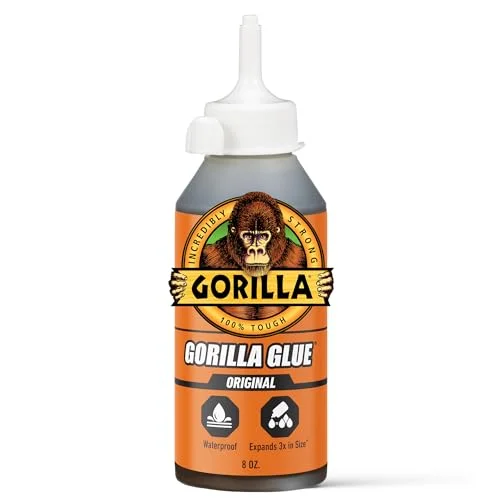 |
Gorilla Original Glue, 8 oz – $9.98 This is the same waterproof polyurethane formula Mark Singer discovered in Indonesia and built the original Gorilla Glue Company around.
|
Every great product has an origin story, and Gorilla Glue’s is one of my favorites because it isn’t about a chemist in a lab. It’s about a woodworker recognizing a good idea when he saw one — a lesson for anyone who tinkers and builds.
Not an Invention, But a Discovery
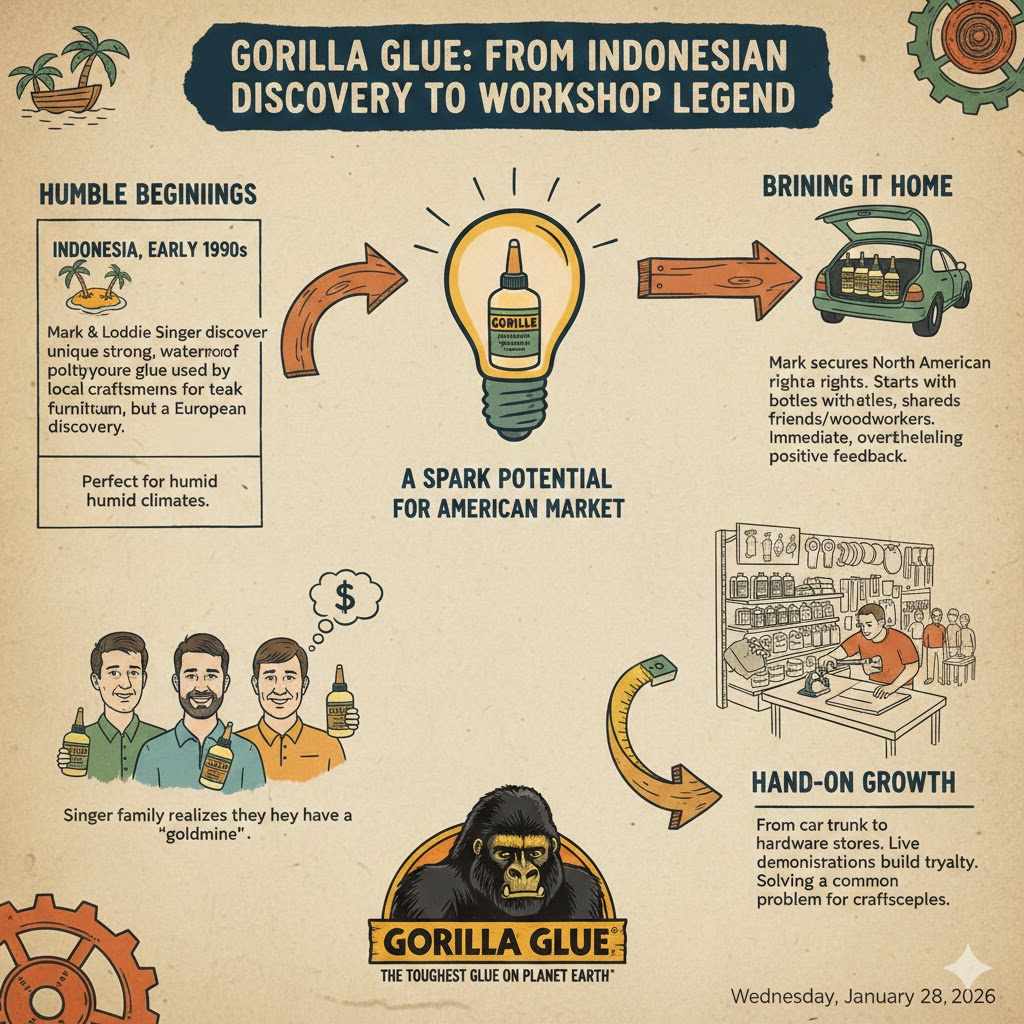
The story starts not in an American workshop, but in Indonesia. Mark Singer — a woodworker, furniture maker, and inventor — was there when he came across a moisture-cured polyurethane adhesive already being used by local craftsmen to build teak furniture. The glue was unlike anything sold in the U.S. at the time: waterproof, and it expanded slightly as it cured, which let it fill gaps and grip in ways ordinary wood glue couldn’t.
Singer didn’t invent the glue — it was already manufactured in Denmark. What he did was see its potential for the American market and acquire the rights to sell it in North America, a much more versatile glue than most woodworkers and DIYers had access to at the time.
A Spark of Genius: Bringing It Home
Convinced he had something special, Singer started small — handing out bottles to fellow woodworkers to try. The feedback was strong enough that he and his family built a real distribution business around it, starting with hardware-store demonstrations rather than any big ad budget. That hands-on, prove-it-in-person approach is a big part of why the brand built such loyal word-of-mouth early on.
The 1999 Sale: What Actually Happened
In 1999, Mark Singer sold The Gorilla Glue Company. The buyer was the Ragland family, who owned the Lutz Tool Company in Cincinnati, Ohio — an established hardware-industry business that would go on to rename itself after the brand it acquired. In Singer’s own words, from a 2020 interview with Fine Woodworking magazine, he “sold the Gorilla Glue business to a wonderful family in Cincinnati” so he could get back to the furniture-making that had first drawn him into woodworking. He’s also said, of the company’s later growth, that “we have all shared in their success” — a comment that suggests some continued connection to the business, though he hasn’t specified the terms.
That 1999 date matters, because a fair amount of content online (including an earlier version of this article) has stated the sale happened in 2004. It didn’t — and some sources also mislabel the buyers as the “Lutz family,” when Lutz Tool Company was the name of the business the Ragland family already owned before they acquired Gorilla Glue.
So, How Much Did Mark Singer Sell Gorilla Glue For?
Here’s the honest answer: nobody outside the deal has ever confirmed a number. Singer’s own retelling of the sale, in the most detailed public interview he’s given about it, doesn’t include a dollar figure. Neither does the Gorilla Glue Company’s own history pages. If you search around, you’ll find blog posts and “net worth” sites throwing out very different numbers — anywhere from the low hundreds of thousands into the billions, depending on the site — and none of them cite an actual source. When multiple sites disagree by that much with zero attribution, that’s a sign the number is invented, not researched.
What we can say with confidence is the shape of the story, not the size of the check: Singer built a small, home-grown import business into a nationally recognized brand, sold it privately to a family-owned hardware company, and the buyers then grew it enormously — today Gorilla Glue is a household name with a full lineup of adhesive products sold across the country. If a verified figure for the original sale ever surfaces from a credible source, this page will be updated to reflect it. Until then, treat any specific dollar amount you see quoted for this deal as unverified.
What Made the Business Worth Buying
Even without a confirmed price tag, it’s easy to see why a hardware-industry buyer would want this business. A glue formula alone isn’t worth much — what Singer had actually built was a brand.
| Value Factor | Description |
|---|---|
| Brand Recognition | The “Gorilla Glue” name and gorilla logo were already strongly associated with strength and reliability among woodworkers and DIYers. |
| A Defined Niche | Gorilla Glue had carved out real market share in premium, high-strength polyurethane adhesives — a category most consumers didn’t even know existed before Singer introduced it. |
| Loyal Customer Base | Years of in-person demos at hardware stores built a following of woodworkers and contractors who trusted the product and recommended it by word of mouth. |
| Simple, Effective Product | The core product was easy to understand and use, yet delivered genuinely professional-grade results — broad appeal that translates directly into sales. |
| Room to Scale | A single-product import business with a strong brand is exactly the kind of asset a larger, established company can scale — more distribution, more product lines, more shelf space. |
That’s the real value in this story — not a specific number, but the fact that a decade of grassroots trust-building turned a niche import into an asset worth acquiring at all.
The Gorilla Glue Legacy Continues to Grow
The 1999 sale wasn’t the end of the story — it was the start of a new chapter under different ownership. The Ragland family kept the brand’s core promise of toughness while expanding it well beyond that first bottle of polyurethane glue.
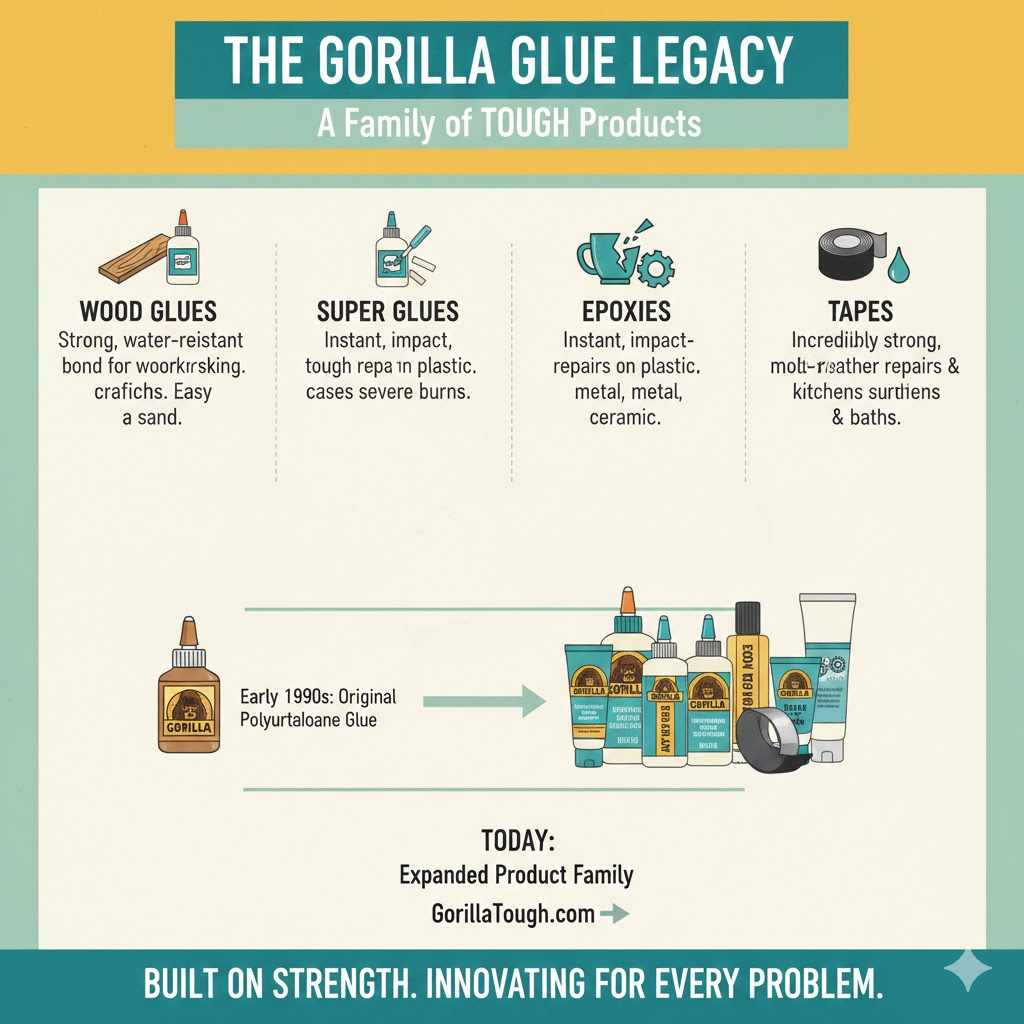
Today, the Gorilla Glue product family spans several categories, all built on the same reputation for holding strong under pressure:
| Product Category | Examples | Purpose |
|---|---|---|
| Wood Glues | Gorilla Wood Glue | For woodworking projects, offering a strong, water-resistant bond that’s easy to sand and finish. |
| Super Glues | Gorilla Super Glue, Super Glue Gel | For instant repairs on plastic, metal, and ceramic, with impact-tough formulas. |
| Epoxies | GorillaWeld, Clear Gorilla Epoxy | For high-strength bonding of multiple surfaces and permanent, waterproof repairs. |
| Tapes | Gorilla Tape, Gorilla Mounting Tape | For heavy-duty, all-weather repairs and mounting. |
| Sealants | Gorilla 100% Silicone Sealant | For a waterproof, mold- and mildew-resistant seal in kitchens and bathrooms. |
If you’re curious about the company’s ownership and structure in more recent years — separate from Singer’s original 1999 sale — we cover what’s publicly known in our related piece, How Much Did Gorilla Glue Sell For?
Frequently Asked Questions (FAQ)
1. Who actually invented Gorilla Glue?
Mark Singer didn’t invent the glue formula itself — the moisture-cured polyurethane adhesive was already being manufactured in Denmark. Singer discovered it while working with wood in Indonesia, recognized its potential for the American market, and acquired the rights to sell it in North America under the Gorilla Glue name.
2. Is the Singer family still involved with the company?
No. Mark Singer sold The Gorilla Glue Company in 1999 to the Ragland family, owners of the Lutz Tool Company in Cincinnati, Ohio, and is not involved in day-to-day operations. He has spoken publicly about having “shared in” the company’s later success, but the specifics of any continued financial relationship haven’t been disclosed.
3. How much did Mark Singer sell Gorilla Glue for?
No sale price has ever been publicly confirmed by Singer, the Ragland family, or The Gorilla Glue Company. Numbers circulating on various websites are not sourced to any credible report and should be treated as unverified guesses, not fact.
4. Why is it called Gorilla Glue?
The Singer family wanted a name that conveyed the product’s strength and toughness. “Gorilla Glue” was simple, memorable, and paired naturally with a strong visual logo — branding that helped it stand out on a crowded hardware-store shelf.
5. What made the original Gorilla Glue so special?
The original Gorilla Glue is a polyurethane-based adhesive that’s 100% waterproof and expands slightly as it cures. That foaming action helps it fill gaps and create an exceptionally strong bond, especially in porous materials like wood.
6. How much is The Gorilla Glue Company worth today?
As a privately held company, its exact valuation isn’t public. Given its national distribution and multiple product lines, it’s reasonable to assume it’s worth a substantial sum today — but no confirmed figure has been released.
7. What’s the biggest mistake people make when using Gorilla Glue?
Forgetting that the original polyurethane Gorilla Glue is moisture-activated. You need to lightly dampen one surface with water before applying it, or it won’t cure properly. Also wear gloves — it’s genuinely difficult to remove from skin once it sets.
Final Thoughts From the Workshop
The story of Mark Singer and Gorilla Glue is a good reminder that great opportunities can be found in unexpected places — and it’s also a good reminder to be skeptical of specific numbers that show up online without a source. Singer didn’t start with a factory or a marketing budget; he started with a good product and a willingness to prove it, one demonstration at a time.
So the next time you reach for that bottle of Gorilla Glue, you can appreciate the real story behind it — a woodworker who spotted something useful, built a brand around it, and sold it to a family business that grew it into a household name. We just can’t tell you exactly what that sale was worth, because nobody who was actually in the room ever has.
Sponsored / affiliate links. As an Amazon Associate I earn from qualifying purchases. I may earn additional commission from eligible campaigns.