How Much Is Gorilla Glue Worth? The Ultimate Answer
A bottle of Gorilla Glue typically costs between $5 for a small 2-ounce bottle and $30 for a larger 36-ounce size. Its true “worth,” however, comes from its incredible strength and versatility. For critical repairs and projects needing a permanent, waterproof bond, its reliability makes it worth every penny compared to cheaper alternatives.
Have you ever stood in the hardware store aisle, staring at a wall of glues? It can be a little overwhelming. You see the familiar Gorilla Glue bottle, and you’ve heard it’s strong. But you also see the price tag and wonder, “Is it really worth it?” It’s a common question, and you’re smart to ask it.
Don’t worry, I’m here to help you figure this out. Choosing the right glue can make the difference between a project that lasts a lifetime and one that falls apart. We’re going to break down the cost of Gorilla Glue, explore its different types, and help you decide if it’s the right choice for your next project. Together, we’ll make sure you get the most value for your money.
Understanding Gorilla Glue’s Value: More Than Just a Price Tag
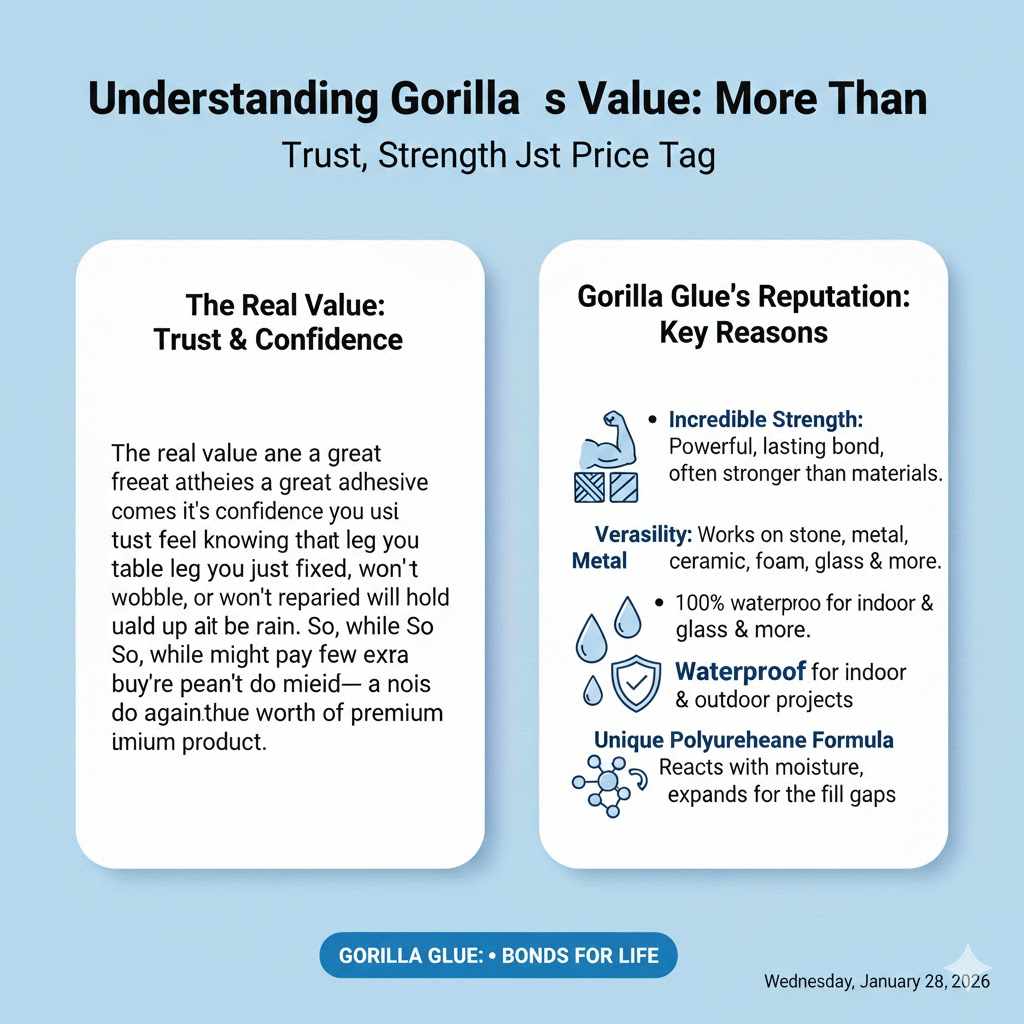
When we talk about how much Gorilla Glue is “worth,” we’re talking about more than just the numbers on the price sticker. The real value of a great adhesive comes from trust. It’s the confidence you feel knowing that the table leg you just fixed won’t wobble, or that the outdoor planter you repaired will hold up in the rain.
Gorilla Glue built its reputation on being incredibly strong and reliable. The original formula is famous for a few key reasons:
- Incredible Strength: It creates a powerful, lasting bond that is often stronger than the materials it’s holding together.
- Versatility: It works on a huge range of materials, including wood, stone, metal, ceramic, foam, glass, and more. This makes it a go-to choice for many different kinds of repairs.
- Waterproof: The original Gorilla Glue is 100% waterproof, making it perfect for both indoor and outdoor projects that will be exposed to the elements.
- Unique Polyurethane Formula: Unlike standard wood glues (which are often PVA-based), original Gorilla Glue is a polyurethane adhesive. It reacts with moisture in the air and the materials to create its bond, and it expands slightly as it dries to fill in gaps. This expansion is a huge benefit for imperfectly fitting joints.
So, while you might pay a few extra dollars for a bottle, you’re buying peace of mind. You’re investing in a repair that you won’t have to do again next year. That’s the true worth of a premium product like Gorilla Glue.
A Breakdown of Gorilla Glue Prices: What to Expect at the Store
The price of Gorilla Glue can vary quite a bit, but it’s easy to understand why. The cost you see on the shelf depends on three main things: the specific type of glue, the size of the bottle, and where you are shopping. Let’s break it down so you know exactly what to look for.
1. Price by Gorilla Glue Type
Gorilla Glue isn’t just one product anymore. The company makes a whole family of adhesives, each designed for a specific job. The original formula is fantastic for big, tough jobs, but you wouldn’t use it for a delicate craft. Knowing the different types helps you pick the right one and pay the right price.
Here’s a handy table to guide you:
| Product Name | Common Sizes | Typical Price Range | Best For |
|---|---|---|---|
| Original Gorilla Glue | 2 oz, 4 oz, 8 oz, 18 oz | $5 – $20 | Heavy-duty repairs, outdoor projects, bonding different materials (wood, stone, metal). |
| Gorilla Wood Glue | 4 oz, 8 oz, 18 oz, 1 Gallon | $4 – $25 | All standard woodworking projects, furniture building, and indoor wood repairs. It’s easier to use than the original for pure wood projects. |
| Gorilla Super Glue Gel | 15g, 20g (tubes) | $5 – $8 | Quick fixes on plastic, metal, and rubber. The gel formula doesn’t run, making it great for vertical surfaces. |
| Gorilla Clear Grip | 3 oz tube | $6 – $9 | A strong, clear, flexible contact adhesive. Great for fabric, leather, and projects where you don’t want the glue to show. |
| Gorilla 2 Part Epoxy | 0.85 oz syringe | $6 – $10 | Toughest repairs requiring gap-filling and extreme strength on materials like metal, plastic, and concrete. |
As you can see, the price aligns with the job. A small tube of super glue for a quick fix is much cheaper than a large bottle of waterproof glue for building a deck chair.
2. Price by Bottle Size
Like with most things you buy, buying Gorilla Glue in a larger quantity usually gives you a better value per ounce. However, it’s only a good deal if you will actually use it. Glues have a shelf life, and a giant bottle that dries up on your shelf is wasted money.
Here’s a quick example using Original Gorilla Glue:
- A 2 oz bottle might cost around $5.00 (which is $2.50 per ounce).
- An 8 oz bottle might cost around $10.00 (which is $1.25 per ounce).
- An 18 oz bottle might cost around $16.00 (which is about $0.89 per ounce).
My advice is simple: buy the smallest size that will comfortably complete your current project, unless you have several more projects lined up right away. This way, you always have fresh, effective glue without wasting any.
3. Where You Buy Matters: Retailer Price Differences
You can find Gorilla Glue in a lot of places, and the price isn’t always the same.
- Big-Box Stores: Places like Home Depot or Lowe’s usually have very competitive pricing and a great selection of sizes and types. They are often a reliable and affordable choice.
- Local Hardware Stores: Your neighborhood hardware store might be a little more expensive, but the expert advice you can get from the staff is often invaluable. Supporting local businesses is a great bonus, too!
- Online Retailers: Websites like Amazon can have great deals, especially on multi-packs or larger sizes. Just be sure to check the shipping costs, as that can sometimes erase the savings.
- Supermarkets and Craft Stores: These stores often carry smaller bottles and tubes, which are perfect for quick repairs or small hobbies. The prices are generally fair for the convenience.
Keep an eye out for sales and coupons, especially at the big-box stores. You can often save a dollar or two, which always feels good.
Is Gorilla Glue Worth the Cost for Your Project?
Now for the most important question: when should you reach for the Gorilla Glue, and when is a cheaper alternative perfectly fine? The answer depends entirely on your project. Paying for performance you don’t need is wasteful, but skimping on glue for an important job can lead to disaster.
Here’s a simple guide to help you decide.
Choose Gorilla Glue When:
- Strength is Your #1 Priority: If you’re repairing something structural, like a chair leg that will hold weight or a loose tool handle, you need a bond you can trust completely. The holding power of Original Gorilla Glue or their Epoxy is worth the price for this peace of mind.
- Your Project Lives Outdoors: For anything that will be exposed to rain, snow, or humidity, you must use a waterproof glue. Original Gorilla Glue is 100% waterproof once cured, making it an excellent choice for mailboxes, outdoor furniture, planters, and more.
- You’re Gluing Different Materials Together: Sticking wood to metal? Plastic to ceramic? This is where the original polyurethane formula truly shines. Standard wood glues just can’t do this effectively.
- The Surfaces Aren’t a Perfect Fit: Because Original Gorilla Glue expands as it dries, it’s brilliant for filling small gaps in joints that aren’t perfectly cut. It creates a solid, strong bond even when there are minor imperfections.
Consider a Cheaper Alternative When:
- It’s a Simple, Indoor Wood-to-Wood Joint: For building bookshelves, picture frames, or most indoor furniture from wood, a standard PVA wood glue (like Gorilla’s own Wood Glue or a competitor’s) is the better choice. It’s cheaper, less messy (no foaming), and creates a bond that is stronger than the wood itself.
- It’s a Small, Non-Structural Craft Project: If you’re working on a simple craft, a basic craft glue or a hot glue gun will often do the trick for a fraction of the cost.
- You Need Something Temporary: Gorilla Glue creates a permanent bond. If you need a temporary hold, it’s the wrong tool for the job.
Think of it like this: you use Gorilla Glue for the jobs you never want to think about again. For everything else, you can often save some money.
Comparing Gorilla Glue to Other Adhesives
To really understand Gorilla Glue’s worth, it helps to see how it stacks up against other common glues you’ll find on the shelf. Each one has its own strengths and is designed for a specific purpose.
| Adhesive Type | Average Cost | Key Feature | Best Use Case |
|---|---|---|---|
| Gorilla Glue (Original) | $$ – $$$ | Incredible strength, waterproof, versatile, expands. | Outdoor projects, bonding dissimilar materials, gap-filling repairs. |
| PVA Wood Glue | $ – $$ | Easy cleanup, non-foaming, very strong wood-to-wood bond. | Indoor furniture making, general woodworking, carpentry. |
| Super Glue (CA Glue) | $ | Bonds nearly instantly, works well on non-porous surfaces. | Quick repairs on plastic, ceramic, or small household items. |
| 2-Part Epoxy | $$ | Extremely strong, excellent gap-filler, machineable. | Bonding metal, plastic, and concrete; high-stress repairs. |
| Construction Adhesive | $ – $$ | Thick, powerful bond for large surfaces, fills major gaps. | Attaching subflooring, drywall, or installing backsplashes. |
This table shows that no single glue is “the best” for everything. The most valuable glue is the one that’s right for your specific task. Using wood glue on plastic won’t work, and using thick construction adhesive for a delicate model would be a mess!
How to Use Gorilla Glue Correctly for Maximum Value
The strongest glue in the world is worthless if you don’t use it correctly. This is especially true for the original Gorilla Glue, which works a little differently than other glues. Follow these simple steps to ensure you get the unbeatable bond you paid for.
These instructions are for the Original Gorilla Glue formula.
- Prepare Your Surfaces: Make sure the surfaces you’re gluing are clean and free of dust, dirt, or oil. If a surface is smooth and glossy (like plastic or metal), it’s a good idea to lightly sand it first to give the glue something to grip onto.
- Dampen It: This is the most important step! Original Gorilla Glue needs moisture to cure properly. Lightly mist one of the surfaces with water. A damp paper towel works great for this. Don’t soak it—just make it slightly damp to the touch.
- Glue It: Apply a thin, even layer of glue to the other, dry surface. A little goes a long way! The glue will expand to about 3-4 times its original size, so if you use too much, you’ll have a big, foamy mess to clean up. Be conservative.
- Clamp It: Press the two surfaces together and clamp them tightly. This is not optional! Clamping ensures a tight bond and prevents the expanding foam from pushing your pieces apart. You need strong pressure. Use clamps, heavy objects, or painter’s tape to hold everything in place for 1-2 hours.
- Let It Cure: After you remove the clamps, the bond will be strong, but it’s not at full strength yet. Let the project sit for a full 24 hours to allow the glue to cure completely.
Always work in a well-ventilated area and read the safety instructions on the bottle. For detailed safety information on any chemical product, you can consult resources like the OSHA Occupational Chemical Database. Safety first, always!
Tips for Getting the Best Deal on Gorilla Glue
Everyone likes to save a little money. Here are a few practical tips to make sure you’re getting the most value when you buy and use Gorilla Glue:
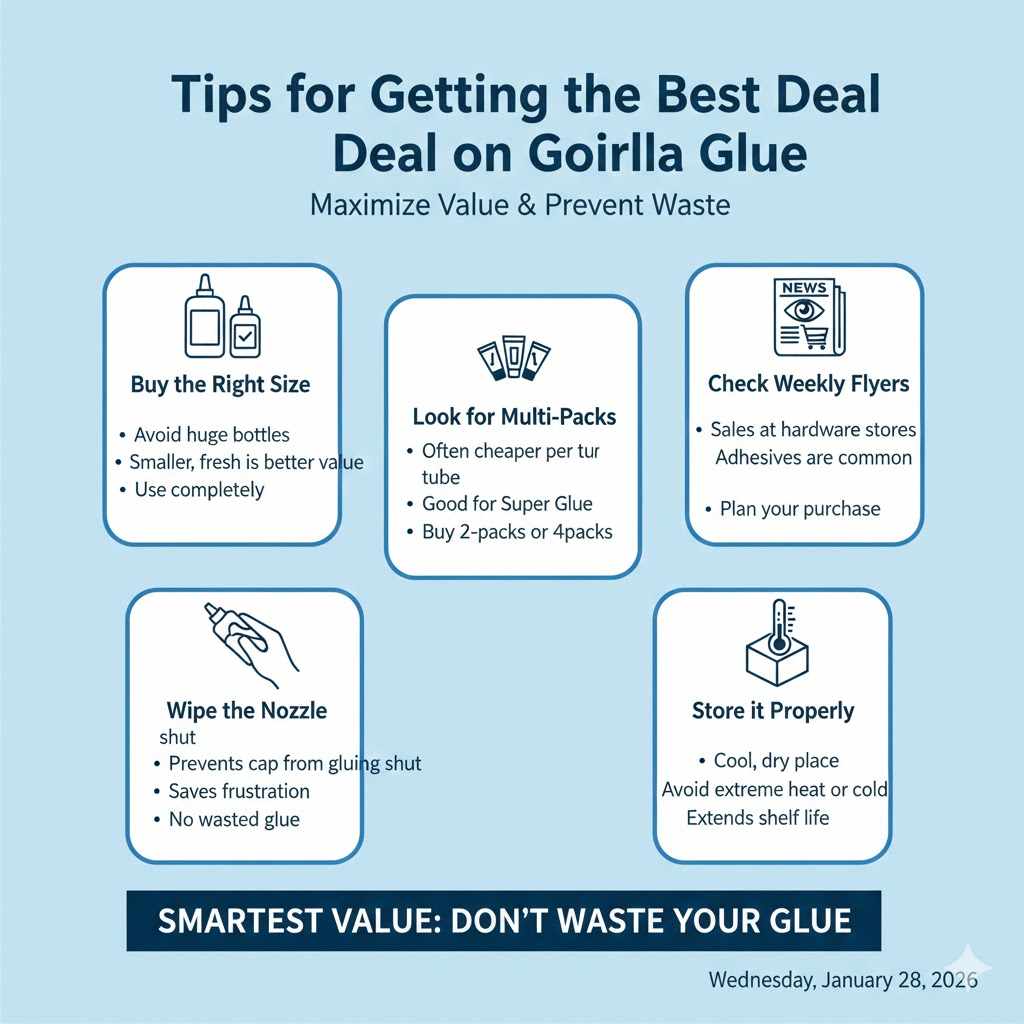
- Buy the Right Size: As we discussed, avoid the temptation to buy a huge bottle “just in case.” A smaller, fresh bottle that you use completely is a much better value than a large one that goes bad on the shelf.
- Look for Multi-Packs: If you use a lot of a specific type, like Super Glue, sometimes buying a pack of two or four tubes can be cheaper than buying them one at a time.
- Check Weekly Flyers: Keep an eye on sales at your local hardware stores. Adhesives are a common sale item.
- Wipe the Nozzle: After each use, wipe the nozzle of the bottle clean before putting the cap back on. This prevents the cap from getting glued shut, which can save a lot of frustration and wasted glue.
- Store it Properly: Store your glue in a cool, dry place. Extreme heat or cold can affect its performance and shelf life.
The smartest way to get value is to not waste what you buy. Using the right amount and storing it correctly ensures every drop you paid for goes into your projects.
Frequently Asked Questions (FAQ)
How much does a small bottle of Gorilla Glue cost?
A small 2-ounce bottle of Original Gorilla Glue usually costs between $5 and $7. This size is perfect for most household repairs and small to medium-sized projects, and it’s a great way to try it out.
Is Gorilla Wood Glue better than other wood glues?
Gorilla Wood Glue is an excellent PVA glue that’s on par with other top brands like Titebond. It creates a bond that is stronger than the wood itself and is great for general woodworking. It’s not necessarily “better” than its competitors, but it is a very high-quality and reliable choice.
Why is Gorilla Glue more expensive?
The original Gorilla Glue is more expensive primarily because of its unique polyurethane formula. This formulation gives it special properties, like being 100% waterproof and the ability to bond many different materials, which standard wood glues cannot do. You’re paying for that advanced technology and versatility.
Can I use Gorilla Glue on everything?
While it is incredibly versatile, it’s not ideal for everything. It’s not recommended for some plastics like polyethylene and polypropylene, which are the waxy types of plastic found in things like milk jugs. Always test on a small, hidden area first if you’re unsure.
How long does Gorilla Glue last once opened?
An opened bottle of Gorilla Glue can last for a year or more if stored correctly. The key is to squeeze all the air out of the bottle before tightly sealing the cap and storing it in a cool, dry place. Air and moisture are what cause it to harden in the bottle.
What’s the difference between Gorilla Glue and Gorilla Super Glue?
They are completely different types of glue. Original Gorilla Glue is a moisture-activated polyurethane that is great for large, porous surfaces and creates a super-strong, waterproof bond over 24 hours. Gorilla Super Glue is a cyanoacrylate that bonds almost instantly on non-porous surfaces like plastic and metal.
Is Original Gorilla Glue truly waterproof?
Yes, once it is fully cured (after 24 hours), the bond from Original Gorilla Glue is 100% waterproof. It will not break down when exposed to water, making it one of the best choices for outdoor applications and repairs in wet environments.
The Final Verdict on Gorilla Glue’s Worth
So, after all that, how much is Gorilla Glue worth? The answer is clear: its value far exceeds its price tag when used for the right job. While the cost may be a bit higher than your average white or yellow glue, you are paying for a premium product with unmatched strength, durability, and versatility.
For those critical repairs, outdoor projects, or when you need to bond challenging materials, the reliability of Gorilla Glue is worth every penny. It provides the peace of mind that your project will hold together through thick and thin, saving you the time, money, and frustration of having to make repairs again down the road. For simple indoor woodworking, its sister product, Gorilla Wood Glue, or another quality PVA glue, is the more economical and practical choice.
Now that you understand the true worth of Gorilla Glue, you can walk into that hardware store with confidence. You can look at that wall of adhesives and know exactly which bottle to grab for your next amazing project. Happy building!