How Thick Is Hardwood Floor: Essential Guide
Hardwood floor thickness typically ranges from 5/16 inch to 3/4 inch. Solid hardwood planks are usually 3/4 inch thick, while engineered hardwood floors can vary from 5/16 inch to 7/16 inch. The thickness impacts durability, cost, and installation.
Choosing the right hardwood floor can feel a bit overwhelming, especially when you’re wondering about something as specific as thickness. It’s a common question for many DIYers and homeowners because, let’s face it, you want floors that look great, last a long time, and fit your budget. Don’t worry, it’s not as complicated as it sounds! We’ll break down exactly what hardwood floor thickness means, why it matters, and help you understand the options so you can make a confident decision for your home. Ready to get your floors sorted?
Understanding Hardwood Floor Thickness
When we talk about hardwood floor thickness, we’re referring to the overall dimension of the plank from its top surface to its bottom. This measurement is crucial because it directly influences several key aspects of your flooring, including its durability, how many times it can be sanded and refinished, its stability, and even its cost. Think of it like the foundation of a house – a sturdier foundation generally supports a more robust structure. Similarly, a thicker hardwood floor plank often means a more durable and long-lasting floor.
It’s important to distinguish between overall thickness and the thickness of the wear layer, especially with engineered hardwood. The wear layer is the top solid wood veneer. For solid hardwood, the entire plank is made of a single piece of wood, so its thickness is consistent throughout.
Solid Hardwood vs. Engineered Hardwood Thickness
The two main types of hardwood flooring, solid and engineered, have different typical thickness ranges. Understanding these differences is key to selecting the right product for your needs and expectations.
Solid Hardwood Flooring Thickness
Solid hardwood floors are exactly what they sound like: planks milled from a single, solid piece of timber. Because they are made from one solid piece of wood, they are generally thicker and more substantial. The most common thickness for solid hardwood flooring is 3/4 inch. This significant thickness allows solid wood floors to be sanded and refinished multiple times throughout their lifespan.
The standard 3/4 inch thickness is a hallmark of quality and longevity. It provides a substantial feel underfoot and contributes to the floor’s acoustic properties, often reducing echo within a room. While thicker options exist, 3/4 inch is the industry standard that offers excellent durability and aesthetic appeal. Some premium or specialty solid wood floors might be slightly thicker, but anything significantly less than 3/4 inch might indicate a less robust product or a different construction method (like pre-finished flooring with a thinner core, though still solid wood overall).
Engineered Hardwood Flooring Thickness
Engineered hardwood flooring is a bit more complex in construction. It’s made of several layers of wood, cross-laminated together, with a top layer of real hardwood veneer. This layered construction makes engineered wood more stable and less prone to expanding or contracting with changes in humidity and temperature compared to solid hardwood. Because of this layered design, the overall thickness of engineered hardwood planks can vary more widely.
Common thicknesses for engineered hardwood range from 5/16 inch to 7/16 inch, though some can be thicker, approaching 1/2 inch or even more. The crucial factor with engineered wood is the thickness of the top hardwood veneer, known as the wear layer. This wear layer dictates how many times the floor can be sanded and refinished. For a floor that is 5/16 inch thick, the wear layer might be as thin as 1mm to 2mm. Thicker engineered floors, perhaps 7/16 inch or 1/2 inch, often have a more substantial wear layer (3mm or more), allowing for one or two refinishes.
The beauty of engineered wood is its versatility. It can be installed in areas where solid hardwood might not be suitable, such as basements or over radiant heating systems, due to its inherent stability. Its construction allows for a wide range of thicknesses to meet different performance and aesthetic needs.
Factors Influencing Hardwood Floor Thickness
Several factors play a role in determining the thickness of hardwood flooring available on the market. These aren’t arbitrary choices; they are based on manufacturing processes, intended use, and market demand.
- Manufacturing Capabilities: The machinery and processes used by manufacturers dictate the range of thicknesses they can produce.
- Cost and Value: Thicker planks often use more wood, which can increase production costs. Manufacturers balance thickness with material use to offer competitive pricing.
- Installation Methods: Different installation methods (like nail-down, glue-down, or floating) can influence the ideal thickness of the flooring. For example, very thin planks might be more suited for glue-down or floating installations.
- Wear and Durability Requirements: For high-traffic areas, thicker planks, especially those with a substantial wear layer in engineered wood, are desirable for longevity.
- Aesthetic Preferences: While thickness doesn’t directly control the look, the substantial feel and heft of a thicker plank can be an aesthetic consideration for some homeowners.
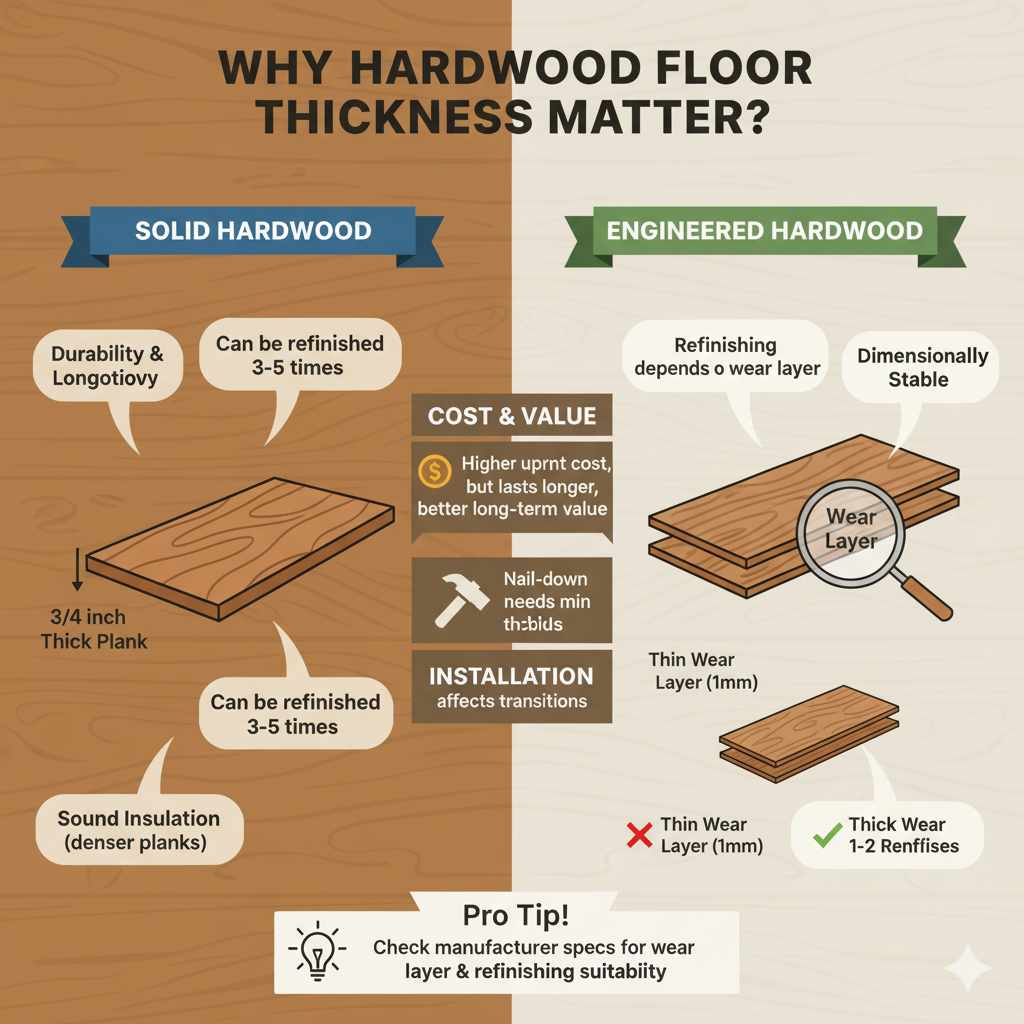
Why Does Hardwood Floor Thickness Matter?
The thickness of your hardwood floor isn’t just a number; it has practical implications for your home. Here’s why paying attention to this measurement is important:
Durability and Longevity
Thicker hardwood floors, especially solid wood planks of 3/4 inch, are inherently more durable. They can withstand more wear and tear, making them ideal for busy households with pets and children. A thicker floor also means more material to stand up to foot traffic and the occasional dropped item.
For solid hardwood, the overall thickness directly relates to how many times it can be sanded and refinished. Refinishing removes a thin layer of wood to remove scratches and wear, essentially giving your floor a fresh start. A 3/4 inch plank can typically be refinished 3-5 times over its lifetime, significantly extending its usefulness. Engineered hardwood’s refinishing capability depends entirely on the thickness of its top hardwood veneer (wear layer).
Sanding and Refinishing Potential
This is a critical point for the long-term maintenance of your floors. As mentioned, solid hardwood’s thickness directly translates to refinishing potential. A standard 3/4 inch solid wood floor can be sanded down and refinished multiple times, allowing you to change the look or refresh worn surfaces. This capability is one of the biggest advantages of solid hardwood and why its thickness is so important.
With engineered hardwood, the situation is different. The wear layer is the key. If the wear layer is very thin (e.g., 1mm on a 5/16 inch plank), sanding it down too much could go through to the cross-laminated core layers. This would ruin the floor’s appearance and structural integrity. Thicker wear layers (3mm or more) on engineered planks offer a limited refinishing capability, perhaps one or two times. Always check the manufacturer’s specifications regarding wear layer thickness and refinishing suitability for engineered wood floors.
Sound Insulation
Thicker hardwood planks tend to be denser and more solid. This can contribute to better sound insulation, both within a room and between floors. A thicker, heavier floorboard is less likely to transmit sound, reducing echoing and making your living space quieter. This is particularly noticeable in apartments or multi-story homes where noise transmission can be a concern.
While not the primary driver for most people, improved sound deadening is an added benefit of a more substantial flooring material. If you’re sensitive to noise or want a more serene home environment, opting for thicker planks can be a wise choice.
Cost and Value
Generally, thicker hardwood flooring, especially solid hardwood, will be more expensive than thinner options or alternative flooring materials. This is due to the increased amount of raw material and potentially more complex manufacturing processes involved.
However, this higher initial cost often translates to better long-term value. A thicker, more durable floor will last longer, require fewer replacements, and maintain its appearance better over time. For solid hardwood, its ability to be refinished multiple times means you’re investing in a floor with a very long potential lifespan, often decades. When considering cost, think about cost per year of use rather than just the upfront price tag.
Installation Considerations
The thickness of hardwood flooring can affect installation. For nail-down installations, a certain minimum thickness is often required to ensure the nails can properly secure the planks. Thicker planks are generally easier for professional installers to work with and tend to create a more robust finished floor.
Engineered hardwood, being more dimensionally stable, can often be installed using a floating method, where planks interlock and are not attached to the subfloor. This can be a DIY-friendly option. The thickness also plays a role in how the new floor will transition to adjacent flooring of different heights. If you’re replacing existing flooring, matching the thickness can avoid awkward transitions or the need for excessive subfloor preparation.
Common Hardwood Floor Thicknesses and Their Applications
Let’s look at typical thickness ranges and where they are most commonly found and recommended.
5/16 Inch to 1/2 Inch: Engineered Wood Focus
Flooring in this thickness range is almost exclusively engineered hardwood. This is where you’ll find a variety of wear layer thicknesses, from very thin to moderately thick.
- Pros: Often more budget-friendly, good for areas with fluctuating humidity, can be suitable for DIY floating installations.
- Cons: Limited refinishing potential (especially with thin wear layers), can feel less substantial than thicker options.
- Best Applications: Basements, kitchens, bathrooms (with proper sealing and care), apartments, areas where humidity control is challenging.
When choosing flooring in this range, always prioritize the wear layer thickness. A wear layer of 3mm (about 1/8 inch) or more is generally recommended if you anticipate wanting to sand and refinish even once. For context, according to the North Carolina Department of Justice, understanding the wear layer is critical to assessing the value and longevity of engineered wood.
3/4 Inch: The Solid Hardwood Standard
This is the classic, traditional thickness for solid hardwood flooring. When people think of robust, long-lasting wood floors, they’re often picturing 3/4 inch planks.
- Pros: Highly durable, can be sanded and refinished multiple times, provides a substantial and high-quality feel, excellent acoustics.
- Cons: More expensive than thinner engineered options, can be sensitive to extreme humidity changes, typically requires nail-down installation which might need professional help.
- Best Applications: Living rooms, dining rooms, bedrooms, hallways, and anywhere desiring traditional beauty and longevity.
A 3/4 inch solid hardwood floor is an investment that can last a lifetime, offering timeless appeal and the ability to be refreshed as styles change or wear occurs.
Thicker Options (Above 3/4 Inch)
While less common, you might find solid hardwood flooring that is even thicker, sometimes up to 1 inch or slightly more. These are often premium products or custom orders.
- Pros: Maximum durability and longevity, best possible sound insulation, can be refinished many times.
- Cons: Highest cost, may require specialized installation, can present clearance issues with doors and cabinetry if not planned for.
- Best Applications: High-traffic commercial spaces, luxury residential projects, or homes aiming for the absolute best in wood flooring.
These ultra-thick floors are usually for those making a significant statement or requiring exceptional performance.
How to Measure Hardwood Floor Thickness
If you’re unsure about the thickness of your existing hardwood floor, or if you’re looking at samples, here’s how you can measure it:
For new flooring:
- Check the Packaging: The thickness is almost always listed on the box of the flooring.
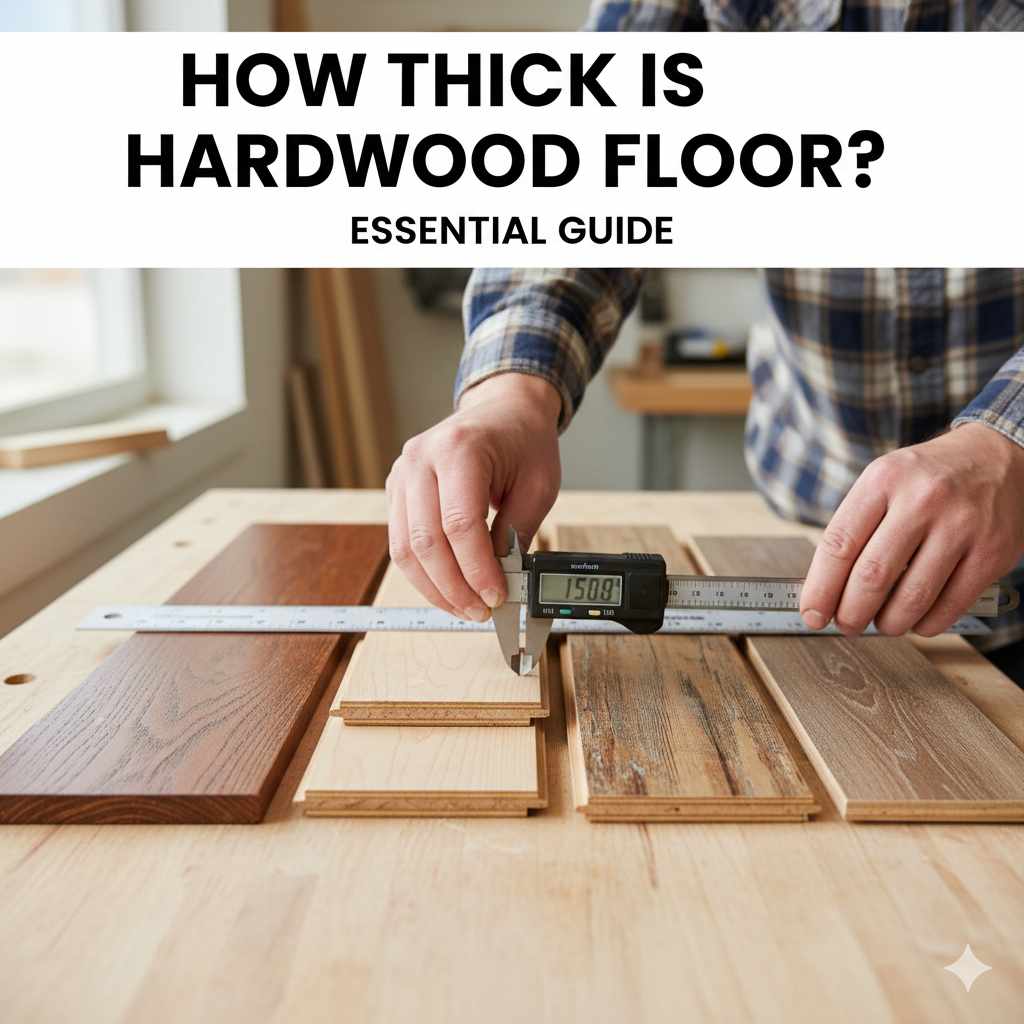
- Use a Measuring Tape or Ruler: Lay a plank flat and measure from the top surface to the bottom surface.
- For Engineered Wood: If you need to know the wear layer thickness, you might need calipers or a magnifying glass and a very fine ruler. Measure the hardwood veneer at the edge of the plank. Manufacturers usually specify this.
For existing flooring:
- Find an Edge or Loose Board: The easiest way is to find a spot where the flooring meets a wall, a threshold, or if you have a slightly loose board.
- Use a Caliper or Ruler: Gently slide a measuring caliper or a thin ruler under the edge of the plank to get a measurement of its full thickness. Measure from the top surface down to the subfloor or the underside of the plank.
- Measure in Several Spots: If possible, measure a few different planks to ensure consistency, as some older floors might have slight variations.
- Look for a Vent or Cutout: Sometimes, a vent cover or a cutaway for pipes might expose the edge of the flooring, providing an easy measurement point.
If you’re planning a refinishing project, knowing the exact thickness of your solid wood floor or the wear layer of your engineered wood floor is crucial. You can find resources on wood floor inspection and measurement from organizations like the National Hardwood Lumber Association (NHLA), though their resources are often geared towards professionals.
Thickness Table Summary
To consolidate the information, here’s a quick reference table:
| Flooring Type | Typical Thickness Range | Wear Layer (Engineered Only) | Refinishing Potential | Common Applications |
|---|---|---|---|---|
| Solid Hardwood | 3/4 inch (standard) | N/A | 3-5+ times | Main living areas, bedrooms, anywhere durability and timelessness are key. |
| Engineered Hardwood | 5/16 inch – 1/2 inch (can vary) | 1mm – 5mm+ (critical factor) | 0-2 times (depends heavily on wear layer) | Basements, kitchens, areas with humidity fluctuations, DIY installations. |
| Specialty Solid Hardwood | > 3/4 inch to 1 inch+ | N/A | Many times | High-traffic areas, luxury homes, commercial spaces. |
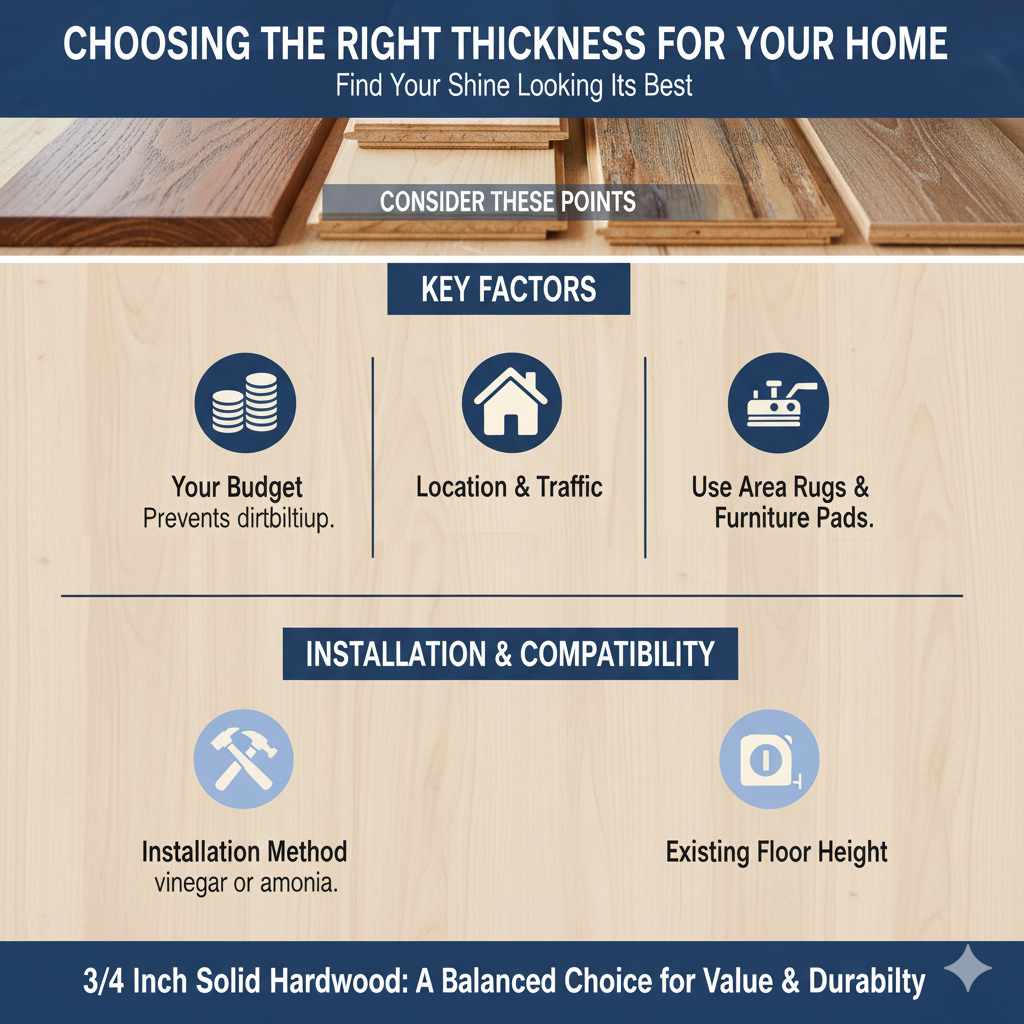
Choosing the Right Thickness for Your Home
When deciding on the best thickness for your project, consider these points:
- Your Budget: Thicker floors, especially solid wood, will generally cost more upfront.
- Location of Installation: For areas with fluctuating humidity (like basements or bathrooms), engineered wood is often a safer bet, and its thickness should be considered for wear layer and overall stability.
- Expected Foot Traffic: High-traffic areas benefit from thicker, more durable materials.
- Refinishing Plans: If you want the option to refinish your floors multiple times to refresh them or change their look, opt for 3/4 inch solid wood or engineered wood with a substantial wear layer (at least 3mm).
- Installation Method: Compatibility with your chosen installation method (nail-down, glue-down, floating).
- Existing Floor Height: Match existing floor heights if you need seamless transitions between rooms.
For most homeowners looking for a balance of beauty, durability, and long-term value, 3/4 inch solid hardwood flooring is an excellent choice. If budget or environmental concerns (stability in varying climates) are paramount, a well-chosen engineered hardwood with a decent wear layer can also be a fantastic and practical option.
Frequently Asked Questions (FAQ)
What is the most common thickness for hardwood flooring?
The most common thickness for solid hardwood flooring is 3/4 inch. For engineered hardwood, the overall thickness can vary more, often ranging from 5/16 inch to 1/2 inch.
Can I refinish any thickness of hardwood floor?
Solid hardwood floors of standard thickness (like 3/4 inch) can typically be refinished multiple times. Engineered hardwood floors’ refinishing capability depends entirely on the thickness of the top hardwood veneer, known as the wear layer. Thin wear layers cannot be sanded more than once or twice, if at all.
Is thicker hardwood flooring always better?
Thicker hardwood flooring, especially solid hardwood, generally offers greater durability and longevity, and can be refinished more times. However, “better” also depends on your specific needs, budget, and installation location. Engineered wood’s stability can make it superior in certain environments regardless of overall thickness.
Does hardwood floor thickness affect installation cost?
While the thickness itself might not drastically alter labor costs for standard installations, very thick or specialty flooring might require different tools or more complex prep, potentially influencing price.