How to Disinfect Hardwood Floors (Without Dulling the Finish)
To disinfect hardwood floors safely, use a product whose label lists disinfection directions for sealed wood, and apply it as a light mist, not a wet mop, because water does more lasting harm to boards than germs do. Vinegar, steam and homemade mixes are not substitutes. This guide covers when disinfecting is truly needed, what each product can and cannot do, the contact-time problem nobody mentions, and a step-by-step method.
How to Disinfect Hardwood Floors Without Soaking Them
Best Controlled-Mist Mop Pick
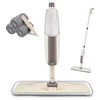 |
HOMTOYOU Refillable Spray Mop with 3 Washable Pads ($17.99) A fine mist per press and a washable microfiber pad let you apply product in small sections, which is how this guide keeps water off the boards.
|
As an Amazon Associate we earn from qualifying purchases.
Three things decide whether a disinfecting job is safe for a finished wood floor: what you put on it, how much liquid reaches the boards, and how long the surface stays wet. Most damage comes from the second one. Standing moisture seeps into seams, and flooring maker Bona notes that puddles can cause swelling and discoloration, which is why it recommends a light mist of a wood-specific cleaner. A tool that releases a measured mist, like the mop above, makes that easier to do consistently.
Everything below assumes a sealed floor, meaning a surface finish such as polyurethane. If your floor is raw, oiled or waxed, skip ahead to the special cases section before you wet anything. For routine upkeep between disinfecting sessions, see our guide to caring for hardwood floors long term.
Cleaning, Sanitizing and Disinfecting: Which One Does a Floor Need?
The CDC separates three jobs. Cleaning removes dirt and some germs with soap and water. Sanitizing lowers germs to a level considered safe. Disinfecting uses chemicals to kill germs left on a surface. The CDC also says to clean before you disinfect, because dirt can keep chemicals from reaching germs.
That sequence matters on wood. It means the first pass on a dirty floor is a plain, damp, wood-safe clean, and the disinfectant goes on a floor that is already free of grit and grease. It also means you may not need the second step at all. The CDC advises disinfecting a home in addition to cleaning when someone is sick or at higher risk of getting sick from a weakened immune system. In an ordinary week, a wood-safe cleaner is the right tool.
If the floor is also just grimy, work through our very dirty wood floor cleaning steps first, then come back here.
Which Products Are Safe on Finished Hardwood?
Not every product that kills germs is safe for a floor finish, and not every product that is safe for a finish kills germs. This table sorts the common options by what each can really do. It is a decision aid built from the sources named in the last column, not a lab test.
| Option | Disinfects? | Risk to a sealed wood floor | Based on |
|---|---|---|---|
| pH-neutral wood floor cleaner | No, cleans only (unless its label says otherwise) | Low when applied damp, not wet | Junckers guidance |
| Disinfectant labeled for sealed wood | Yes, for the germs and contact time on its label | Low if the label allows wood and you limit moisture | EPA label rules |
| White vinegar and water | No label claim, so no reviewed data | Acid can break down the finish and dull it over time | Bona, EPA |
| Chlorine bleach | Yes on suitable surfaces, but not a wood-floor product | Junckers advises avoiding it on wood; toxic gas if mixed | Junckers, CDC |
| Steam mop | Not a labeled disinfection method for wood | Heat and water can cup boards | Bona |
| Isopropyl alcohol (spot use only) | Works in the 60 to 90 percent range, evaporates fast | Finish compatibility not confirmed by any maker we found | CDC |
Why EPA label directions are the only claim you can trust
The EPA states that registered antimicrobial products may not make efficacy claims against a pathogen unless the agency has reviewed data and approved the claim on the label. It also warns that if a label has no directions for a given pathogen, EPA has not reviewed any data on using the product that way. Practically, this means a vinegar bottle, a homemade spray or a steam mop has no reviewed disinfection claim behind it, while a labeled product does.
Isopropyl alcohol: the dilution mistake
A tip repeated on many cleaning sites is to mix 70 percent isopropyl alcohol half and half with water for floors. The arithmetic undercuts it: that mix is roughly 35 percent alcohol. The CDC describes the best bacteria-killing range for alcohol in water as 60 to 90 percent, and says activity drops sharply below 50 percent. Dilute it for the floor and you have a pleasant-smelling cleaner, not a disinfectant.
Alcohol works best at 60 to 90 percent in water, and its activity drops sharply below 50 percent. Source: CDC Guideline for Disinfection and Sterilization
Undiluted alcohol falls inside that range, but the same CDC disinfection guideline notes that alcohols evaporate rapidly, which makes extended exposure difficult, and that they are flammable. We did not find any floor-finish manufacturer that approves alcohol on a finished floor, so treat it as a small spot treatment at most, test it somewhere hidden first, keep it away from heat and flames, and do not use it across a whole room.
Never mix cleaners to boost them
Mixing is the one mistake that can hurt you rather than the floor. CDC guidance says bleach should not be mixed with ammonia or any other cleaner, and that mixing bleach with vinegar or ammonia can release chlorine or chloramine gases that can severely damage lung tissue.
“Do not mix products or chemicals with each other.”
That includes the popular habit of following a vinegar wipe with a bleach-based product. Use one product per session, rinse out the mop and bottle before switching, and ventilate the room.
The Contact-Time Problem on Wood Floors
Here is the part most guides skip. The EPA defines contact time as how long a product must stay on the surface to work, and the surface must remain visibly wet for that whole period. The CDC gives the same instruction for home use. A disinfectant label may ask for a few minutes of wetness, and a hardwood floor is exactly the surface where leaving a visible film of liquid for minutes is the thing you are trying to avoid.
The two requirements pull in opposite directions, so the answer is technique, not a stronger product. A practical way to reconcile them is to work in small sections, apply a mist that wets the surface evenly without pooling, read the contact time on your label, and wipe dry only after that time has passed. Repeat section by section. If a label requires a long wet time that you cannot achieve without pooling, that product is a poor fit for your floor, and choosing another one is better than shortening the time. Contact time is label-specific, so we cannot give one number for all products.
Step-by-Step: Disinfecting a Sealed Hardwood Floor
- Check the finish: confirm the floor is sealed. Drip a few drops of water in a hidden spot; if it beads, the finish is intact. If it soaks in, stop and use the special cases below.
- Read the label: look for wood or sealed floor surfaces, the germs listed, the contact time, and any instruction about dilution or rinsing.
- Clear and dry-clean: sweep or vacuum with a hard-floor setting so grit does not scratch the finish while you mop.
- Clean first: go over the floor with a damp microfiber pad and a wood-safe cleaner, then let it dry. The CDC says disinfectant works better on a clean surface.
- Protect yourself: open windows or run a fan, and wear gloves if the label calls for them. The CDC also advises keeping chemicals away from children and pets.
- Apply in sections: mist a small area of the floor evenly, enough to be visibly wet without pooling.
- Wait the label time: keep the area wet for the full contact time, adding a light mist if it dries early, then wipe with a clean, dry microfiber cloth.
- Dry and ventilate: make sure no moisture remains along seams and edges before walking on the floor with shoes.
For deeper grime or a tricky finish, our guide to cleaning polyurethane wood floors covers what the common finishes tolerate, and the deep cleaning guide for hardwood covers heavy buildup without disinfectants.
Special Cases: Pet Accidents, Raw Food and Unsealed Floors
Pet accidents and raw food spills
Lift the mess with paper towels first, working from the edge inward so it does not spread, then clean the spot with your wood-safe cleaner. Only after that, apply a labeled disinfectant for the contact time on its label. Urine that has soaked into the wood or seams is a different problem, since disinfectant on the surface does not reach it.
Raw, oiled or waxed floors
Unsealed wood absorbs liquid, so a wet disinfectant can stain or raise the grain. Do not wet these floors with a general-purpose disinfectant. Ask the floor or finish manufacturer what they allow, because oiled floors need their own cleaning products. Junckers, for example, publishes separate care instructions for oiled floors.
Engineered planks
Engineered boards have a thin wood top layer over a core that can swell, so moisture limits are even tighter. See our engineered hardwood floor care guide before you use any liquid disinfectant on them.
Drying and Keeping Floors Cleaner Between Sessions
Wipe any remaining moisture with a dry microfiber cloth right after the contact time ends, concentrating on seams, thresholds and edges, then keep the room ventilated until the floor feels completely dry to the touch. Junckers also recommends drying promptly after mopping.
Prevention cuts the need to disinfect. Set protective mats at the doors, ask people to remove shoes at the entry, and sweep with a soft broom; our broom comparison for hardwood shows which bristles are gentle on the finish. Skip the steam mop entirely, and read our review of whether steam mops are good for hardwood floors if you want the finish-by-finish detail.
Frequently Asked Questions
Can vinegar disinfect hardwood floors?
No. A vinegar bottle carries no EPA-reviewed disinfection claim, so nobody has reviewed data for that use. Flooring maker Bona also notes that vinegar is an acid that can break down a floor finish and leave it dull over time. Use a wood-safe cleaner for cleaning and a labeled disinfectant when you truly need to disinfect.
What is the safest way to disinfect sealed hardwood floors?
Clean the floor first, then apply a disinfectant whose label includes sealed wood, using a light mist in small sections. Keep the surface wet for the contact time on the label, wipe it dry, and ventilate the room. Never mix products, and test a hidden spot before treating the whole floor.
Can you use bleach or Clorox on hardwood floors?
Flooring maker Junckers advises avoiding bleach, ammonia and sodium hypochlorite products on wood floors because they can damage the wood and finish. Separately, the CDC warns against mixing bleach with ammonia, vinegar or other cleaners because toxic gases can form. We do not recommend bleach water for hardwood.
Can I use isopropyl alcohol to disinfect wood floors?
Only as a small spot treatment, with caution. The CDC lists 60 to 90 percent alcohol as the effective range, so a 1 to 1 mix with water falls below it. Alcohol also evaporates quickly and is flammable, and we found no floor-finish maker that approves it, so test a hidden spot first.
Do steam mops disinfect hardwood floors?
Steam mops are not a recommended way to disinfect wood. Bona says steam cleaners put heat and excessive water on the floor, which can lead to cupping and long-term damage. A labeled disinfectant applied as a light mist is the safer route.
How often should I disinfect hardwood floors?
Most homes only need regular dry and damp cleaning. The CDC advises disinfecting in addition to cleaning when someone is sick or at higher risk of getting sick, so disinfect after illness or after a raw-food or pet accident rather than on a fixed schedule.
Conclusion
Disinfecting a hardwood floor is a moisture-management job as much as a germ-killing one. Clean first, choose a product whose label covers sealed wood, apply it as a mist in small sections, honor the contact time, and dry the boards. Leave vinegar, steam and homemade mixes out of it, and never combine products.
Sponsored / affiliate links. As an Amazon Associate I earn from qualifying purchases. I may earn additional commission from eligible campaigns.