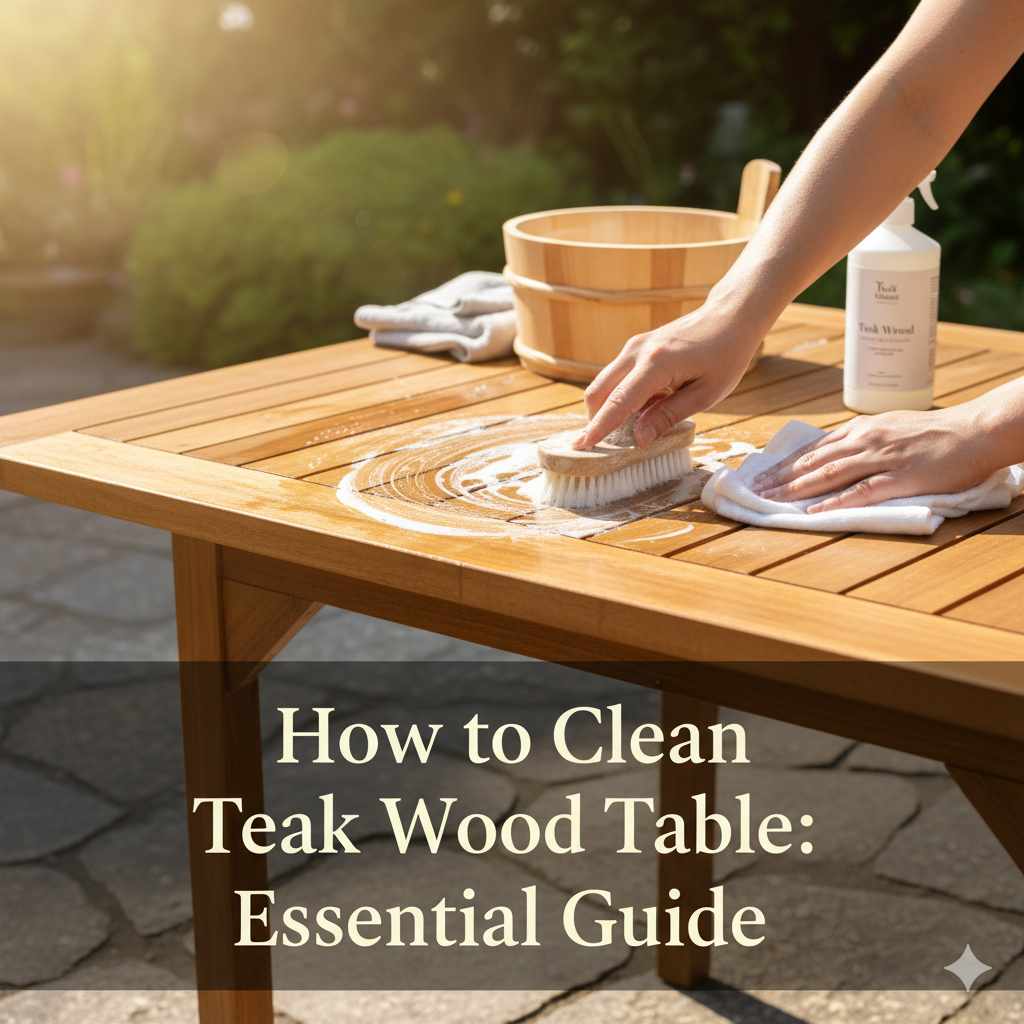
How to Clean Teak Wood Table: Essential Guide
Proper cleaning of your teak wood table involves gentle washing with mild soap and water, avoiding harsh chemicals, and regular sealing to preserve its natural beauty and protect it from the elements. This guide provides clear, beginner-friendly steps for a sparkling teak table.
Teak wood tables are beautiful, aren’t they? Their rich, golden-brown color and natural water resistance make them a popular choice for outdoor furniture and sophisticated indoor pieces. But like any natural material, teak needs a little care to stay looking its best. Over time, dust, grime, and even mildew can dull its shine. Many people worry about using the wrong products and damaging their beloved table, leading to frustration. Don’t worry! Keeping your teak table clean and beautiful is simpler than you think. Follow these easy steps, and you’ll have a table that shines with minimal effort.
Why Teak Wood Needs Special Care
Teak wood is naturally oily, which makes it resistant to water, rot, and insects. This is why it’s so fantastic for outdoor furniture. However, this same natural richness means it can react differently to cleaning products than other woods. Harsh chemicals can strip away these natural oils, causing the wood to dry out, crack, or lose its beautiful color. Exposure to sunlight can also cause teak to turn a silvery-gray, which some people love, but others prefer to maintain the original golden hue. Understanding these properties helps us choose the right cleaning methods.
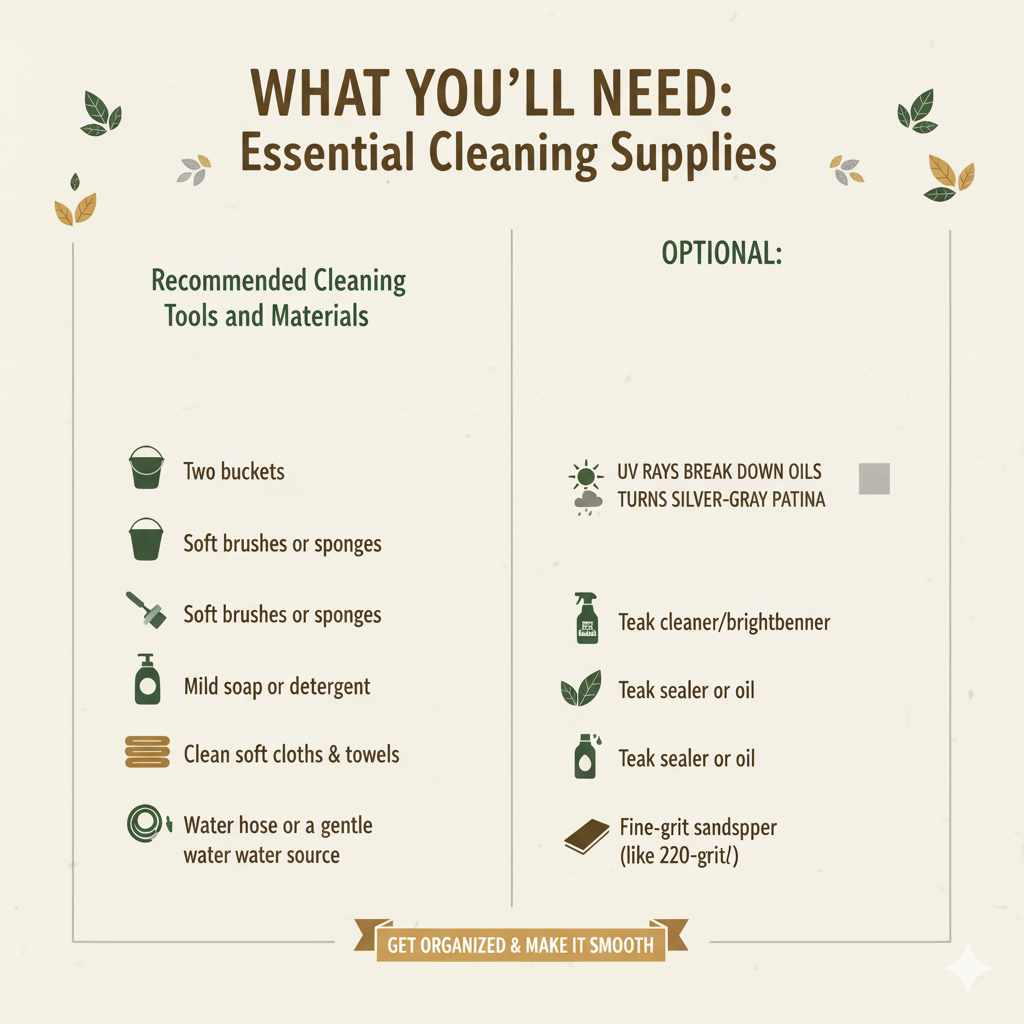
What You’ll Need: Essential Cleaning Supplies
Before we dive into the cleaning process, gather your supplies. Having everything ready will make the job much smoother and more enjoyable. You don’t need fancy tools; the best approach for teak is often the simplest.
Recommended Cleaning Tools and Materials:
- Two buckets
- Soft brushes or sponges (non-abrasive)
- Mild soap or detergent (like dish soap or a specialized teak cleaner)
- Clean, soft cloths or towels
- Water hose or a gentle water source
- Optional: Teak cleaner/brightener (for tougher stains or restoring color)
- Optional: Teak sealer or oil (for protection after cleaning)
- Optional: Fine-grit sandpaper (like 220-grit, for very stubborn marks)
Step-by-Step Guide: How to Clean Your Teak Wood Table
Cleaning your teak table doesn’t have to be a chore. With these simple steps, you can restore its beauty and ensure it lasts for years to come.
Step 1: Clear the Tabletop
First, remove everything from the table. This includes placemats, dishes, decorative items, and anything else sitting on the surface. Make sure you have plenty of clear space to work.
Step 2: Sweep Away Loose Debris
Use a soft brush or a dry cloth to gently sweep away any loose dirt, leaves, or dust from the table’s surface. This prevents you from just pushing grit around when you start washing.
Step 3: Prepare Your Cleaning Solution
Fill one bucket with clean water for rinsing. In the second bucket, mix a mild soap or detergent with warm water. A good rule of thumb is about two tablespoons of mild soap for every gallon of water. If you’re using a dedicated teak cleaner, follow the product’s instructions for dilution. Using a gentle cleaner is key to protecting the wood’s natural oils. For more information on wood care, the Woodweb Knowledge Base offers great insights into wood finishing for beginners.
Step 4: Gently Wash the Teak Surface
Dip a soft brush or sponge into the soapy water. Gently scrub the teak table in the direction of the wood grain. Don’t scrub too hard, especially if you have a new table or are worried about damaging the surface. The goal is to lift dirt and grime, not to abrade the wood. Work in small sections so the soap doesn’t dry on the surface.
Step 5: Rinse Thoroughly
Using your hose on a gentle setting or a bucket of clean water, rinse the table thoroughly. Make sure to wash away all the soap residue. Leftover soap can leave a dull film on the wood. Rinse thoroughly, again following the grain of the wood.
Step 6: Tackle Stubborn Stains and Mildew
If you notice any stubborn stains or areas with mildew, you might need a little extra help.
- For Mildew: You can use a mild bleach solution (one part bleach to four parts water) very carefully on affected spots. Apply it with a cloth or sponge, let it sit for a few minutes, and then rinse thoroughly. Always test this in an inconspicuous area first!
- For Tough Stains: A specialized teak cleaner or brightener can work wonders. These products are formulated to lift dirt and restore the wood’s original color without being too harsh. Follow the product instructions exactly.
- For Deep Scratches or Roughness: If there are minor scratches or the surface feels a bit rough, you can lightly sand the area. Use a fine-grit sandpaper (220-grit is usually a good choice). Sand only in the direction of the wood grain. Be careful not to oversand, as this removes wood. After sanding, wipe away any dust with a damp cloth and let it dry.
Step 7: Dry the Table
After rinsing, use clean, soft towels to dry the table as much as possible. Allow the table to air dry completely. It’s crucial that the wood is thoroughly dry before moving to the next step, especially if you plan to seal or oil it. Leaving it in the sun for a few hours is acceptable if it’s a warm, sunny day, but don’t leave it out too long if the sun is very intense, as prolonged direct sun can dry out the wood.
Step 8: Consider Sealing or Oiling (Optional but Recommended)
Once your teak table is clean and completely dry, you can protect it with a teak sealer or oil. This step is optional, but it significantly extends the life and beauty of your table.
- Teak Oil: Applying teak oil revives the wood’s natural golden color and provides some water resistance. It needs to be reapplied periodically, usually once or twice a year.
- Teak Sealer: A teak sealer offers more robust protection against UV rays and moisture, often lasting longer than oil. Many sealers also contain UV inhibitors to prevent graying.
When applying oil or sealer, use a clean, lint-free cloth and apply it evenly in the direction of the wood grain. Allow it to soak in according to the product’s instructions, and then wipe away any excess. For best results, apply in moderate temperatures and avoid direct sunlight. According to the Forest Products Laboratory, proper protective treatments can greatly enhance wood longevity.
Maintaining Your Teak Table’s Beauty
Regular maintenance is the secret to a long-lasting, beautiful teak table. A little attention now and then can prevent bigger problems down the line.
Daily/Weekly Care:
- Wipe up spills immediately.
- Sweep or dust the table regularly to prevent dirt buildup.
- Use coasters and placemats to protect the surface from scratches and heat.
Monthly/Seasonal Care:
- Perform a thorough cleaning as outlined in the steps above, especially after periods of heavy use or exposure to the elements.
- Inspect the table for any signs of damage, mold, or mildew and address them promptly.
- Reapply teak oil or sealer as needed, typically once or twice a year, depending on your climate and how much the table is used.
Troubleshooting Common Teak Table Issues
Even with the best care, issues can arise. Here are some common problems and how to tackle them.
Issue 1: Stubborn Green or Black Spots (Mold/Mildew)
These are common, especially in damp or shaded areas. A mild bleach solution (1 part bleach to 4 parts water) applied carefully to the spots, followed by thorough rinsing, usually does the trick. Alternatively, a dedicated teak cleaner is formulated for this. Always test in an inconspicuous area first and wear gloves and eye protection.
Issue 2: Graying of the Wood
Sun exposure causes teak to weather to a silvery-gray patina. If you prefer the original golden-brown color, you can use a teak brightener or cleaner. These products are designed to lift the graying and restore the wood’s natural hue. Follow the product instructions carefully.
Issue 3: Minor Scratches and Dings
For light surface scratches, a gentle sanding with fine-grit sandpaper (220-grit) along the wood grain can often smooth them out. Wipe away dust and consider applying teak oil or a sealer afterwards to blend the area.
Issue 4: Dried Out or Cracked Wood
This usually happens when the wood loses its natural oils due to excessive sun exposure or harsh cleaning. Reapplying teak oil regularly can help rehydrate the wood. For already cracked wood, it might be beyond simple cleaning; consult with a furniture restoration specialist if the damage is severe.
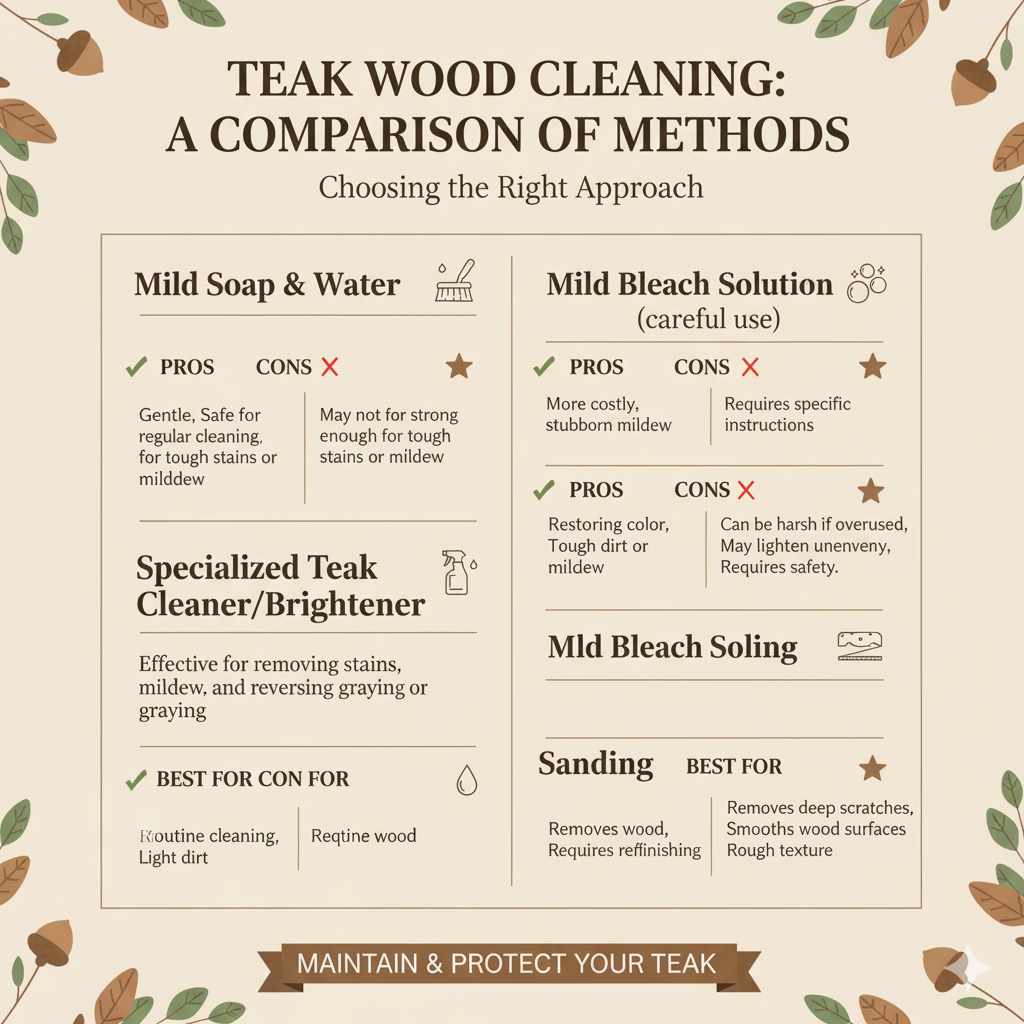
Teak Wood Cleaning: A Comparison of Methods
Choosing the right cleaning method ensures your teak table stays in great condition. Here’s a look at different approaches.
| Method | Pros | Cons | Best For |
|---|---|---|---|
| Mild Soap & Water | Gentle, safe for regular cleaning, readily available. | May not be strong enough for tough stains or mildew. | Routine cleaning, light dirt. |
| Specialized Teak Cleaner/Brightener | Effective for removing stains, mildew, and reversing graying. | More costly, requires following specific instructions. | Restoring color, removing tough dirt or mildew. |
| Mild Bleach Solution (careful use) | Effective for stubborn mildew. | Can be harsh if overused, may lighten wood unevenly, requires safety precautions. | Localized, stubborn mildew spots. |
| Sanding | Removes deep scratches, smooths rough surfaces. | Removes wood, can alter finish if not done carefully, requires refinishing. | Deep scratches, rough texture. |
Frequently Asked Questions About Cleaning Teak Tables
Q1: How often should I clean my teak wood table?
A: For outdoor tables, a good cleaning should be done at least once a year, typically in spring before heavy use. For indoor tables, clean as needed, perhaps monthly or when spills occur, and give it a deeper clean seasonally.
Q2: Can I use a power washer on my teak table?
A: It’s strongly recommended not to use a power washer. The high pressure can damage the soft fibers of the teak wood, causing it to splinter, fray, or become rough. A gentle hose or bucket of water is much safer.
Q3: What’s the difference between teak oil and teak sealer?
A: Teak oil penetrates the wood to nourish it and enhance its natural color, offering some water repellency. Teak sealer sits more on the surface, providing a protective barrier against UV rays and moisture, and usually lasts longer. Both help preserve the wood, but they offer different levels of protection and aesthetic results.
Q4: My teak table has turned completely gray. Can I get the golden color back?
A: Yes, you absolutely can! Graying is a natural weathering process. Using a dedicated teak cleaner or brightener will help lift the gray layer and reveal the original golden-brown teak color underneath. After brightening, consider applying teak oil or a sealer to maintain the color.
Q5: Are there any household cleaners I should absolutely avoid on teak?
A: Yes, avoid abrasive cleaners, steel wool, strong detergents, ammonia-based cleaners, and window cleaners. These can strip the natural oils, scratch the surface, or leave an undesirable residue that damages the wood over time.
Q6: What’s the best way to remove sap from my teak table?
A: For fresh sap, try gently scraping it off with a plastic scraper or an old credit card. If it’s dried or sticky, you can try dabbing the sap with a cloth dampened with mineral spirits. Test this in an inconspicuous area first, as mineral spirits can affect the wood’s finish or color. Wipe the area clean with soapy water afterwards and rinse well.
Conclusion
Caring for your teak wood table doesn’t require a professional’s touch or expensive products. By following these simple, step-by-step instructions, you can effectively clean your table, tackle common issues, and maintain its inherent beauty for years to come. Remember, gentle methods and consistent care are the keys. Your teak table is an investment, and with this guide, you have the knowledge to keep it looking stunning, whether it’s gracing your patio or dining room. Enjoy your beautifully maintained teak!