Fix Deep Scratches on Wood Floors Without Sanding
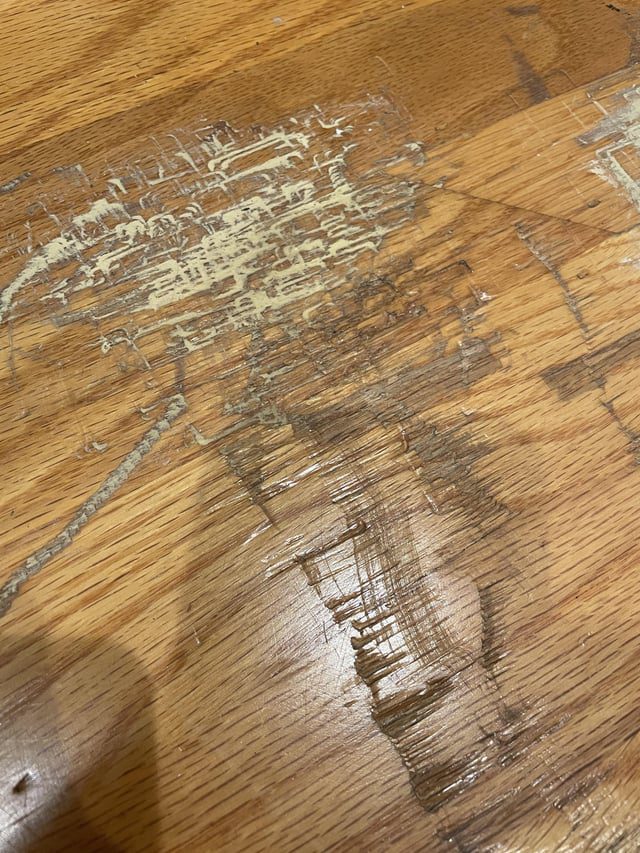
Color-matched wood filler, two-part epoxy, or a shellac burn-in stick can fix most deep wood floor scratches without sanding — but a gouge that’s splintered, water-swollen, or deeper than about 1/8 inch usually still needs it. Skipping sanding on the wrong scratch just means redoing the repair later. This guide covers three real no-sand methods, an honest decision table for which one to use, and how they compare to our full sand-and-refinish guide for scratches that need it.
Quick Answer
For most deep scratches, press color-matched wood filler or a burn-in wax stick into the gouge and level it with a putty knife or straight edge instead of sandpaper. Two-part epoxy works for wider gouges. If the wood is splintered, cracked across the grain, or the gouge is deeper than roughly 1/8 inch, sand and refinish instead — filler alone won’t hold.
When You Can Skip Sanding (And When You Really Can’t)
Best No-Sand Repair Kit Pick
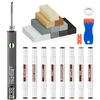
Wood Floor Scratch Repair Kit with Heat Pen (11 Colors)
An 11-color wax stick kit with a heated melting tool built specifically for filling scratches on hardwood and laminate without sanding, roughly $20-$25.
- Best for: Small to medium deep scratches where you want a fast, contained color match
- Why we picked it: Includes the heat tool needed for burn-in style filling, so you’re not buying tools separately
- Main drawback: The stock color range may not perfectly match unusual or reclaimed wood tones
Compare more no-sand repair options
 Option 1 Minwax Color-Matched Wood Filler, Golden Oak 6 oz
|
 Option 2 Mohawk Hard Fill Wood Touch-Up Sticks (for burn-in knife)
|
 Option 3 SoftTouch 1″ Round Felt Furniture Pads, 48-Pack
|
As an Amazon Associate we earn from qualifying purchases.
Every guide to deep scratches assumes you’ll sand the filler flush. That’s true for a smooth, contained gouge — but not always. This table is the decision most articles skip:
| Scratch Condition | No-Sand Method Works? | Why |
|---|---|---|
| Smooth-sided gouge, under 1/8″ deep | Yes | Filler or burn-in stick bonds cleanly and levels with a card scraper |
| Splintered or torn wood fibers | No | Loose fibers keep catching and lifting the filler; sanding is the only way to get a flat bonding surface |
| Gouge wider than 1/4″ or deeper than 1/8″ | Partial | Epoxy can fill it, but the raised patch usually needs a light final leveling pass |
| Water-swollen or discolored wood around the scratch | No | Filler won’t fix swelling — the board needs to dry out and may need sanding or replacement |
| Multiple overlapping deep scratches in one area | No | Spot-filling several gouges close together rarely blends evenly — refinishing that section looks better |
What You’ll Need
- Color-matched wood filler or wood putty
- A stiff putty knife or plastic card scraper (not sandpaper)
- Two-part wood epoxy for wider gouges
- A shellac burn-in stick and a heated knife or burn-in tool, if you’re trying Method 3
- A soft cloth and mineral spirits or a mild wood cleaner
- Matching stain and a small brush or foam applicator
Method 1: Color-Matched Wood Filler (No Sanding Required)
This is the method that works for most deep-but-clean gouges. The trick to skipping sandpaper entirely is overfilling slightly and leveling the excess with a card or putty knife blade instead of sanding it down.
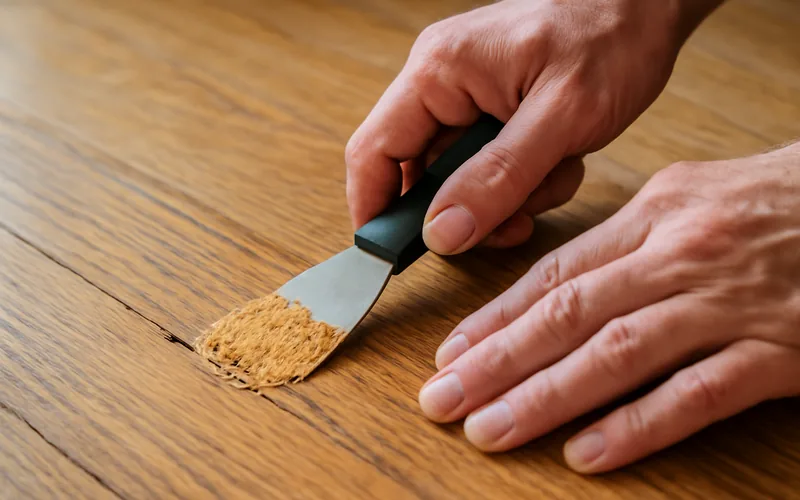
- Clean the gouge: Wipe out dust and debris with a cloth dampened in mineral spirits so the filler can bond to bare wood.
- Choose the color: Test the filler on a hidden spot first — most fillers dry slightly darker than they look wet.
- Overfill slightly: Press filler in with a putty knife, mounding it just above the surrounding floor level.
- Level with a card, not sandpaper: Once the filler is dry, hold a stiff plastic card or putty knife blade flat against the floor and scrape the excess off in one direction, following the grain.
- Stain and seal: Touch up the color with a stain pen or matching stain, then apply a small amount of matching finish over the repair.
Method 2: Two-Part Epoxy for Wider Gouges
Epoxy wood filler is the better choice when the gouge is wider than about 1/4 inch or has an irregular shape that plain putty won’t hold in. Mix a small batch of two-part wood epoxy, press it into the gouge slightly proud of the surface, and let it cure fully — usually 24 hours — before leveling with a card scraper the same way as Method 1. Epoxy is harder than most fillers once cured, so a bit of fine leveling with 400-grit paper folded over a block is sometimes needed on the last 1/32 inch; that’s a light touch-up, not full-scale sanding.
Method 3: The Shellac Burn-In Stick (A Professional No-Sand Trick)
Furniture and floor restorers use burn-in sticks — solid shellac-and-resin sticks melted into a scratch with a heated knife — to fill deep gouges without ever touching sandpaper to the surrounding finish. The stick is melted directly into the gouge, then leveled while still warm using the flat edge of the same heated knife, so there’s no sanding step at any point.
- Pick a matching color: Burn-in sticks come in dozens of wood tones; hold the stick against the floor in good light to check the match.
- Heat the knife: Warm a dedicated burn-in knife (or the flat edge of a heat gun-warmed putty knife) until it just melts the stick on contact.
- Melt the stick into the gouge: Touch the stick to the hot blade and let it drip into the scratch, slightly overfilling.
- Level while warm: While the fill is still soft, draw the flat, cooler side of the knife across it to level it flush — no sandpaper needed.
- Buff once cool: Once fully hardened, buff gently with a soft cloth to bring back the sheen.
📊 Professional hardwood floor refinishing averages about $1,800, while a DIY no-sand filler or burn-in repair typically runs $15–$30 in materials. — Source: Angi, 2026
“In our shop, overfilling a gouge by about a hair’s width and leveling it with a stiff putty knife card — instead of sandpaper — leaves a slightly duller patch where the filler meets the finish. A thin coat of matching wipe-on poly over just that spot blends the sheen back in without ever putting sandpaper near the surrounding floor.”
— Md Meraj, Woodworking Advisor
Comparing the Three No-Sand Methods
| Method | Time Needed | Cost | Best For |
|---|---|---|---|
| Color-matched wood filler | 30-60 min + dry time | $8-$12 | Single clean gouges under 1/8″ deep |
| Two-part epoxy | 24 hr cure | $12-$20 | Wider or irregular gouges |
| Shellac burn-in stick | 15-20 min | $15-$25 | Fastest color match, no cure time |
What About Light and Medium Scratches?
Everything above is for scratches deep enough to feel with a fingernail. For fine surface scratches and medium marks that haven’t gouged the wood, a walnut, stain marker, or vinegar-and-olive-oil mix usually hides them in minutes. Our full guide to fixing scratches on hardwood floors covers the whole spectrum — from those light fixes through the sand-and-refinish process for scratches too far gone for filler alone — if you’re not sure which category your floor falls into.
Preventing Future Deep Scratches
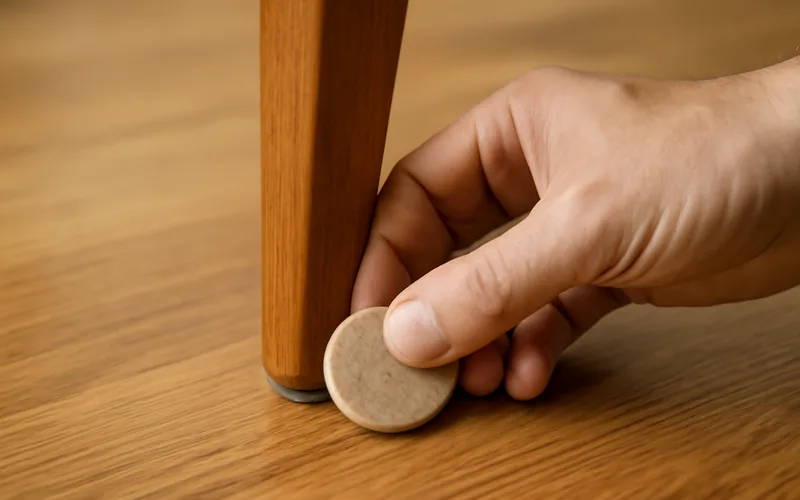
Felt pads under furniture legs prevent most of the deep gouges these methods are built to fix. Replace them every few months once the felt wears thin and starts pressing bare wood or metal glide against the floor. See our guide to making hardwood floors last longer for the rest of a full maintenance routine.
Frequently Asked Questions
Is sanding necessary to fix a deep scratch on a wood floor?
No, not always. A clean, smooth-sided gouge under about 1/8 inch deep can usually be filled with color-matched wood filler, epoxy, or a burn-in stick and leveled with a putty knife or card scraper instead of sandpaper. Sanding becomes necessary when the wood is splintered, water-swollen, or the gouge is wider and deeper than filler can cleanly hold.
What is the best wood filler for deep floor scratches?
A color-matched, stainable wood filler such as Minwax Color-Matched Wood Filler works well for most single deep gouges. For wider or irregularly shaped gouges, a two-part wood epoxy holds better because it’s rigid once cured and won’t shrink back as it dries.
Can a burn-in stick really fix a scratch without any sanding?
Yes. A burn-in stick is melted directly into the gouge with a heated knife and leveled while still warm using the same knife’s flat edge, so sandpaper never touches the floor. It’s the technique professional furniture and floor restorers use specifically to avoid disturbing the surrounding finish.
How long should wood filler dry before you walk on it?
Most stainable wood fillers are dry enough to level and stain within 30-60 minutes, but check the product label — some latex-based fillers need a few hours for a deep fill to fully harden all the way through before you apply stain or finish over it.
Will vinegar and olive oil fix a deep scratch?
No. A vinegar-and-olive-oil mix only masks fine surface scratches by darkening exposed wood fibers — it doesn’t fill a gouge. For a scratch deep enough to catch a fingernail, use wood filler, epoxy, or a burn-in stick instead.
Conclusion
Most deep wood floor scratches can be fixed without sanding using color-matched filler, epoxy, or a burn-in stick, leveled with a card scraper instead of sandpaper. The exception is damage that’s splintered, water-swollen, or too wide for filler to hold — that’s when sanding and refinishing is genuinely the better call. Felt pads on furniture legs are the simplest way to avoid needing either method again.
Sponsored / affiliate links. As an Amazon Associate I earn from qualifying purchases. I may earn additional commission from eligible campaigns.