How to Clean a Wood Cutting Board After Raw Chicken
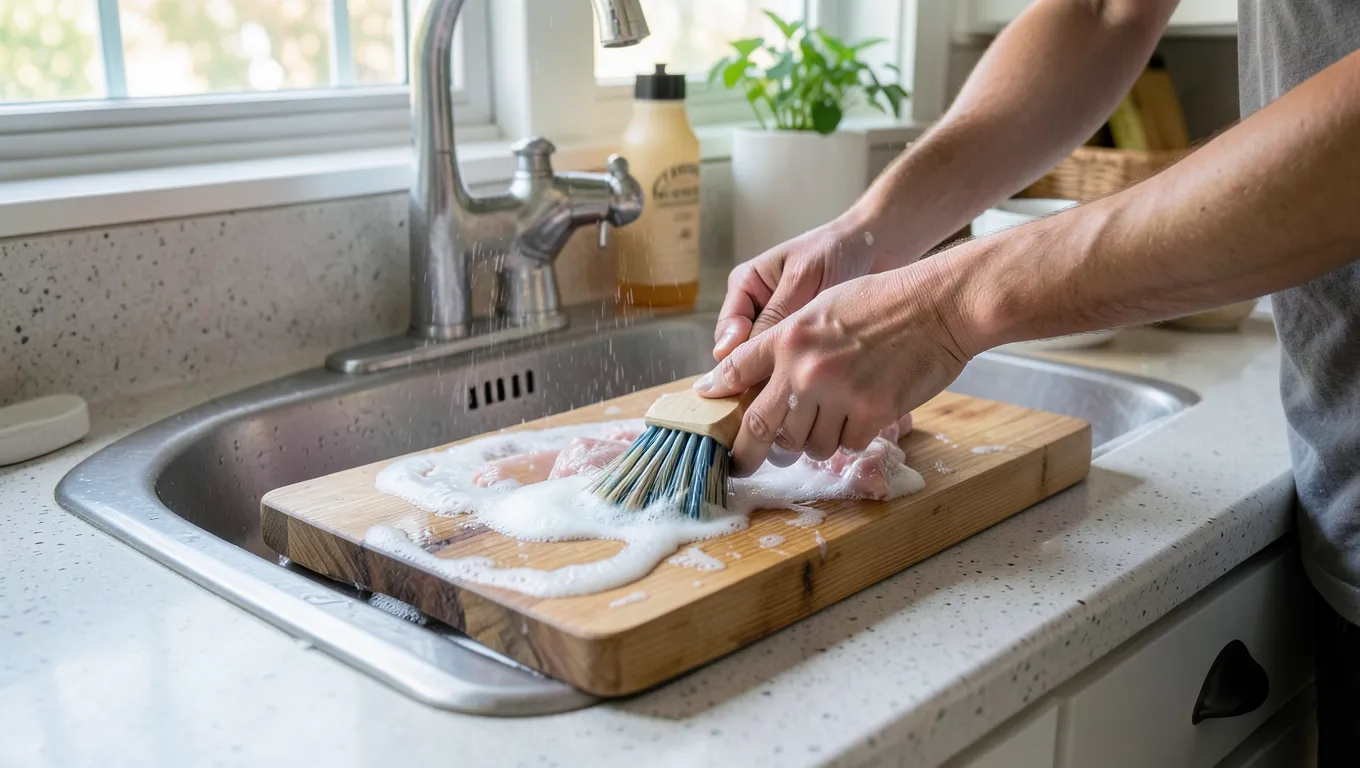
Wash the board immediately with hot, soapy water and a scrub brush, then sanitize with a bleach solution (1 tablespoon unscented liquid chlorine bleach per gallon of water, left wet for 5 minutes) before rinsing and standing it up to air dry. Do this right after cutting the chicken, not after the rest of dinner prep is done – raw poultry juice sitting on a board for even twenty minutes gives bacteria that much longer to work into the wood.
Why Raw Chicken Specifically Needs This
Best Board Oil After Sanitizing
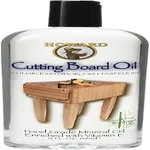 |
Howard Products Food Grade Mineral Oil, 12 oz – $8.95 Apply once the board is fully dry from washing to keep it from cracking into grooves that are hard to sanitize.
|
Raw poultry is one of the most common sources of Salmonella and Campylobacter in a home kitchen, and both survive on a damp cutting board surface long enough to transfer to the next thing that touches it – a knife, your hands, or whatever food gets cut there next. That’s the real risk with cutting boards: not the chicken itself, but cross-contamination onto something eaten raw afterward, like the salad you slice on the same board twenty minutes later without washing it first.
The Full Cleaning Process
- Scrape off any visible bits with a spatula or paper towel before washing – this keeps organic matter from diluting your soap and bleach solution’s effectiveness.
- Wash with hot water and dish soap, scrubbing every surface including knife grooves with a stiff brush. Hot water is fine here and doesn’t warp the board on its own – it’s standing water and soaking that cause warping, not water temperature during a normal wash.
- Rinse thoroughly so no soap residue remains.
- Sanitize with a bleach solution: 1 tablespoon of unscented liquid chlorine bleach per gallon of water, poured or sprayed over the entire surface and left wet for 5 minutes, then rinsed with clean water. This is the step most home cooks skip, and it’s the one that actually matters for a board that touched raw poultry.
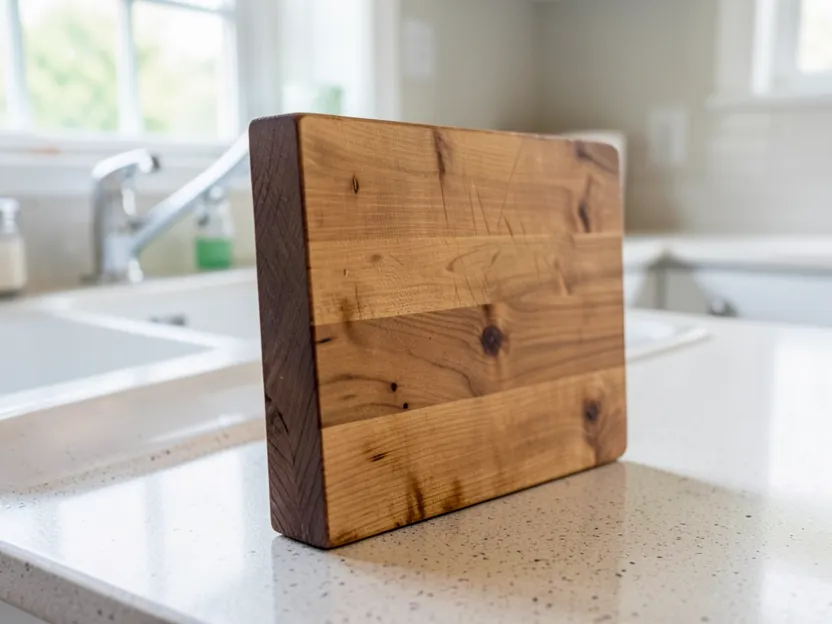
- Dry completely, standing the board on its edge so air circulates on both faces rather than laying it flat where moisture pools against the counter.
Bleach vs. Vinegar: Use Bleach for Poultry
A lot of cleaning advice treats vinegar and bleach as interchangeable “natural vs. harsh” options, but they aren’t equivalent for this specific job. Diluted bleach is the sanitizer public health guidance actually recommends after raw meat or poultry, because it reliably kills Salmonella and Campylobacter within its 5-minute contact time. Vinegar has some antibacterial effect, but testing shows it doesn’t reliably inactivate Salmonella or Campylobacter at the contact times most people actually use – it typically needs 20-30 minutes of continuous wet contact to meaningfully sanitize, which isn’t how anyone actually wipes down a cutting board mid-meal-prep. Vinegar is a perfectly good everyday cleaner and deodorizer for a board that only touched vegetables, but after raw poultry specifically, use the bleach solution.
Wood Isn’t as Risky as It Sounds
Older food-safety advice pushed plastic over wood on the assumption that a porous surface must be harder to clean. Research out of UC Davis found the opposite in practice: bacteria applied to a wood surface get drawn down into the wood by capillary action and largely die off there rather than sitting on the surface where they can transfer to the next food, while the same bacteria left on a plastic board’s knife-scarred surface actually survived and multiplied overnight at room temperature. That’s not a reason to skip washing a wood board – you still need to clean and sanitize it every time – but it does mean a well-maintained wood board isn’t the contamination risk older kitchen advice made it out to be.
Never Put a Wood Cutting Board in the Dishwasher
The dishwasher’s prolonged soak and high heat are exactly what causes wood to warp, crack, and eventually split along the grain – and a cracked or heavily grooved board is genuinely harder to clean and sanitize than a smooth one, since bacteria can sit down inside a crack where a scrub brush and bleach solution can’t fully reach. Hand-wash wood boards every time, and if a board develops deep knife grooves or persistent cracks that won’t sand out, replace it rather than continuing to sanitize around damage that’s only getting worse.
Keep Raw-Meat and Ready-to-Eat Boards Separate
If you have more than one cutting board, dedicate one specifically to raw meat and poultry and use a separate one for produce and anything eaten raw. That removes the cross-contamination risk entirely instead of relying on remembering to wash and sanitize between switching tasks on a single board mid-prep.
Oil the Board Once It’s Fully Dry
A food-grade mineral oil, applied every few weeks or whenever the wood looks dry and pale, keeps the surface from drying out and cracking – and cracks are exactly what create the deep grooves that are hard to clean and sanitize. Only oil a board once it’s completely dry from washing; oiling over trapped moisture just seals the moisture in.
Frequently Asked Questions
How do I clean a wooden cutting board after raw chicken?
Wash immediately with hot, soapy water, scrubbing all surfaces and grooves. Sanitize with a solution of 1 tablespoon unscented bleach per gallon of water left wet for 5 minutes, rinse, then stand the board on its edge to air dry completely.
Is vinegar enough to sanitize a board after raw chicken?
Not reliably. Vinegar needs roughly 20-30 minutes of continuous wet contact to meaningfully reduce Salmonella and Campylobacter, which isn’t practical for a cutting board in normal use. Use a diluted bleach solution instead for anything that touched raw poultry.
Can I put a wood cutting board in the dishwasher after raw chicken?
No. The heat and prolonged soaking warp and crack wood, and a cracked board is harder to clean thoroughly than a smooth one. Always hand-wash wood cutting boards.
Are wood cutting boards actually safe for raw chicken?
Yes, when washed and sanitized properly. Research has found that bacteria on wood get drawn into the wood’s pores and largely die off, while the same bacteria on a knife-scarred plastic board can survive and multiply. Wood still needs to be washed and sanitized after every raw-poultry use – it isn’t self-cleaning.
Bottom Line
Wash immediately with hot soapy water, sanitize with a proper bleach dilution rather than vinegar alone, and dry the board completely standing on its edge. Do that consistently and a wood cutting board handles raw chicken safely for years – just never run it through the dishwasher, and replace it once cracks get too deep to clean. See our quick after-chicken cleaning routine for a shorter step-by-step version of this same process.
Sponsored / affiliate links. As an Amazon Associate I earn from qualifying purchases. I may earn additional commission from eligible campaigns.