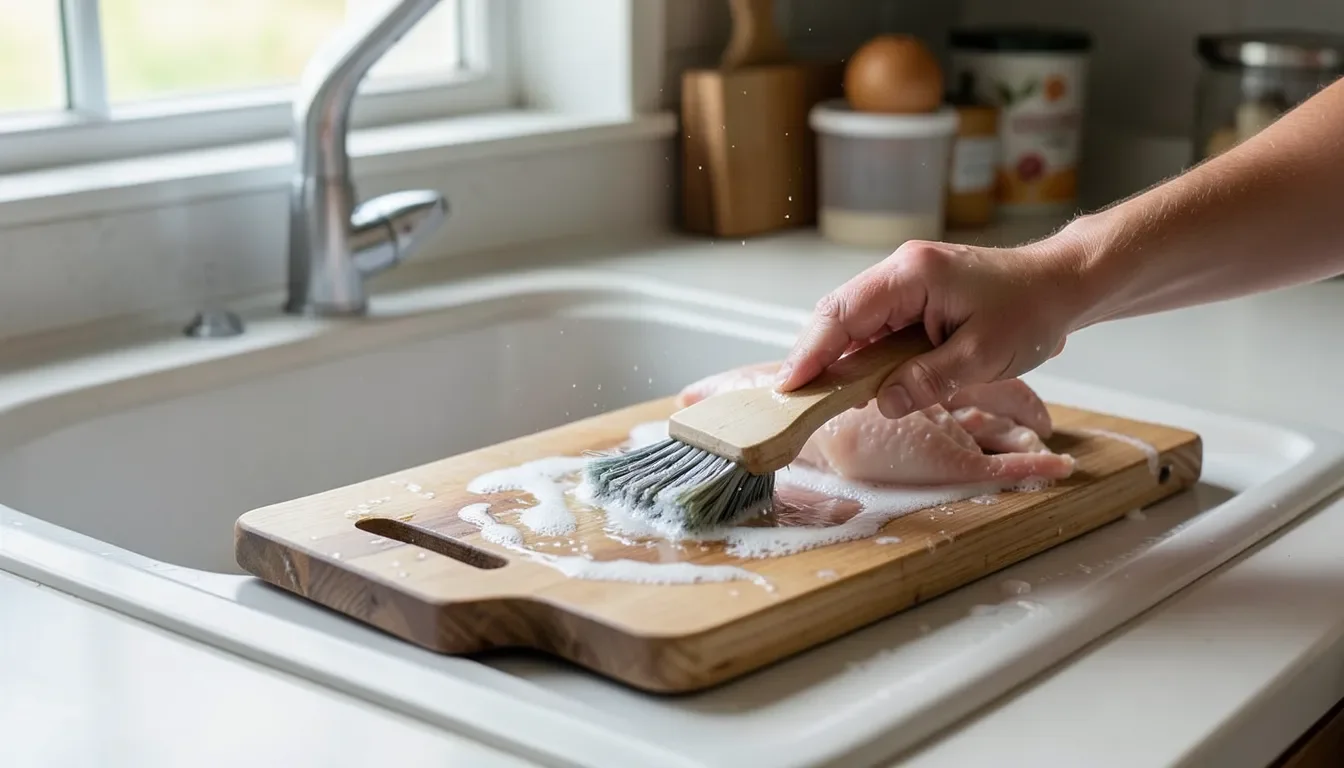
How to Clean a Wooden Cutting Board After Chicken (USDA Method)
Wash a wooden cutting board that’s touched raw chicken with hot, soapy water immediately, then disinfect it with a diluted bleach solution (1 tablespoon of unscented bleach per gallon of water) – not vinegar or lemon juice, which don’t reliably kill the bacteria raw poultry carries.
Vinegar and lemon juice show up constantly in home-cleaning advice, but the USDA’s own food safety guidance is clear that they aren’t validated sanitizers against Salmonella or Campylobacter, the two bacteria most commonly found on raw chicken. This guide covers the actual routine that gets a board safely clean right after cutting chicken, plus how to handle lingering odor or discoloration without damaging the wood.
For the fuller explanation of why raw chicken specifically needs this extra step and how wood compares to plastic, see our wood cutting board after raw chicken guide.
Importance Of Proper Cleaning
After The Bleach Rinse, Reoil
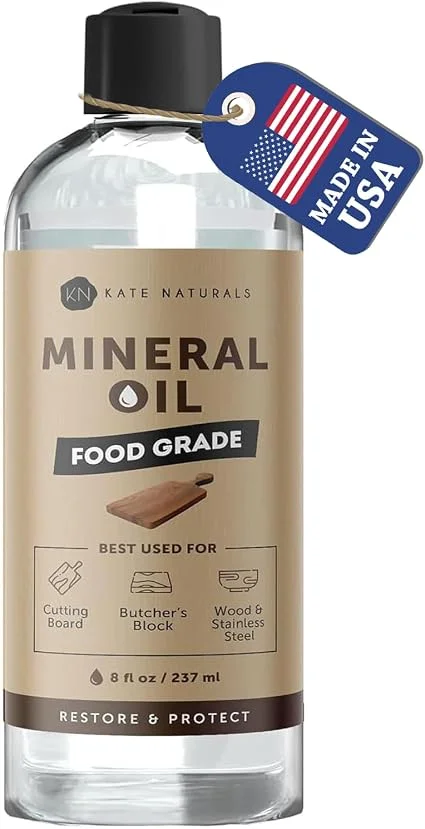 |
Kate Naturals Food Grade Mineral Oil, 8oz Frequent washing and disinfecting dries wood out fast – a monthly coat of food-safe mineral oil keeps the board from cracking and developing the deep grooves where bacteria can hide.
|
Cleaning a wooden cutting board after chicken matters because raw poultry commonly carries Salmonella and Campylobacter, both of which can survive on a board’s surface and cross-contaminate the next thing cut there. Washing with hot soapy water removes the visible residue and most surface bacteria, but it is not the same as disinfecting – that requires an actual sanitizing step, covered below.
Baking soda is a genuinely useful mild abrasive for lifting stuck-on residue and neutralizing odor, and it’s safe to use on wood. It is not, however, a substitute for the bleach sanitizing step when raw chicken was involved – use it for the scrubbing stage, not as the disinfecting stage.
Materials Needed For Cleaning
Gather everything before you start so the board isn’t sitting wet and unattended between steps: hot water, mild dish soap, a scrub brush or sponge, and a clean towel for drying. For the actual disinfecting step, you’ll need unscented liquid chlorine bleach (the only sanitizer here with real, tested effectiveness against Salmonella and Campylobacter) mixed at 1 tablespoon per gallon of water.
Coarse salt is genuinely useful for scrubbing stuck-on residue out of grooves, and baking soda helps lift residue and neutralize odor – both are fine for the wash stage. Lemon juice and straight vinegar can be used afterward purely for smell, but neither replaces the bleach step when raw chicken was on the board; skipping bleach and using only these leaves live bacteria behind.
Initial Scrubbing Techniques
Rinse the board under warm water immediately after use to remove loose chicken residue before it dries on – dried-on residue is harder to fully remove and gives bacteria more time to sit on the surface. Scrub with a stiff brush, hot water, and dish soap, working into the grooves and any knife-scarred areas where residue collects. Rinse thoroughly to wash away all soap and food particles.
For staining or lingering odor after this wash, a coarse salt scrub followed by a lemon-half rub does genuinely lift color and smell – lemon’s acid and the salt’s abrasion work on stains and odor molecules, just not on bacteria. Treat this as a cosmetic/odor step that happens in addition to, not instead of, the bleach disinfecting step below whenever raw chicken was involved.
Disinfecting With Diluted Bleach (Not Vinegar)
Vinegar is a mild acid and does have some antimicrobial effect, but the USDA’s own food safety research has found it doesn’t reliably kill Salmonella or Campylobacter, the specific bacteria of concern with raw chicken – the two most common home-cleaning “natural sanitizer” claims (vinegar and lemon juice) simply aren’t backed by that testing for poultry-borne pathogens. After washing with soap and water, mix 1 tablespoon of unscented liquid chlorine bleach per gallon of water and wipe or flood the surface with it.
Let the bleach solution sit on the surface for at least one minute (check your bleach bottle’s label, since concentrations vary slightly by brand), then rinse thoroughly with clean water and dry completely. This dilution is gentle enough not to damage the wood when used occasionally and rinsed promptly – it’s leaving bleach on the wood for extended periods or using it undiluted that causes fiber damage, not the diluted sanitizing rinse itself.
Salt And Lemon: For Stains And Odor, Not Disinfecting
Sprinkle a generous amount of coarse salt on the board, then scrub with the cut side of a lemon half, working in small circles. This combination genuinely lifts residual discoloration and odor – the salt provides mild abrasion and the citric acid helps break down odor-causing compounds – but treat it as a finishing/deodorizing step after washing and bleach-disinfecting, not a replacement for either. Rinse thoroughly and dry completely before storing; a board put away even slightly damp can warp or develop mold in the grain.
Baking Soda For Deep Cleaning
Baking soda is a gentle, wood-safe abrasive that’s effective for lifting embedded odor and light staining. Sprinkle a generous amount on the damp board, scrub with a sponge focusing on stained or smelly spots, let it sit a few minutes, then rinse thoroughly and dry. Like the salt-and-lemon method, this is a cleaning and deodorizing step – the bleach solution above is still the step that actually addresses raw-chicken bacteria.
Drying And Storage Tips
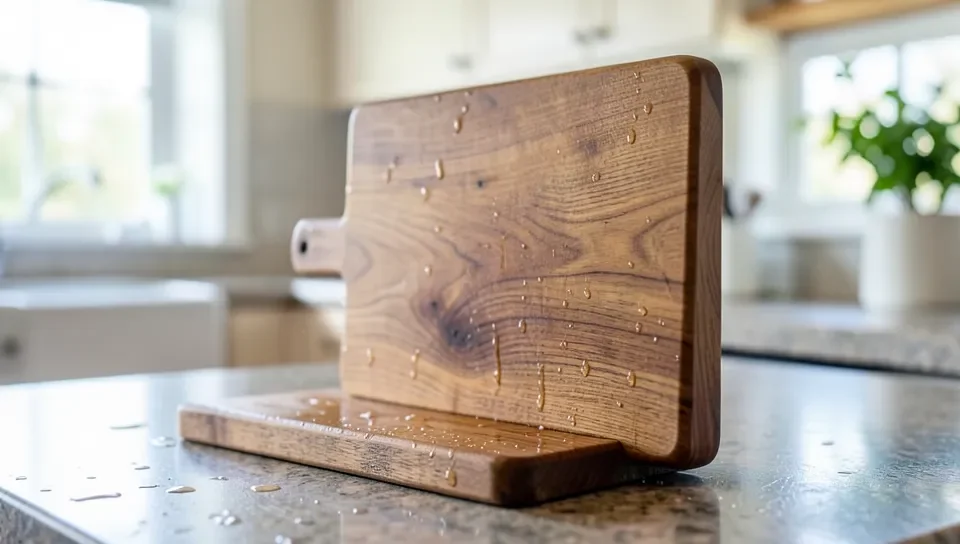
Towel-dry the board first, then stand it on its edge (rather than laying it flat) to finish air-drying – standing it up lets air reach both faces so it dries fully rather than trapping moisture against the counter on one side. A board that’s put away while still slightly damp is exactly the condition bacteria and mold need to establish themselves in the wood.
Store it away from the stove and sink where heat and splashing water reach it, and oil it roughly once a month with a food-grade mineral oil (see the product recommendation above) – frequent washing and occasional bleach disinfecting both dry the wood out faster than normal use alone, so a board used for raw chicken regularly needs that monthly oiling more than one that rarely touches meat.
Maintaining The Board’s Condition
Clean the board right after every use rather than letting it sit – hot soapy water, a thorough rinse, and prompt drying is the daily routine, with the bleach step added specifically after raw chicken. Never soak a wood board or run it through the dishwasher; standing water and dishwasher heat both cause warping and can open up glue-joint seams on a glued-up board. Regular monthly oiling makes a real difference in how long a board lasts, since dry wood is more prone to cracking, and cracks are exactly where bacteria and residue can hide from a surface wash.
Avoiding Common Mistakes
The biggest mistake is skipping the bleach step entirely and relying on vinegar or lemon juice alone after raw chicken – both feel like a thorough clean but don’t reliably kill Salmonella or Campylobacter, leaving live bacteria on a board that looks and smells clean. The diluted 1-tablespoon-per-gallon bleach rinse used occasionally and rinsed promptly does not meaningfully damage wood fibers; it’s soaking a board in full-strength bleach or leaving any bleach solution on for extended periods that causes real damage.
Other common mistakes: soaking the board in water (wood absorbs water and warps or cracks), letting it air-dry lying flat where one side stays damp, and skipping the monthly oiling until the wood already looks dry and is starting to crack. Check the board periodically for deep grooves or cracks – these are exactly where residue and bacteria can hide from even a careful surface wash, and a board with significant grooving from knife use is worth replacing rather than continuing to sanitize.
Frequently Asked Questions
How To Disinfect Wood Cutting Board After Chicken?
Clean the wood cutting board with hot soapy water and rinse thoroughly. Disinfect using a diluted bleach solution (1 tablespoon unscented bleach per gallon of water) – vinegar is not a reliable sanitizer against poultry bacteria. Let it air dry completely and oil it regularly to maintain its condition. Avoid soaking in water to prevent warping.
What Is The Best Way To Sterilize A Wooden Cutting Board?
Clean the wooden cutting board with hot soapy water, rinse thoroughly, and dry. For the actual sterilizing step, use a solution of 1 tablespoon unscented liquid chlorine bleach per gallon of water – this is the sanitizer with real tested effectiveness against the bacteria raw chicken carries, unlike vinegar. Let the solution sit for about a minute, then rinse and dry completely.
How Do Chefs Clean Their Wooden Cutting Boards?
Professional kitchens typically scrub boards with hot soapy water immediately after use, then sanitize with a diluted bleach solution or a commercial food-safe sanitizer after raw meat or poultry specifically – health-code requirements for commercial kitchens generally call for an actual validated sanitizer, not vinegar. Regularly applying mineral oil helps maintain the board’s condition, and standing it upright to dry helps it dry fully rather than trapping moisture on one face.
How To Cut Chicken On A Wooden Board And Not Contaminate?
Wash the board with hot soapy water before and after use, and keep a separate board dedicated to raw chicken and other raw meats so it never cross-contaminates ready-to-eat foods like vegetables or bread. Sanitize after cutting chicken with a diluted bleach solution, not vinegar, and dry the board thoroughly before storing. Replace any board with deep grooves or cracks, since those hide residue that a surface wash can’t reach.
Conclusion
Cleaning a wooden cutting board after chicken is a two-part job: wash thoroughly with warm water and soap, then disinfect with a diluted bleach solution rather than vinegar or lemon juice, which don’t reliably kill the bacteria raw poultry carries. Rinse thoroughly and dry it completely to prevent bacteria growth – a vinegar or lemon juice rinse afterward is fine purely for smell, not as the disinfecting step.
Regularly oil the board to keep it in good condition. Ensure it’s fully dry before storing. By following these steps, your cutting board stays safe and lasts longer. A clean board means safe cooking every time. Keep your kitchen healthy and your meals delicious!
Sponsored / affiliate links. As an Amazon Associate I earn from qualifying purchases. I may earn additional commission from eligible campaigns.