How to Get Ice Off a Wood Deck Safely Without Damage
Use a plastic snow shovel for broad areas or a plastic ice scraper for small spots, then use calcium chloride only if the deck maker and product label allow it for a needed walking path. Skip metal tools, rock salt, and boiling water, and let thin, non-hazardous ice thaw on its own. Bad methods can gouge the wood, stain the finish, and leave a slicker surface. This guide shows what to clear now, what to leave alone, and the safest wood-deck steps for ice removal.
This guide is part of our Winter Wood Care: Decks, Fences, Doors and Furniture series.
Before you start


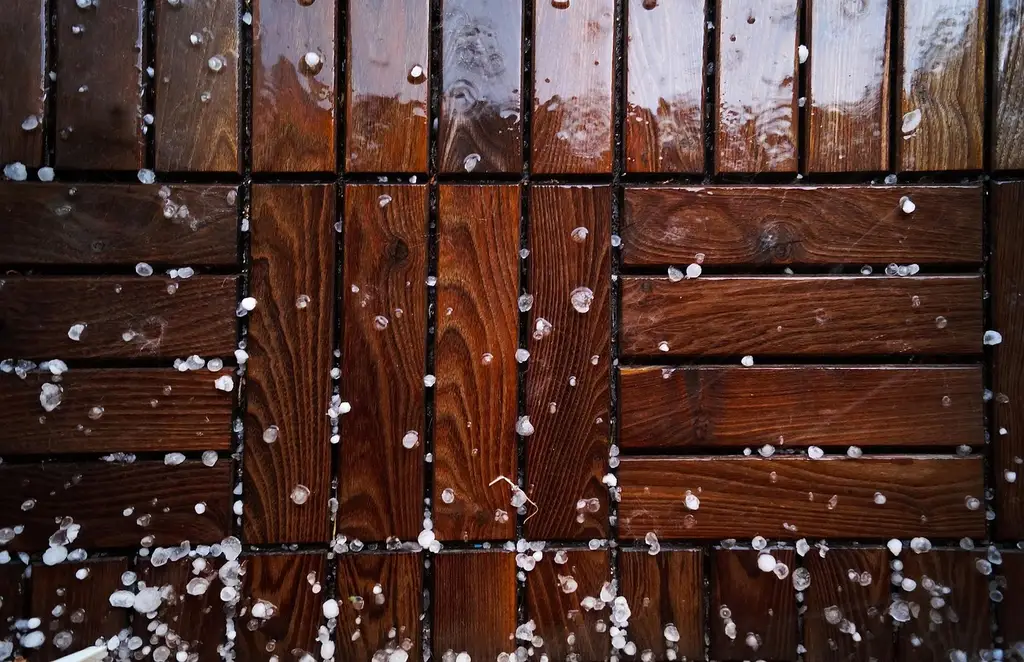
Check the deck type and finish before you touch the ice. Bare wood, stained wood, and composite trim do not react the same way to scraping, salt, or grit, and softwood boards mark faster than harder species. If the deck has loose boards, raised fasteners, or an aging finish, be extra cautious around seams and screw heads.
Read the decking manufacturer care guide first. Check it before applying ice melt or abrasive materials, because warranty limits and finish advice can differ by product line. If the deck maker names a de-icer, follow that guidance over a general winter tip.
Clear the area around doors, stairs, and railings before working on open boards. Deck stairs are often the highest winter slip risk and should be treated first. Keep treads accessible down to the surface, because a half-cleared stair is still a fall hazard.
What you’ll need
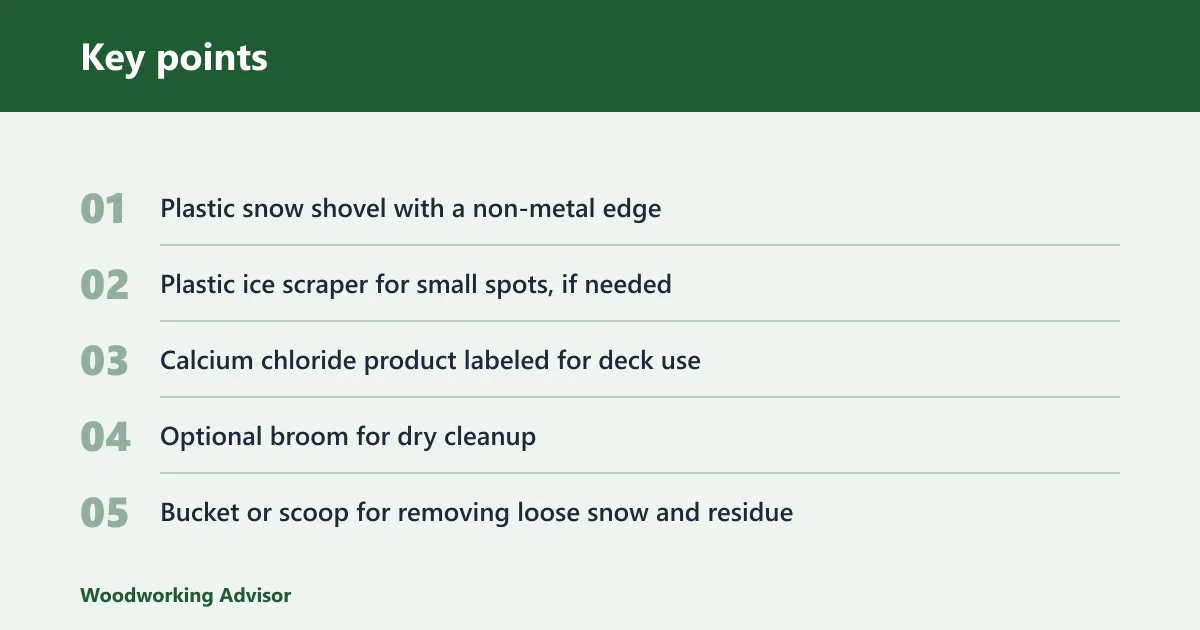
- Plastic snow shovel with a non-metal edge
- Plastic ice scraper for small spots, if needed
- Calcium chloride product labeled for deck use
- Optional broom for dry cleanup
- Bucket or scoop for removing loose snow and residue
- Gloves with good grip
- Slip-resistant footwear
How do you get ice off a wood deck without damaging it?
Start with the least aggressive method that clears the walking path. Use a plastic shovel, keep the blade low, and push parallel to the boards when you can. That reduces crossings over board gaps and lowers the chance of catching fasteners or splintering edges.
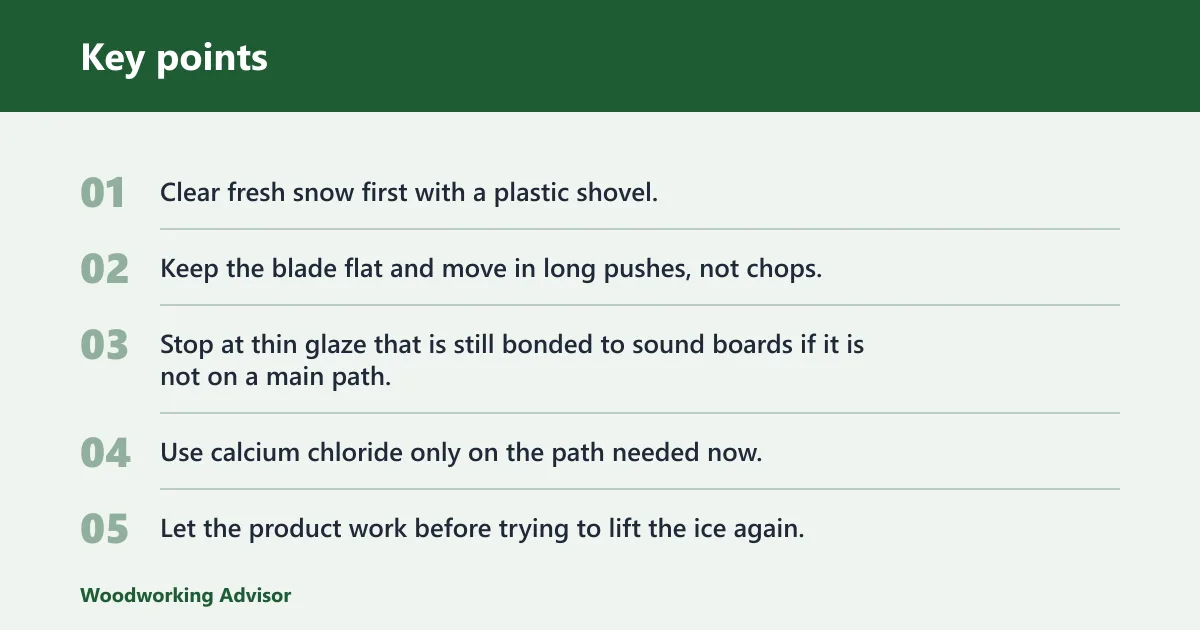
- Clear fresh snow first with a plastic shovel.
- Keep the blade flat and move in long pushes, not chops.
- Stop at thin glaze that is still bonded to sound boards if it is not on a main path.
- Use calcium chloride only on the path needed now.
- Let the product work before trying to lift the ice again.
Fresh snow is easier to move than snow that has been walked on or frozen. A common first-timer mistake is waiting until the deck looks “manageable,” then finding packed snow locked into seams and around stair nosings.
If that didn’t work, try this next
- Reapply calcium chloride at the label rate if the first pass only loosened the surface.
- Wait for the product dwell time on the package, then test with the plastic edge.
- Leave thin, non-hazardous ice alone until temperatures rise if the area is not an active walking route.
How do you melt ice off a wooden deck safely?
Use calcium chloride only if the deck maker and product label allow it for the temperature and surface you have, then give it time to break the bond before scraping. Calcium chloride can work in colder weather than rock salt, but that does not make it the right choice for every deck. Do not pour water over the deck for cleanup while temperatures are still below freezing, because it can refreeze and make the surface slick again.
For practical dosing, follow the product label exactly. Many de-icers give a rate in pounds per square feet or a spread rate per 100 square feet; use the smallest amount the label allows for the current temperature band, then recheck after the stated dwell time. If the package does not list a deck-safe rate, do not guess.
Picture a 6-by-8-foot landing with a thin crust after an overnight freeze. A light labeled application to the traffic lane is safer than blanketing the whole deck, because extra residue means more cleanup and more chance of tracking melt product into seams.
What to avoid while melting ice
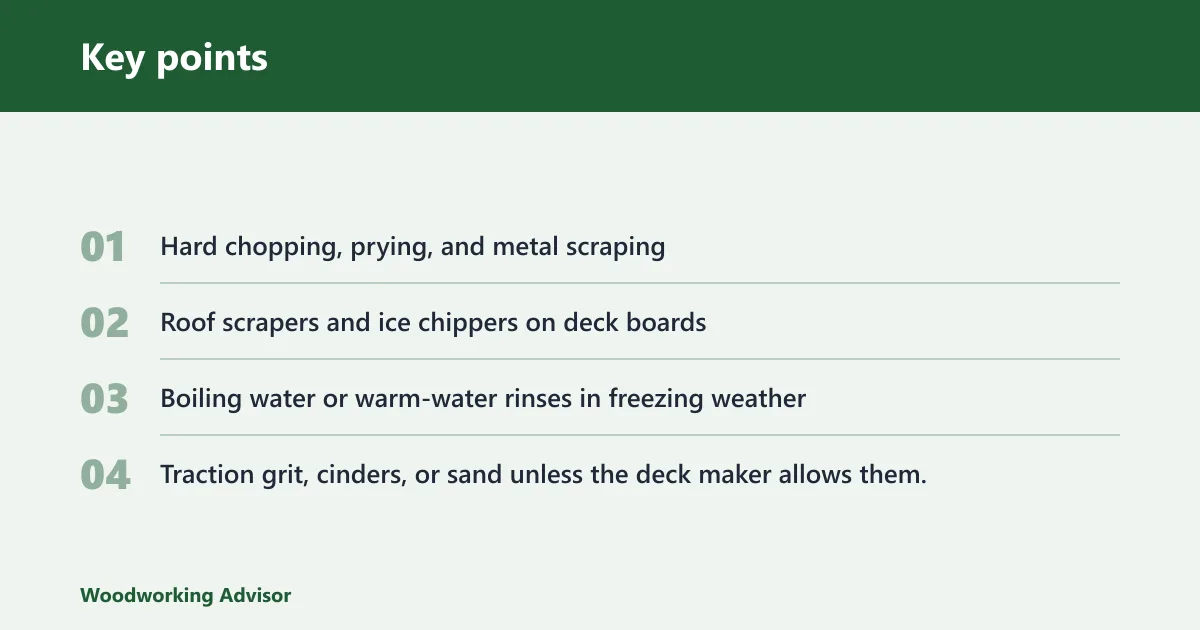
- Hard chopping, prying, and metal scraping
- Roof scrapers and ice chippers on deck boards
- Boiling water or warm-water rinses in freezing weather
- Traction grit, cinders, or sand unless the deck maker allows them, since they can add traction but may also abrade some finishes and be difficult to remove
Aggressive ice chipping can increase the chance of marking a deck surface. On finished boards, that can mean a scarred coating, raised grain, or splintering near fasteners.
Can you use rock salt on a wood deck?
Only use rock salt if the decking manufacturer allows sodium chloride on that specific deck. Rock salt can help melt ice on some decking, but it is often a poor first choice in deep cold and can accelerate corrosion on fasteners and hardware. Runoff can also harm nearby plants and concrete at the drip line.
If the package or deck guide does not name sodium chloride as acceptable, choose calcium chloride instead. Rock salt is slower in low temperatures, so it often sits on the surface longer before working. That means more residue, more foot tracking, and more chance of a wet-freeze cycle as temperatures swing.
When rock salt might be considered
- The deck maker specifically allows sodium chloride
- Temperatures are not so low that the product stalls for hours
- You can keep it off planting beds and concrete edges
- You will clean the residue only when conditions are above freezing
Do not assume “safe for wood” means harmless for the whole setup. Fasteners, railings, plants, and concrete all matter.
How do you remove packed ice from deck stairs?
Clear packed ice from stairs before you work on the main deck surface. Stairs are the exception where winter maintenance is not optional, because one slick tread can create a fall in a single step. Keep tread edges visible, and treat landings, nosings, and handrail posts as high-priority safety points.
- Shovel the stair treads with a plastic blade from top to bottom.
- Use calcium chloride on the treads if ice remains bonded.
- Wait for the melt product to loosen the pack, then clear again.
- Do not pry under a frozen tread edge with metal tools.
- Keep the walking edge open all the way to the next landing.
Suppose a three-step set has a hard rim at the nosing and the rest of the deck only has frost. Clear the stairs first, even if that means leaving the flat deck until later. Access beats appearance in winter.
Wood deck ice removal decision matrix
| Ice condition | Deck condition | Safest action | What not to use | Whether to wait |
|---|---|---|---|---|
| Fresh powder | Sound boards, dry finish | Push with a plastic shovel, parallel to boards when possible | Metal-edge shovel, ice chipper | Yes, if no one needs the path now |
| Thin glaze | Intact boards with no loose finish | Light calcium chloride on the traffic lane, then recheck | Hard scraping, boiling water | Yes, if it is not a stair or entry route |
| Bonded ice on boards | Raised grain, finish wear, or softwood | Use the label-rated melt product, then lift only what loosens | Ice chipper, roof scraper, prying | Usually no for active paths |
| Ice in board gaps | Fasteners exposed, seams visible | Let calcium chloride work, then clear loose material with a plastic edge | Chopping into seams, metal scrapers | Often yes if the gap is not a walking hazard |
| Icy stairs or landings | Any deck type | Clear immediately with a plastic shovel and approved melt product | Delay, abrasive grit without approval | No |
| Repeated freeze-thaw residue | Stained or bare wood | Dry-brush loose residue, then inspect for finish failure when safe | Rinsing with water below freezing | Yes, until above-freezing cleanup is safe |
Common mistakes
Using an ice chipper or metal scraper on boards is the fastest way to gouge wood. A steel edge can scratch composite boards and mark wood fibers too, especially at fasteners and board ends.
Adding sand, cinders, or grit without checking the finish creates another problem: abrasion under foot traffic. On wood, that material can grind the coating and pack into grain. It may also be hard to remove later.
Rinsing with water while temperatures are still below freezing can turn a small job into a refreeze hazard. Dry cleanup is the safer choice until the deck can stay above freezing long enough to dry.
Leaving residue in seams, around screws, or at stair nosings invites more ice the next time temperatures drop. A dry broom or plastic scoop can remove loose material without cutting into the surface.
How to keep ice off a wood deck in winter
The best prevention is to remove snow before it compacts, then keep high-traffic paths clear. Check the deck after each snowfall, especially on stairs and at the door. If the deck maker and product label allow a winter-safe de-icer, use it in the way they specify before an ice storm rather than after the surface is locked up.
Keep runoff points in mind. Melt product that leaves the deck can land on plants, fasteners, and concrete below. That matters more on softwood decks and older finishes, where wear shows sooner and cleanup is harder.
Check the surface after each thaw-freeze cycle. Repeated freeze-thaw residue can hide around seams and create slick spots even when the main walking lane looks dry.
Frequently asked questions
What ice melt is safe for a wooden deck?
Calcium chloride may be appropriate when the manufacturer allows it and the product label lists the deck surface and temperature range. Check the product label for deck use and the temperature range, then use the lowest label rate that matches the weather. If the guide excludes de-icers, wait for a thaw and use mechanical clearing only.
Should you chip ice off a deck with a shovel?
No. Chipping and hard scraping can gouge wood, lift finish, and catch on fasteners. A plastic shovel can move loose snow, but bonded ice needs time, melt product, or both. Use a non-metal edge and work with the board direction when you can.
Sponsored / affiliate links. As an Amazon Associate I earn from qualifying purchases. I may earn additional commission from eligible campaigns.
 BNUOK #12 x 6 in Multi-Purpose Wood Deck Screw for Interior and Exterior,Bugle Head,Golden Coated with T25 Bit Star Drive Torx for Furniture Building/Fence/Decking(5LBS,119Pcs)
 VICASKY 2PCS Small Wood Maintenance Beeswax Polish for Furniture Floors Natural Yellow Seasoning Wax for Crack Repair Surface Protection Food Safe Organic Formula Easy Application for