How To Control Termites In Wood: Proven Essential
To control termites in wood effectively, homeowners must combine early detection, safe barrier treatments, direct application methods, and long-term moisture control. For beginners, focusing on non-chemical options first, like physical barriers and eliminating wood-to-soil contact, provides a safe, lasting defense against these persistent pests.
Termites can strike fear into the heart of any homeowner or wood enthusiast. Seeing tiny mud tubes or discovering sawdust-like frass around your prized wooden furniture or home foundation is never fun. These little bugs are masters at hiding and chewing, causing thousands of dollars in damage without you even knowing it’s happening.
But don’t worry! Controlling termites in wood isn’t magic; it’s about taking clear, simple steps. As your woodworking mentor, I’ll walk you through exactly how to spot them, stop them, and keep them away for good. We’ll cover easy DIY methods that give you real results.
Step 1: Become a Termite Detective – Identifying the Problem Early
The biggest secret to winning the battle against termites is spotting them before they eat too much of your wood. Prevention is key, but if you suspect an issue, a good inspection is where we start. Think of this as your first hands-on lesson in wood health.
What Do Termites Look Like?
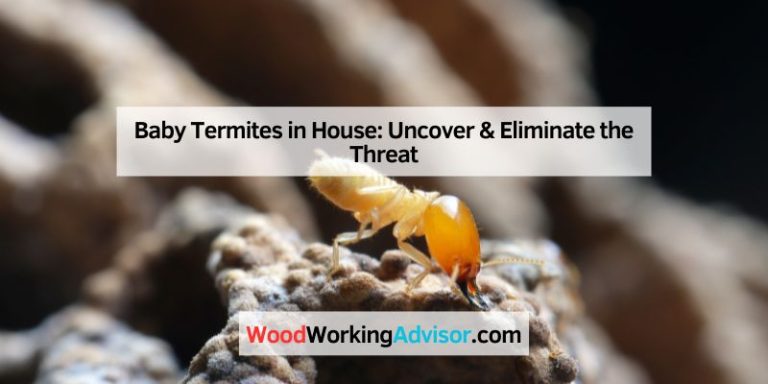
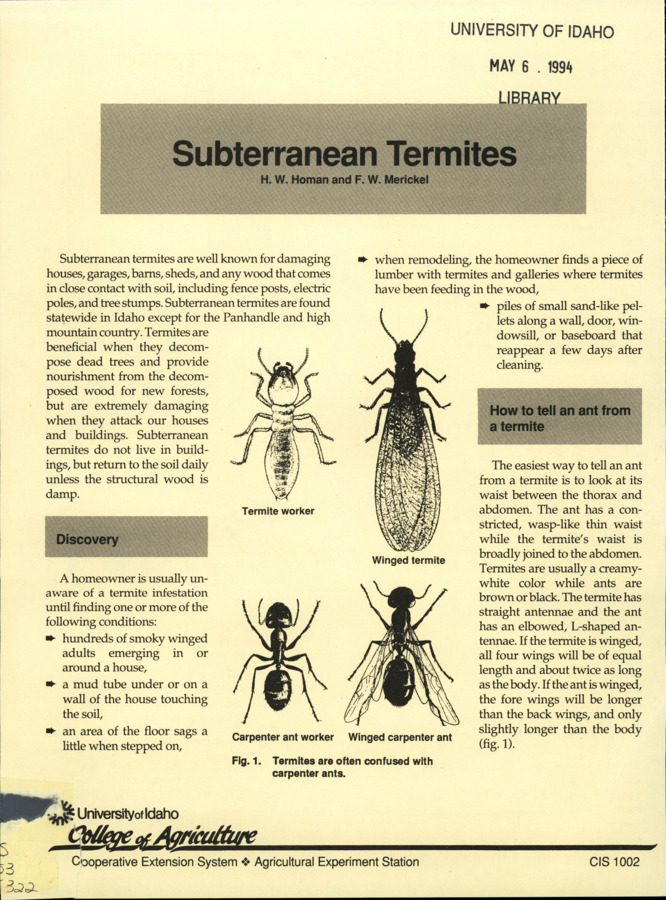
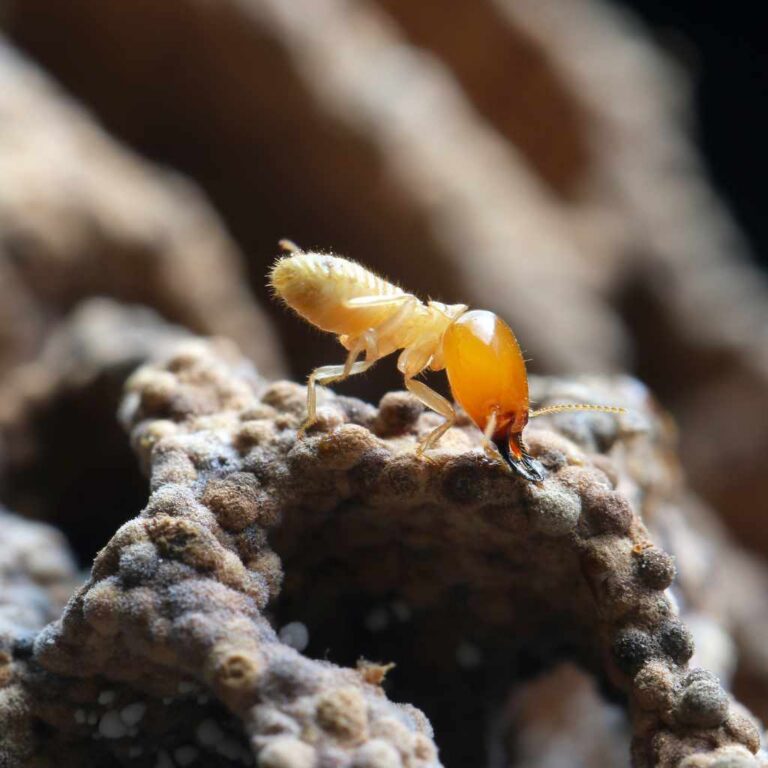
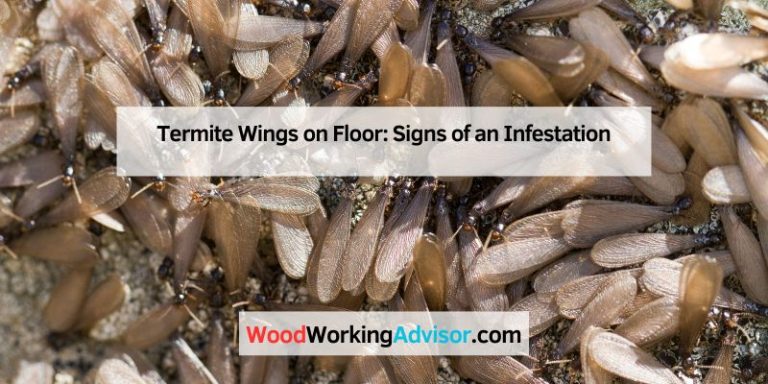
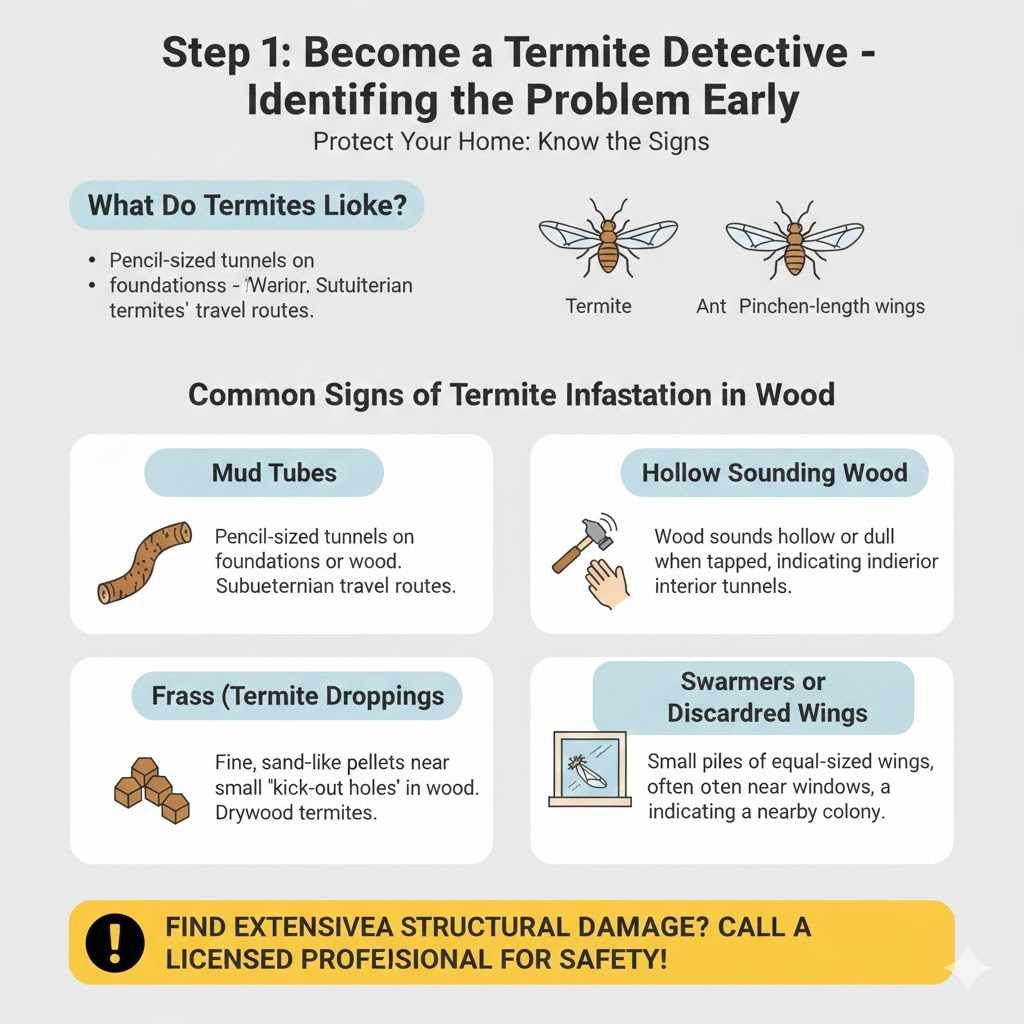
Termites are often mistaken for ants, which causes delays. Here is a simple way to tell them apart. Termites are soft-bodied and straight-waisted, unlike ants, which have a pinched waist. Also, during swarming (when they fly away to start new colonies), termites have four wings that are all the same length. Ant swarmers have two sets of wings that are uneven in size.
Common Signs of Termite Infestation in Wood
You are looking for evidence of their activity, not usually the pests themselves, as they live hidden deep inside the wood or soil.
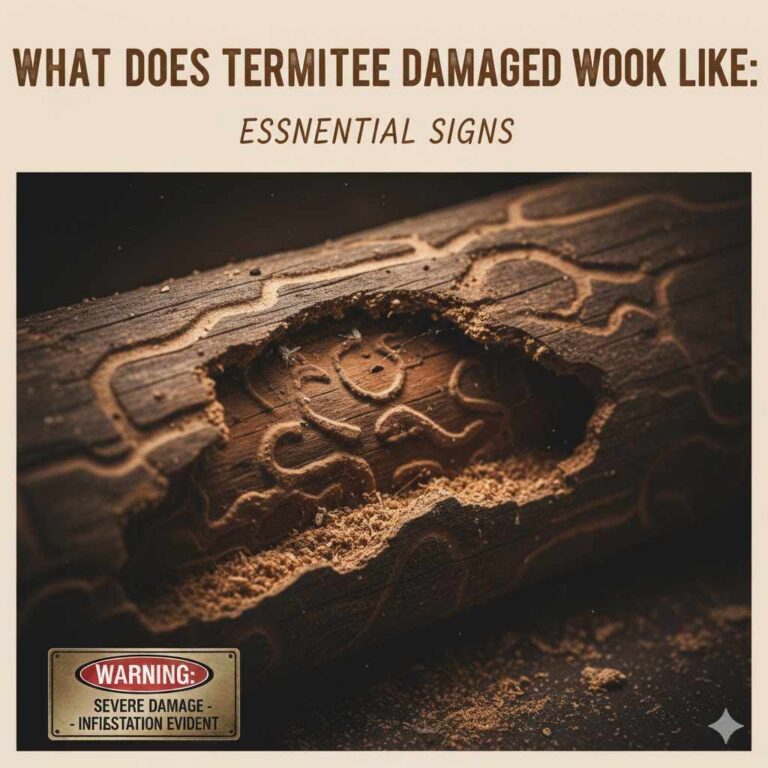
- Mud Tubes: These pencil-sized tunnels running up foundations or along wood supports are a classic sign of subterranean termites. They use these tubes for safe travel between the soil and the wood.
- Hollow Sounding Wood: Gently tap suspect wood with a screwdriver handle or small hammer. If it sounds hollow or dull instead of solid, termites may have tunneled inside.
- Frass (Termite Droppings): Drywood termites push their droppings out of small “kick-out holes.” This looks like fine sawdust or pepper flakes gathered below the wood.
- Swarmers or Discarded Wings: Finding small piles of discarded wings near windowsills or door frames indicates that the colony is maturing nearby.
- Peeling Paint or Blistered Wood: Sometimes, damage shows externally as bubbles or buckling, especially on painted surfaces, hiding the tunnels underneath.
When to Call a Professional Right Away
While we love DIY, some situations require an expert. If you find extensive, deep infestation, especially in load-bearing structural beams, it is time to call a licensed pest control operator. You can learn more about professional structural pest control guidelines from resources like the Environmental Protection Agency (EPA) for informed decisions on hiring help.
Step 2: Stopping Soil Contact – The Most Essential Prevention Step
The most common type of destructive termite, the subterranean termite, needs one thing to thrive: direct access to moist soil. If you cut off this highway, you dramatically increase your home’s defense. This is essential, practical, and usually the most cost-effective step a homeowner can take.
Creating a Physical Barrier
We need to physically separate all accessible wood from the dirt around your house. This means checking things near your foundation:
- Check Firewood Storage: Never stack firewood directly against your home or on the ground. Stack it at least 20 feet away from the structure and keep it elevated several inches off the soil, ideally on concrete blocks or a sturdy metal rack.
- Inspect Landscape Timbers and Mulch: Old railroad ties or landscape timbers directly touching your foundation are like open invitations. If possible, replace wood borders near the house with stone, brick, or concrete edging. Keep mulch pulled back 6 to 12 inches from the foundation wall.
- Ensure Proper Drainage: Water is an accomplice to termites. Ensure your gutters are clean and downspouts direct water far away from the foundation. Sloping the ground away from your house (a minimum of a 5% slope for the first 10 feet) is crucial for keeping moisture down.
- Seal Foundation Cracks: Inspect concrete patios, sidewalks, and the foundation wall for any cracks or gaps larger than a credit card edge. Seal these immediately with a concrete patching compound or caulk.
Step 3: Proven Control Methods for Active Infestations in Wood
If you have found termites actively eating a piece of wood—say, a floor joist in a damp crawlspace, a deck post, or a piece of antique furniture—we need direct action. Here are tried-and-true methods, ranging from least invasive to stronger treatments.
Method A: Direct Application of Borate Treatments (DIY Favorite)
For wood that is still somewhat accessible and not structural (like deck framing, fascia boards, or interior framing you can reach), borate treatments are fantastic. Borates (like boric acid) are naturally occurring minerals that act as an insecticide and fungicide. Termites cannot detect it, so they ingest it while eating, which is fatal.
Application Tips:
- Product Selection: Look for commercially prepared liquid borate sprays or dusts labeled specifically for termite control (often containing Disodium Octaborate Tetrahydrate).
- Surface Prep: Clean the wood surface first. Remove paint, varnish, or heavy dirt so the liquid can soak in easily.
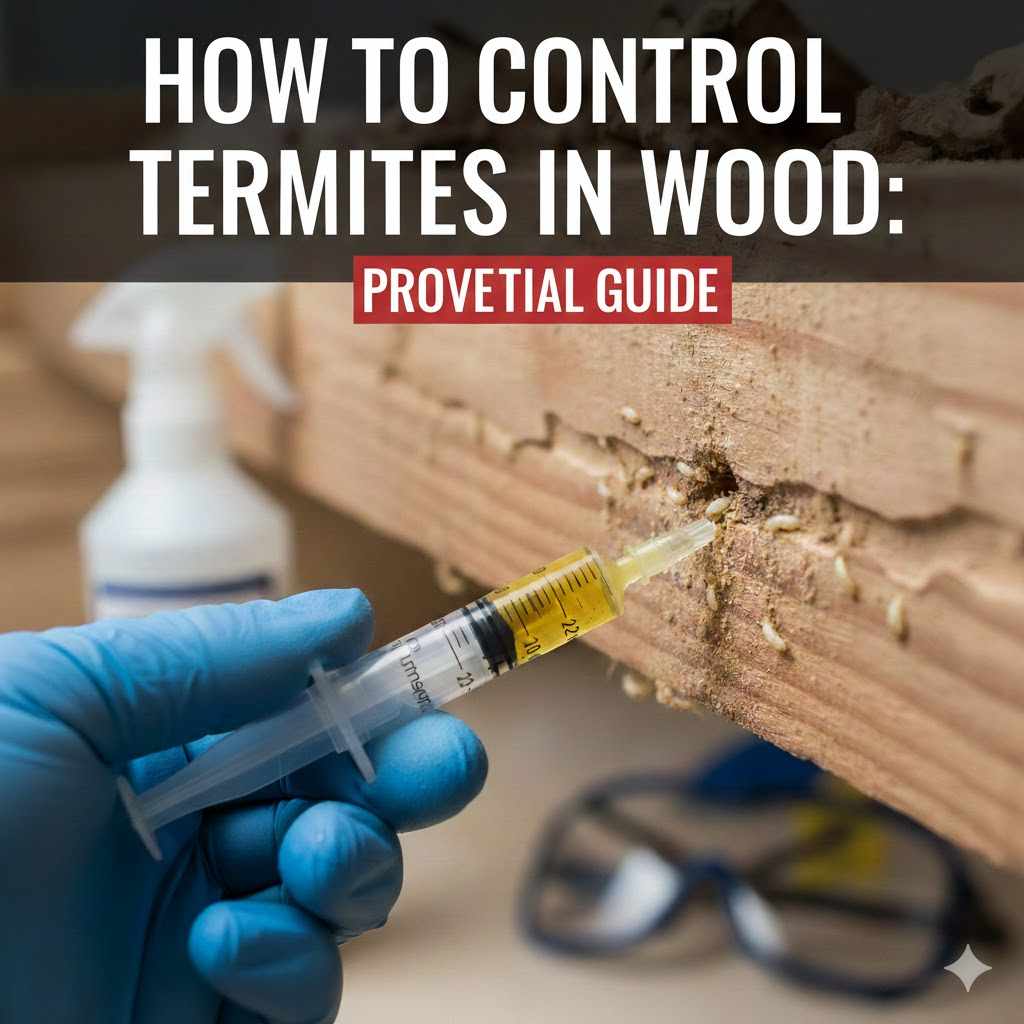
- Application: Use a pump sprayer to saturate the wood surface until it’s wet. For bare, dry wood, reapply a second coat after the first has dried. For structural wood where you suspect deep damage, sometimes drilling small holes (about 1/4 inch every 12 inches) into the wood and injecting the borate solution using a syringe or specialized nozzle is necessary.
Pro Tip from the Workshop: Borates leach out with prolonged, heavy rain exposure. They work best on wood that is protected from constant moisture, like enclosed framing or areas only occasionally dampened.
Method B: Using Heat or Cold for Non-Structural Items
If you are dealing with furniture, picture frames, or smaller wooden objects, sometimes temperature is your best friend. This works wonderfully for valuable, small antiques that you do not want chemicals near.
Heat Treatment (Baking)
Temperatures exceeding 140°F (60°C) for sustained periods will kill all termites and eggs inside the wood. You can sometimes place small items in a regular oven set low (around 150°F to 170°F) for several hours, watching carefully to ensure the wood doesn’t scorch.
Cold Treatment (Freezing)
This works well in colder climates or if you have access to a large deep freezer. Wrap the wood item securely in thick plastic bags to protect it from moisture/ice crystals. Place it in a freezer set to 0°F (-18°C) or lower for at least three to four days. This prolonged deep freeze penetrates the core of the wood.
Method C: Targeted Dusting and Baits
For termites traveling in hidden voids, like inside walls or piers, dusts and baits are excellent because they rely on the termites to carry the poison back to the colony.
Insecticidal Dusts
Dusts, like those containing Deltamethrin or other labeled ingredients, are puffed into termite runways, ventilation screens, or wall voids using a hand duster. When termites crawl through the dust, they pick up particles and transfer them to others, effectively collapsing the colony over time. Always follow the product label for where and how much dust to apply.
Baiting Systems
Termite baiting systems involve placing monitoring stations in the soil around your property. Once termites are confirmed to be feeding on the wood lure in the station, a slow-acting termiticide is swapped in. Because the poison works slowly, foraging termites feed on it and carry it back to the queen and the rest of the colony. This method is less disruptive than traditional liquid barrier treatments and is highly effective when properly maintained. Check reputable sources like university extension offices for the best practices on managing baiting systems.
Step 4: Understanding Termite Control Barriers – Liquid Treatments
For foundational protection, professional-grade liquid termiticides create a chemical barrier in the soil surrounding your home. While often professionally applied, understanding what they do helps you supervise contractors or use DIY alternatives responsibly.
Types of Liquid Termiticides
Termite liquid treatments generally fall into two categories:
| Treatment Type | Mechanism | Best Use For Beginners |
|---|---|---|
| Repellent Termiticides | Termites detect the chemical barrier and actively avoid it, forcing them to find another way in. | Good for sealing obvious entry points if you see a trail. |
| Non-Repellent Termiticides | Termites walk through the treated soil without sensing danger, eventually dying and transferring the chemical throughout the colony. | Highly effective, usually preferred by professionals for soil treatment. |
DIY Liquid Application Considerations
Treating the soil barrier yourself requires significant amounts of chemical products and precise trenching around the foundation. For large infestations or entire house perimeter protection, this job often needs professional equipment and licensing due to the toxicity and specialized application required. Always check local regulations before mixing or applying broad-spectrum soil treatments yourself.
Step 5: Long-Term Wood Care and Maintenance for Durability
Controlling termites isn’t a one-time fix; it’s ongoing maintenance—a sign of true craftsmanship in home ownership! Once you’ve dealt with an active infestation, the next step is creating an environment where they absolutely do not want to return.
Protecting Outdoor Wood Structures
Any wood exposed to the elements is at risk. Proper sealing and treatment are essential.
- Use Pressure-Treated Lumber: When replacing decks, fence posts, or any wood touching the ground, always choose lumber rated for “Ground Contact” (GC). This wood has chemical preservatives forced deep into the fibers, offering significant resistance.
- Seal and Stain Above-Ground Wood: Use high-quality exterior paint, stain, or water-repellent sealants on all exposed wood like siding, trim, and window frames. This keeps moisture out, which deters termites and other wood-destroying fungi.
- Maintain Exterior Gaps: Regularly check the joint where the siding meets the foundation. Use a durable exterior caulk to seal any small gap that might allow moisture or insects entry.
Managing Moisture Underneath the Home
Moisture is the silent partner of termites. Basements and crawlspaces are common battlegrounds.
- Crawlspace Encapsulation: If you have a dirt crawlspace, consider encapsulation. This involves laying thick plastic sheeting over the entire dirt floor and walls, sealing off the moist earth environment. This drastically reduces humidity and is one of the best defenses against subterranean termites and mold.
- Venting: If you have an existing vented crawlspace, ensure vents are clear and functioning to allow fresh, dry air to move through, reducing standing moisture under your floorboards.
- Fix Leaks Immediately: Dripping pipes under sinks or slow roof leaks are massive attractions. Repair them as soon as you notice them. Every drop of standing water near wood is an invitation.
Quick Comparison: DIY Termite Treatments
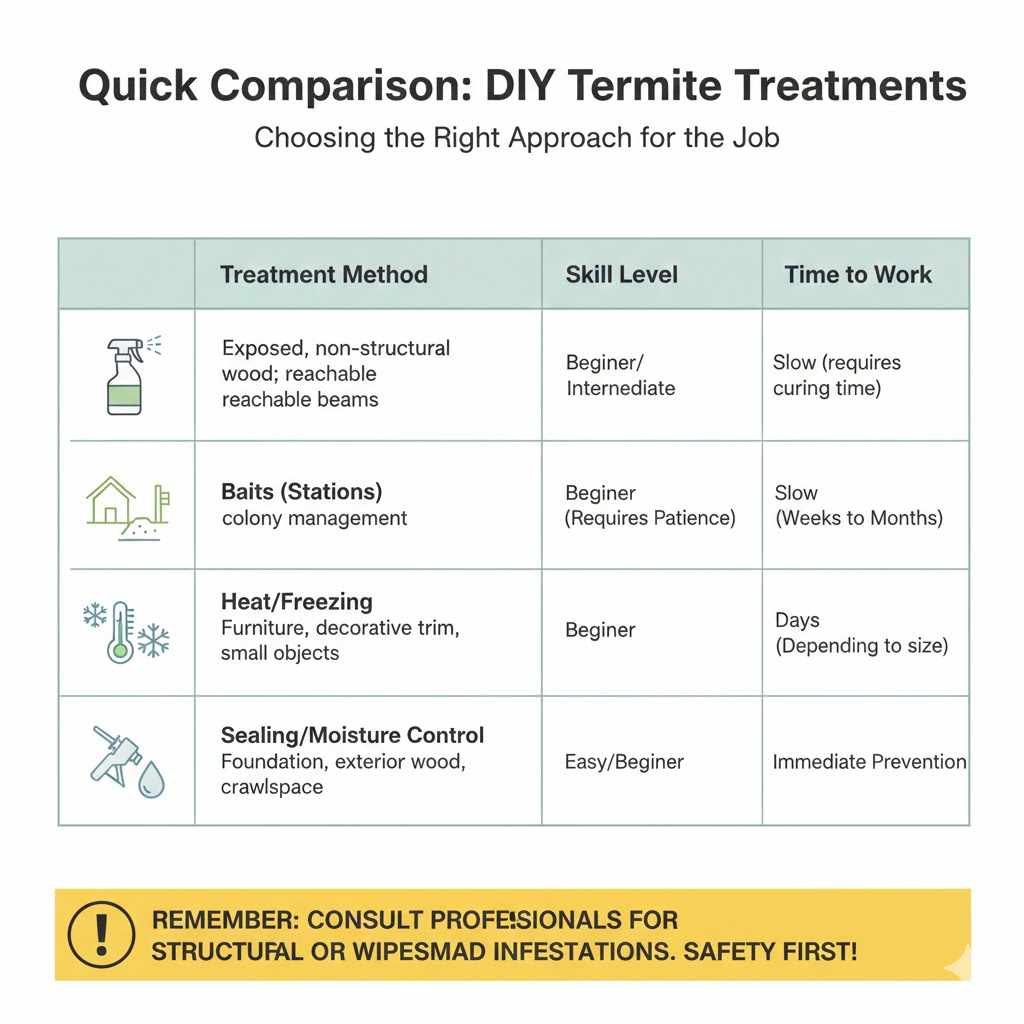
Choosing the right DIY method depends on where the wood is and how severe the damage looks. Here is a quick guide to help you decide.
| Treatment Method | Target Wood Location | Skill Level | Time to Work |
|---|---|---|---|
| Borate Spray/Injection | Exposed, non-structural wood; reachable beams | Beginner/Intermediate | Slow (requires curing time) |
| Baits (Stations) | Soil perimeter/colony management | Beginner (Requires Patience) | Slow (Weeks to Months) |
| Heat/Freezing | Furniture, decorative trim, small objects | Beginner | Days (Depending on size) |
| Sealing/Moisture Control | Foundation, exterior wood, crawlspace | Easy/Beginner | Immediate Prevention |
Frequently Asked Questions (FAQ) for New Homeowners
Q1: Can I really get rid of termites myself without calling an exterminator?
A: For minor, superficial infestations in small, non-structural items (like a bookshelf), DIY methods like heat/freezing or localized borate treatments often work. However, if termites are found in your foundation wood or wall supports, professional assessment and treatment are usually necessary for safety and thoroughness.
Q2: How long does it take to know if a termite treatment is working?
A: It varies greatly. Baits can take weeks or months for the colony to collapse. Direct application dusts or liquids might show fewer visible signs within a few days, but full elimination relies on the pests carrying the material back to the main nest, which takes time.
Q3: Are mosquito sprays effective against termites?
A: No. Standard perimeter sprays designed for flying or surface insects (like mosquitoes or spiders) are generally not formulated or strong enough to penetrate soil barriers or eliminate established termite colonies within wood structures. You need specific termiticides.
Q4: What is the number one way termites enter a home?
A: Subterranean termites overwhelmingly enter through wood that touches the soil or through tiny cracks in the concrete foundation slab, searching for moisture and wood as they travel up from their underground nests.
Q5: If I see one termite, does that mean my whole house is infested?
A: Not necessarily, but it means you need to act fast. Finding a few swarmers means a colony is nearby and mature. If you find mud tubes or damage, the infestation is likely established. Immediate inspection of all susceptible wood areas is required.
Q6: Can termites survive cold winters?
A: Yes. Subterranean termites living underground survive winter by retreating deeper into the soil, where the temperature stays above freezing. Drywood termites deeper inside the wood structure are also protected from typical winter cold.
Q7: Is borate safe to use around pets and kids if I spray the deck framing?
A: Borates are generally considered low-toxicity when dry, especially compared to older chemical treatments. However, they should always be applied following label instructions—avoiding direct contact when wet and keeping pets and children away until the treatment has completely dried and cured.
Conclusion: Building Confidence in Your Pest Defense Strategy
You have now walked through the essential blueprint for controlling termites in your wood structures. Remember, you don’t need special licenses to defend your property; you just need knowledge and consistency. Termite control is much like woodworking itself—it requires careful inspection, the right tools for the job, and consistent maintenance.
Start by taking that physical inventory: look for mud, listen for hollow sounds, and, most importantly, break any contact between wood and soil. For direct action, borate treatments offer accessible, effective control for accessible lumber, allowing you to boost the wood’s natural resistance.
By pairing immediate treatment with long-term moisture management—especially keeping crawlspaces and foundations dry—you build a truly resilient defense system. Every small step you take, from clearing mulch to sealing a crack, adds up to powerful protection. Go forward with confidence; your beautiful wood projects and your home are in capable hands!