Wood Deck vs Concrete Patio: Which Is Cheaper in 2026?
A wood deck costs $25 to $50 per square foot installed, while a poured concrete patio runs $4 to $15 per square foot — concrete is cheaper upfront in nearly every case. But a wood deck recoups 94.9% of its cost at resale nationally, versus just 46% for a backyard patio, per Zonda’s 2025 Cost vs. Value Report. This guide breaks down real 2026 material, labor, and maintenance costs, permit rules, and resale value for both.
Cost Comparison
Best Deck Stain & Sealer Pick

Ready Seal Exterior Wood Stain & Sealer, 1 Gallon – $40.98
A one-coat stain-and-sealer combo that matches the 1-2 year restaining cycle this guide’s maintenance section covers — no separate sealer step needed.
- Best for: Pressure-treated or cedar decks due for their yearly reseal
- Why we picked it: No lap marks, works in one coat, keeps deck upkeep costs near the $540-$1,250 range above rather than over it
- Main drawback: Oil-based — needs mineral spirits for cleanup, not water-washable
Compare more deck stain & sealer options
 Option 1 SaverSystems Semi-Transparent Stain – $37.99
|
 Option 2 Olympic WaterGuard Stain & Sealer – $31.98
|
 Option 3 Thompson’s WaterSeal Clear – $16.95
|
As an Amazon Associate we earn from qualifying purchases.
The gap between a wood deck and a concrete patio comes down to materials, labor, and long-term maintenance. If you’ve already settled on a wood decking project and just need the numbers, here is what each actually costs in 2026.
Materials
Pressure-treated lumber for a deck runs $14 to $28 per square foot in material cost alone, while cedar or composite boards push that to $27 to $80 per square foot. Poured concrete for a patio costs $4 to $12 per square foot in plain gray, or $8 to $30 per square foot once you add stamping, staining, or a decorative finish.
| Option | Material Cost (per sq ft) | Total Installed (per sq ft) |
|---|---|---|
| Pressure-treated wood deck | $14–$28 | $25–$50 |
| Cedar or composite deck | $27–$40+ | $40–$80 |
| Plain concrete patio | $3–$6 | $4–$12 |
| Stamped or stained concrete patio | $5–$10 | $8–$30 |
Labor
Deck labor runs $11 to $22 per square foot — framing, joist hangers, and deck board fastening all add hours a concrete pour doesn’t need. Concrete labor is priced into that lower per-square-foot total above, since pouring, leveling, and finishing a slab is typically a one- to two-day job for a standard-size patio, versus several days for a deck built from scratch.
Maintenance
A wood deck needs restaining or resealing every one to two years, which runs $540 to $1,250 per job depending on deck size and product. A concrete patio needs only occasional cleaning and a resealing every 3 to 5 years, usually under $300. Skip a deck’s maintenance cycle and the lower upfront cost stops looking like such a deal — the boards gray, check, and eventually need board replacement years earlier than they would with regular care.
For the full breakdown of installed cost, expected lifespan, and year-by-year maintenance for both materials side by side, see our concrete patio vs. wood deck cost and lifespan comparison.
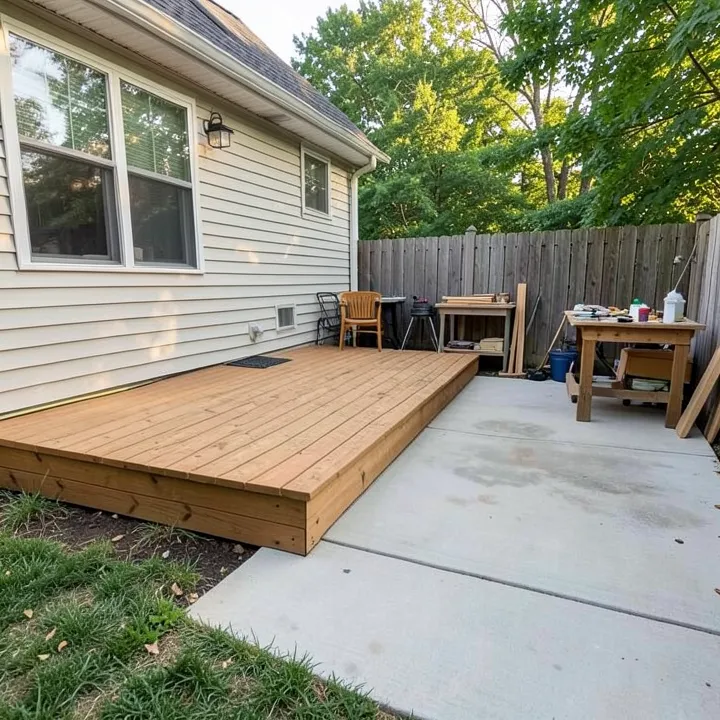
Total Project Cost by Size (2026)
Per-square-foot ranges are useful, but most homeowners want to know the actual bill. Here’s what a 200 sq ft and a 400 sq ft project costs installed, using 2026 national averages.
| Size | Pressure-Treated Wood Deck | Plain Concrete Patio | Stamped Concrete Patio |
|---|---|---|---|
| 200 sq ft | $5,000–$10,000 | $800–$2,400 | $1,600–$6,000 |
| 400 sq ft | $10,000–$20,000 | $1,600–$4,800 | $3,200–$12,000 |
A 16×20 ft deck (320 sq ft) averages around $18,263 nationally per the 2025 Zonda Cost vs. Value Report — roughly $57 per square foot once framing, railing, and finish work are included, which runs higher than the bare material-and-labor range above. See our full wood deck cost breakdown for scenario-by-scenario pricing.
Durability
A wood deck is cheaper to install but shorter-lived; a concrete patio costs more upfront but typically lasts longer with less upkeep.
Wood Deck
A well-maintained pressure-treated deck lasts 15 to 20 years; cedar and composite can push past 25. Without regular cleaning, staining, and sealing, moisture works into the grain and causes cracking, splintering, and warping years earlier than that.
Concrete Patio
A properly poured and cured concrete patio commonly lasts 30 years or more. Concrete resists rot, pests, and moisture damage by nature, and it doesn’t need annual staining — just periodic cleaning and resealing every few years to slow surface wear and cracking.
Aesthetics
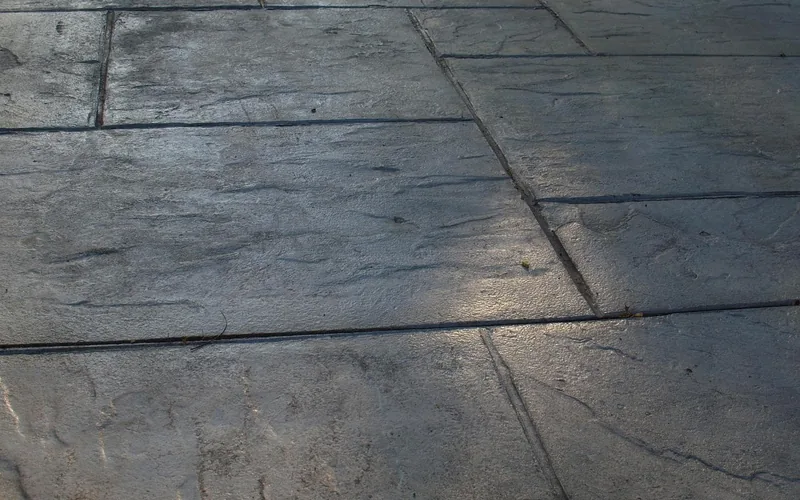
A wood deck brings warm, natural grain and can be built raised off a sloped yard; a concrete patio delivers a smooth, modern surface and can be stamped or stained to mimic stone or brick at a fraction of the cost.
Versatility & Terrain
Terrain decides more of this choice than most guides mention. A deck is the practical option on a sloped or uneven lot since it’s built on posts and framing above the ground. A patio needs a relatively flat, well-graded site — pouring concrete on a slope means expensive excavation and retaining work first. A deck can also carry a hot tub or heavy planters more easily since it’s engineered to a specific load, while a patio’s flat concrete slab handles distributed weight like outdoor kitchens or fire pits without special framing.

Do You Need a Permit for a Deck or a Patio?
In most jurisdictions, a deck needs a permit if it attaches to the house, sits more than 30 inches above grade, or exceeds 200 square feet — which covers the majority of residential decks. A ground-level, unattached patio without framing or posts is often exempt, but the moment you add a raised section, a pergola footing, or built-in seating, many building departments reclassify it as a deck and the permit requirement follows. Rules vary by city and county, so confirm with your local building department before you dig or build.
📊 A deck attached to the house, over 30 inches high, or larger than 200 sq ft needs a permit in most U.S. jurisdictions — a simple ground-level patio usually does not. Source: Decks.com, 2026
Resale Value: Which Adds More?
Cost isn’t the only number that matters if you plan to sell. A wood deck addition recoups 94.9% of its cost at resale nationally — one of the highest-ROI projects tracked — while a backyard patio recoups only about 46%, per Zonda’s 2025 Cost vs. Value Report. Composite decking costs more upfront ($25,096 average vs. $18,263 for a wood deck) but recoups slightly less at 88.5%. On resale math alone, a wood deck is the stronger investment even though a patio wins on day-one cost.
| Project | National Average Cost | Resale Recoup |
|---|---|---|
| Wood deck (16×20 ft) | $18,263 | 94.9% |
| Composite deck (16×20 ft) | $25,096 | 88.5% |
| Backyard patio | Varies by size/finish | 46% |
📊 A wood deck recoups 94.9% of its cost at resale nationally — a backyard patio recoups only about 46%. Source: Zonda 2025 Cost vs. Value Report
“I’ve built and restained enough decks to know the real cost isn’t the lumber — it’s skipping a season of sealing. A deck that goes two summers without a fresh coat starts graying and checking, and by year five you’re replacing boards you’d have saved with a $40 can of sealer every spring.”
Environmental Impact
Wood is a renewable resource, and FSC-certified lumber reduces the impact of harvesting it — but a shorter lifespan means more frequent replacement and waste over time. Concrete uses abundant raw materials and lasts decades without replacement, but cement production is a significant source of carbon dioxide emissions during manufacturing. Neither option is a clear environmental winner; the trade-off is sourcing versus manufacturing emissions.
Frequently Asked Questions
Is a concrete patio cheaper than a wood deck?
Yes. A poured concrete patio costs $4 to $15 per square foot installed versus $25 to $50 per square foot for a pressure-treated wood deck — concrete wins on upfront cost in almost every case, though a stamped or decorative concrete finish narrows that gap considerably.
Is it cheaper to build a deck or pour concrete?
Pouring concrete is cheaper upfront due to lower material and labor costs. A deck costs more to build but needs less site prep on sloped ground and can add more resale value, so “cheaper” depends on whether you’re comparing install cost or total cost of ownership.
What is the cheapest way to build a deck or patio?
A DIY-built, ground-level patio using plain poured concrete or budget composite decking on a simple rectangular footprint is the cheapest route for either option. Skipping decorative finishes, hiring only for concrete pouring or framing you can’t do yourself, and comparing at least three local quotes typically saves 15-20% off the first estimate.
Do you need a permit for a concrete patio or a wood deck?
A deck usually needs a permit if it’s attached to the house, over 30 inches high, or larger than 200 sq ft. A simple, unattached, ground-level patio is often exempt, but check your local building department, since the exact thresholds vary by city and county.
Does a deck or a patio add more resale value?
A wood deck adds more resale value. It recoups 94.9% of its cost nationally, one of the highest returns of any home project tracked, while a backyard patio recoups only about 46%, per Zonda’s 2025 Cost vs. Value Report. Composite decking recoups slightly less than wood at 88.5%, despite a higher upfront cost.
Is a raised patio cheaper than a deck?
A raised patio can cost less than a deck of the same size, but once you add retaining walls, fill, or a raised platform structure, many jurisdictions treat it the same as a deck for permitting and cost purposes — the cost gap narrows fast as the height increases.
Conclusion
A concrete patio is the cheaper build in almost every case — $4 to $15 per square foot versus $25 to $50 for a wood deck — and it costs less to maintain year to year. A wood deck costs more upfront and needs regular staining, but it fits sloped lots a patio can’t, and it typically recoups more value at resale. Weigh your site, your maintenance budget, and how long you plan to stay before deciding.
Sponsored / affiliate links. As an Amazon Associate I earn from qualifying purchases. I may earn additional commission from eligible campaigns.