How to Get Bugs Out of Wood: Effective Solutions
To get bugs out of wood, start by vacuuming the affected area to remove visible pests. Then, apply a suitable insecticide or natural remedy like diatomaceous earth.
Wooden structures and furniture can attract various pests, such as termites, beetles, and wood borers. These insects can cause significant damage if left untreated. Early detection is key to preventing extensive harm. Homeowners should regularly inspect wooden items for signs of infestation, such as small holes or powdery residue.
Different methods exist to eliminate these pests, ranging from chemical treatments to natural solutions. Understanding the type of bug and the extent of the infestation will guide your approach. Taking swift action not only preserves your wood but also ensures a pest-free environment.
Introduction To Wood Infestations
Wood can be home to many pests. These bugs can damage wood structures. Knowing the common types helps in identifying them early.
- Termites: They eat wood and cause severe damage.
- Carpenter Ants: They tunnel through wood and weaken structures.
- Wood Borers: They lay eggs in wood, and larvae eat it.
- Powderpost Beetles: Their larvae create small holes in wood.
Signs of infestation include small holes and sawdust. Wood may sound hollow when tapped. Look for discarded wings or frass, which is bug waste. Early detection is key to preventing further damage.
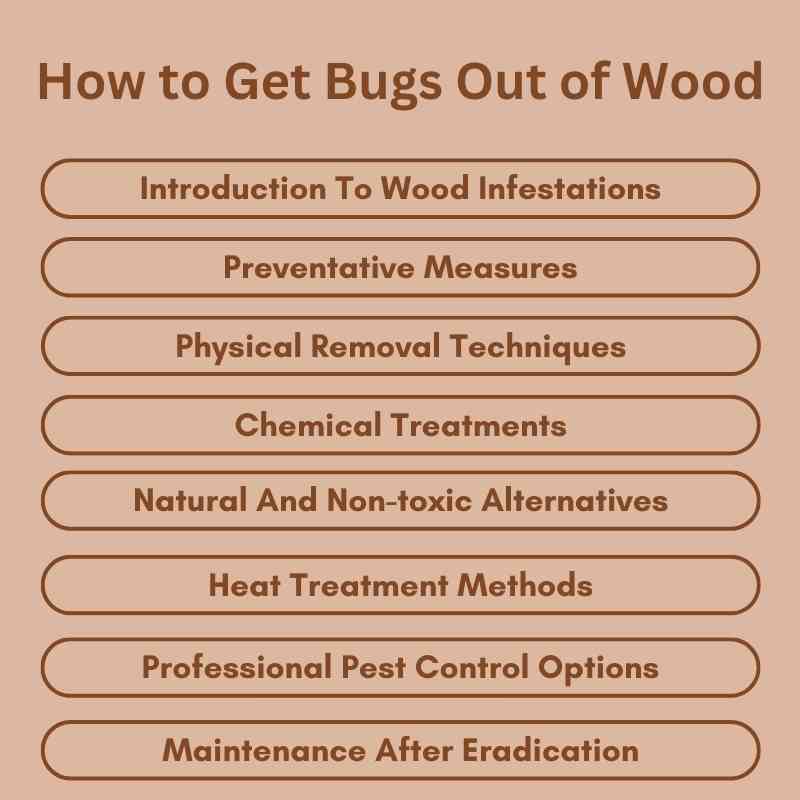
Preventative Measures
Moisture control is key to preventing bugs in wood. Keep wood dry and free from dampness. Use a dehumidifier in areas with high humidity. Seal any cracks to prevent water entry.
Regular inspection and cleaning help catch problems early. Check wood surfaces for signs of bugs. Clean areas where dust gathers, as bugs love to hide there.
Proper wood storage is essential. Store wood in a dry place, away from moisture. Use pallets to keep wood off the ground. This helps air circulate and keeps bugs away.
Physical Removal Techniques
Manual extraction is a simple way to remove bugs from wood. Use a small tool like a chisel or tweezers. Carefully pick out the bugs one by one. Make sure to wear gloves for safety.
Freezing infested wood can kill bugs effectively. Place the wood in a freezer for at least 48 hours. This method works well for smaller pieces of wood. After freezing, let the wood thaw before using it.
Sunlight exposure is another useful technique. Place the wood in direct sunlight for several hours. The heat will drive out many types of bugs. Make sure to turn the wood to expose all sides.
Chemical Treatments
Using insecticidal sprays can effectively eliminate bugs in wood. These sprays target specific pests and penetrate wood surfaces. Always follow the manufacturer’s instructions for safety and effectiveness.
Wood preservatives protect against future infestations. They create a barrier that bugs find hard to penetrate. Choose a product that suits your wood type and environment.
Safety is very important. Always wear gloves and a mask when applying chemical treatments. Ensure the area is well-ventilated. Keep children and pets away until the product dries completely.
Natural And Non-toxic Alternatives
Diatomaceous Earth is a safe, non-toxic powder. It kills bugs by drying them out. Sprinkle it in areas where bugs hide. This method is effective and easy to use.
Neem Oil comes from the seeds of the neem tree. It disrupts the life cycle of insects. Mix it with water and spray it on infested wood. This natural remedy helps keep bugs away.
Essential Oils like peppermint and tea tree are great for repelling bugs. Mix a few drops with water in a spray bottle. Spray it on the wood to protect it from pests. These oils smell nice and are safe to use.
Heat Treatment Methods
Kiln drying is a common method used to eliminate bugs in wood. This process uses controlled heat and humidity. It effectively kills any pests and their eggs.
Portable heat chambers are another effective option. These chambers use high temperatures to treat the wood. They can be moved to different locations for convenience.
Microwave treatment is a quick and easy method. It heats the wood evenly, killing insects in minutes. This method is great for small pieces of wood.
Professional Pest Control Options
Professional pest control is essential for serious infestations. Termite fumigation is effective for killing termites in wood. This method involves sealing the area and using gas to eliminate pests. It ensures all wood surfaces are treated, reaching hidden areas.
Integrated Pest Management (IPM) combines different strategies for pest control. It focuses on prevention and monitoring. IPM uses methods like sanitation, exclusion, and targeted treatments. This approach is safer for the environment and less harmful to humans.
Call a professional when you notice signs of damage. Swarming insects or wood dust indicate trouble. Early intervention can save money and prevent further damage.
Maintenance After Eradication
Regular monitoring of wood is vital. Check for signs of bugs often. Look for tiny holes or sawdust. Early detection can save your wood.
Seal any cracks and crevices. Use caulk or wood filler to close gaps. This prevents new bugs from entering. Make sure to check old seals too.
Long-term wood care is important. Apply protective finishes to your wood. Keep wood dry and well-ventilated. Store wood off the ground to avoid moisture.
Frequently Asked Questions
How Do I Identify Wood-boring Insects?
Identifying wood-boring insects involves inspecting wood for small holes and sawdust. Common pests include termites, carpenter ants, and powderpost beetles. Look for frass, which is a sign of infestation. Regularly check wooden structures for any signs of damage or unusual behavior to catch issues early.
What Natural Methods Remove Bugs From Wood?
Natural methods to remove bugs include using essential oils like neem or peppermint. Spraying a diluted solution can deter insects without harmful chemicals. Additionally, diatomaceous earth is effective; it dehydrates insects upon contact. Regular cleaning and maintenance also help keep wood pest-free naturally.
When Should I Call A Pest Control Professional?
Call a pest control professional if the infestation is severe or persistent. Signs of significant damage or numerous insects indicate a serious problem. Professionals can provide targeted treatments and long-term solutions. Early intervention is key to preventing further damage to your wooden structures.
Can I Prevent Bugs In Wood?
Yes, you can prevent bugs in wood through proper maintenance. Keep wood dry and well-ventilated to deter moisture-loving pests. Regularly inspect wooden structures for signs of damage. Applying protective sealants and treating wood with insect repellents can also help prevent infestations.
Conclusion
Removing bugs from wood is essential for maintaining your home’s integrity. Regular inspections and preventive measures can help you avoid infestations. Use natural remedies or consult professionals for effective solutions. By staying vigilant and proactive, you can protect your wooden surfaces and ensure a bug-free environment.
Keep your wood healthy and pest-free!