How to Start a Flooded Chainsaw (Any Brand): The 4-6 Pull Fix
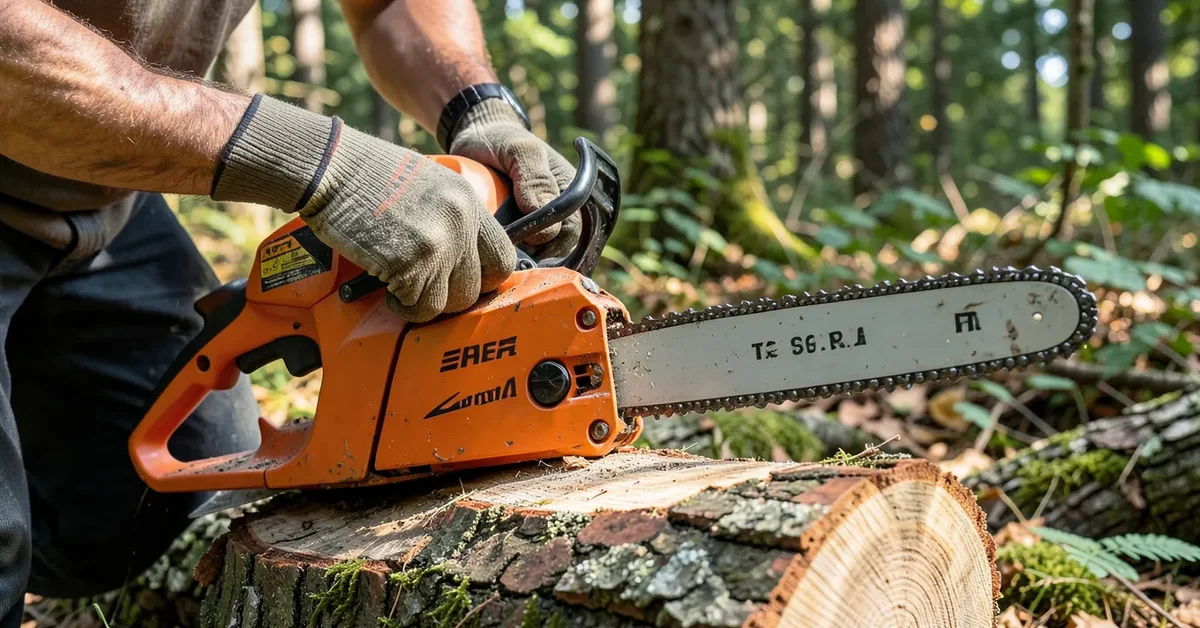
Turn the choke off, hold the throttle wide open, and pull the starter cord 4-6 times with the spark plug still in. This clears most flooded chainsaws in under a minute. If it still won’t fire, pull the spark plug, dry it off, and crank the engine a few more times with the plug out before reinstalling it and trying again.
This works on any gas chainsaw — Stihl, Husqvarna, Echo, Poulan, Craftsman — because they all use the same basic two-stroke carburetor design and flood the same way: too much raw fuel reaches the cylinder before it fires, and the spark plug ends up wet instead of sparking. If you specifically own a Stihl and want the exact choke/throttle sequence for that model line, we cover it in more detail in our Stihl-specific flooded chainsaw guide. Below is the process that applies across brands, plus how to tell a simple flood apart from hydro lock, which needs an extra step.
How to Tell If Your Chainsaw Is Actually Flooded
Best Replacement Plug For a Flooded Saw
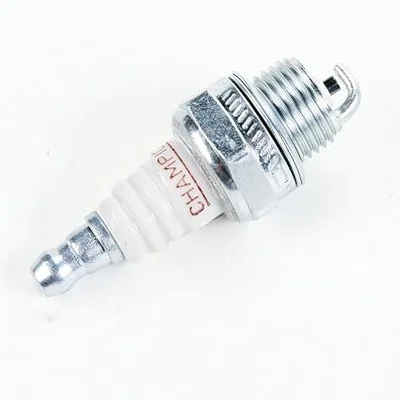 |
Champion RCJ6Y OEM Spark Plug – $5.54 The near-universal fit across Stihl, Husqvarna, Echo, and Poulan chainsaws — if a wet or fouled plug won’t clean up, this is the exact replacement most saws call for.
|
Three signs point to flooding rather than a dead battery, bad fuel, or ignition fault: the engine cranks normally but won’t catch, you smell raw gasoline around the muffler or air filter, and the spark plug — when you pull it — is visibly wet. A chainsaw that cranks slowly or not at all is a different problem (usually the pull cord, recoil spring, or a seized engine), not flooding.
Flooding almost always traces back to one of three habits: holding the choke on too long after the engine first catches, pumping the primer bulb more times than the manual specifies before a cold start, or repeatedly yanking the starter cord with the choke still engaged after a failed start attempt. Each extra pull with the choke on dumps more raw fuel into a cylinder that already has more than it can burn.
The Standard Fix: Choke Off, Throttle Open, Pull
This is the sequence that clears the large majority of flooded chainsaws without opening anything up:
- Push the choke lever fully to the “run” or “off” position — not half-choke, all the way off. The choke is what’s restricting air and letting fuel dominate the mixture; shutting it off lets more air in to balance things out.
- Hold the throttle trigger wide open. On most saws you need to squeeze the throttle lock-out lever first, then the trigger, and hold both while you pull. Wide-open throttle pulls more air through the carburetor relative to fuel, which is exactly what a flooded engine needs.
- Pull the starter cord in firm, full strokes, 4 to 6 times with the plug still installed. You’re using the engine’s own cranking motion to pump the excess fuel-air mixture out through the exhaust and draw in fresh air. Don’t yank short, weak pulls — a full pull each time clears more.
- Release the throttle and try a normal start. Choke off (since the engine is now warm from flooding, not cold), throttle at idle position, pull to start as usual.
If it catches and immediately dies, that’s a good sign — it means you’ve cleared enough fuel that the engine can fire, but there’s still a slightly rich mixture. Repeat the wide-open-throttle pulls two or three more times and try again.
If That Doesn’t Work: Pull and Dry the Spark Plug
When the throttle-and-pull method doesn’t get it running, the spark plug itself is likely wet enough that it can’t produce a spark through the fuel film coating the electrode. Here’s how to deal with that:
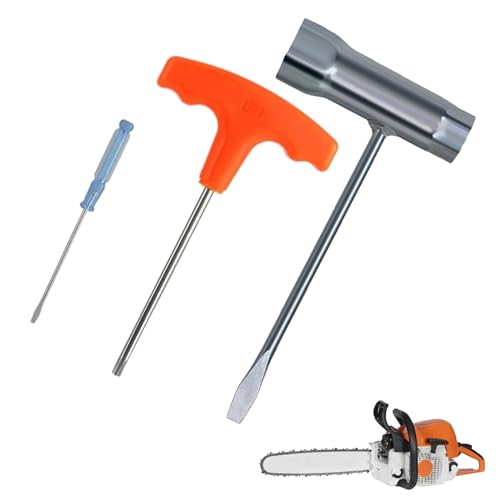
- Remove the spark plug boot, then use a spark plug wrench or the socket that came with the saw to unscrew the plug.
- Inspect it. If the electrode is wet or coated in fuel, wipe it dry with a clean rag or paper towel. If it’s also black and sooty (carbon-fouled), a wire brush or a bit of fine sandpaper on the electrode will restore the spark gap.
- With the plug out, pull the starter cord 3-4 more times with the throttle held open. This vents remaining fuel vapor through the open spark plug hole rather than trying to force it out past a closed cylinder.
- Reinstall the dried, cleaned plug, torque it snug (don’t overtighten — you can strip the aluminum head), reconnect the boot, and restart normally with the choke off.
A spark plug that’s wet, sooty, and won’t clean up with a wipe or a light sanding — or one with a cracked porcelain insulator or badly worn electrode — is worth replacing outright rather than fighting with. Plugs are inexpensive, and a fresh one removes any doubt about whether flooding or a tired plug is the real problem.
When It’s Hydro Lock, Not Just Flooding
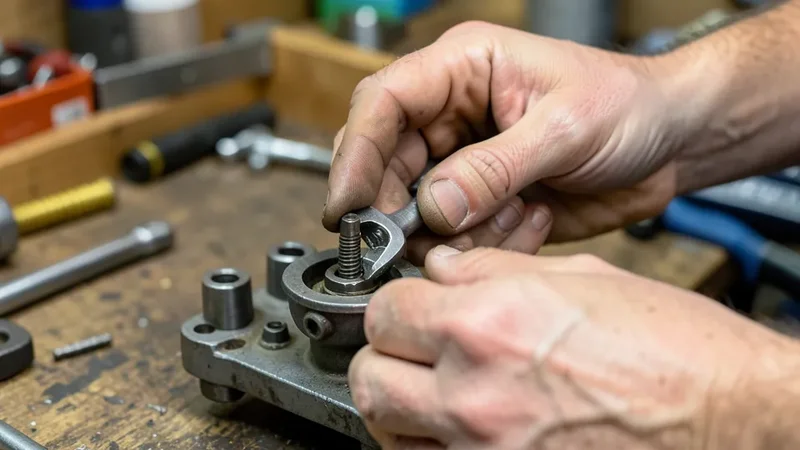
Hydro lock is the more serious version of the same problem: enough liquid (fuel, or occasionally water in the fuel) has pooled in the cylinder that the piston physically can’t complete its stroke. You’ll notice the difference immediately — a flooded engine cranks freely but won’t fire, while a hydro-locked engine feels stiff, resistant, or stops partway through a pull, because you’re trying to compress a liquid that doesn’t compress.
Stop pulling immediately if you feel that resistance. Continuing to force the pull cord against hydro lock can bend a connecting rod. Instead:
- Remove the spark plug.
- Turn the saw so the spark plug hole points down and away from you, and pull the starter cord slowly a few times. This lets the liquid drain and/or get pushed out through the open plug hole instead of getting trapped against the piston.
- Once the cord pulls freely with no resistance, dry the plug, reinstall it, and start normally.
Hydro lock from flooding alone is uncommon — it usually takes either a saw stored on its side with a cracked fuel line slowly leaking into the cylinder, or a genuinely extreme flooding episode (repeated failed cold starts over several minutes). If a saw hydro locks with no obvious flooding history, have someone check the fuel line and carburetor float for a leak before you run it again.
Preventing It Next Time
Three habits prevent nearly all chainsaw flooding:
- Use the choke only for the first pull or two of a genuinely cold engine, then push it off as soon as the engine fires — even if it stalls right after. Restart with the choke off from there.
- Follow your saw’s primer bulb count, not a habit from a different saw. Most modern chainsaws need 3-6 presses; older or carbureted models vary. Check the owner’s manual once and stop guessing.
- Stop after 4-5 failed pull attempts and reassess instead of continuing to pull with the choke engaged. If it hasn’t started in five pulls, switch the choke off and try the flooding-clear sequence above before you actually have a flooded engine to fix.
Frequently Asked Questions
What happens if you flood the engine of a chainsaw?
Too much raw fuel reaches the cylinder before ignition, soaking the spark plug electrode and making it unable to produce a spark. The engine cranks but won’t fire until the excess fuel clears or the wet plug is dried or replaced.
How do you start a flooded chainsaw engine?
Turn the choke fully off, hold the throttle wide open, and pull the starter cord 4-6 times with the spark plug in. If it still won’t start, remove and dry the spark plug, pull the cord a few more times with the plug out, then reinstall it and try a normal start.
How long do you leave a flooded chainsaw before trying again?
You don’t need to wait if you actively clear it with the choke-off, throttle-open pull method — that usually works within a minute. If you’d rather just let it sit, 10-15 minutes gives excess fuel time to evaporate, but pulling the plug and drying it is faster and more reliable.
How do you know if a chainsaw is flooded versus hydro locked?
A flooded engine cranks freely with the pull cord but won’t fire, and often smells strongly of gasoline. A hydro-locked engine feels stiff or stops partway through a pull because liquid trapped in the cylinder is blocking the piston — stop pulling immediately if you feel that resistance to avoid bending a connecting rod.
Bottom Line
Choke off, throttle wide open, pull 4-6 times — that sequence clears most flooded chainsaws regardless of brand. If the engine still won’t catch, a wet or fouled spark plug is almost always the holdout; pull it, dry or clean it, and try again. Save hydro lock’s extra caution for the rare case where the pull cord actually resists, not every flooded start.
Sponsored / affiliate links. As an Amazon Associate I earn from qualifying purchases. I may earn additional commission from eligible campaigns.