Is Apple Wood Good for Carving? Yes, But Season It First
Apple wood carves well, but not the way most guides make it sound. Fresh-cut apple is workable with hand tools, yet the same wood turns nearly glass-hard once it dries down to the roughly 1,730 lbf Janka rating that shows up in lumber references — and if you rush the drying, the blank will crack straight through the pith before you ever pick up a knife. This guide covers what actually happens to apple wood as it dries, when to carve it, and which tools hold an edge against it.
Apple Wood’s Carving Profile at a Glance
Apple (Malus domestica) is a diffuse-porous hardwood with fine, tight, mostly straight grain that takes crisp detail and a smooth polish — the same qualities that make it popular for spoons, small figures, and inlay work. It runs reddish-brown at the heart with pale sapwood, dense enough to resist fuzzing on fine cuts, and it doesn’t carry the strong smell some other fruitwoods do. The real tradeoff is availability and stability: orchard and yard trees rarely yield straight, defect-free logs over about 12–18 inches in diameter, and the wood moves and checks aggressively while it dries.
Best Knife Set For Hard Woods Like Apple
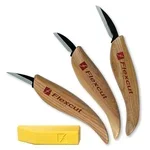 |
Flexcut KN500 3-Knife Starter Set – $57.56 Apple’s 1,730 Janka rating dulls a soft edge fast — this set’s 1095 high-carbon steel blades are built to hold an edge through denser hardwoods.
|
Janka Hardness and What 1,730 lbf Means for Your Tools
Put a number on it: apple wood tests at roughly 1,730 lbf on the Janka scale, the standard measure of the force needed to press a steel ball halfway into a wood sample. That’s more than four times harder than basswood (about 410 lbf), the wood most carving instructors hand beginners, and noticeably harder than black cherry (about 950 lbf) or even white oak (1,360 lbf). In practice, that means a knife edge that stays sharp through an entire basswood spoon can dull halfway through a comparable cut in apple. Plan to strop or hone every 10–15 minutes of active cutting, and expect more hand fatigue on a first apple wood project than you’re used to.
Grain, Figure, and Why Apple Wood Takes Fine Detail
Where apple wood earns its reputation is grain quality. The texture is fine and close, and the grain usually runs straight along the length of a branch or trunk section — that combination is exactly what lets a sharp knife leave a clean, almost polished surface straight off the blade, with none of the fuzzing you get from open-pored woods like oak or ash. The exception is near branch unions, crotches, and any curve in the trunk, where the grain goes interlocked or wavy. Cut into one of those spots without adjusting your angle and the wood will tear out instead of slicing clean, so it pays to read the grain direction on each face before committing to a cut, especially on a small figure where there’s no room to sand out a gouge.
The Real Problem: Why Apple Wood Cracks As It Dries
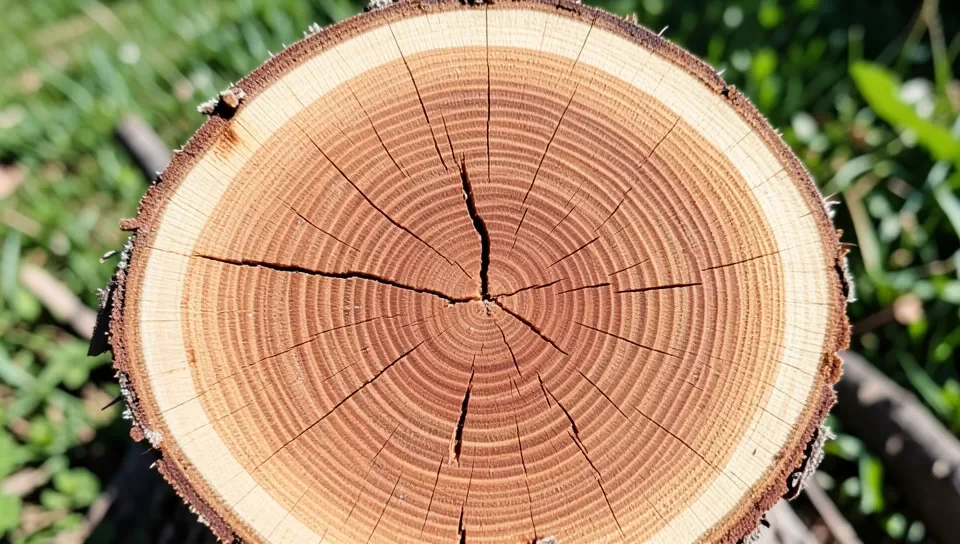
Apple wood’s reputation for being “impossible to carve” almost always traces back to cracking, not hardness. The wood loses moisture through its end grain many times faster than through its sides, so a round log or thick blank dries unevenly — the outside shrinks while the core is still wet, and that mismatched shrinkage builds up internal stress until the piece splits open along a radial line straight from the pith outward, exactly like the crack pattern in the log section above. It’s not that apple can’t be carved; it’s that a lot of apple wood never gets the chance because it was left to dry in the sun on its own.
The fix most guides skip is simple: seal the end grain (and ideally the whole outer surface) with wax or a commercial end-sealer immediately after cutting, then let the piece dry slowly somewhere cool with low airflow — not near a heater, a fireplace, or in direct sun. A rough rule of thumb for air-drying hardwood is about a year per inch of thickness, though a carving-sized blank dries faster than a full log. Bagging a rough-out in paper with sawdust from the same piece, opening the bag every few days to let a little moisture escape, slows the process down further and evens it out.
Carve Green or Wait for Seasoning?
Most experienced carvers don’t wait for apple wood to fully season before starting. They rough out the shape while it’s still green, since green apple cuts noticeably easier than fully dried apple, then set the rough-out aside to dry slowly and come back to finish the fine detail once most of the movement and shrinkage has already happened. If you work this way, leave extra thickness everywhere during the rough-out stage — the piece will shrink as it dries, and removing material evenly matters more than removing it fast, because thick and thin sections next to each other dry at different rates and that’s exactly where a crack starts.
How Apple Wood Compares to Other Carving Woods
- Basswood — about 410 lbf Janka, no real grain figure, cheap and widely available; still the standard first wood for beginners because it’s forgiving of mistakes.
- Butternut — soft and easy to cut with attractive grain, but weaker and more prone to chipping on thin details than apple.
- Black cherry — about 950 lbf, darkens attractively with age and finish, moderate difficulty, much more available as milled lumber than apple.
- Black walnut — medium-hard with striking dark color, but interlocked grain in some boards causes tear-out similar to apple’s problem spots.
- White oak — about 1,360 lbf, strong open grain figure, but prone to splitting along the ray lines rather than the radial cracking apple shows.
- Apple — about 1,730 lbf, the finest detail retention on this list, but limited to small stock and the most crack-prone of the group if it isn’t dried carefully.
For a broader rundown of how other species stack up for carving in general, see our full guide to the best woods for carving.
Where to Actually Find Apple Wood
Apple almost never shows up at a regular lumberyard, because orchard and yard trees are too small, crooked, and low-yield to be worth milling commercially — there’s no real apple lumber industry the way there is for oak or maple. The realistic sources are orchard pruning or tree-removal jobs (ask a local orchard or tree service if you can take offcuts), firewood sellers if you catch the wood before it gets split and burned, and specialty carving-blank sellers who sell small, often partially dried apple wood chunks sized specifically for spoons and figures. Because the pieces you’ll find are almost always small, most apple wood carving projects stay modest in scale — spoons, small figures, handles, and inlay rather than large sculptural pieces. If you’re weighing apple against other options for a lathe project instead of hand carving, our guide to apple wood for turning covers the same hardness and cracking issues from that angle.
Best Tools and Technique for Carving Apple Wood
Because of the density, tool choice matters more with apple than with a soft carving wood. A knife or gouge with high-carbon steel (or a good stainless alloy built for edge retention) will hold up far better than a budget stainless blade that’s fine on basswood but rolls or dulls quickly on apple. Take smaller, lighter cuts rather than trying to remove as much wood per stroke as you would on a soft wood, and pay attention to grain direction near knots and branch unions — carving across interlocked grain instead of with it is the fastest way to tear out a chunk you can’t put back. Keep a leather strop within reach and touch up the edge often; a dull edge on dense wood takes more force to push, and more force on a small figure is exactly how carving injuries happen.
Finishing and Preserving Apple Wood Carvings
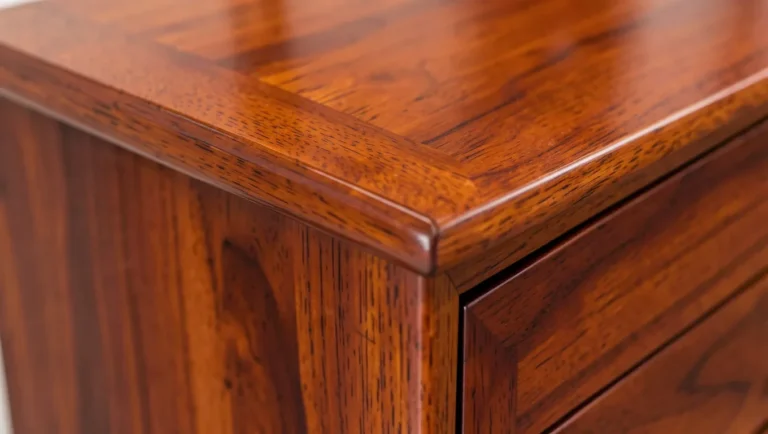
Apple’s tight grain takes a fine surface straight from sanding — working through 400 to 600 grit is usually enough to get a smooth, slightly polished look without needing a filler or sealer coat first. For kitchen items like spoons or spatulas, a food-safe finish such as mineral oil or a walnut-oil/beeswax blend is the standard choice. For decorative figures, a light paste wax brings out the grain without building up a plastic-looking film. One caution: don’t apply a film finish (varnish, lacquer) to a piece that hasn’t fully dried yet — trapping residual moisture under a sealed finish is a good way to get the exact radial cracking this guide is trying to help you avoid.
Frequently Asked Questions
Is apple wood good for carving?
Yes. Apple is a fine-grained, dense hardwood that takes crisp detail and a smooth polish, which is why it shows up in spoons, small figures, and inlay work. The catch is that it has to be seasoned correctly first — green or improperly dried apple wood is prone to cracking, and that reputation is what gives apple wood its “hard to carve” name.
How hard is apple wood to carve?
Apple wood has a Janka hardness rating of roughly 1,730 lbf, more than four times harder than basswood (about 410 lbf) and noticeably harder than black cherry (about 950 lbf) or white oak (1,360 lbf). A knife edge that lasts through an entire basswood project will dull faster in apple, so plan to strop or hone every 10–15 minutes of active cutting.
Should you carve apple wood green or let it dry first?
Many carvers rough out the shape while the wood is still green, since it cuts far easier than fully dried apple, then let the piece dry slowly before finishing the details once most of the movement has happened. If you carve green, leave extra thickness for shrinkage and remove material evenly — uneven thickness dries at uneven rates and that’s where cracks start.
How do you keep apple wood from cracking while it dries?
Seal the end grain (and ideally the whole outer surface) with wax or a commercial end-sealer right after cutting, then dry it slowly somewhere cool with low airflow — not near a heater or in direct sun. A rough rule of thumb for air-drying hardwood is about a year per inch of thickness. Bagging a rough-out in paper with same-species sawdust, and opening the bag periodically, slows moisture loss even further.
Where can you buy apple wood for carving?
Apple almost never gets milled and sold at regular lumberyards because orchard trees are too small and crooked to be commercial lumber. The realistic sources are orchard pruning or removal jobs, firewood sellers (check the wood before it gets split and burned), and specialty carving-blank sellers who sell small, partially dried apple wood chunks sized for spoons and figures.
Conclusion
Apple wood is genuinely good for carving — fine, tight grain that takes detail well and holds a clean edge off the knife. What it isn’t is forgiving of bad drying: the hardness is manageable with the right tools and a bit more stropping, but a blank that dries too fast will crack regardless of how good your technique is. Season it slowly with the end grain sealed, or rough it out green and let it dry before the final pass, and apple wood earns its reputation as one of the better fruitwoods for detailed small carving.
Sponsored / affiliate links. As an Amazon Associate I earn from qualifying purchases. I may earn additional commission from eligible campaigns.