Is Birch Good for Cutting Boards Safe or Not
Many folks wonder, Is Birch Good for Cutting Boards? Safe or Not? It’s a common question for anyone starting their kitchen adventures.
You want a cutting board that works well and is safe for your food, but sometimes the choices seem tricky. Don’t worry, we’ll make it super simple. We’ll walk through everything you need to know, step by step, so you can feel confident in your kitchen.
Get ready to learn all about birch wood for your cutting needs.
Is Birch Good for Cutting Boards Safety First
This section looks at why safety is the top concern when picking a cutting board material. We explore how wood can interact with food and how to ensure it’s a healthy choice for your kitchen. Understanding the basics helps you make smart decisions about what touches your meals.
Wood’s Natural Properties for Food Prep
Wood has been used for ages in kitchens. Its natural feel is nice, and it looks good on the counter. But when we talk about food, we need to be sure it’s clean and safe.
Some woods have natural oils or are very porous, which can be a problem. We want a wood that doesn’t soak up juices too much or let germs grow easily. This makes it important to know which woods are best suited for preparing our food.
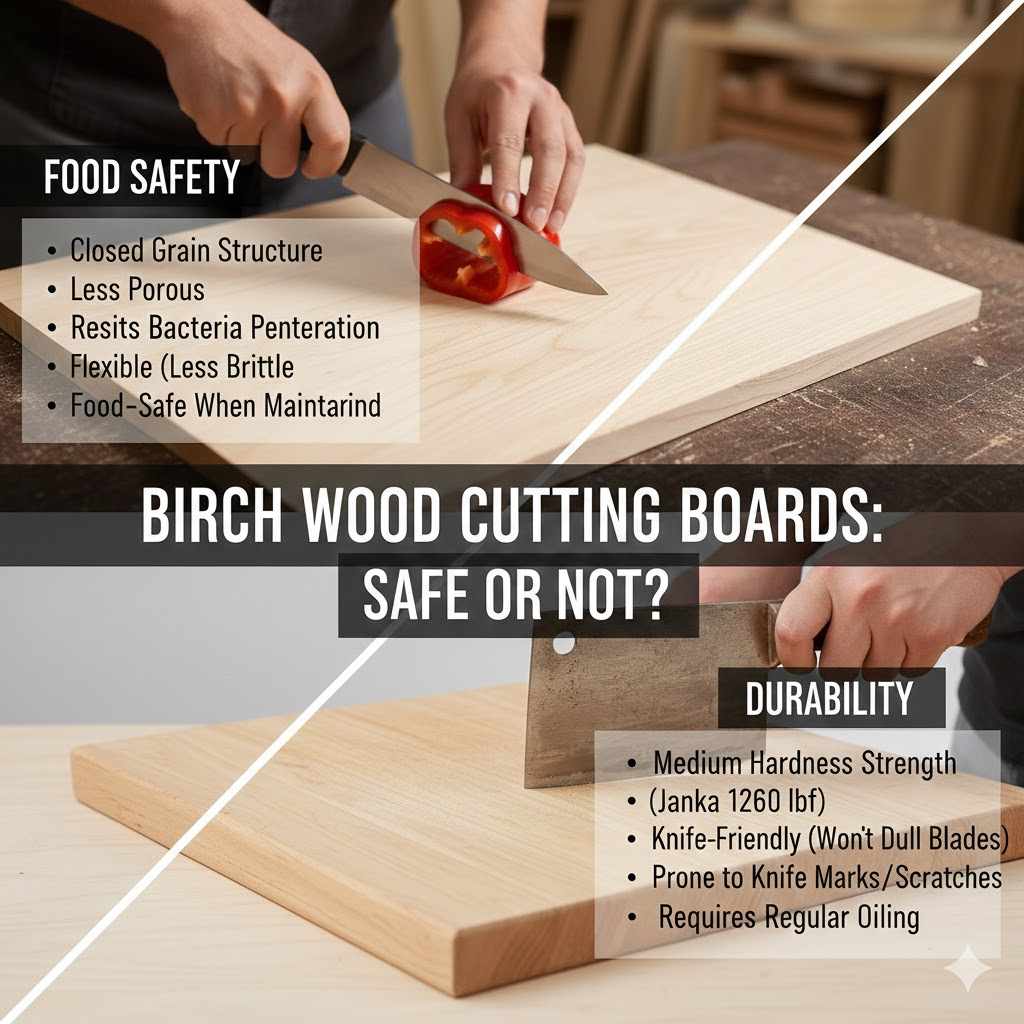
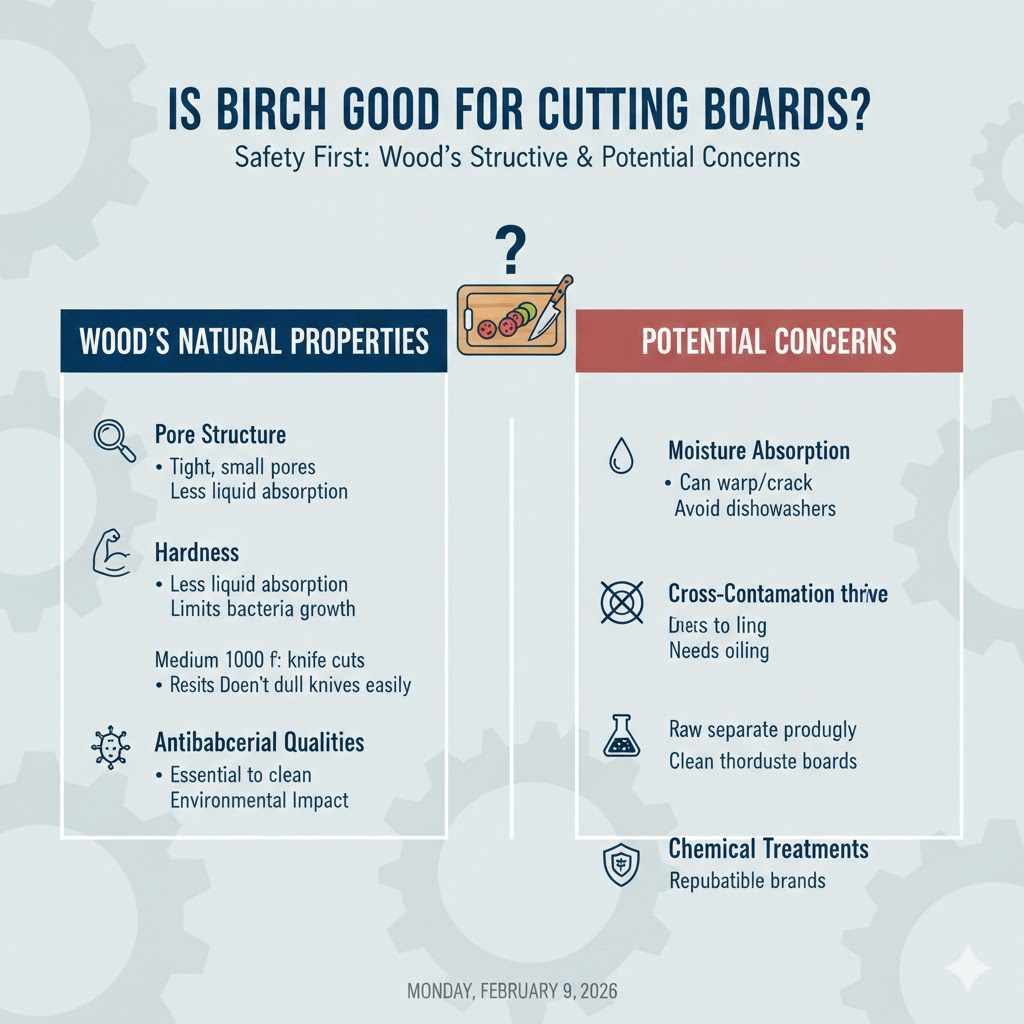
- Pore structure in wood plays a big role in how clean a cutting board stays. Woods with tight, small pores are less likely to absorb liquids like meat juices or vegetable water. This means fewer places for bacteria to hide and grow.
Birch has a fine grain and relatively closed pores, which helps in keeping it cleaner. Compared to woods with large open pores, birch offers a better barrier against unwanted guests.
- Hardness is another key factor for cutting board longevity and safety. A board that is too soft will get cut up easily, creating nicks and grooves. These grooves can trap food particles and bacteria, making it hard to sanitize properly.
Birch wood is considered a medium-hard wood. This means it can withstand knife cuts better than softer woods but is not so hard that it will dull your knives quickly. This balance is good for both the board and your kitchen tools.
- Natural antibacterial qualities are a bonus in any food preparation surface. Some wood types contain natural compounds that can help kill bacteria. While birch doesn’t have the same strong antibacterial reputation as some other woods, its tight grain still limits the environment for bacteria to thrive.
Regular cleaning and maintenance are still essential, but the wood’s natural structure provides a good starting point for a safe surface.
Potential Concerns with Wood Cutting Boards
Even with good wood, there are things to watch out for. Wood can dry out and crack if not cared for. Cracks are like tiny valleys where bacteria love to hang out.
Also, some woods might contain natural toxins or leach chemicals, though this is rare with common kitchen woods. It’s important to know the source of your wood and how it’s treated.
- Moisture absorption is a common issue with any wood. When wood gets wet, it swells. When it dries, it shrinks.
This constant change can lead to warping or cracking over time, especially if the board is exposed to extreme heat or cold, or if it’s washed in a dishwasher. Birch’s tighter grain helps reduce how much moisture it absorbs compared to more open-grained woods. However, proper drying and oiling are still crucial steps to prevent damage.
- Cross-contamination is a risk with any cutting board, regardless of the material. This happens when juices from raw meat, for example, transfer to ready-to-eat foods. While wood can harbor bacteria, regular and thorough cleaning can significantly reduce this risk.
Using separate cutting boards for raw meats and produce is a common practice to prevent this. Birch’s surface can be cleaned effectively, but consistent good habits are key.
- Chemical treatments during manufacturing are a concern for some. If birch wood is treated with harmful chemicals or glues during its production, it could be unsafe. Reputable manufacturers use food-safe finishes or no finish at all for cutting boards.
Always check the product details or choose brands known for their safety standards. This ensures that the wood is safe for direct food contact.
Is Birch Good for Cutting Boards Performance and Durability
Beyond safety, how well does birch wood hold up in a busy kitchen? This part focuses on how durable birch cutting boards are, how they perform with knives, and what you can expect in terms of their lifespan. Good performance means a board that serves you well for a long time.
Knife Friendliness of Birch Wood
A good cutting board should not ruin your knives. You want a surface that offers a bit of give when you cut, so your knife blade doesn’t get nicked or dull too fast. This is often called being “knife-friendly.” Birch is generally considered to be quite good in this regard.
It offers a nice balance that protects your knife edges while still providing a stable cutting surface.
- The hardness of birch is a key factor in its knife-friendliness. While it’s hard enough to resist deep cuts, it’s not so hard that it acts like stone or glass against your knife. Woods that are too hard can damage the fine edge of your kitchen knives, requiring them to be sharpened more often.
Birch falls into a sweet spot, offering enough resistance to stop your knife but yielding enough to prevent excessive wear on the blade. This makes it a favorite for chefs and home cooks alike.
- The grain pattern also contributes to how a knife interacts with the wood. Birch typically has a fine, straight grain. This means the wood fibers run mostly in one direction.
When a knife cuts across these fibers, it severs them cleanly. This results in less resistance and a smoother cutting experience. Unlike woods with interlocking or wavy grain, birch offers a more predictable and gentler interaction with your sharpest blades.
- Compared to other popular cutting board woods like maple or walnut, birch often sits in a similar performance category for knife edge retention. Maple is very hard and dense, which some find slightly harder on knives. Walnut is softer and more porous than birch.
Therefore, birch offers a practical middle ground that many find ideal for everyday kitchen tasks, balancing blade preservation with board durability.
Durability and Longevity of Birch Cutting Boards
How long will a birch cutting board last? This depends on how you use and care for it. Birch is a decent hardwood, meaning it’s strong and can take a beating.
With the right upkeep, a birch cutting board can be a kitchen staple for many years. It’s built to handle the daily demands of chopping, slicing, and dicing.
- Birch wood’s density and structure contribute significantly to its durability. It’s a strong wood that can resist dents and gouges well, which is important for a cutting board that sees constant use. While it will show signs of wear over time, as all wooden cutting boards do, it holds up better than softer woods.
This means fewer deep cuts where bacteria can hide and a longer useful life for the board itself.
- The lifespan of a birch cutting board can be extended by proper care. Regular oiling keeps the wood from drying out and cracking. Avoiding prolonged soaking and never putting it in the dishwasher are also critical.
These simple steps help maintain the wood’s integrity and prevent common problems like warping or splitting. A well-maintained birch board can last for a decade or more.
- Consider the construction of the cutting board. A “butcher block” style board made from thick pieces of birch glued together is generally more durable than a thin, laminated board. The thicker boards are more stable and less prone to warping.
They also offer a more substantial feel and can be planed down if they become too deeply scored over many years of use.
Is Birch Good for Cutting Boards Maintenance and Care
Keeping your birch cutting board in great shape is key. Good maintenance makes it last longer and stay safer to use. This section gives you the simple, clear steps you need to follow to care for your board properly.
Cleaning Your Birch Cutting Board
Cleaning is the most important part of caring for any cutting board. For birch, it’s straightforward. You want to clean it after every use to get rid of food bits and germs.
Avoid harsh chemicals that could harm the wood or be unsafe for food.
- The best way to clean a birch cutting board is with warm water and a mild soap. Use a sponge or a soft brush to scrub the surface. Make sure to get into any nooks or crannies.
Rinse it thoroughly with clean water to remove all soap residue. This simple process removes most food particles and surface grime.
- For tougher spots or to sanitize, you can use a solution of white vinegar or a diluted bleach solution (about 1 teaspoon of bleach per quart of water). After using either of these, be sure to rinse the board very well with plain water. This helps to remove any lingering odors or sanitizing agents.
Always follow up with proper drying.
- Never, ever put your wooden cutting board in the dishwasher. The intense heat and prolonged exposure to water will cause the wood to warp, crack, and break apart. The harsh detergents can also strip the natural oils from the wood, leaving it dry and prone to damage.
Hand washing is the only way to go for wooden boards.
Oiling and Conditioning Birch Cutting Boards
Oiling is like giving your birch cutting board a drink. It keeps the wood from drying out, prevents cracks, and makes it more resistant to stains and moisture. It also helps maintain that smooth, appealing surface.
- Use a food-grade mineral oil or a specialized cutting board conditioner. These oils penetrate the wood and create a protective barrier. Apply the oil generously to all surfaces of the board.
Let it soak in for at least a few hours, or even overnight. Then, wipe away any excess oil with a clean cloth. This process should be done regularly, perhaps once a month, or whenever the board looks dry.
- Another option is to use a blend of mineral oil and beeswax. This creates a harder, more protective finish that can last a bit longer. You can buy pre-made cutting board waxes or make your own.
This type of conditioning offers an extra layer of defense against moisture and stains, keeping your board looking and performing its best.
- Frequent oiling is especially important for new boards. They need to be seasoned before their first use to ensure they are well-protected. After the initial seasoning, continue to oil them as needed.
You’ll notice the wood looking dull or feeling dry when it’s time for another coat. Consistent care prevents common issues and keeps the board hygienic.
Tips for Prolonging the Life of Your Board
There are a few extra tricks to keep your birch cutting board in top shape for years. These are simple habits that make a big difference.
- Always dry your cutting board completely after washing. Stand it upright or place it on a drying rack so air can circulate around all sides. Never leave it flat on the counter to dry, as this can trap moisture and lead to warping or mildew.
Proper drying is just as important as proper cleaning.
- Use different cutting boards for different tasks if possible. Have one for raw meats and another for fruits and vegetables. This significantly reduces the risk of cross-contamination.
If you only have one board, clean and sanitize it thoroughly between uses for different food types. This simple step is a game-changer for kitchen safety.
- If your board develops deep knife marks over time, you can sand it down to a smooth surface. Use fine-grit sandpaper and sand in the direction of the wood grain. After sanding, wash the board and then re-oil it.
This process can revive an older board, making it look almost new again and ensuring it remains sanitary and safe for food preparation.
Is Birch Good for Cutting Boards Compared to Other Woods
How does birch stack up against other popular choices for cutting boards? This comparison helps you see the pros and cons and decide if birch is the right fit for your kitchen needs. We’ll look at common alternatives.
Birch vs. Maple Cutting Boards
Maple is often seen as the gold standard for cutting boards. It’s a very hard, dense wood with a fine grain, similar to birch. Both are excellent choices, but there are slight differences.
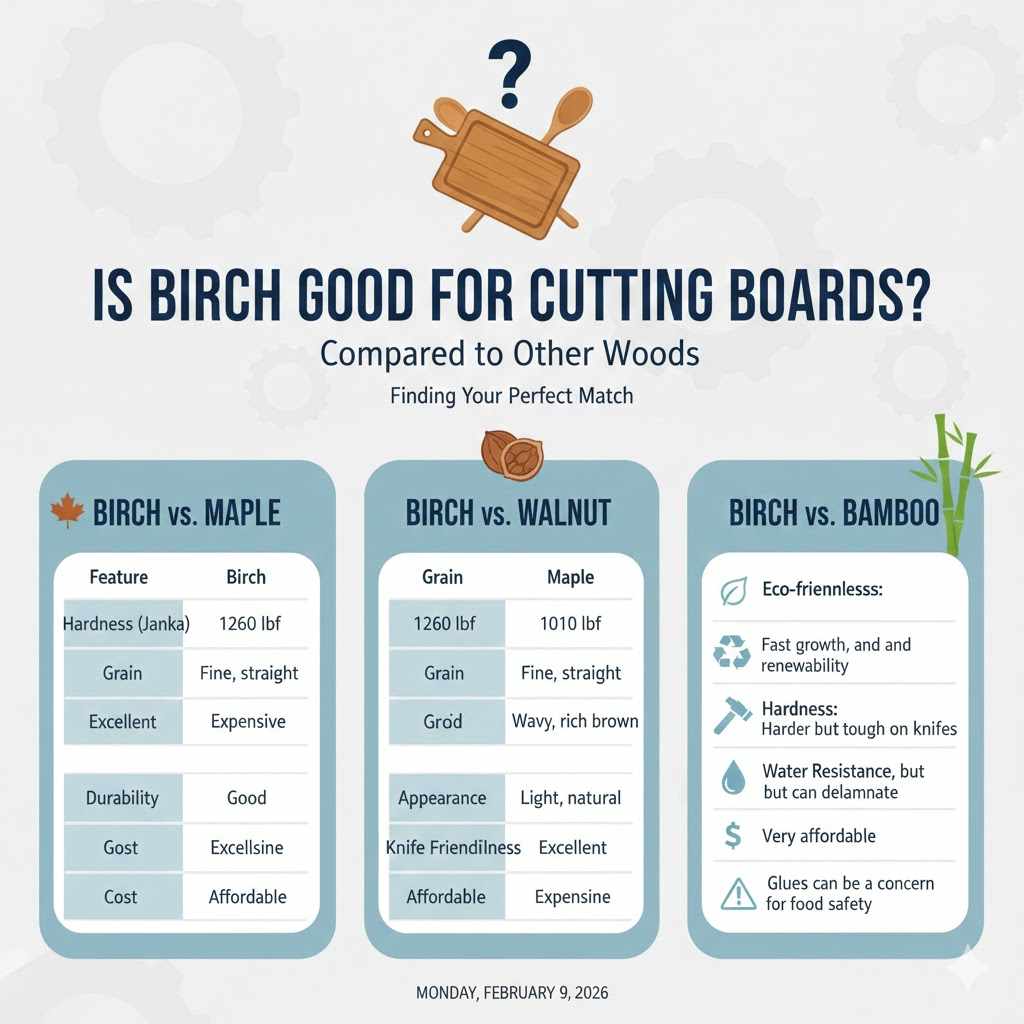
| Feature | Birch | Maple |
|---|---|---|
| Hardness (Janka Scale) | ~1260 lbf | ~1450 lbf |
| Grain | Fine, straight | Fine, straight |
| Pore Structure | Closed | Closed |
| Durability | Good | Excellent |
| Knife Friendliness | Good | Good, slightly harder on knives |
| Cost | Often more affordable | Mid-range to expensive |
Maple is generally harder and denser than birch, making it slightly more resistant to knife marks and wear. However, this also means maple can be a bit tougher on your knife edges. Birch offers a great balance of durability and knife-friendliness at a often more attractive price point.
Both are considered very safe and effective for cutting boards when properly maintained.
Birch vs. Walnut Cutting Boards
Walnut is a beautiful wood, known for its rich dark color. It’s often softer than maple and birch, which can be a pro or a con depending on your preference.
| Feature | Birch | Walnut |
|---|---|---|
| Hardness (Janka Scale) | ~1260 lbf | ~1010 lbf |
| Grain | Fine, straight | Can be straight, wavy, or irregular |
| Pore Structure | Closed | Moderately closed |
| Durability | Good | Moderate |
| Knife Friendliness | Good | Excellent, very gentle on knives |
| Appearance | Light, natural | Dark, rich brown |
| Cost | Often more affordable | Mid-range to expensive |
Walnut is exceptionally gentle on knife blades due to its slightly softer nature and typically larger pore structure compared to birch. This makes it a favorite for those who want to preserve their knife edges. However, its softer nature means it might show knife marks a bit more readily than birch.
If you prioritize knife edge preservation above all else and don’t mind a bit more wear, walnut is a great choice. For a good all-around performer that’s a bit tougher, birch is a strong contender.
Birch vs. Bamboo Cutting Boards
Bamboo is a grass, not a wood, and it’s often marketed as an eco-friendly and durable option. It’s made by pressing bamboo strips together with adhesives.
- Eco-friendliness: Bamboo is a rapidly renewable resource, making it a popular choice for environmentally conscious consumers. It grows much faster than hardwood trees. This quick growth cycle means it can be harvested more frequently without depleting the resource.
- Hardness and Durability: Bamboo is quite hard, often harder than maple. This makes it very resistant to knife marks. However, the way it’s constructed, by laminating strips with glues, can sometimes lead to issues.
The glues used can be a concern for food safety if not food-grade. Also, the density can be very hard on knife edges.
- Water Resistance: Bamboo can be fairly water-resistant due to its natural density and the glues used in its construction. However, some bamboo boards can delaminate or crack if exposed to excessive moisture. Proper care, similar to wood, is still needed.
- Cost: Bamboo cutting boards are often very affordable, making them an attractive option for budget-conscious shoppers. Their widespread availability and efficient production methods contribute to their lower cost.
While bamboo is durable and renewable, the glues used in its construction are a significant consideration for many. Birch, being a solid piece of wood, avoids this concern. The choice between birch and bamboo often comes down to prioritizing natural wood versus a manufactured composite material.
Frequently Asked Questions
Question: Is birch wood safe for cutting boards?
Answer: Yes, birch wood is generally considered safe for cutting boards. It has a fine, closed grain which helps reduce moisture absorption and bacteria growth, and it’s typically free from harmful natural toxins. Proper maintenance ensures its safety.
Question: Will birch cutting boards dull my knives quickly?
Answer: Birch is a medium-hard wood, offering a good balance. It’s not as hard as maple, which can dull knives faster. It’s softer than some synthetic materials.
So, it should be reasonably gentle on your knife edges with regular use and care.
Question: How often should I oil my birch cutting board?
Answer: You should oil your birch cutting board at least once a month, or whenever it looks dry. If you live in a dry climate or use it very frequently, you might need to oil it more often. Regular oiling keeps the wood from drying out and cracking.
Question: Can I wash my birch cutting board in the dishwasher?
Answer: No, you should never wash a birch cutting board in the dishwasher. The heat and prolonged exposure to water will damage the wood, causing it to warp, crack, or split. Always hand wash your wooden cutting board with warm, soapy water.
Question: What is the best way to clean a birch cutting board?
Answer: The best way to clean a birch cutting board is by hand with warm water and mild dish soap. Use a sponge or soft brush to scrub, rinse thoroughly, and then dry it completely. For tougher stains or sanitizing, a diluted vinegar or bleach solution can be used, followed by a good rinse.
Summary
So, is birch good for cutting boards? Yes, absolutely. It’s a safe, durable, and knife-friendly choice for your kitchen.
With simple care like regular cleaning and oiling, your birch cutting board will serve you well for many years, providing a reliable surface for all your food prep needs.