Is Birch a Softwood or a Hardwood? The Real Answer
Birch is a hardwood, not a softwood – even though a lot of people assume the opposite the first time they handle a piece. That mix-up is understandable: “hardwood” sounds like it should mean hard, and paper birch has a Janka hardness of only about 910 lbf, softer than some woods that are actually labeled softwood. The real answer has nothing to do with how the wood feels in your hand.
Hardwood and softwood are botanical categories based on how a tree reproduces, not a scale of physical hardness. Birch trees are deciduous, broadleaf, and flower-bearing, which places them firmly in the hardwood group regardless of how soft or hard any individual board feels. Below is the science behind that classification, the real Janka numbers for the three common birch species, and two classic exceptions – balsa and yew – that show why “hardwood” and “hard” aren’t the same word.
Hardwood vs. Softwood: The Botanical Classification Explained
Best Baltic Birch Plywood for Small Projects
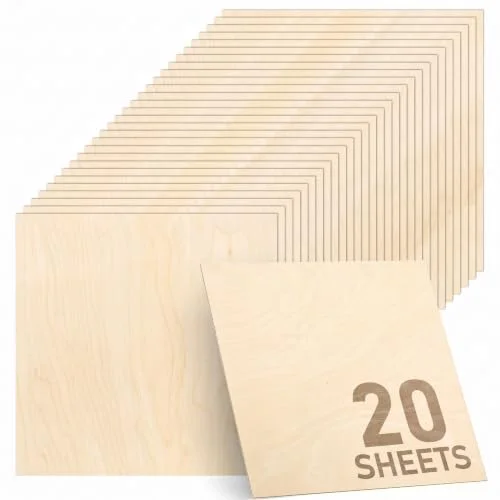 |
TX liteart Baltic Birch Plywood, 1/8in, 20 Sheets – $33.99 Since birch’s angiosperm classification is what makes it a true hardwood, this is real Baltic birch veneer plywood – not a softwood substitute – sized for laser cutters, CNC work, and small hardwood projects.
|
Foresters and botanists split trees into two groups based on their reproductive structures, not their density. Coniferous trees – pines, firs, spruces, cedars – are gymnosperms, meaning their seeds are “naked,” carried in cones rather than enclosed in fruit. Their wood is classified as softwood. Deciduous, broadleaf trees – oaks, maples, cherries, and birches – are angiosperms, meaning their seeds develop inside a fruit, pod, or husk. Their wood is classified as hardwood.
- Softwood (gymnosperm): evergreen conifers with needles or scale-like leaves and naked seeds carried in cones – pine, fir, spruce, cedar, redwood.
- Hardwood (angiosperm): deciduous, broadleaf trees that flower and enclose their seeds in fruit – oak, maple, cherry, walnut, and birch.
Why This System Ignores Actual Hardness
This system was settled by botanists long before anyone measured wood hardness with a tool. It groups trees by biology first, and as a side effect, most hardwoods do turn out denser than most softwoods, because slow-growing deciduous trees tend to pack their cell walls tighter. But “most” is not “all,” and the exceptions are common enough that relying on the name alone will mislead you – birch is one of them.
| Feature | Softwood | Hardwood |
|---|---|---|
| Tree type | Coniferous (evergreen, needles, cones) | Deciduous (loses leaves, broad leaves, flowers/fruit) |
| Botanical group | Gymnosperm | Angiosperm |
| Growth rate | Generally faster | Generally slower |
| Typical density | Generally lower | Generally higher |
| Cell structure | Simpler (mostly tracheids) | More complex (vessels, fibers, parenchyma) |
| Common uses | Framing, paper, general construction | Furniture, flooring, cabinetry, fine woodwork |
This table holds for most species, but it is a generalization, not a rule – which is exactly why the botanical classification, not the comparison table, is what actually decides whether birch is a hardwood.
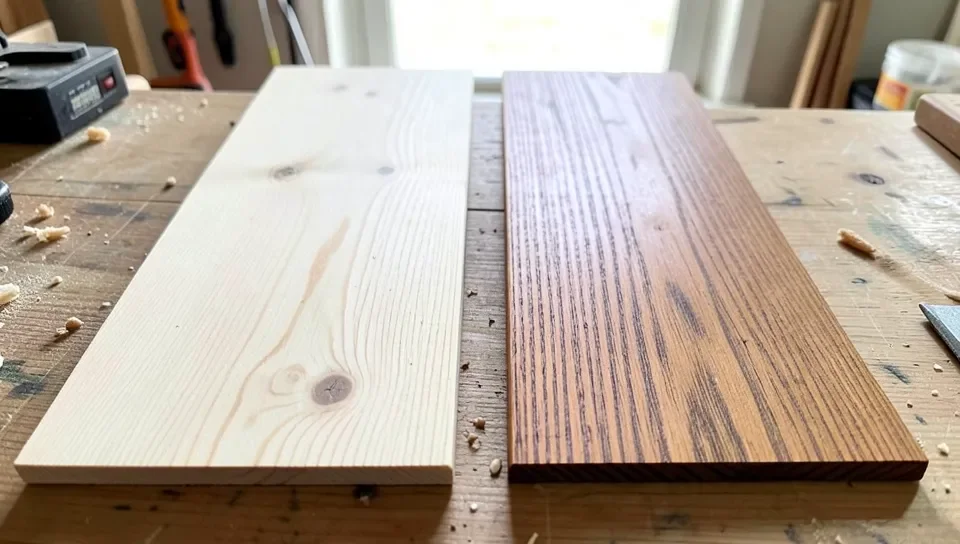
Is Birch a Softwood or a Hardwood? The Real Answer
Birch belongs to the genus Betula, a group of deciduous, broadleaf trees native to the temperate and boreal forests of the Northern Hemisphere. Birch trees lose their leaves every fall, flower in spring, and produce seeds inside small winged fruits called samaras. That reproductive profile is the entire test: birch is an angiosperm, so birch is botanically a hardwood. There’s no asterisk – the classification is settled by biology, not by how the lumber feels under a hand plane.
The Real Janka Hardness Numbers for Birch
Here’s where the confusion actually comes from: not all birch is equally hard, and none of the common species are as hard as people expect from the word “hardwood.” Janka hardness measures the force needed to embed a steel ball halfway into a wood sample, and birch’s numbers vary noticeably by species:
- Paper birch: about 910 lbf – the softest of the common birches.
- Yellow birch (the species most often sold simply as “birch” lumber): about 1,260 lbf.
- Sweet birch (also called black birch): about 1,470 lbf, close to hard maple.
For reference, white oak sits around 1,360 lbf and hard maple around 1,450 lbf. That puts yellow birch only modestly softer than white oak, and sweet birch essentially in the same range as hard maple. Paper birch is the real outlier – genuinely soft for a hardwood, which is exactly why lumber sold as generic “birch” (almost always yellow birch) feels noticeably firmer than paper birch plywood or veneer does.
The Balsa and Yew Paradox
Two classic examples show exactly why the botanical system and the everyday meaning of “hard” and “soft” don’t line up. Balsa wood – the famously light, crushable material used in model airplanes – comes from a fast-growing tropical flowering tree, Ochroma pyramidale. Because that tree is an angiosperm, balsa is, by definition, a hardwood, despite a Janka hardness of roughly 100 lbf, a tiny fraction of birch’s.
Yew runs the opposite direction. It’s a coniferous, cone-bearing, needle-leaved evergreen – a gymnosperm – so it’s classified as a softwood. But yew is dense and springy enough that it was the preferred wood for English longbows for centuries, with a Janka hardness around 1,520 lbf – harder than sweet birch and close to hard maple. A “softwood” that outhardens most hardwoods is the clearest reminder that the name describes the tree’s family tree, not the board’s toughness.
Birch Wood Properties and Workability
Because birch is a hardwood, it behaves like one in the shop: it dulls edge tools faster than pine or fir, holds screws and glue joints securely, and sands to a smooth, even surface thanks to its fine, tight grain. Its pale, creamy color and subtle figure make it a common stand-in for pricier hardwoods like cherry or maple once it’s stained. For the full breakdown of grain, color variation, and species-by-species workability notes, see our dedicated birch wood characteristics guide.
Birch plywood deserves its own mention. It’s built from thin birch veneer layers glued with alternating grain direction, which makes it strong, stable, and resistant to warping – a big part of why it’s the default choice for laser-cut and CNC-cut craft projects, as well as furniture-grade cabinetry.
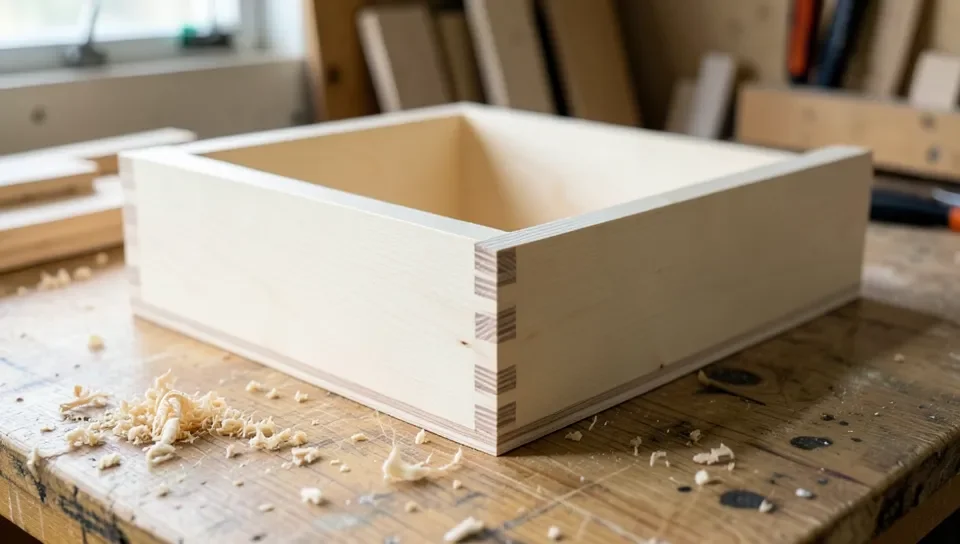
Where You’ll Find Birch Wood in Real Projects
Birch shows up constantly in furniture and cabinetry – drawer boxes, cabinet doors, and tabletops – partly because its light color and clean, even grain suit Scandinavian-style furniture and painted cabinets equally well. Kitchen cabinet makers favor it because it resists dents and scratches better than softer woods and takes paint without the grain telegraphing through. Beyond furniture, birch plywood is a favorite for musical instrument parts (drum shells in particular rely on it for its resonance), children’s toys, wooden utensils, and craft projects that need a stable, hardwood-grade sheet material.
Why the Softwood Confusion Happens
Most of the confusion traces back to two things: birch’s light color and papery bark read as “soft” to people who’ve never handled the actual lumber, and there’s genuine overlap in the middle of the hardness scale between softwood and hardwood species. Once you know the classification runs on tree biology – not a feel test – the name stops being confusing. Birch isn’t the hardest hardwood on the shelf, but it is, unambiguously, a hardwood.
Frequently Asked Questions
Is birch wood good for flooring?
Yes. Birch is a hardwood, so it holds up to foot traffic reasonably well, and its light, even grain takes stain nicely. Yellow birch (about 1,260 lbf) is the species most commonly milled for flooring; paper birch is softer and less common in flooring applications.
Does birch wood have a strong scent?
No. Birch has a mild, slightly sweet smell when freshly cut, but it isn’t considered a strongly aromatic wood, and the scent fades once the wood is dried and finished.
Is birch wood more expensive than pine?
Generally, yes. Birch is a hardwood and pine is a softwood, and hardwoods typically cost more because the trees grow more slowly and the wood requires more processing to mill and finish well.
Can birch wood be used outdoors?
Not well without help. Despite being a hardwood, birch isn’t naturally rot- or moisture-resistant the way cedar or redwood is, so outdoor use requires thorough sealing and regular maintenance to prevent decay.
How can I tell the difference between birch and maple wood?
Both are pale, fine-grained hardwoods, which makes them easy to mix up. Maple tends to have a slightly finer, more uniform grain and can show figuring like “bird’s eye” or “flame” patterns that birch rarely does; birch usually shows a bit more visible growth-ring patterning by comparison.
Final Thoughts
Birch is a hardwood – full stop – because that classification is decided by the tree’s biology, not by how hard the wood happens to feel. Paper birch’s softness and balsa’s near-total lack of density don’t change their hardwood status any more than yew’s surprising hardness changes its softwood status. For woodworking purposes, birch’s strength, fine texture, and finishing quality make it a dependable, versatile material for furniture, cabinetry, and plywood alike.
Sponsored / affiliate links. As an Amazon Associate I earn from qualifying purchases. I may earn additional commission from eligible campaigns.
 Baltic Birch Plywood 1/8'' x 12'' x 18'', 6 Pack, B/BB Grade, Void-Free Core, Laser Cutting Ready, Flat Sheets for CNC, Engraving, DIY Crafts, Art Painting, Wood Burning, Staining
 Baltic Birch Plywood Sheets Box of 45 - Laser Engraving Cutting, Scroll Saw Nature Veneer Color, Stronger Than Basswood, A/A Grade,12 x 12 x 1/8”, 3mm Thickness Perfect for Wood Burning