Is Wood Ash Good For Lawns? Essential GuideIs Wood Ash Good For LawnsIs Wood Ash Good For Lawns? Essential Guide
Yes, wood ash can be surprisingly good for lawns by helping to raise soil pH, adding essential minerals, and improving soil structure. However, it must be used correctly and sparingly to avoid harm. This guide will show you how to safely and effectively use wood ash to boost your lawn’s health.
Ever looked at the cozy fireplace ashes and wondered if they could do more than just keep your hearth clean? Many of us who enjoy a good fire, whether in a wood stove or an outdoor fire pit, end up with a pile of wood ash. It might seem like just a leftover, but that powdery residue can be a hidden gem for your lawn! For homeowners and DIYers like us, finding smart ways to reuse materials is always a win. It’s about being resourceful and tending to our homes, inside and out. But, like any good DIY tip, there’s a right way and a wrong way to do things. Let’s dive into whether wood ash is truly good for your lawn and how you can use it to encourage greener, healthier grass, the safe and simple way.
Understanding Wood Ash for Your Lawn
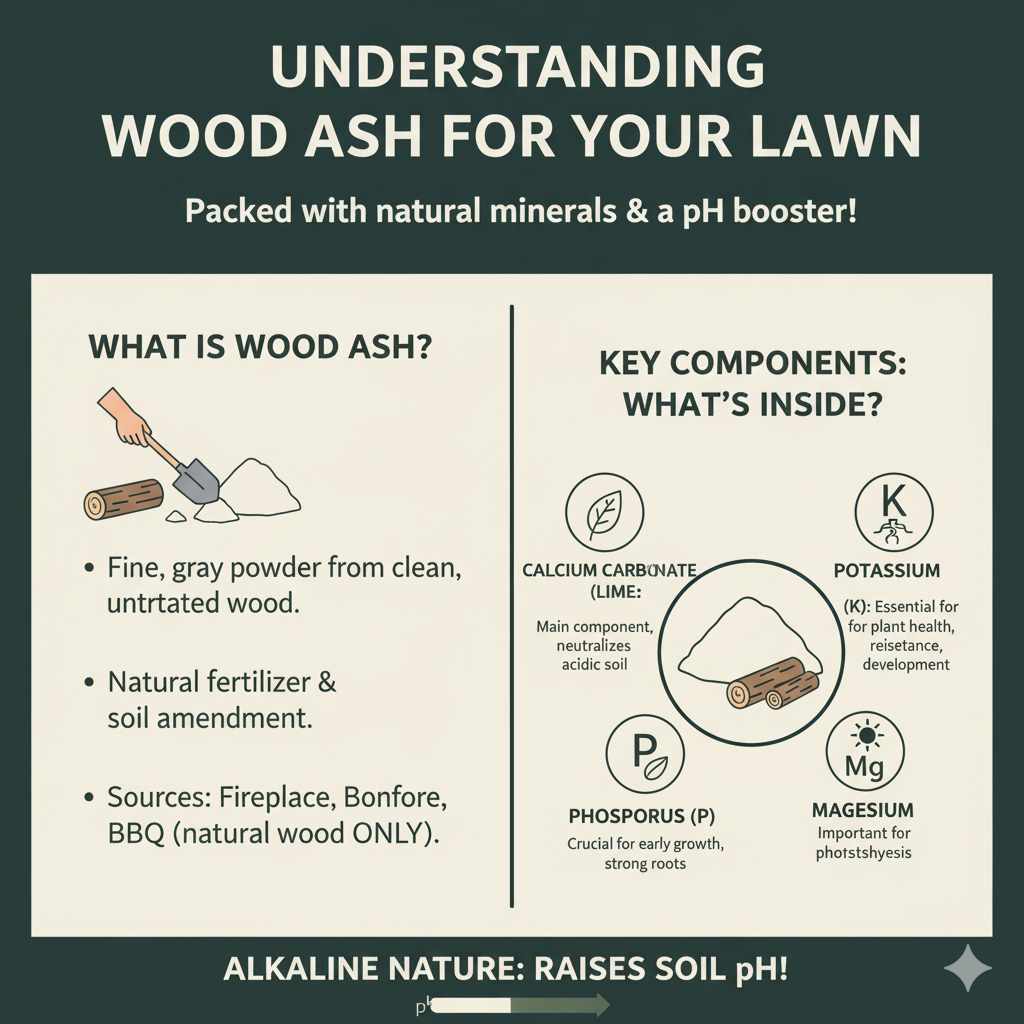
Wood ash is what’s left after wood burns completely. It’s not like charcoal ash; it’s a fine, gray powder. When we talk about using it on the lawn, we’re talking about the ash from clean, untreated wood. Things like fireplace ashes, bonfire ashes, or even ashes from your backyard BBQ can be candidates, provided they come from natural wood sources only. Think about it: many natural minerals are locked up in wood as it grows, and when it burns, these minerals are released into the ash. This makes wood ash a potential natural fertilizer and soil amendment.
The key components of wood ash that make it interesting for gardening and lawns are its mineral content and its alkaline nature. It’s rich in calcium, potassium, and phosphorus, all vital nutrients for plant growth. But the most significant effect wood ash has on soil is its ability to raise the pH level because it’s alkaline. Many lawns, especially in wetter climates, can become too acidic over time, which makes it hard for grass to absorb nutrients and thrive. Wood ash can help rebalance this.
What’s Actually In Wood Ash?
When you look at a pile of wood ash, it’s easy to just see gray dust. But a closer look reveals a spectrum of beneficial elements:
- Calcium Carbonate (Lime): This is the primary component, making wood ash alkaline and an excellent natural liming agent. It helps neutralize acidic soils.
- Potassium: Essential for overall plant health, disease resistance, and root development.
- Phosphorus: Crucial for early growth, flowering, and fruiting in plants, and contributes to strong root systems in grass.
- Magnesium: Another important nutrient for photosynthesis and chlorophyll production.
- Trace Minerals: Wood ash also contains small amounts of other beneficial minerals like iron, manganese, zinc, and copper, which are needed in tiny quantities but are vital for healthy plant function.
It’s important to remember that the exact composition can vary depending on the type of wood burned, how thoroughly it’s burned, and where the wood came from. Hardwoods generally produce ashes with higher mineral content than softwoods.
The Pros of Using Wood Ash on Your Lawn
Applying wood ash to your lawn, when done correctly, can offer several advantages. It’s a natural way to improve your soil and give your grass a boost, fitting perfectly into the DIY ethos of making the most of what you have.
- pH Adjustment: This is often the biggest benefit. Most lawns prefer a slightly acidic to neutral pH (around 6.0 to 7.0). If your soil is too acidic, grass struggles. Wood ash, being alkaline, can gently raise the soil pH, making nutrients more available to the grass. You can discover your soil’s pH with a simple soil test kit from a garden center or through your local cooperative extension office.
- Nutrient Boost: As seen above, wood ash contains valuable nutrients like potassium and phosphorus, which act as food for your grass, helping it grow thicker and stronger.
- Improved Soil Structure: The fine particles of ash can help improve soil aeration and drainage, especially in heavy clay soils. This allows water and air to penetrate the soil more easily, benefiting grass roots.
- Natural and Free Resource: If you have a fireplace or fire pit, wood ash is a readily available, natural material that would otherwise be discarded. It’s a fantastic way to recycle and save money on soil amendments.
- Pest Deterrent (Limited): Some gardeners report that a light dusting of wood ash can deter certain crawling insects like slugs and snails because the alkaline ash can irritate their soft bodies. However, this effect is usually temporary and very localized.
The Cons and Risks of Using Wood Ash
While wood ash has benefits, it’s not a magic bullet, and misusing it can cause more harm than good. Understanding the potential downsides is crucial for any responsible DIY project involving natural materials.
- Can Burn Grass: Applying too much ash, especially when the grass is wet, can burn the blades and damage the lawn. It’s also more likely to burn if applied directly to young seedlings.
- Can Raise pH Too High: If your soil is already neutral or alkaline, adding wood ash can push the pH too high (above 7.0). This can make essential micronutrients unavailable to grass, leading to deficiencies and yellowing even if the nutrients are present in the soil.
- Salt Content: Wood ash contains salts which, in high concentrations, can be harmful to plants and soil microbes.
- Contamination Risks: Never use ash from treated wood (like painted or pressure-treated lumber), composite materials, or coal. These can contain chemicals that are toxic to your lawn and even unsafe for you.
- Dust and Airborne Particles: Applying ash in windy conditions can create dust, which can be irritating to breathe and can scatter the ash unevenly.
- Slow Release of Nutrients: While it provides nutrients, the release can be slow, and it’s not a balanced fertilizer. It’s primarily a liming agent.
Because of these potential issues, moderation and careful application are key. It’s always best to approach this as a supplementary soil amendment rather than a primary fertilizer.
When and How To Apply Wood Ash to Your Lawn
Timing and method are everything when it comes to successfully using wood ash on your lawn. It’s not something you want to do on a whim. Here’s a breakdown of how to do it right, keeping it simple and safe.
Best Time to Apply
The ideal time for applying wood ash is during the cooler, drier months when your lawn isn’t actively growing at its peak and when the soil could benefit from the pH adjustment before the growing season kicks into high gear. This typically means:
- Late Fall: After the grass has stopped growing and before the ground freezes is a great time. The ash has time to integrate into the soil over winter.
- Early Spring: Before new grass growth starts vigorously or as the snow melts is another good option. This helps prepare the soil for the upcoming growing season.
- Avoid Hot, Dry Weather: Applying ash during scorching summer heat or prolonged dry spells can stress the grass and increase the risk of burn.
- Avoid Wet, Rainy Weather: Heavy rain can wash away the ash before it has a chance to work into the soil, or it could lead to runoff and potential environmental issues.
How Much is Too Much? (Dosage Guidelines)
This is where many go wrong. Less is definitely more when it comes to wood ash. Over-application is the quickest way to harm your lawn. There’s no universal magic number, as it depends heavily on your soil type, existing pH, and the type of wood ash. However, a general guideline for lawns with acidic soil (pH below 6.0) is:
- 10-30 pounds per 1,000 square feet.
This is a small amount. For comparison, if you’re spreading sand, 10 pounds is just a small bucketful. It’s far less than you might think!
Crucial Step: Test Your Soil! Before you spread any ash, get a soil test. This will tell you your current soil pH. If your pH is already 6.5 or higher, you likely don’t need to add wood ash, or you should use it in extremely small quantities. A soil test from your local cooperative extension is invaluable and often free or very low cost.
If you don’t have a soil test: Start with the absolute minimum – about 5 pounds per 1,000 square feet – and monitor your lawn. You can always add a little more later if needed, but you can’t take it away once it’s applied.
Application Method: Step-by-Step
Applying wood ash correctly ensures even distribution and minimizes damage. Here’s how to do it:
- Cool and Sift the Ash: Make sure the ash is completely cool. Sift it through a screen (a simple hardware cloth or an old sieve works well) with about 1/4-inch openings. This removes any larger chunks of charcoal or debris and ensures finer, more even spreading.
- Wait for Ideal Conditions: Choose a calm, dry day. If you can, apply it when there’s light moisture on the grass (dew), but not when heavy rain is forecast for the next 24-48 hours.
- Use a Spreader: The best tool for even application is a broadcast spreader (either a handheld one for small areas or a push spreader for larger lawns). Set it to its lowest setting.
- Apply Sparingly and Evenly: Walk at a consistent pace and spread the ash in a thin, uniform layer. Try to avoid clumping. If you don’t have a spreader, you can use a shovel or scoop and gently scatter it, but achieving an even layer is much harder this way.
- Water Lightly (Optional but Recommended): For the first application or if using a bit more ash, a light watering can help wash the ash off the grass blades and into the soil, reducing the risk of burn and speeding up its integration. Don’t flood the lawn.
- Observe Your Lawn: After applying, keep an eye on your lawn for any signs of stress, burning, or yellowing.
What Not to Burn for Lawn Ash
This is a critical safety and effectiveness point. Only use ash from clean, natural, untreated wood. Absolutely avoid ashes from:
- Treated Lumber: Anything pressure-treated or chemically preserved (like CCA, ACQ) is toxic.
- Painted or Stained Wood: The chemicals in paints and stains are harmful.
- Particleboard, Plywood, MDF: These engineered wood products contain glues and resins.
- Coal or Briquettes: These are not wood and can contain harmful heavy metals or chemicals.
- Meat or Plastics: Non-wood materials produce harmful contaminants.
Stick to ash from seasoned firewood burned in your fireplace or wood stove. When in doubt, don’t use it on the lawn.
Wood Ash vs. Commercial Lime: A Comparison
For many homeowners, the primary reason to consider wood ash is its liming effect. It raises soil pH, much like agricultural lime or dolomitic lime. But how do they stack up against each other?
Here’s a table to help illustrate the differences:
Cost
| Feature | Wood Ash | Commercial Lime (e.g., Agricultural Lime) |
|---|---|---|
| Primary Function | pH adjustment, source of some nutrients (K, P) | Primary function is pH adjustment (liming) |
| Nutrient Content | Contains potassium, phosphorus, calcium, magnesium, and trace minerals. Nutrient levels vary. | Primarily calcium carbonate and/or magnesium carbonate. Some have added nutrients. |
| Effect on pH | Raises pH, but can be unpredictable due to varying composition. Generally faster acting but shorter lasting than some forms of lime. | Raises pH in a more predictable and controlled manner. Different types (e.g., calcitic, dolomitic) offer varying speeds and magnesium content. |
| Ease of Application | Can be dusty, may clump, requires sifting for best results. Risk of burning if over-applied. | Available in granular forms, easier to spread evenly, less risk of burning if applied as directed. |
| Free if you have a fireplace/fire pit. | Requires purchase. Cost varies by type and quantity. | |
| Source Purity | Variable, risk of contamination from what was burned. | Processed and standardized; generally reliable content. |
In essence, wood ash is a multi-purpose amendment but requires more caution due to its variable nature and potential for burning or over-liming. Commercial lime is a more focused, predictable, and often easier-to-use product for solely addressing soil acidity.
Can You Use Wood Ash as a Fertilizer?
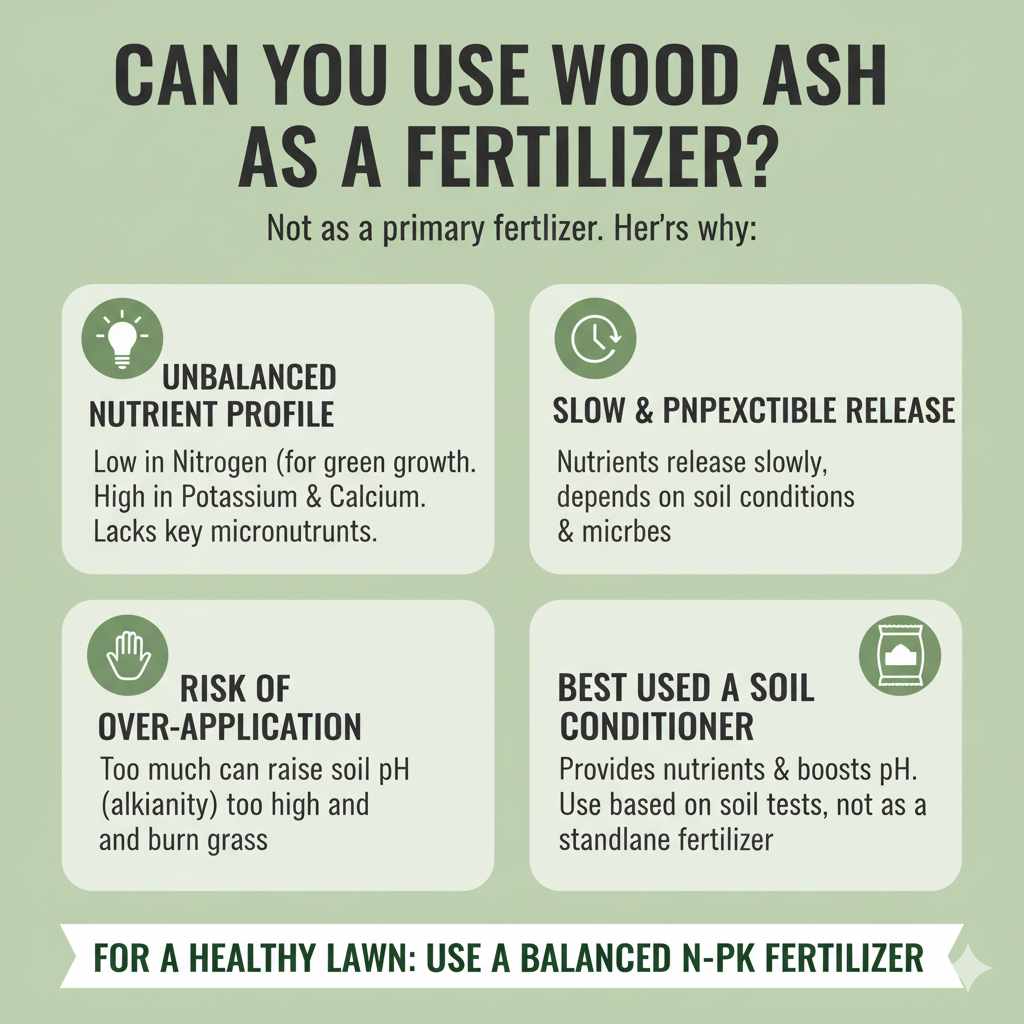
While wood ash does contain essential plant nutrients, it’s not typically recommended as a primary or balanced fertilizer for your lawn. Here’s why:
- Unbalanced Nutrient Profile: Wood ash is rich in calcium and potassium but is often low in nitrogen, which is the most crucial nutrient for green, leafy grass growth. It also lacks significant amounts of other micronutrients that might be needed.
- Slow or Unpredictable Release: The nutrients in wood ash are minerals that are not readily available to plants immediately. Their release depends on soil conditions and microbial activity.
- Risk of Over-Application: Trying to get enough potassium or phosphorus from wood ash could lead to an excessive amount of ash being applied, which would then cause pH issues and potential burning.
Think of wood ash as a soil conditioner that happens to provide some nutrients, rather than a dedicated fertilizer. For your lawn’s overall health, it’s best to use a balanced lawn fertilizer that provides the right N-P-K (Nitrogen-Phosphorus-Potassium) ratio, and use wood ash only as a supplementary soil amendment if a soil test indicates a need for liming or if you’re trying to boost potassium levels specifically. You can learn more about essential lawn nutrients from resources like the LawnStarter fertilizer guide.
Alternatives to Wood Ash for Lawn Care
If you’re hesitant about using wood ash, or if your soil doesn’t need its specific properties, there are other excellent, often simpler, ways to care for your lawn:
- Commercial Lawn Fertilizers: These are formulated with specific N-P-K ratios tailored for lawn growth and are readily available. They offer a balanced approach to feeding your grass.
- Lime (Agricultural or Dolomitic): If your soil test shows it’s too acidic, lime is the go-to product for raising pH. It’s more predictable and easier to control than wood ash.
- Compost: Well-rotted compost is a fantastic soil amendment that improves soil structure, adds organic matter, and provides a slow, steady release of nutrients. It helps with both sandy and clay soils.
- Slow-Release Fertilizers: These are designed to feed your lawn gradually over time, promoting consistent growth without rapid spikes and crashes.
- Organic Matter: Topdressing your lawn with a thin layer of compost or organic mulch annually can significantly improve soil health over time.
- Aeration and Dethatching: These practices improve air circulation, water penetration, and nutrient uptake, addressing many underlying lawn health issues that might otherwise prompt a search for soil amendments.
Choosing the right method depends on your lawn’s specific needs, as identified by a soil test and visual inspection. Always start with understanding what your lawn truly requires.
Frequently Asked Questions (FAQ)
Q1: Can I put wood ash on my lawn in the summer?
It’s generally not recommended to apply wood ash in the summer. The grass is already under stress from heat and potential drought. Applying ash, which is alkaline, can further stress the lawn and increase the risk of burning the grass blades. It’s best to stick to cooler seasons like late fall or early spring.
Q2: How often can I safely apply wood ash to my lawn?
Use wood ash sparingly. If your soil is acidic and a soil test confirms the need, you might apply it once every 1-2 years.