Jack O’ Lantern Mushroom Vs Chicken Of The Woods: Essential Identification
Mastering the Jack O’ Lantern vs. Chicken of the Woods Mushroom Identification Makes Foraging Safer a nd More Rewarding for Beginners
Comparing Jack O’ Lantern and Chicken of the Woods mushrooms is crucial for safe foraging. While both grow on wood this time of year, they look quite different. Knowing key identification features helps you avoid mistakes and find delicious edibles like the true Chicken of the Woods safely, even as a beginner forager. Read on for a clear, simple guide! “);;
For any budding mycologist or enthusiastic mushroom hunter, the chance to step out into the woods and fill your basket with nature’s bounty is incredibly exciting. Two particularly vibrant shelf or bracket fungi that often catch untrained eyes are the Jack O’ Lantern mushroom (Omphalotus olearius) and the strikingly beautiful Chicken Of The Woods (Laetiporus sulphureus). While both have distinct characteristics, misidentifying them can lead to a highly unpleasant, even severe, bout of food poisoning with the Jack O’ Lantern. Fear not! This straightforward guide will equip you with the essential knowledge to distinguish these fungi with confidence. We’ll break down their appearances, growth habits, and what makes them respectively desirable or to be avoided. Trust me, with a little practice and this clear comparison, you’ll be pointing them out like a pro in no time!
Why Accurate Identification Matters So Much
Venturing into the world of wild mushroom foraging is like entering a treasure hunt designed by nature. The thrill of discovery is undeniable, especially when you stumble upon a sought-after delicacy. Unfortunately, this treasure hunt can also involve impostors, and a direct comparison of distinguishing features is key.
The Jack O’ Lantern mushroom is infamous for its hallucinatory properties, and, crucially, it is _poisonous_. Despite its sometimes attractive orange color, consuming it can cause severe gastrointestinal distress, including vomiting and diarrhea. On the other hand, Chicken of the Woods, with its brilliant, layered growths, tender texture, and mild, chicken-like flavor, is a delicious and prized edible mushroom for many. The critical challenge is differentiating the deadly twins before anything enters your pantry—or, worse yet, your stomach!
Remember our guide to selecting tools for any workshop? Good tooling prevents errors and speeds success. The same principle applies to foraging: knowing your tools (or in this case, fungi,) prevents costly—and potentially painful—mistakes. If you were working a project and two pieces of lumber looked similar, you’d check the grain, weight, and markings. Mushroom identification follows the same keen observation skills. This is why understanding the nuances between poisonous and edible species is the absolute bedrock of responsible wild mushroom foraging.
This vital accuracy separates a healthy meal from a dangerous experience. We’ll illuminate the key differences to give you the confidence you need to forage smartly and safely.
Key Differences: Jack O’ Lantern vs. Chicken of the Woods Explained Simply
Let’s dive into a clear-cut breakdown of what distinguishes these two colorful fungi. Think of it as an inspector checking key features on blueprints. Different brands of tape measures might vary, but measuring “on the square” remains crucial. Similarly, the exact shades of orange may differ, but the fundamental characteristics of these fungi are consistently different.
Understanding The Jack O’ Lantern Mushroom (Omphalotus olearius)
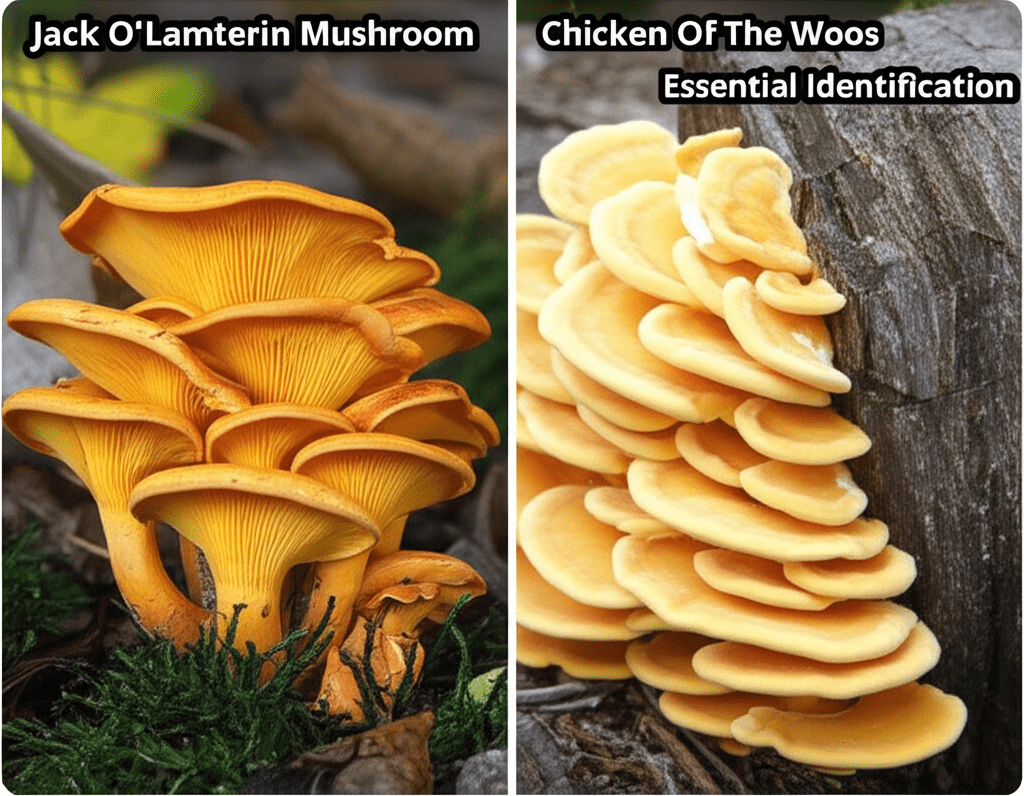
The Jack O’ Lantern often grows in dense clusters, carpeting logs, stumps, and the ground around the base of hardwoods. Its scientific name, Omphalotus, actually means “navel-like,” referring to its slightly sunken center cap, though not all specimens show this prominently. It’s crucial to know that what Omphalotus species commonly present as growing from the ground ARE actually growing from buried wood — a key clue for identification you won’t see for chicken of the woods.
Appearance of the Jack O’ Lantern:
To get a clear mental (and visual!) picture and see why it’s commonly foraged with concern:
- Cap Shape & Color: Typically starts as convex but flattens with age into a funnel or bell shape with a characteristic in-rolled margin. It’s a bright, almost waxy-looking orange, sometimes fading to yellowish or even brownish tones in direct sunlight or maturity.
- Gills: This is perhapsthe most defining characteristic of the Jack O’ Lantern mushroom for beginners. The Jack O’ Lantern has _decurrent_ gills – those that run a significant way down the stem. Critically, these bright orangish-red gills are _sharpedged_, uniformly spaced, and thin. Unlike pores of Chicken of the Woods, presence of definite thin gills IS a deal breaker for ediblity
- Stem: The stem is usually the same classic orange color as the cap, fibrous, and tapers towards the base. It does not have a skirt or annulus. For some, an in-depth feature is that The jack o’ lantern may glow faintly in the dark due to bioluminescence, but this isn’t a reliable identification characteristic since you’re unlikely to be in pitch black conditions that are good so be aware this it can exist.
- Habitat clue: While frequently found on wood, critically, Jack O’ Lanterns – particularly Omphalotus celebrensis’ – are well-indicated to have an ability to be near wood it isn’t directly growing on; e..g it may sprout on subterranean root systems or buried wood that no longer has any wood to sprout on top from. On ground, there tend not not notice _other_ mushrooms around where jacks tend to be , e.g; like at the edge of clear-ings this suggests they might out-compete each other here
Early morning dew on freshly drilled joints of pine can sometimes give it a look of the mushroom caps. Even seasoned pros might pause for a second glance, but consistent observation keeps foragers a step ahead.
A Comprehensive Look at Chicken of the Woods (Laetiporus sulphureus)
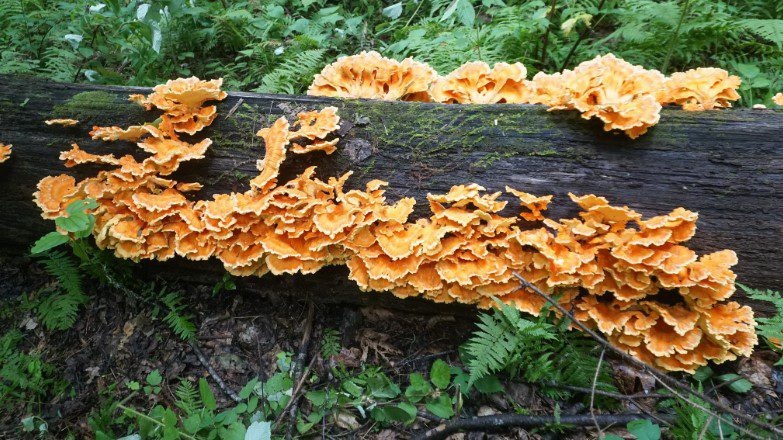
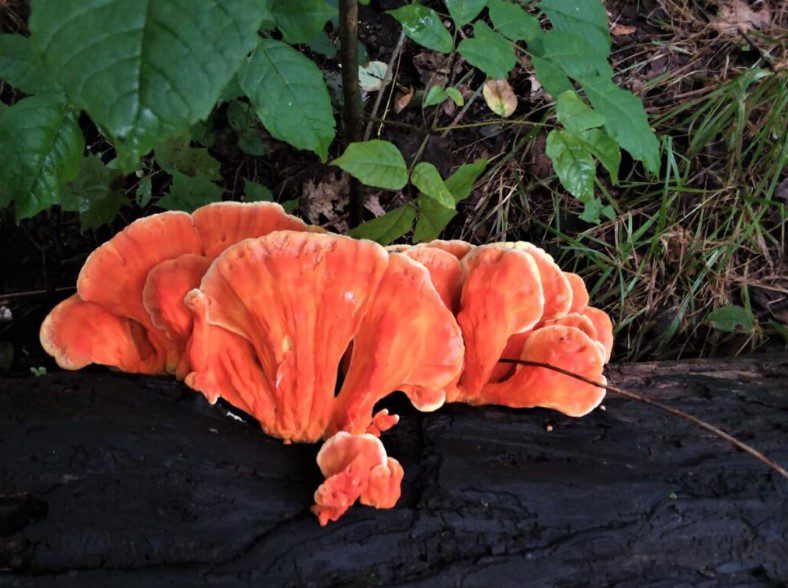
Chicken of the Woods is aptly named for its flavor and texture reminiscent of chicken in cooked dishes. This mushroom is a true triumph for forages: striking in both appearance and as a culinary ingredient. Fortunately for beginners, it’s far more distinct from its poisonous look-alike than many other edibles and equally-edible species.
Appearance of Chicken of the Woods:
Let’s get granular on identifying this delightful fruiting body:
-
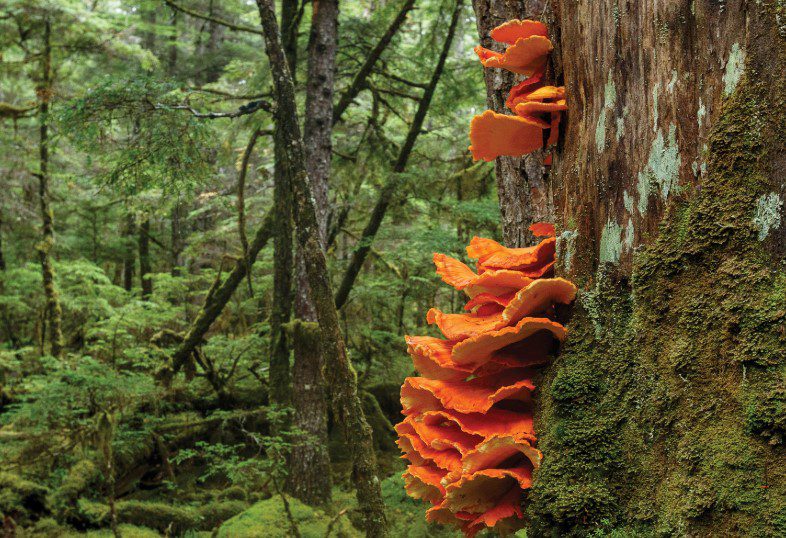
- Growth Habit: This vibrant fungus typically grows in shelves, rosettes, or overlapping fans, almost always attached directly to decaying hardwoods like oaks and elms (and sometimes phenols or willows). You’ll usually see it in large clusters growing sideways from a tree trunk or stump. It is very, very unlikely to grow exclusively trom the ground unless there is dead hard word that’s rotting and still in direct connect with its substrate base _so__ do check this
- Cap Shape & Color: This is perhaps its most commanding feature. The bright, sulphur-yellow to vibrant orange young fleshy caps form overlapping brackets which can grow to be an impressive 13 feet long! Mature specimens may fade to pale yellow or cream, losing their intense color after extended dry periods as also do their colour which fade or wash off
- Pores: This is a key distinguishing feature from the widely misunderstood Jack-o’-lantern mushroom for beginners. Chicken of the Woods DOES NOT have gills.
There are no true gills present under the cap’s surface where these grow. Instead, at the pore surface, a network of tiny little _pores._
- Spores: The spore color typically found is white or _bright yellow_ – Unlike more subtle colours which means we have gills, this pore surface colour shows a greater degree of it all. With Chicken of the Woods this is normal.
- Stem: The “stem” on these conks is generally absent or very reduced. When present, it’s stout and typically stubby, blending into the cap, and also creamy, yellowish-white. There’s no solid base going far below, as is normal in the case where it is growing and still looks much the same, and doesn'(look as if the base is any darker;
- Edibility & Flavor: It’s a delicious cooked delicacy, often described as having a tangy, lemony, or slightly “meaty” flavor. Young, tender parts found at the growing edge are preferred as older specimens can become rubbery and tough. As with most wild mushrooms, it should only be consumed thoroughly cooked and best results are _never_ raw; remember thoroughly
When you see that vibrant shelf of sulfur-yellow unfurling up a tree, it’s quite an iconic sight. It’s easy to tell you when there is doubt at all
Comparing Key Features of Confusion
To make this as crystal clear as possible, let’s directly compare the most confusing attributes of both species using aids typical in good DIY guides – comparisons matter greatly.
Here’s a table to make the critical differences immediately apparent. It’s really just about paying attention to the details, like reading a tape measure accurately against your workpiece.
| Feature | Jack O’ Lantern (Omphalotus olearius) | Chicken of the Woods (Laetiporus species) |
|---|---|---|
| Growth Cluster Type | Dense clusters, fan like shapes on wood or at ground around old wood/roots. Can hug surfaces. The stems often are central. | Overlapping shelves, rosettes, lobed and wavy tiers growing from trunks, branches from hardwoods. Often overhangs are prevalent |
| Under-Cap Spore Surface Types | Decurrent (running down STEM), sharp-edged, brittle, thin, equally thin, bright-orange to yellowish gills. | Small pores ( not gills) covering a smooth surface area or powdery down below. |
| Overall Colour Hue | Bright and waxy orange, can vary to pale yellow. | Vibrant sulphur-yellow at the margin, aging outwards to flesh tones of white or creamy beige/pale-yellow. |
| Stem Appearance | Central, tapered, fibrous, colored to match the cap. Appears clearly distinct and fibrous right to the ground sometimes fading brown . | Typically absent as a visible stem or very stout, short and blended into the main cap or shelving material so that it appears continuous. Doesn’t taper down. |
| Location | Wood, hardwood stumps and roots, sandy areas near salt marshes, and near pine trees, especially at forest edges; sometimes in fairy rings or singular patches, may appear on ground around dying woody plants this without being directly attached to any wood . Therefore on ground it does seem an unusual occurrence. | Always attaches _directly_ to growing ordead hardwood logs, especially common oaks but also hickories elm and some deciduous trees of different manner when they present that situation |
| Expected Spore Color. | White. (Note: Spore prints in darkness could be a slight bit of luminecing fact which can appear brighter to be aware that some members might state its yellow for bioluminescence .The real ones are only white; | Yield White or bright yellow spore prints depending on specific Laetiporus species which you gather . Hence, we might see the pore text remains coloured to yellow usually :.. ) |
| Glow in the dark? | Yes, faintly for some species, but unreliable as it needs a fully darkened eye to observe. Foragers often mention this and it is considered rare. Use all feature to id : just 1 feature will do if it’s enough to get right decision from you . | No. |
Expert Tips for Confident Identification (Beginner’s Edition!)
To put your mind at ease and set you up for success, here are some actionable tips that’ll turn you into a mushroom-spotting pro. Remember how important good scaffolding is for safe construction? Consistent, steady methods lead to sound results every time.
Here’s your beginner’s kit for foolproof foraging sanity checks:
- Start with “If in doubt, throw it out.” This is the golden rule of foraging, and it bears repeating from any mentor. Never take a risk, especially for deliciousness, that can lead to an emergency room visit, please. Keep your sanity. Your confidence in your finds must be total—absolutely 100%, total assurance even if this limits finds out there from yours
- Go with an experienced forager. To build early as solid learning experience and knowledge – like having an old timer there to steer your approach before undertaking some tricky joinary alone – the best way to ensure safe mushroom. Look for them near local woodland and learn from friends or local hunting and eating groups. These groups aim to expand the pool of those on woods . If this exists around you so this article may only augment our collective pursuit with additional info!
- Focus on ONE similar species FIRST at the beginning. It’s completely normal to start by focusing on distinguishing one species that looks similar to your target, then moving on by practicing another comparison such like our today one : you need total certain as to not fall from high place . A specific comparison will make you gain absolute knowledge about this specific species; learning what you need it on daily practice .
- When you find one, examine it as if you were a forensic investigator. It’s not just the obvious color. Look under the cap, examine the stem’s texture and shape, and even smell it. Laetiporus typically have a milder, less distinct mushroom smell, while the Jack O’ Lantern might have a slightly more pungent, earthy odor. However, olfactory clues are often subjective, so don’t bet your life on them alone
- Consult Multiple Resources AND cross-reference! Use good field guides, reputable apps, and especially reliable online databases or university extension sites. Good universities post extensive scientific resources online; remember Carnegie Museum of Natural History[link to their fungology section: https://publicresources.carnegiemuseums.org/education/all-about- fungi/ ]. Then, check that information against trusted local field studies, too. Many foraged recipes would be wonderful as you might collect many good finds on behalf of those on family with which it does seem beneficial.
Think about assembling, say, an Ikea furniture piece: following all instructions, checking each part, and ensuring everything is seated correctly before pulling tight. That methodical approach is your safety net in the woods. The goal here is to go from ‘pretty orange mushroom!’ to total identification mastery!
FAQs: Your Go-To Answers
Mushroom identification can bring up all sorts of questions for those new to the subject. Here’s a direct Q&A to banish common uncertainties!
My mushroom is orange and grows on wood. Is it Chicken of the Woods?
There absolutely is a possibility that might be so, BUT we’ve now covered how to confirm: Jack-o-lantern and Chicken of the Woods both grow on timber. But the Jack-o-lantern normally has true false edges under top of its hat the actual spores whereas Chicken of the Woods ONLY possesses a pale, dull, and sometimes brightly colored powder-puff texture so examine BOTH the colors and any gills really closely!
Are Jack O’ Lantern mushrooms poisonous through and through?
Yes, Jack O’ Lanterns are recognized specifically as poisonous – always keep them aside FROM anything you intend to ingest, no exceptions made even for as common as they exist! It’s a reliable way so those of us who get food posion may have much more trouble. Its genus is even associated biologically for most that grow them a bit better in relation to being less eaten due to toxicity. From a distance many times people often do confusion between Jack O Lantern and either Oyster types often found as common varieties throughout much of the USA and other parts in world as well as Elm tree mushrooms.
What do you mean by “flesh from woody root/stump”? Foraging Ground
This is when mushrooms like the Jack O’lantern, or Omnphalos O. celebrencis, will grow from wood that ISN’t visible at ground level (i.e. below, on the forest bedding). This IS A vital factor for beginners where too generally it is not really visible on chicken of woods. These two species normally grow on such stuff such to see clearly that only when it grows, to ensure from wood and its part then use for consumption as if not it does often occur that most users feel uncomfortable when they ingest . It is all part of ensuring mushroom comes FROM WOOD for to enjoy eating that fungus safely and very delicious;! However, since you see its stem, which generally stays attached to your mushrooms and may contain small fiber bundles as commonly;
When is the best time to find Chicken of the Woods and Jack O’ Lantern?
While availability varies wildly dependent on climate specific to locale ,these fungi bloom between the late Spring and autumn months – specifically from March to October, if conditions are hot a mild as ideal; also though especially popular throughout august days after we see a lot of hot rain . For your information Laetiporus species do tend to flourish even following heavier precipitation periods which provide moisture to aid growth: though so; we often get many days during an array of humid spells which gives great chance to forages. Look closely around old and mature broadleaf flora after we experience a substantial drop of rain into soil to assist in that blooming, all with attention to it
Can I just pick any bright orange mushroom?
Absolutely avoid this tempting folly you wish for good of good health – NEVER treat ALL orange, bright caps the very same manner . As an example, remember that deadly Amanitas can have vivid colour stages: do check very carefully about what _my_ fungus is; a certain, precise species needs this. Also learn _every_ different mushroom part and what feature needs to stay so that it always remains in the same species as original is noted as! The Jack O’ Lantern & the Chicken of species ARE BOTH highly delicious. But for now trust these steps will help. You gain knowledge of fungi best with steady slow progress towards success. The more you read so this means you know the better .
If Chicken of the Woods has pores, not gills, how can I see that?
Getting a closer look can provide a huge amount of help so look under where it’s cap extends. To actually describe : find a knife, break off a bite of one specimen : feel whether it can break readily the surface under all of same; from the wood upwards your mushroom may contain actual thin flesh to break : it would be this way that gives up as gills there. It would actually be no different as if you break of its skin – all such that shows gills clearly, to try! Any little sample from its stem section toward a tree so as to see all its feature clearly too, it works much better to determine by a few .
You may want to look also by viewing as it would look attached on its growing media: it can also tell.
What if I’ve heard they both glow? Is Jack O’ Lantern also glow worms?
Despite tales of faint eerie luminescence in the dark, Omphalotus olearius often displays a slight bioluminescence. However you MUST NOT consider so at no case to look for glow – like too, many other mushrooms species; as light sources are dim or even just gone after they’d reached maturity fully : you should always have the light source of you or for someone else when foraging through forest to see well . Therefore ; be aware of ANY mushroom by that aspect ; it looks good because you may be in a lot of darkness and are losing sense direction around you : your only good thought, to protect you . We MUST rely on your primary observational abilities for every distinct visual . Use Your head! : this also makes certain what makes my fungi well. The other can be observed for all your work and they do seem good finds by then, as are often more for decoration than for any common eating.
Conclusion: Forage Safely, Enjoy Deliciously!
Equipping yourself with the knowledge to distinguish the Jack O’ Lantern from the Chicken of the Woods is perhaps the single most vital step in venturing into the exciting world of wild mushroom foraging. The visual differences, particularly the stark contrast between true, slender gills and the poroid surface, are your primary tools for safe and successful foraging.
Remember the cardinal rule: when in doubt, err on the side of caution and leave it behind. Building your fungal identification skills is a rewarding journey, much like mastering advanced woodworking techniques – it starts with understanding the fundamentals, practicing consistently, and always, always prioritizing safety. By focusing on these key identifiers, consulting reliable resources, and perhaps even joining forces with more experienced foragers, you’ll soon be confidently spotting and enjoying this delightful woodland treasure guilt-free. Happy and safe foraging!