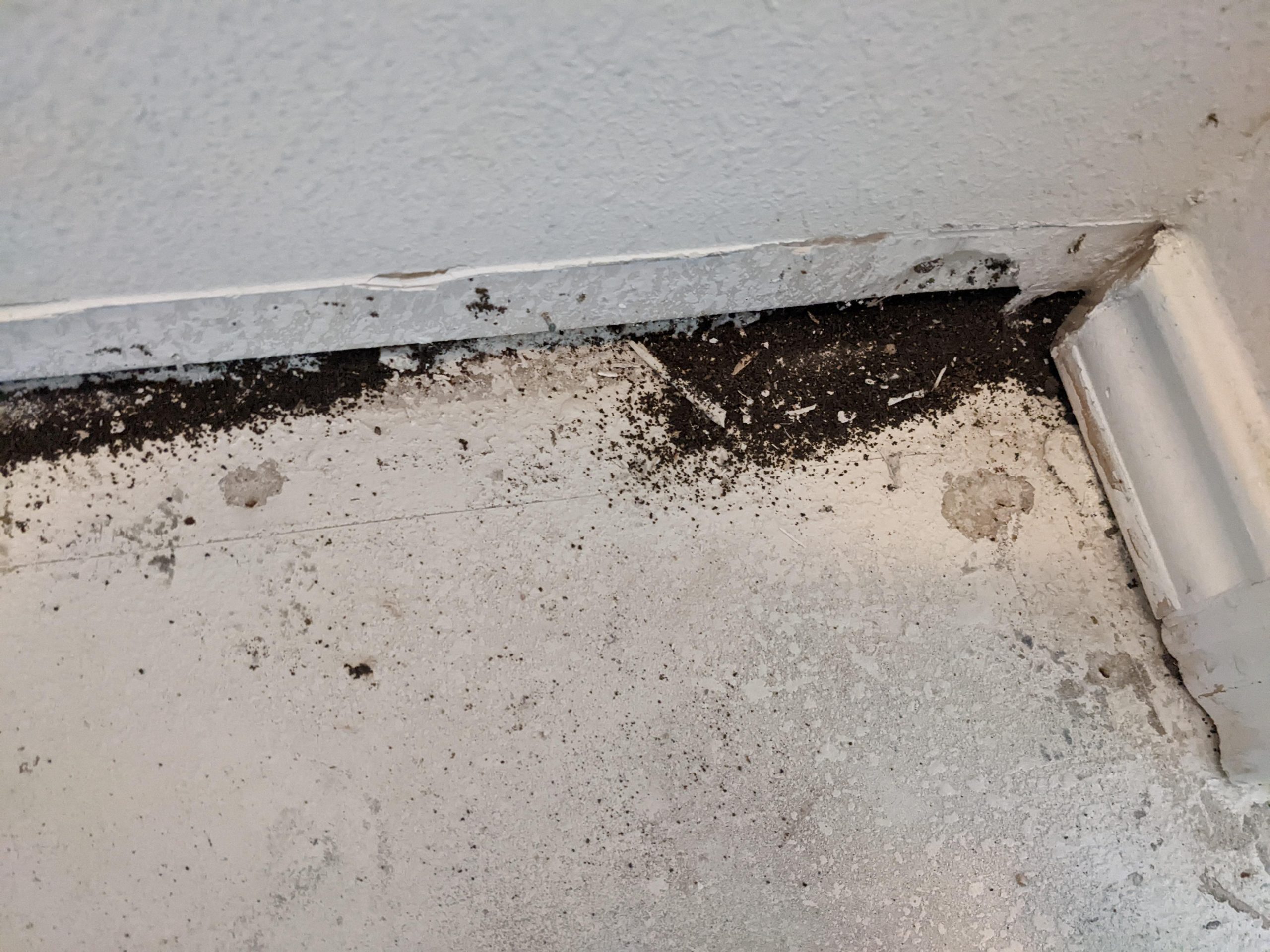
Pile of Dirt near Baseboard: Causes, Prevention, and Solutions
Noticed a pile of dirt near your baseboard? This could be a sign of trouble.
A small pile of dirt might seem harmless, but it can indicate a larger issue. It could mean pests, structural damage, or poor cleaning habits. Each cause requires attention and possibly professional help. Ignoring it can lead to bigger problems down the road.
Identifying the source is crucial for maintaining a healthy home. This blog will help you understand the common causes and what steps to take next. Stay tuned to learn more about keeping your home safe and clean.

Credit: www.reddit.com
Common Causes
Hey friends, have you ever noticed a pile of dirt near your baseboard? It can be concerning. But don’t worry, understanding the common causes can help you figure out the next steps. Let’s dive into the main reasons you might see dirt near your baseboard.
Termite Activity
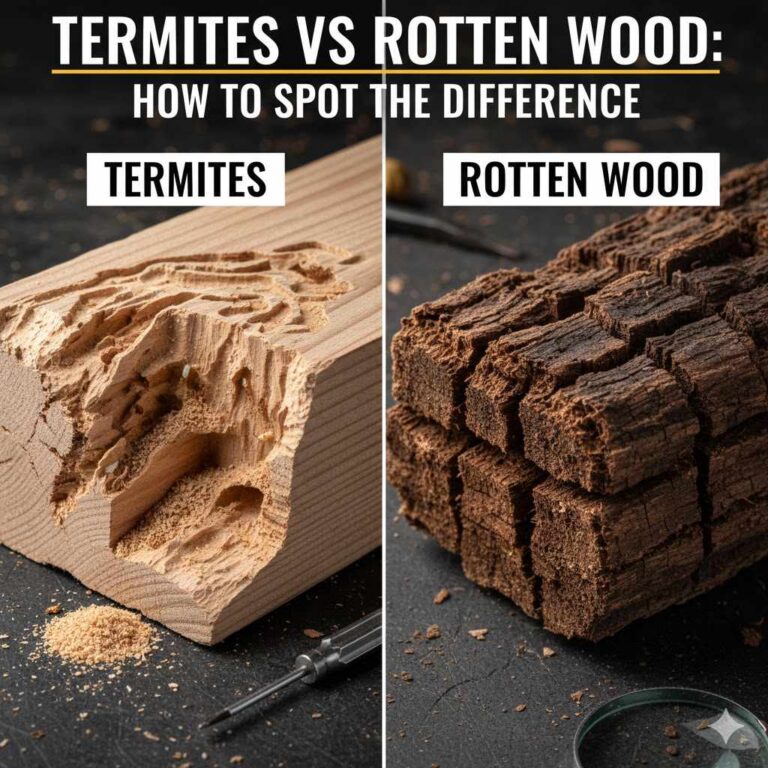
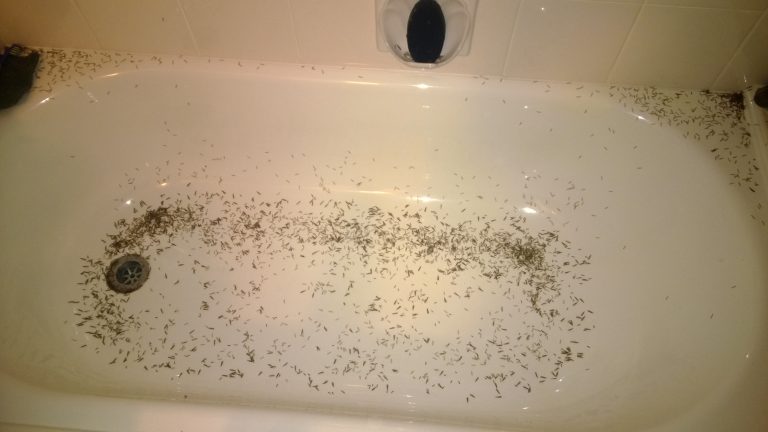
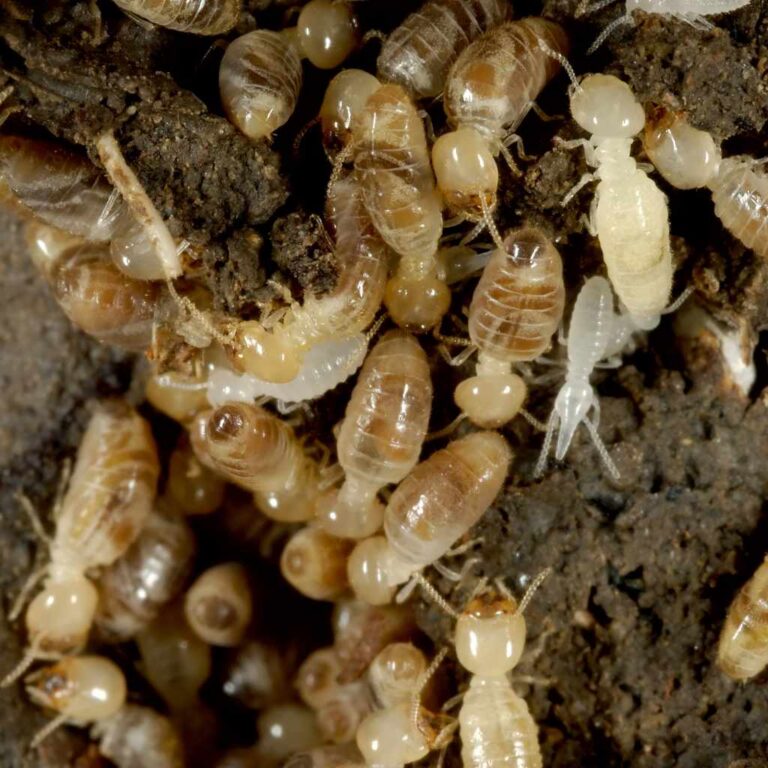
Termites are tiny insects that love to eat wood. They can sneak into your house and start feasting on your baseboards. The result? Small piles of dirt or wood dust near the baseboards. These piles are actually termite droppings, also known as frass. If you see these, it might be time to call a pest control expert.
Why do termites leave these piles?
- Termites create tunnels in the wood.
- They push out dirt and wood particles as they dig.
- The dirt piles up near their entry points.
Foundation Issues
Sometimes, the dirt near your baseboard can be a sign of foundation problems. If the ground shifts or settles, it can cause cracks in your home’s foundation. These cracks can let in dirt and moisture.
How can you tell if it’s a foundation problem?
- Check for cracks in the walls.
- Look for gaps between the floor and the baseboard.
- Notice if doors and windows are hard to open or close.
If you spot these signs, it might be time to consult a foundation repair specialist.
Construction Debris
Lastly, construction debris can also cause piles of dirt. When workers install or repair parts of your home, they might leave behind small bits of material. These can collect near the baseboards over time.
When might this happen?
- After a renovation project.
- During new construction.
- When fixing plumbing or electrical systems.
Cleaning up the area and keeping an eye on it can help you manage this issue.
To sum up, a pile of dirt near your baseboard can be due to termites, foundation issues, or leftover construction debris. By understanding these common causes, you can take the right steps to keep your home safe and clean.
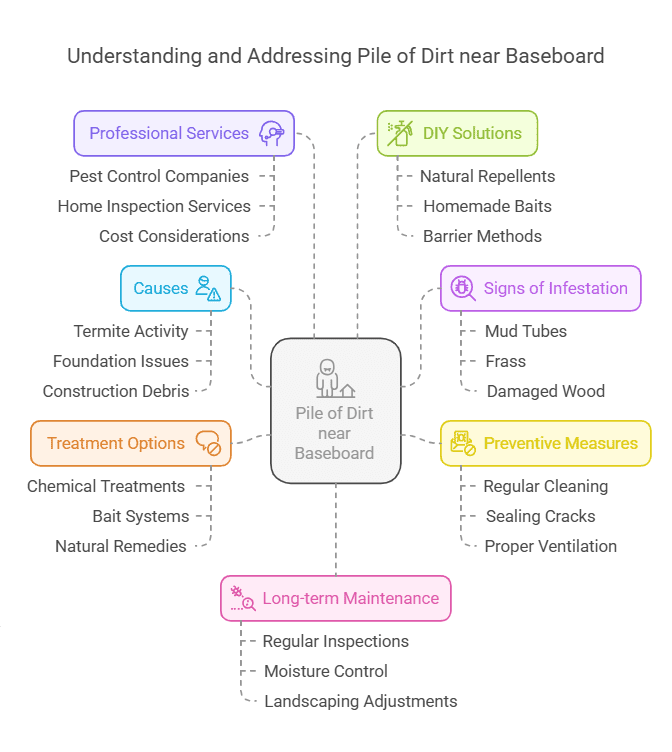
Signs Of Infestation
Noticing a pile of dirt near your baseboard can be alarming. It might be an indication of an infestation. Various pests can cause these signs. Look out for these indicators to protect your home.
Mud Tubes
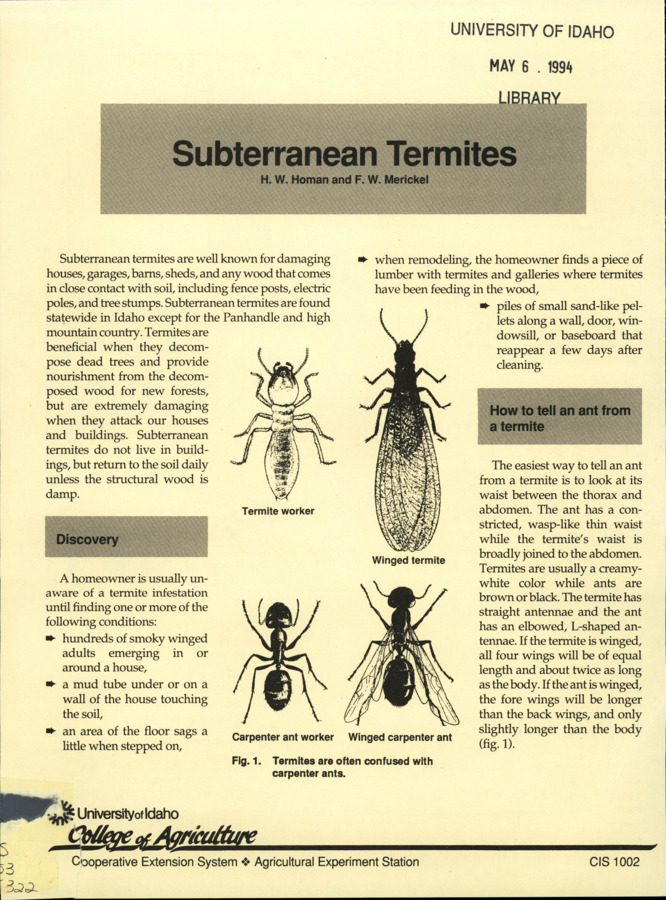
Termites are known for creating mud tubes. These tubes are thin tunnels made from soil and saliva. They act as protective shelters for termites. You might find them along your baseboards or walls. If you see these tubes, it could signal a termite infestation.
Frass
Frass is a term for insect droppings. It resembles tiny wood shavings or sawdust. If you spot frass near your baseboards, it could mean wood-boring insects are present. These insects leave frass behind as they eat through wood.
Damaged Wood
Pests often cause visible damage to wood. Check your baseboards for cracks, holes, or splintering. Termites and other wood-eating insects can weaken structures over time. If you notice damaged wood, it might indicate an infestation.
Initial Inspection
Finding a pile of dirt near your baseboard can be alarming. It may point to larger issues. Your first step should be an initial inspection. This will help you understand what is happening.
Visual Check
Start with a visual check. Look closely at the area where the dirt is. Check for cracks or gaps in the baseboard. Notice any signs of insects. Inspect the dirt pile for any tiny wood particles. These could indicate termites.
Moisture Levels
Check the moisture levels in the area. Dampness can attract pests. It can also cause wood rot. Use a moisture meter if you have one. High readings can indicate a problem. You may need to dry the area out.
Professional Assessment
If you cannot find the source, call a professional. They have the tools to inspect thoroughly. An expert can identify hidden issues. They can also provide solutions. Do not wait too long. The problem can get worse over time.

Credit: www.reddit.com
Preventive Measures
We all want our homes to be clean and tidy. A pile of dirt near the baseboard can be quite an eyesore. But don’t worry! There are simple preventive measures that can help you keep your home spotless. By following these steps, you’ll reduce the dirt buildup and enjoy a cleaner living space.
Regular Cleaning
It’s no secret that regular cleaning is the best way to keep dirt at bay. Here are a few tips to help you stay on top of it:
- Vacuum often: Make it a habit to vacuum the floors and baseboards at least once a week.
- Dust frequently: Use a damp cloth to wipe down surfaces, including baseboards, to keep dust from settling.
- Sweep daily: A quick sweep each day can prevent dirt from accumulating.
Consistency is key. By sticking to a regular cleaning schedule, you’ll see a noticeable difference in your home’s cleanliness.
Sealing Cracks
Cracks and gaps in your home’s structure can let in dirt and debris. Here’s how to address this issue:
- Inspect your home: Check for cracks around windows, doors, and baseboards.
- Use caulk: Apply caulk to seal any visible cracks. It’s simple and effective.
- Consider weatherstripping: Adding weatherstripping to doors and windows can also help reduce dirt entry.
Sealing cracks not only keeps your home cleaner but also helps with energy efficiency. Win-win!
Proper Ventilation
Good ventilation can make a huge difference in reducing indoor dirt and dust. Here’s what you can do:
- Open windows: Allow fresh air to circulate by opening windows regularly.
- Use exhaust fans: Turn on exhaust fans in the kitchen and bathroom to remove moisture and airborne particles.
- Install air purifiers: Consider using air purifiers to filter out dust and allergens.
Proper ventilation helps keep the air clean and reduces the amount of dirt settling near your baseboards.
By following these simple preventive measures, you can keep that pesky pile of dirt near the baseboard under control. It doesn’t take much effort, and the results are well worth it. Happy cleaning!
Treatment Options
Hey folks, ever walked into a room and noticed a pile of dirt near the baseboard? It can be quite alarming. These tiny mounds are often signs of pest infestations, such as termites or ants. But don’t worry, I’ve got you covered with some straightforward solutions. In this section, we will explore different treatment options to tackle this problem. From chemical treatments to natural remedies, there’s a solution for everyone.
Chemical Treatments
One of the most effective ways to get rid of pests is through chemical treatments. These products are specifically designed to kill insects and can be very powerful. Here are some common types:
- Insecticides: These chemicals are sprayed directly on the affected area. They kill pests on contact.
- Termiticides: If termites are the issue, termiticides can be applied to create a barrier around your home.
- Dusts: These are fine powders that can be spread in cracks and crevices where pests hide.
Always read the label and follow the instructions. Safety first!
Bait Systems
Bait systems are another efficient way to deal with pests. They work by attracting pests to a bait that contains a slow-acting poison. Here’s how they work:
- Placement: Baits are placed around the house, especially near the baseboards.
- Attraction: Pests are lured to the bait, thinking it’s food.
- Poison: The pests eat the bait and carry it back to their colony, where it spreads.
This method is great because it targets the entire colony, not just the pests you see.
Natural Remedies
If you prefer a more natural approach, there are several remedies you can try. These methods are safer for pets and children:
- Essential Oils: Oils like peppermint and eucalyptus can repel insects. Mix with water and spray around the baseboards.
- Diatomaceous Earth: This natural powder can be sprinkled in areas where pests are found. It dehydrates and kills them.
- Vinegar: A mixture of vinegar and water can be used to clean surfaces and deter pests.
Natural remedies may take a bit longer, but they are a safe and eco-friendly option.
So, there you have it! From strong chemical treatments to gentle natural remedies, there are plenty of options to get rid of that pile of dirt near your baseboard. Choose the method that suits you best and say goodbye to those pesky intruders!
Professional Services
So, you’ve noticed a pile of dirt near your baseboard. Not exactly what you wanted to see. The good news? There are professionals who can help. In this section, we’ll explore some key services. These experts will pinpoint the problem and offer solutions. Let’s dive in.
Pest Control Companies
First up, pest control companies. These folks are pros at dealing with pests. They know how to find the sneaky little critters causing the dirt piles. Think of them as detectives for your home.
- Inspection: They start with a thorough inspection. They look for signs of pests like termites or ants.
- Treatment: Once they find the problem, they treat it. This could involve sprays, traps, or other methods.
- Prevention: Finally, they help you prevent future issues. This may include tips on keeping your home pest-free.
Simple, right? It’s like having a clean-up crew for your house. And the best part? They make sure those pests don’t come back.
Home Inspection Services
Next, consider home inspection services. Think of these experts as your home’s health check-up team. They look for structural issues that could be causing that dirt pile.
- Initial Assessment: They start with a detailed assessment. They check everything from your foundation to your roof.
- Report: They provide a report with their findings. This report will highlight any issues and suggest fixes.
- Follow-Up: They might come back for a follow-up. This ensures that any repairs are done correctly.
It’s like a doctor’s visit for your home. And trust me, it’s worth it. You get peace of mind knowing your home is in good shape.
Cost Considerations
Now, let’s talk money. Professional services can be pricey. But they can also save you money in the long run. Here are some points to consider:
| Service | Average Cost |
|---|---|
| Pest Control | $100 – $300 |
| Home Inspection | $200 – $500 |
Tip: Get multiple quotes. Compare prices and services. This way, you’ll find the best deal for your needs. Trust me, I once had a pest issue and getting multiple quotes saved me a lot of money.
So, there you have it. Professional services can help you tackle that dirt pile near your baseboard. It’s all about finding the right experts and considering the costs. Your home will thank you.
DIY Solutions
Hey friends, have you ever found a pile of dirt near your baseboards and wondered what to do? It can be pretty annoying, right? But don’t worry, you can handle it yourself! Today, we’ll go through some simple DIY solutions to tackle this problem. Let’s dive in!
Natural Repellents
Using natural repellents is an easy and safe way to keep those dirt piles at bay. Here are some you can try:
- Vinegar: Mix equal parts of vinegar and water. Spray it along the baseboards. Bugs hate the smell.
- Lemon Juice: Squeeze some fresh lemon juice and apply it. It’s a natural deterrent.
- Essential Oils: Peppermint and tea tree oils work wonders. Add a few drops to water and spray.
Homemade Baits
Making your own baits can help get rid of the source of the dirt. Here are a couple of simple recipes:
- Borax and Sugar: Mix 1 part borax with 3 parts sugar. Sprinkle it near the baseboards. Ants will take it back to their colony.
- Baking Soda and Powdered Sugar: Combine equal parts of both. This works great for cockroaches.
Barrier Methods
Sometimes, the best defense is a good barrier. Here are some barrier methods you can try:
- Caulking: Seal any cracks or gaps in the baseboards. This prevents pests from entering.
- Diatomaceous Earth: Sprinkle this natural powder along the edges. It’s safe for pets and kids.
- Double-sided Tape: Place it near baseboards. It traps insects trying to crawl over.
I recently tried these methods at home, and they worked wonders. My favorite is the vinegar spray. It’s easy and effective. Give these DIY solutions a try and say goodbye to those annoying dirt piles!
Long-term Maintenance
Keeping your home clean and well-maintained is crucial. One area that often gets overlooked is the pile of dirt near the baseboard. This dirt can lead to bigger problems if not addressed. Long-term maintenance is key to ensuring your home stays in top condition.
Regular Inspections
Conduct regular inspections around your baseboards. Look for dirt and dust buildup. This helps you catch issues early. Addressing them promptly prevents larger problems. Use a flashlight to see under furniture. Check all corners and edges.
Moisture Control
Moisture can cause dirt to accumulate faster. Control moisture levels in your home. Use dehumidifiers in damp areas. Ensure your home has proper ventilation. Fix any leaks immediately. Dry wet areas quickly to prevent mold and dirt buildup.
Landscaping Adjustments
Proper landscaping can prevent dirt from entering your home. Keep soil and mulch away from the base of your house. Ensure proper drainage around your home. Trim plants and trees that are close to your house. This reduces the amount of dirt brought inside.

Credit: www.reddit.com
Frequently Asked Questions
Do Termites Leave Piles Of Dirt?
Yes, termites leave piles of dirt. These are called mud tubes or termite mounds, used for protection and travel.
What Insect Leaves Piles Of Dirt?
Ants and earthworms are the insects that leave piles of dirt. They create mounds while digging tunnels underground.
Why Am I Finding Piles Of Dirt In My Yard?
Piles of dirt in your yard may indicate the presence of burrowing animals like moles, voles, or gophers. These animals dig tunnels, pushing dirt to the surface. Inspect for other signs such as holes or damaged plants to identify the culprits.
Do Carpenter Ants Leave Piles Of Dirt?
Carpenter ants do not leave piles of dirt. They leave sawdust-like wood shavings from their nesting activities.
Conclusion
Dealing with a pile of dirt near your baseboard can be frustrating. Regular cleaning helps maintain a tidy home. Check for gaps or cracks and seal them promptly. Pests or moisture may cause such issues. Address these problems quickly to prevent bigger troubles.
Simple maintenance and vigilance keep your home clean and safe. Remember, a little effort now saves more work later. So, keep an eye out and take action. Your home will thank you!