Recoating vs Refinishing Hardwood Floors: How to Tell Which One You Need
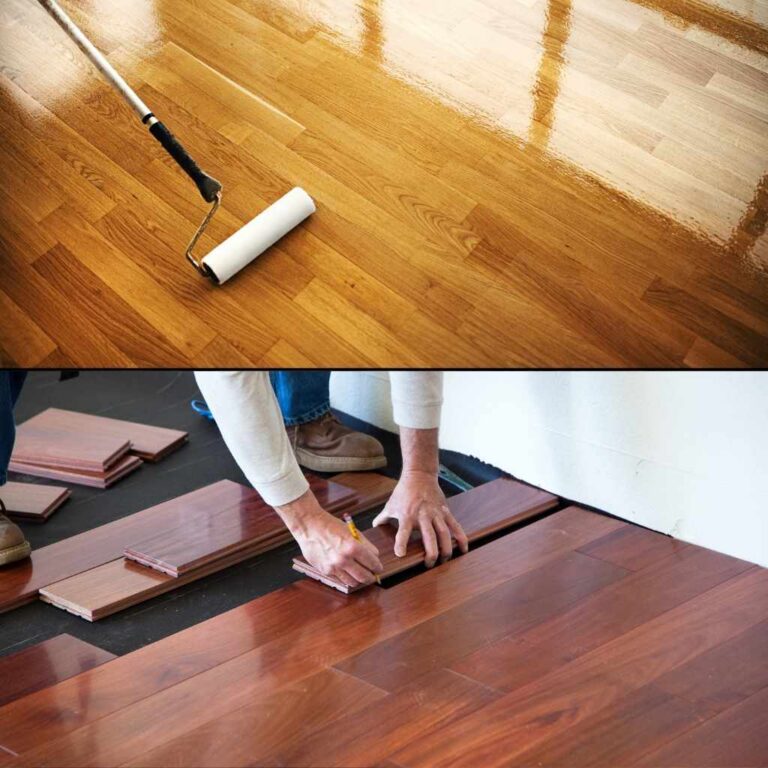
If your hardwood floors look dull, scratched, or tired, you don’t automatically need a full sand-and-refinish job. Two very different repairs get lumped into the same conversation: recoating, a same-day touch-up that adds a fresh top coat over your existing finish, and refinishing, which sands the floor down to bare wood and starts over. Picking the wrong one wastes money either way – recoating over damage that needs sanding just seals it in, and refinishing a floor that only needed a fresh top coat burns budget and a layer of wood you didn’t need to remove. Below are the tests flooring pros actually use to tell the two apart, real cost and time numbers, and a compatibility check most homeowners never think to run before booking either job.
What Recoating Actually Does
Recoating – also called screen-and-recoat – refreshes the protective top layer of your floor without removing the wood underneath. A technician lightly abrades (“screens”) the existing finish with a buffer and a fine abrasive pad, just enough to give a new coat something to grip, then applies one or two new coats of polyurethane or another top finish over it. Nothing about the wood or the stain color changes – you’re only replacing the worn protective layer sitting on top of it. Before booking either job, run the finish tests in our guide to renewing wood floors without sanding.
Best For A No-Sand Recoat
 |
Rejuvenate Professional Wood Floor Restorer, 32 oz – $20.15 A one-coat, no-sanding way to do a light recoat yourself when your floor only has surface dullness and light scratches, not deep damage.
|
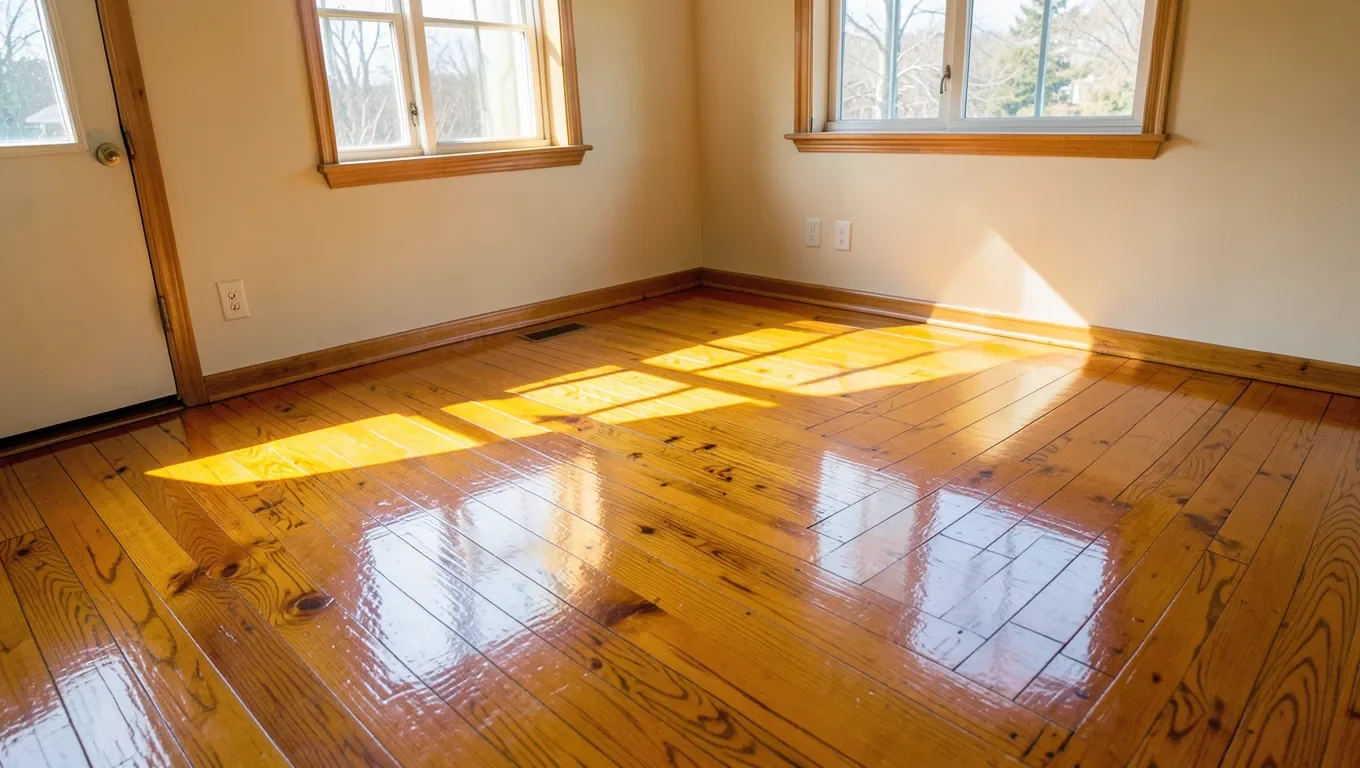
That makes recoating the right call when the wood is fine and only the finish has worn down: light scratches that haven’t broken through the top coat, a hazy or dull sheen from years of foot traffic and cleaning products, or a floor that’s simply lost its shine but whose color you still like. It’s also the faster and cheaper of the two by a wide margin – less labor, no heavy sanding equipment, and a fraction of the dust.
Signs Recoating Will Work
Run your fingernail across a scratch. If it glides over smoothly, the damage is in the finish layer and recoating can erase it. If your nail catches or digs in, the scratch has gone into the wood and no amount of recoating will fix it. Beyond scratches, recoating is the right fit when the finish looks worn or cloudy but is otherwise intact, when you want to keep your current stain color exactly as-is, and when there are no water rings, pet stains, or gouges that have actually penetrated the wood surface.
The Recoating Process, Step by Step
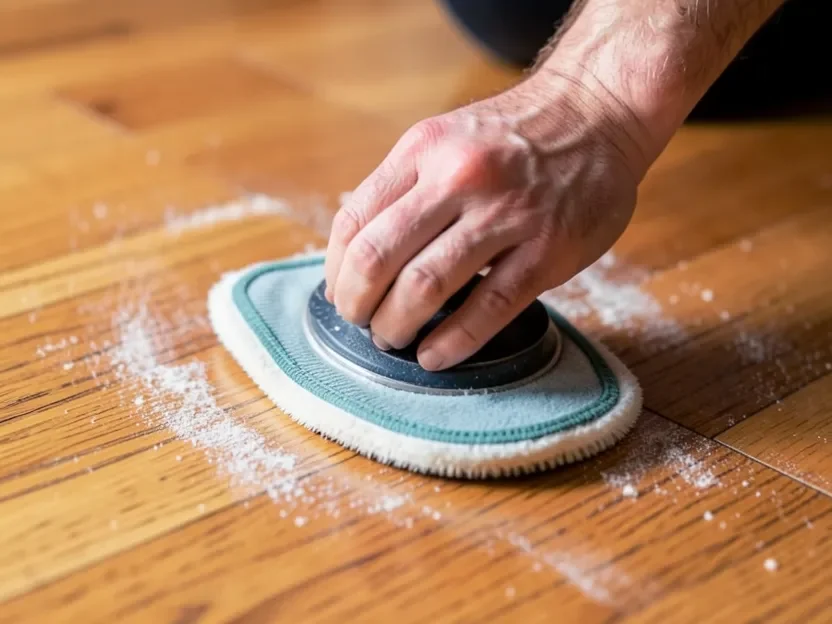
The floor is first deep-cleaned to strip away wax, grime, and old polish – any residue left behind will keep the new coat from bonding. A buffer fitted with a fine screening pad then lightly scuffs the existing finish (this is the “screening” step), and all resulting dust is vacuumed and tack-clothed away. One or two thin coats of water-based or oil-modified polyurethane go on next, with drying time between coats. Start to finish, most recoating jobs wrap up in a day or two, and floors are typically walkable within 24-48 hours, though full cure can take up to a week.
What Refinishing Actually Does
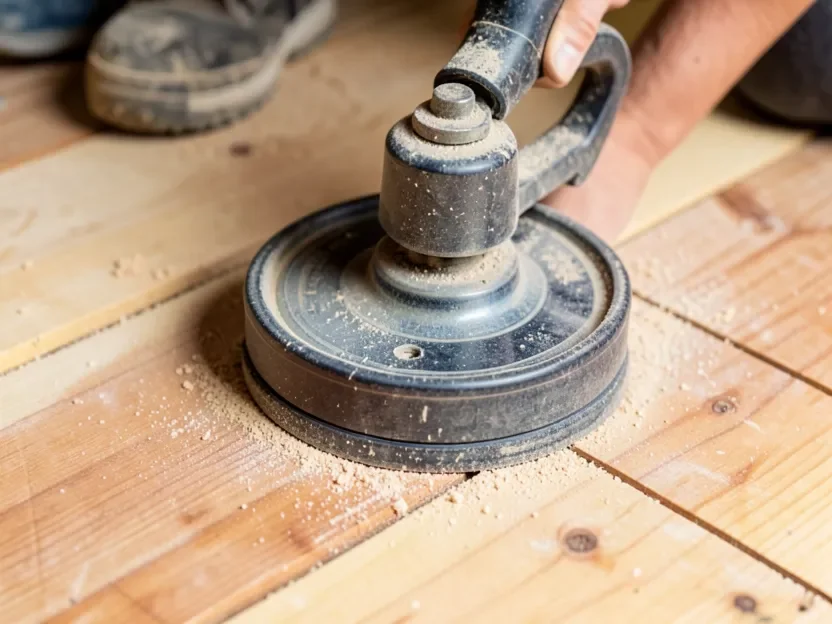
Refinishing is a full restoration: a drum sander strips away the old finish and a thin layer of the wood itself, exposing fresh material underneath. That’s the only way to remove damage that has gone past the finish and into the board – deep gouges, pet or water stains, warping, or a stain color you want to change entirely. Because it removes actual wood, refinishing also resets an uneven or previously patchy floor to a single, uniform surface.
Signs You Need Refinishing
If the fingernail test catches on a scratch, that’s refinishing territory. So are stains that have soaked into the wood – recoating would just seal them in permanently rather than remove them. Uneven wear patterns (a dull walking path next to areas that still look new), previous coats that have built up unevenly, or simply wanting a different stain color or sheen are all refinishing-only fixes. There’s no shortcut around sanding for any of these.
The Refinishing Process, Step by Step
A drum sander handles the open floor area in progressively finer grits, removing the old finish, stains, and a thin surface layer of wood; an edge sander and orbital sander reach the perimeter the drum can’t. After sanding, the floor is fully vacuumed and tack-clothed. If a new color is wanted, stain is applied and wiped to the desired hue, then multiple coats of protective finish go on with light buffing between coats. The full process typically runs three days to a week depending on square footage, and cure time before normal furniture and rugs can go back can run up to a month.
Recoating vs Refinishing at a Glance
Here’s how the two compare across the factors that actually drive the decision.
| Feature | Recoating | Refinishing |
|---|---|---|
| Fixes | Light scratches, scuffs, dull or hazy finish | Deep scratches, gouges, stains, warping, color change |
| Process | Light screening + new top coat | Full sanding to bare wood + new finish |
| Time | 1–2 days | 3–7+ days |
| Cost per sq ft | $1–$3 | $3–$8 |
| Changes stain color? | No | Yes |
| Wood removed? | None | A thin surface layer |
| Typical frequency | Every 2–5 years | Every 10–20 years (solid wood) |
Can You Even Recoat Your Floor? The Test Most Homeowners Skip
Before assuming recoating is an option, check whether your floor will actually accept a new coat – this is the step that gets skipped most often, and it’s why some recoat jobs bubble, peel, or fail to bond within weeks. Two things disqualify a floor from a simple recoat:
Wax or silicone-based polish residue. If the floor has ever been treated with a wax-based cleaner or furniture polish, a new finish coat generally won’t bond to it – it needs to be fully stripped first, which turns a cheap recoat into a bigger job. A simple way to check: place a few drops of water on the finish in an inconspicuous spot. If the water beads up tightly instead of spreading into a thin sheen, there’s likely a wax or silicone coating present, and a plain screen-and-recoat probably won’t hold.
A limited remaining wear layer on engineered wood. This one matters for refinishing specifically, but it’s worth knowing before you start either process: engineered hardwood only has a thin veneer of real wood on top of a plywood base – often just 0.6mm to 3mm – so it can typically be sanded and refinished just once or twice in its lifetime, compared with four to six times for solid hardwood. If you’re not sure which type you have, check a floor vent or doorway transition where you can see the board’s cross-section; a thin, uniform wood layer over a visibly different base material means engineered, and recoating (which removes no wood) is the safer long-term choice whenever it’s an option.
Cost Breakdown
Recoating runs roughly $1 to $3 per square foot, or about $500 to $1,500 for an average room, since it skips heavy equipment and uses far less material. Refinishing runs $3 to $8 per square foot, translating to roughly $1,500 to $4,000-plus for the same space, driven by drum sander rental or labor, multiple grits of sandpaper, and several coats of stain and finish. The gap in upfront cost is real, but refinishing resets the floor’s condition and can be a better long-term value when the wood itself needs the repair – recoating over damage that needs sanding just means paying for a fix that won’t last.
DIY or Hire a Pro?
Light recoating on a small, low-traffic area is realistic to DIY if you’re comfortable with a buffer and careful about even coat application – uneven screening or a rushed coat is the most common self-install mistake. Refinishing is a different story: drum sanders are aggressive, gouge easily in inexperienced hands, and improper dust containment can leave fine sawdust throughout your home for weeks. Most flooring pros recommend hiring out any job that involves sanding, both for a level result and because professional-grade equipment does a cleaner job than anything typically available to rent.
How to Decide
Start with the fingernail test on your worst scratches, then check for the wax/water-bead issue above before assuming recoating will work. If the wood is structurally sound, scratches are surface-level only, and you like your current color, recoating is the faster and cheaper path. If you find deep gouges, stains that have soaked into the wood, or you want a different color entirely, refinishing is the only process that will actually deliver that result – recoating over any of those issues just seals the problem in rather than fixing it.
Frequently Asked Questions
How often should hardwood floors be recoated?
Every 2 to 5 years for most homes, depending on foot traffic. Households with kids, pets, or high-traffic entryways typically need it closer to the 2-year mark, while lower-traffic rooms can stretch toward 5.
How often should hardwood floors be refinished?
Solid hardwood can typically be refinished every 10 to 20 years, and 4 to 6 times total over the life of the floor, since each pass removes a thin layer of wood. Engineered hardwood has a much thinner wear layer and usually tolerates only 1 to 2 refinishes in total.
Can I change the stain color during a recoating?
No. Recoating only adds a clear protective top coat over your existing finish and color. Changing stain color requires sanding down to bare wood, which means refinishing.
Is recoating a dusty process?
Far less than refinishing. Screening produces light dust rather than the heavy sawdust a drum sander generates, and most pros vacuum and tack-cloth the area before and after. Some fine dust is still normal.
Will refinishing remove pet stains?
Usually yes, since sanding removes the stained layer of wood along with the old finish. Very old or deep stains that have soaked far into the board can sometimes leave a faint shadow that a pro should assess before you commit to a stain color.
Final Thoughts
The fingernail test and the water-bead check above will settle most of this decision in under five minutes. If your floor’s damage is only surface-deep and the wax test comes back clean, recoating gets you a refreshed floor for a fraction of the cost and downtime. If the damage runs into the wood, or you’re after a different color altogether, refinishing is the only process built to deliver it – and on engineered floors, it’s worth confirming you actually have wear layer left to spare before you sand.
Sponsored / affiliate links. As an Amazon Associate I earn from qualifying purchases. I may earn additional commission from eligible campaigns.