What to Do With Wood Dust: 10 Genius Uses and Tips
Wood dust can be repurposed for various uses, such as mulch, compost, or as filler in projects. Proper disposal options include recycling or using it as a biomass fuel.
Wood dust is a common byproduct of woodworking and construction. Instead of discarding it, consider its potential benefits. Many people overlook wood dust’s versatility, yet it can serve multiple purposes. From enhancing garden soil to serving as a natural pest deterrent, wood dust can be a valuable resource.
Homeowners and craftsmen can also use it for DIY projects, like making particle board or as an ingredient in homemade cleaners. Exploring these options not only promotes sustainability but also reduces waste. Understanding how to utilize wood dust effectively can transform this nuisance into a helpful asset.
The Hidden Value Of Wood Dust
Wood dust is often seen as waste, but it holds great value. Many people throw it away, missing out on its benefits. Using wood dust can help the environment and save money.
One great use for wood dust is as a natural fertilizer. It adds nutrients to the soil. This helps plants grow strong and healthy. Wood dust can also be used for making particleboard and wood composites. These materials are useful for furniture and building projects.
Another surprising use is for crafting. Wood dust can be mixed with glue to create a strong filler. This helps fix cracks in wood. It can also be used to make art supplies, like colored powders.
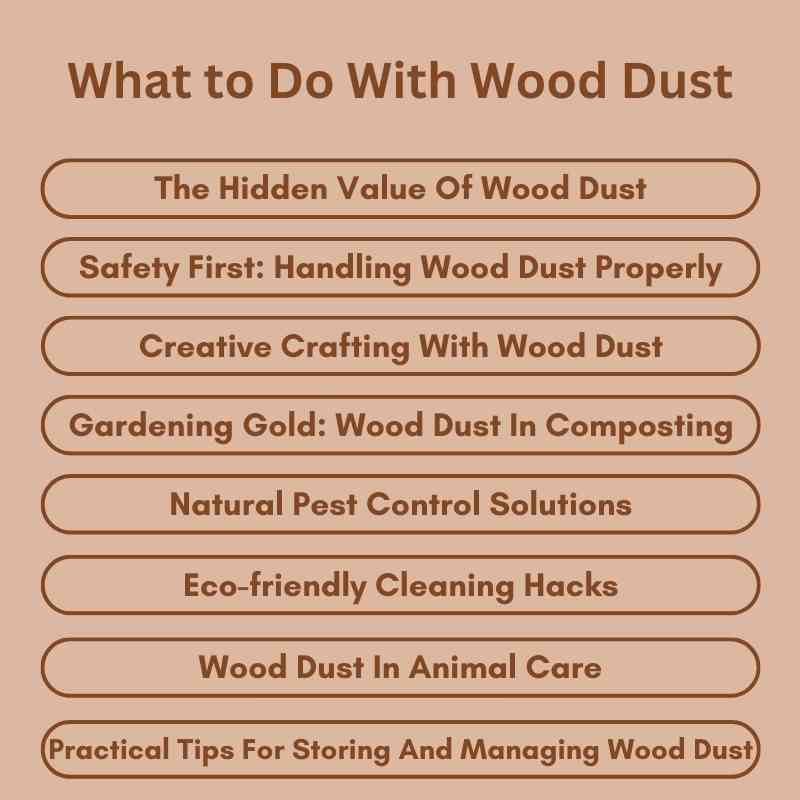
Safety First: Handling Wood Dust Properly
Wood dust can cause serious health problems. Respiratory issues may arise from inhaling fine particles. Skin irritation is common for those who handle wood frequently. Allergic reactions can also occur, leading to more severe symptoms.
Using proper safety gear is essential. Wear a mask to avoid breathing in dust. Goggles protect your eyes from irritation. Gloves help prevent skin contact.
Best practices include keeping your workspace well-ventilated. Use a dust collection system to minimize dust spread. Regularly clean surfaces to remove accumulated dust.
Creative Crafting With Wood Dust
Wood dust can be a great resource for crafting. Homemade wood filler is one easy way to use it. Mix wood dust with glue to create a paste. This paste fills holes and cracks in wood projects. It dries hard and can be sanded smooth.
Creating wood dust art is another fun option. Combine wood dust with paint or glue to make colorful designs. Use stencils to create shapes or patterns. This art can decorate frames, boxes, or furniture.
Store extra wood dust in a sealed bag. It can be used later for other projects. Using wood dust helps reduce waste and sparks creativity.
Gardening Gold: Wood Dust In Composting
Wood dust is a great source of carbon for composting. It helps create a balanced environment for microbes. Mixing wood dust with nitrogen-rich materials is key. This balance improves soil structure and promotes healthy plant growth.
Adding wood dust to compost can also enhance moisture retention. It prevents soil from drying out quickly. This is especially helpful in hot weather. Using wood dust can lead to better nutrient availability for plants.
| Benefit | Description |
|---|---|
| Soil Structure | Improves aeration and drainage. |
| Moisture Retention | Helps soil retain water better. |
| Nutrient Availability | Enhances nutrients for plants. |
Natural Pest Control Solutions
Wood dust can be an effective way to deter pests in your garden. Sprinkling wood dust around plants creates a barrier. This can stop unwanted insects from reaching your plants. Mixing wood dust with soil can also help. It adds nutrients while keeping pests at bay.
Some natural pest control solutions include:
- Wood dust as a repellent for ants and beetles.
- Using wood dust to trap slugs and snails.
- Creating a safe environment for beneficial insects.
A non-toxic approach helps keep your garden safe for children and pets. Using wood dust is a simple and eco-friendly choice.
Eco-friendly Cleaning Hacks
Wood dust can be a great tool for polishing metal surfaces. Simply rub it on the metal with a soft cloth. The dust acts as a gentle abrasive. This method brings out the shine without harsh chemicals.
For absorbing oil and other spills, wood dust works wonders. Spread some wood dust over the spill. It soaks up the liquid quickly. After that, sweep or vacuum it up. This keeps your area clean and safe.
Wood Dust In Animal Care
Wood dust can be a great bedding option for small pets. It is soft and comfortable. This helps pets feel safe and cozy. Make sure to use dust from safe woods like aspen. Avoid cedar and pine dust, as they can harm pets.
Wood dust can also serve as a supplement for bird baths. Mixing it with water creates a fun texture. Birds enjoy splashing and playing in it. This natural material helps keep their feathers clean. Always ensure the dust is clean and chemical-free for bird safety.
Practical Tips For Storing And Managing Wood Dust
Storing wood dust properly helps prevent waste. Use airtight containers to keep it dry. Label each container for easy identification. A dedicated storage area can help organize dust efficiently.
For large amounts of wood dust, consider a dust collection system. These systems capture dust at the source. They help keep your workspace clean and safe. Regularly check and empty the collection bags to maintain efficiency.
Always wear a mask to protect against inhaling dust. Keep the workspace well-ventilated to reduce dust buildup. Clean surfaces often to minimize dust accumulation. These practices ensure a safer working environment.
Innovative Building Materials From Wood Dust
Wood dust can be transformed into DIY bricks. Mixing it with cement creates strong building materials. These bricks are not only eco-friendly but also cost-effective.
To make wood dust bricks, gather wood dust and cement. Combine them in a 1:3 ratio. Add water to create a workable mixture. Form the mixture into bricks using molds. Allow them to cure for several days.
Mixing wood dust with cement enhances its properties. It improves durability and reduces weight. This makes the bricks easy to handle. Furthermore, it provides better insulation.
| Material | Benefit |
|---|---|
| Wood Dust | Eco-friendly, lightweight |
| Cement | Strength, durability |
Wood Dust For Smoky Flavors In Cooking
Wood dust can add delicious flavors to your food. Cold smoking is a great way to use it. This method infuses a smoky taste without cooking the food.
Choosing the right type of wood dust is important. Each type brings a unique flavor. Here are some popular options:
| Wood Type | Flavor Profile |
|---|---|
| Hickory | Strong and bold |
| Apple | Sweet and fruity |
| Cherry | Mild and sweet |
| Mesquite | Earthy and strong |
Experimenting with different woods can enhance your dishes. Enjoy the smoky flavors that wood dust can bring!
Frequently Asked Questions
What Can I Do With Wood Dust?
Wood dust can be repurposed in various ways. It can be used as mulch in gardens, providing nutrients to plants. Additionally, it can be mixed with adhesives to create homemade particleboard. Always ensure the wood dust is from untreated wood to avoid harmful chemicals.
Is Wood Dust Harmful To Health?
Yes, wood dust can pose health risks. Prolonged inhalation may lead to respiratory issues and allergies. It’s crucial to wear masks and ensure proper ventilation while working with wood. Always prioritize safety to minimize health risks associated with wood dust exposure.
Can I Use Wood Dust In Compost?
Absolutely! Wood dust can enhance your compost. It adds carbon, balancing the nitrogen-rich materials. However, use it in moderation to prevent compacting. Mixing wood dust with green waste promotes aeration and speeds up decomposition, improving your compost’s overall quality.
How Do I Dispose Of Wood Dust?
Disposing of wood dust requires care. Check local regulations for proper disposal methods. Consider recycling options or donating it for animal bedding. If you must throw it away, ensure it’s in sealed bags to prevent dust spread and comply with waste management guidelines.
Conclusion
Wood dust can be a valuable resource when used creatively. From enhancing garden soil to crafting unique art pieces, the possibilities are endless. Proper disposal is also crucial for safety. By repurposing wood dust, you not only reduce waste but also contribute to a more sustainable environment.
Embrace these ideas and get started!