What to Look for in a Used Table Saw (10-Point Checklist)
A used table saw is worth buying only if the blade runs true, the arbor spins with zero wobble, and the fence locks parallel to within about 1/32 inch — everything else is cosmetic or a cheap fix. Skip those three checks and you risk inheriting a $150–$300 bearing or motor repair hidden under fresh paint. This guide covers the full 10-point inspection checklist, safety features older saws lack, realistic used prices by saw type, and how to negotiate.
Quick Answer
Before you pay, check five things in order: the blade for cracks or burn marks, the arbor for wobble when spun by hand, the tabletop and fence for flatness and parallel lock, the belt and pulleys for cracking, and whether the riving knife or splitter and blade guard are still installed. If any of the first two fail, walk away — everything else is a cheap fix.
What Type of Used Table Saw Should You Buy?
Best Inspection Tool Pick
Digital Table Saw Alignment Gauge with Magnetic Base
Rides in the miter slot and reads blade-to-fence parallelism in thousandths of an inch — the same check described in Step 4 above, done in under a minute.
- Best for: confirming fence alignment on the spot before you pay
- Why we picked it: purpose-built for the exact check in this checklist, no dial-indicator math required
- Main drawback: only checks alignment, not arbor runout or bearing condition
Compare more used-saw inspection tools
 Option 1 Klein Tools Digital Angle Finder
|
 Option 2 Magnetic Base Dial Test Indicator
|
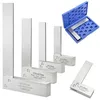 Option 3 Suwimut 4-Piece Machinist Square Set
|
As an Amazon Associate we earn from qualifying purchases.
Before you inspect a single bolt, decide which category fits your shop, since the four types hold value very differently on the used market. A full breakdown of saw types is worth reading if you’re still deciding between a table saw and another tool entirely.
- Jobsite/benchtop saws — portable, direct-drive, meant for hauling to a site. Cheap used, but the aluminum tables flex and rarely hold tight tolerances.
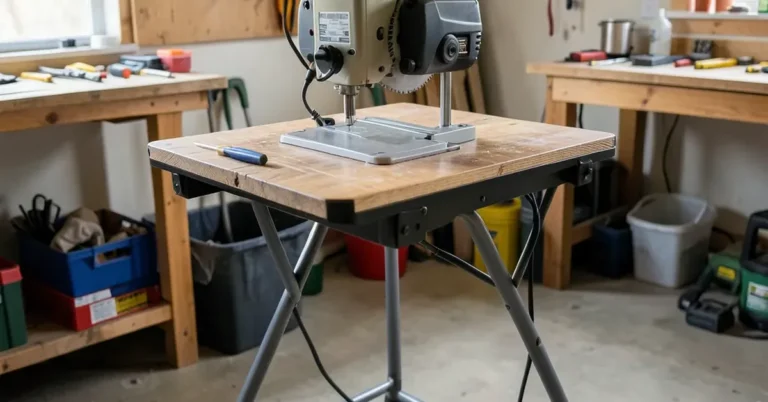
- Contractor saws — belt-driven, cast-iron top, open-leg stand. The sweet spot for used buying: parts are common and the motors are easy to service.
- Hybrid saws — contractor-size footprint with a partially enclosed cabinet base. Better dust control than a contractor saw, quieter than a jobsite saw.
- Cabinet saws — fully enclosed base, heavy trunnions, 3–5 HP motors. Holds calibration the longest and depreciates the slowest of the four.
The 10-Point Pre-Purchase Inspection Checklist
Work through these in order. The first three catch the expensive problems; the rest are quick visual checks you can do in under ten minutes.
- Spin the arbor by hand (power off): Unplug the saw, remove the blade, and spin the arbor flange. It should turn smoothly with zero wobble or grinding. A rough or gritty feel means a bad bearing — a $40–$120 parts repair, more if the motor has to come apart.
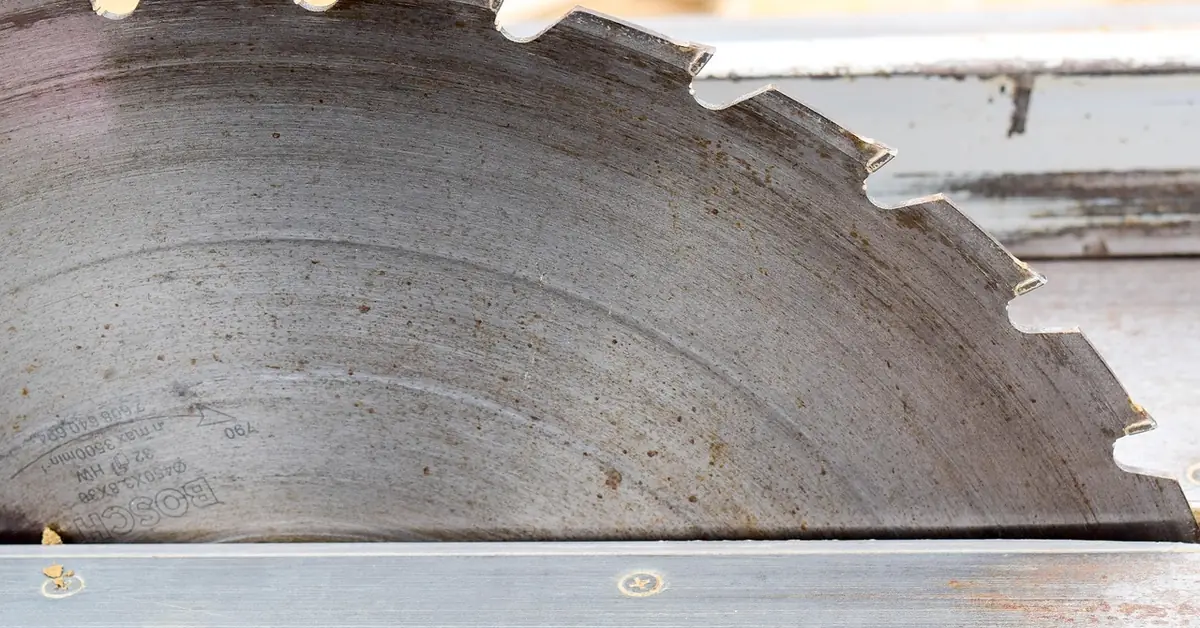
- Check the blade for damage: Look for cracks, missing carbide teeth, blue/purple burn discoloration, or heavy pitch buildup. A worn blade is a $20–$60 swap, but burn marks can also mean the fence was misaligned for a long time — check the fence next.
- Test the tabletop for flatness: Lay a straightedge across the top in several directions. Light should not show more than a hair under the edge. Cast-iron tops with visible rust pitting or a belly in the middle are hard to fix without a machine shop.
- Verify the fence locks parallel to the blade: Lock the fence at both the front and back of the table and measure the distance to the blade in both spots. More than about 1/32 inch of difference means kickback risk until it’s realigned.
- Inspect belts and pulleys: Cracked, glazed, or missing-chunk belts are a $15–$30 fix. Pulleys should spin true with no side-to-side play.
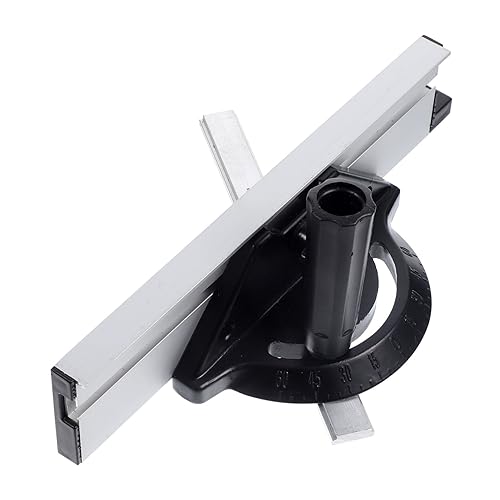
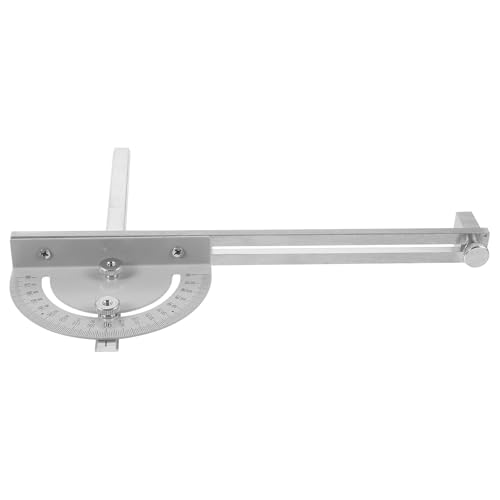
- Calibrate the miter gauge: Slide it in the miter slots — it should move without slop. Set it to 90° against the blade with a square to confirm the stops are accurate.
- Check the base and stand: Look for cracked welds, stripped leg-lock hardware, or a wobbly stand. On a cabinet saw, check that the sheet-metal base isn’t dented into the trunnion mechanism.
- Confirm the dust port isn’t missing: A missing or broken dust chute isn’t a dealbreaker, but factor $20–$40 into your offer to replace it.
- Test the power switch and cord: Frayed cords or a switch that sticks in the ON position are safety issues, not negotiating points — budget for an electrician-grade replacement switch ($15–$25) before you ever plug it in.
- Ask for extras: A miter gauge, extra blades, a dado stack, or an aftermarket fence upgrade can be worth $50–$150 if included — factor that into what you’re willing to pay.
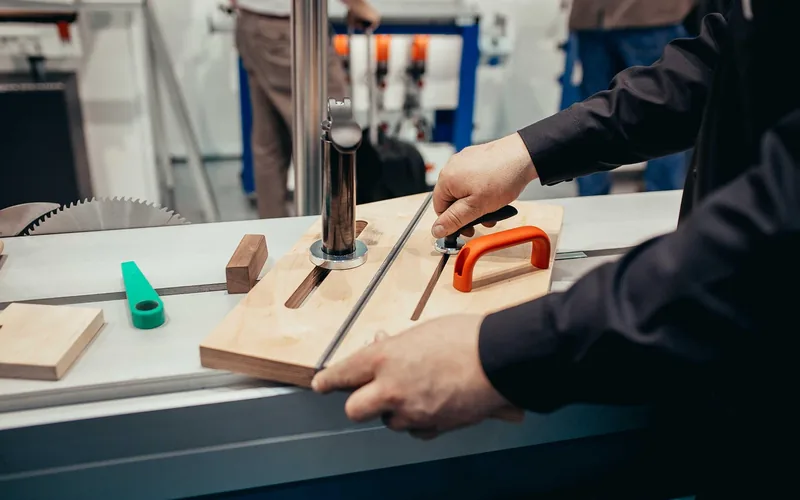
Test the Saw Before You Hand Over Money
A seller who won’t let you plug it in and run it is a red flag on its own. If they agree, listen and look for these three things.
- Start-up sound: The motor should spin up smoothly with no delay, no smoke smell, and no grinding. A saw that hasn’t run in years can sound fine idling and still have dried-out bearings that fail within the first few hours of real use.
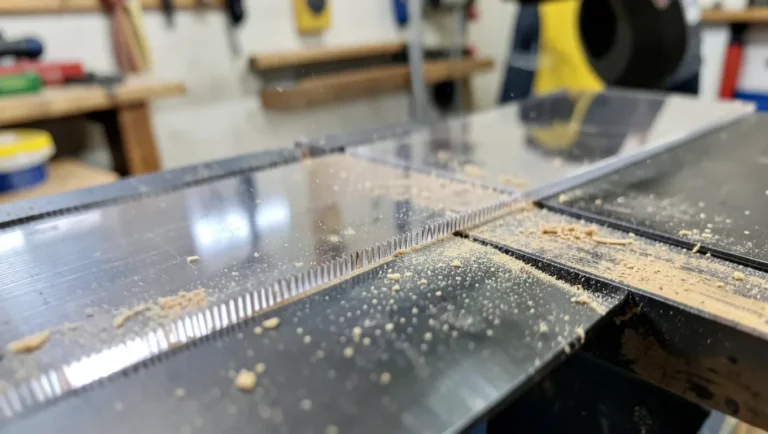
- Load test: Bring a scrap piece of 3/4-inch plywood and make an actual cut. The blade shouldn’t bog down, and the cut edge shouldn’t show burn marks (a sign of a dull blade or a misaligned fence).
- Blade-change test: Ask to swap the blade. If the arbor nut is seized or rounded off, that’s a sign of past abuse — and a seized arbor bolt is a genuinely miserable repair to do yourself.
Safety Features Older Used Saws Often Lack
Most sellers strip the guard assembly off because it gets in the way of everyday cuts — that doesn’t mean you should buy the saw without one.
- Riving knife or splitter: A thin blade-shaped piece of metal directly behind the blade that keeps the kerf from pinching shut and kicking the workpiece back at you. Check whether it’s still present and correctly installed — it’s the single most-often-missing part on a used saw.
- Blade guard and anti-kickback pawls: The clear guard over the blade and the spring-loaded teeth that let wood move forward but not back. Both are commonly removed and lost; replacements run $30–$80 depending on the saw.
- Flesh-detection technology: Newer saws can stop the blade in milliseconds on contact with skin. Almost no used saw built before the last decade has this — see our breakdown of how flesh-detection saws work if that’s a feature you want, since retrofitting it isn’t realistic.
Red Flags That Mean You Should Walk Away
- Seller refuses to let you test-run the saw or watch a cut being made.
- Rust pitting deep enough to catch a fingernail on the tabletop (surface rust polishes out; pitting doesn’t).
- Blade wobbles visibly when spun by hand, or the arbor has any side-to-side play.
- Burn marks on multiple past cuts, suggesting long-term fence or blade misalignment.
- A motor that hesitates, hums, or trips a breaker on start-up.
- No riving knife, splitter, or blade guard included or available, and the seller can’t say why.
Research the Brand and Model First
Parts availability matters more than the badge on a used saw. SawStop, Powermatic, Delta, Jet, DeWalt, Bosch, and Makita all still stock replacement parts for saws a decade or more old, which keeps a $40 belt from turning into a $200 problem when something wears out. If you’re eyeing a specific vintage or discontinued brand — a Sears Craftsman or an old Sears Roebuck saw, for example — check parts availability before you buy; our vintage Sears Roebuck buyer’s guide covers what to expect from that specific line.
Search the model number plus “recall” before you buy anything – a small number of older contractor saws were recalled for guard or switch defects, and a recalled unit is a real safety issue, not just a bargaining chip.
What’s a Fair Price? Used Table Saw Cost by Type
New-saw pricing is easy to look up — see our guide to how much new table saws cost for that baseline. Used pricing is murkier because condition swings the number more than brand does. Based on typical resale patterns for used power tools, here’s what a well-maintained saw in each category realistically sells for:
| Saw Type | New Price | Realistic Used Price | What You’re Really Paying For |
|---|---|---|---|
| Jobsite/benchtop | $100–$500 | $60–$250 | Portability, not precision |
| Contractor | $300–$1,200 | $150–$600 | The best value on the used market |
| Hybrid | $500–$1,500 | $300–$800 | Cabinet-saw feel at a contractor price |
| Cabinet | $800–$3,000+ | $400–$1,800 | The saw that holds calibration for decades |
Deduct further for anything on the red-flag list above — a missing riving knife or a blade that needs replacing is a fair reason to offer 10–15% under asking. If the saw includes a dado stack, extra blades, or a fence upgrade, that can justify paying closer to the top of the range.
Where to Find a Used Table Saw
- Facebook Marketplace and Craigslist: The largest selection and the most negotiating room, but you’re on your own for inspection — always meet in person and test before paying.
- Estate sales and auctions: Often the best-maintained saws, since they usually come from a single owner’s home shop. Bring your checklist; auction “as-is” terms mean no returns.
- Tool rental shops and dealers: Some sell off retired rental or trade-in units. Prices run higher than private sales, but the saw has usually been serviced.
- Woodworking club classifieds and local forums: Sellers here tend to be hobbyists who maintained the saw carefully and can answer real questions about its history.
“A saw that sounds fine idling can still have a bad bearing. Spin the blade by hand with the power off first — if you feel any grinding or catch as it slows down, that bearing is on its way out, and replacing one runs $40 to $120 in parts depending on the saw.”
FAQ: Buying a Used Table Saw
Is a used table saw worth buying over a new one?
Yes, for most hobbyists and DIYers — a used contractor or cabinet saw that passes the 10-point checklist gives you cast-iron accuracy and a real motor for 40–60% of the new price. It’s a worse deal only if the saw needs a bearing, motor, or fence repair that eats most of the savings, which is exactly what the inspection checklist above is meant to catch before you pay.
Which is better, an 8-inch or a 10-inch table saw?
An 8-inch table saw is smaller, lighter, and easier to move, which suits tight shops and infrequent use. A 10-inch saw has more cutting depth and rip capacity for thicker stock or wider boards, and it’s the far more common size on the used market — parts and blades are easier to find. See our guide on dado blade capacity on a 10-inch saw if you’re planning to run dado stacks.
What’s the best tooth count for a table saw blade?
A 24- to 30-tooth blade rips faster and clears chips well but leaves a rougher edge. A 60- to 80-tooth blade gives a smoother, near-splinter-free cut but feeds slower and heats up faster in thick stock. Most shops keep a 40-tooth combination blade on the saw as a middle ground and swap in a specialty blade for finish cuts.
How much horsepower does a good table saw need?
Most woodworkers are well served by 1.5 to 2 HP for general hobby use, and 3+ HP for ripping hardwood or running a dado stack regularly. See our 1.75 HP vs. 3 HP comparison for what the difference actually feels like when you’re cutting. More horsepower means fewer stalls in thick or dense material, but it also usually means a bigger motor and a heavier saw to move.
How can you tell if a used table saw is still accurate?
Run a test cut on scrap and check it with a square: the edge should be flat with no taper end to end. Then check that the blade is 90° to the table (or exactly at your set bevel angle), the miter gauge stops are accurate, and the fence reads the same distance to the blade at the front and back of the table. If all four line up, the saw is accurate; if any one is off by more than a hair, budget time to recalibrate it before your first real project.
How much should I pay for a used table saw?
It depends on the type — see the pricing table above for realistic ranges by category. As a rule of thumb, expect to pay 40–60% of the current new price for a well-maintained saw, less if it fails any part of the inspection checklist, and slightly more if it comes with a dado stack, extra blades, or a fence upgrade already installed.
Conclusion
The arbor, the blade, and the fence tell you almost everything you need to know about a used table saw — if those three check out, most other issues are cheap to fix. Work through the 10-point checklist above, test-run the saw before you pay, and don’t skip the safety-feature check just because the price looks good. A saw that fails on price alone is rarely a bargain once you’ve priced out the repair.
Sponsored / affiliate links. As an Amazon Associate I earn from qualifying purchases. I may earn additional commission from eligible campaigns.