Who Cuts Butcher Block Countertops Professionally
Cutting butcher block countertops can be tricky for DIYers. Getting the perfect fit and clean edges requires special tools and a steady hand. Many people wonder Who Cuts Butcher Block Countertops Professionally? This guide will show you the simple steps to get it done right.
We will explore the best ways to get your butcher block ready for your kitchen.
Professional Butcher Block Cutting Services
When you are fitting a new kitchen or updating your existing one, the butcher block countertop is a beautiful and durable choice. However, these solid wood surfaces need to be cut to size. This is not always a simple task for someone without the right equipment or experience. This section looks at who can help you get those precise cuts.
Who Offers Butcher Block Cutting Services
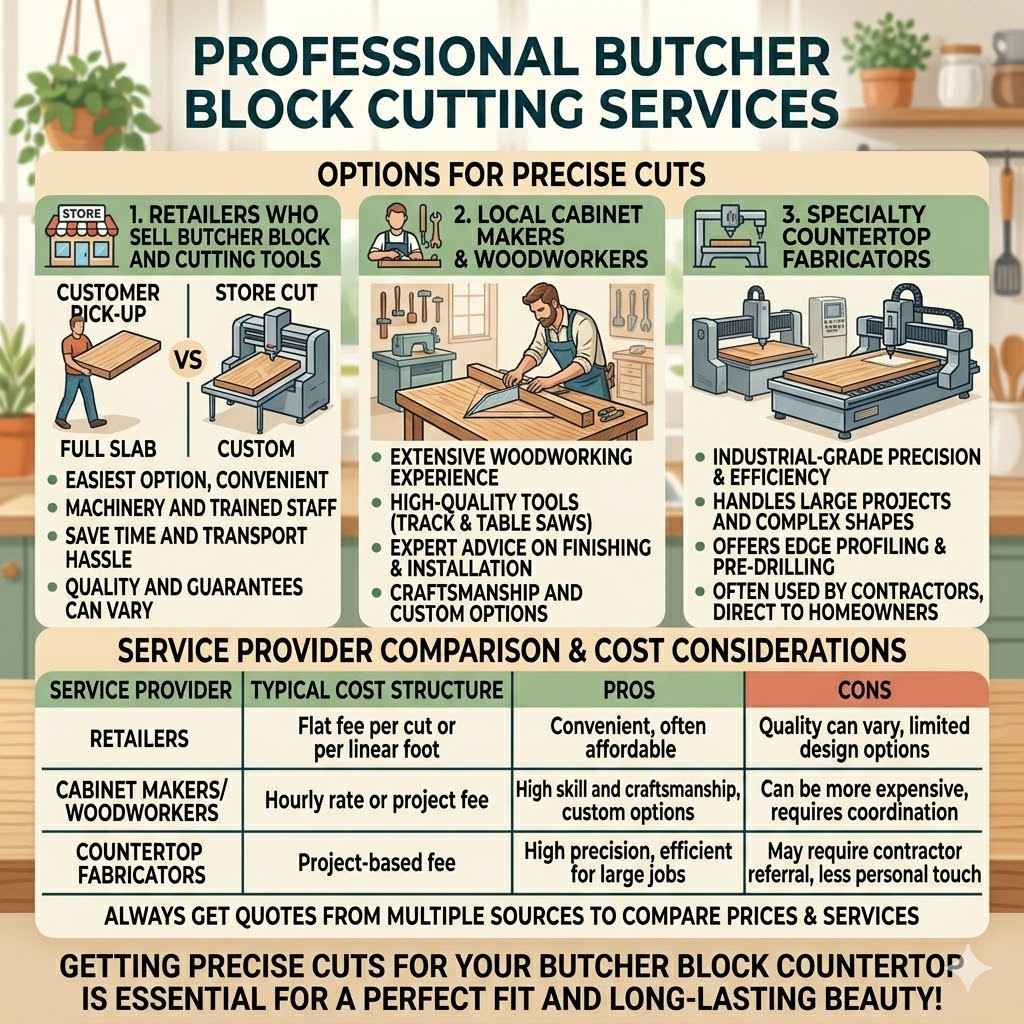
Several professionals and businesses can handle cutting butcher block countertops. The most common options include the retailers where you purchase the butcher block, specialized woodworking shops, and sometimes even cabinet makers. Each of these has its own advantages regarding cost, convenience, and quality of work. Understanding these options helps you make the best choice for your project.
- Retailers Who Sell Butcher Block
This is often the easiest option. Many home improvement stores and kitchen supply shops that sell butcher block countertops offer custom cutting services. They have the machinery and trained staff to make accurate cuts. This can save you time and the hassle of transporting a large slab to another cutting facility. The quality can vary, so it’s good to ask about their process and any guarantees. - Local Cabinet Makers and Woodworkers
These skilled artisans have extensive experience working with wood. They possess high-quality tools like track saws and table saws that are perfect for precise cuts. A local woodworker can also offer advice on finishing and installation. Their expertise often comes at a higher price, but the craftsmanship is usually top-notch. You might also find they can do more complex cuts or shapes if needed for your kitchen design. - Specialty Countertop Fabricators
Some companies focus specifically on fabricating countertops, including solid wood like butcher block. They have industrial-grade equipment designed for precision and efficiency. These fabricators can handle large projects and offer a high degree of accuracy. They are often used by contractors, but many also work directly with homeowners. Their services might include edge profiling and pre-drilling for sinks.
Cost Considerations for Professional Cutting
The price for cutting butcher block countertops varies depending on the service provider, the complexity of the cuts, and the length of the cuts. Retailers might charge a flat fee per cut or by the linear foot. Cabinet makers and fabricators may charge an hourly rate or a project-based fee. It is always best to get a quote from multiple sources to compare prices and services.
| Service Provider | Typical Cost Structure | Pros | Cons |
|---|---|---|---|
| Retailers | Flat fee per cut or per linear foot | Convenient, often affordable | Quality can vary, limited design options |
| Cabinet Makers/Woodworkers | Hourly rate or project fee | High skill and craftsmanship, custom options | Can be more expensive, requires coordination |
| Countertop Fabricators | Project-based fee | High precision, efficient for large jobs | May require contractor referral, less personal touch |
Understanding Butcher Block Cutting Techniques
Cutting butcher block countertops requires specific knowledge and tools to ensure a clean, precise cut. Unlike laminate or tile, solid wood can splinter or chip if not handled correctly. This section explains the common methods professionals use and why they work.
Types of Saws Used for Butcher Block
Professionals use various saws to cut butcher block. The choice of saw depends on the type of cut needed, the thickness of the wood, and the desired finish. Using the right saw prevents damage to the wood and ensures a smooth edge.
- Table Saw
A table saw is a workshop staple. It offers a stable platform for cutting straight lines with high precision. For butcher block, a sharp, fine-tooth blade is essential to prevent tear-out. The wood is fed through the blade, which is set at the correct height for the countertop’s thickness. Professionals ensure the wood is supported and guided properly to maintain a perfect 90-degree angle. This is ideal for crosscuts and ripping boards to width. - Circular Saw with a Guide Rail
A circular saw is a portable power tool. When used with a guide rail or a straight edge, it can make very straight cuts. This is particularly useful for cuts made in place or when dealing with very large slabs that are difficult to maneuver on a table saw. A good quality blade designed for fine woodworking will minimize splintering. The guide rail ensures the saw travels in a perfectly straight line, mimicking the precision of a table saw. - Track Saw
A track saw is similar to a circular saw but is designed to run on a guide track. This system offers exceptional precision and clean cuts, often rivalling that of a table saw. The track holds the saw firmly in place, guiding it along a perfectly straight line. This tool is excellent for large panels and precise cuts without needing to move the material to a fixed saw. It minimizes dust and provides a very clean edge, reducing the need for extensive sanding.
Blade Selection for Clean Cuts
The blade used to cut butcher block is just as important as the saw itself. A dull or inappropriate blade will result in a rough, splintered edge, which is difficult to repair and ruins the aesthetic. Professionals invest in high-quality blades.
A fine-tooth carbide blade is generally recommended for cutting butcher block. These blades have more teeth per inch, which results in a smoother cut. The teeth are designed to shear the wood rather than tear it.
For example, a 60-tooth or 80-tooth blade is often preferred over a coarser blade, especially for the final finishing cuts. The material of the blade, usually carbide, also ensures durability and maintains sharpness for longer periods, which is crucial for consistent results across multiple cuts.
DIY Cutting vs. Professional Cutting
Deciding whether to cut your butcher block yourself or hire a professional involves weighing several factors. Both approaches have their pros and cons. Understanding these differences can help you make the best decision for your budget, skill level, and desired outcome.
DIY Cutting Risks and Rewards
Doing it yourself can save money. If you have a steady hand, basic woodworking tools, and patience, you might be able to achieve good results. However, the risks are significant. A mistake can ruin a costly piece of butcher block, leading to unexpected expenses.
- Cost Savings
The most obvious reward of DIY cutting is the potential for saving money. You avoid paying for professional labor and service fees. If you already own the necessary tools, the only cost is your time. This can be a significant advantage for those on a tight renovation budget. - Learning Opportunity
Taking on a DIY project can be a rewarding learning experience. You gain new skills and a deeper appreciation for the craftsmanship involved. Successfully completing a challenging task like cutting butcher block can boost your confidence for future projects. - Potential for Errors
The biggest risk is making a mistake. Butcher block is solid wood, and once a cut is made, it cannot be undone. Common errors include making an off-square cut, causing splintering or tear-out, or cutting the wrong measurement. These mistakes can lead to the butcher block being unusable or requiring costly repairs.
When to Hire a Professional
Hiring a professional is often the safest bet, especially for complex projects or if you are new to woodworking. Professionals have the experience, tools, and techniques to ensure a perfect cut the first time. This minimizes stress and guarantees a high-quality finish.
If your butcher block needs intricate cuts, like those for a sink or cooktop, or if you are installing a long, continuous piece that requires perfect alignment, professional help is highly recommended. They can handle precise measurements and ensure that the wood grain flows beautifully across seams. Professionals also have access to specialized dust collection systems, which can make the cutting process cleaner and safer, especially when dealing with large amounts of sawdust.
Preparing Butcher Block for Installation
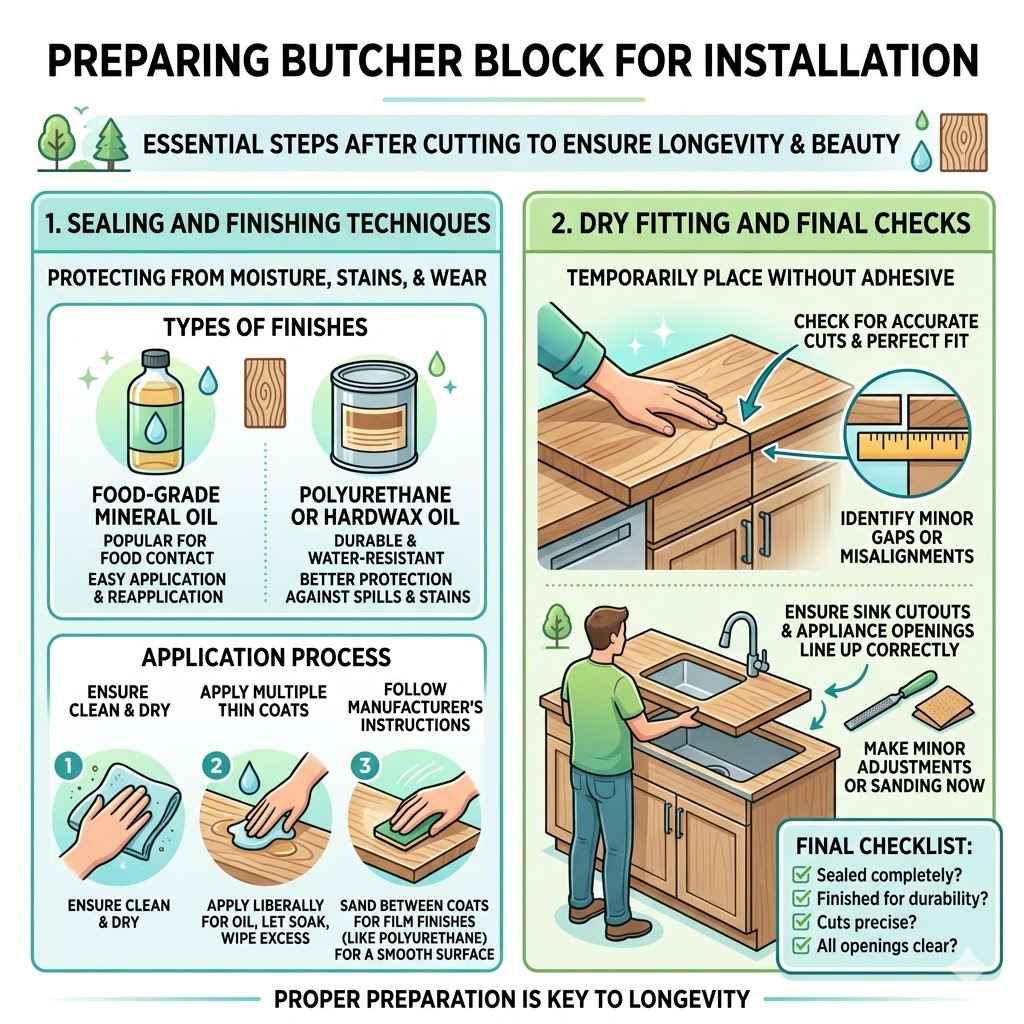
Once your butcher block is cut to the correct size, there are important steps to take before it is installed. Proper preparation ensures its longevity and beauty. This involves sealing, finishing, and checking the fit.
Sealing and Finishing Techniques
Butcher block is a natural wood product and needs protection from moisture, stains, and wear. Sealing and finishing create a barrier that keeps the wood looking its best for years.
- Types of Finishes
There are several types of finishes suitable for butcher block countertops. Food-grade mineral oil is a popular choice for kitchens where the surface might come into contact with food. It is easy to apply and reapply. For a more durable, water-resistant finish, a polyurethane or a hardwax oil can be used. These offer better protection against spills and stains. - Application Process
The application process typically involves applying multiple thin coats. Ensure the butcher block is clean and dry before starting. For oil finishes, apply liberally, let it soak in, and wipe off any excess. For film finishes like polyurethane, sanding between coats is often necessary to achieve a smooth surface. Always follow the manufacturer’s instructions for the specific product you choose.
Dry Fitting and Final Checks
Before permanently installing the butcher block, it is crucial to do a dry fit. This means placing the cut pieces in their intended locations without any adhesive or permanent fasteners.
This step allows you to check if all cuts are accurate and if the pieces fit together perfectly. You can identify any minor gaps or misalignments. If issues are found, they can often be corrected with minor adjustments or sanding at this stage.
A dry fit also ensures that sink cutouts and appliance openings align correctly. It is the final opportunity to catch any problems before the installation is made permanent.
Frequently Asked Questions
Question: Can I cut butcher block myself with a handsaw?
Answer: While technically possible, using a handsaw for butcher block is not recommended for a professional finish. Handsaws lack the power and precision of power saws. This will likely result in a rough, uneven cut with significant splintering, making it very difficult to achieve a clean edge and a good fit.
It is best to use power tools designed for this type of material.
Question: How much does it cost to have butcher block cut professionally?
Answer: The cost can vary widely. Retailers might charge anywhere from $25 to $100 per cut, depending on the length and complexity. Specialized woodworkers or fabricators might charge by the hour, which could range from $75 to $150 per hour, or a flat project fee.
Factors like the thickness of the wood, the type of cuts, and your location will influence the final price.
Question: What is the best type of wood for a butcher block countertop?
Answer: Popular choices include maple, oak, walnut, and cherry. Maple is a very hard and dense wood, making it highly durable and resistant to dents and scratches. Oak is also strong and has a distinct grain pattern.
Walnut and cherry offer richer colors and a more premium look. The best choice depends on your aesthetic preferences and the level of durability you need.
Question: How often should I re-oil butcher block countertops?
Answer: If you are using a food-grade mineral oil finish, you should re-oil the countertops regularly, typically once a month, or whenever the wood starts to look dry or faded. More frequent applications might be needed in the first few weeks after installation to allow the wood to fully absorb the oil. The frequency also depends on usage and exposure to moisture.
Question: Can butcher block countertops be repaired if damaged?
Answer: Yes, butcher block countertops are generally repairable. Minor scratches and dents can often be sanded out. Deeper damage might require filling with wood filler or epoxy designed for countertops.
If a section is severely damaged, it might be possible to cut out and replace just that section, although this requires skilled work to match the wood grain and ensure a seamless finish.
Final Thoughts
When it comes to getting your butcher block countertops perfectly sized, professionals offer precision and peace of mind. Whether you choose the retailer, a local woodworker, or a dedicated fabricator, they have the right tools and skills. This ensures your countertops fit flawlessly, look great, and last for years.
Trusting the cutting to an expert saves you from potential mistakes and costly rework, making your kitchen upgrade a smooth success.