Ash Leaf Identification: Leaflet Count, Lookalikes, EAB Signs
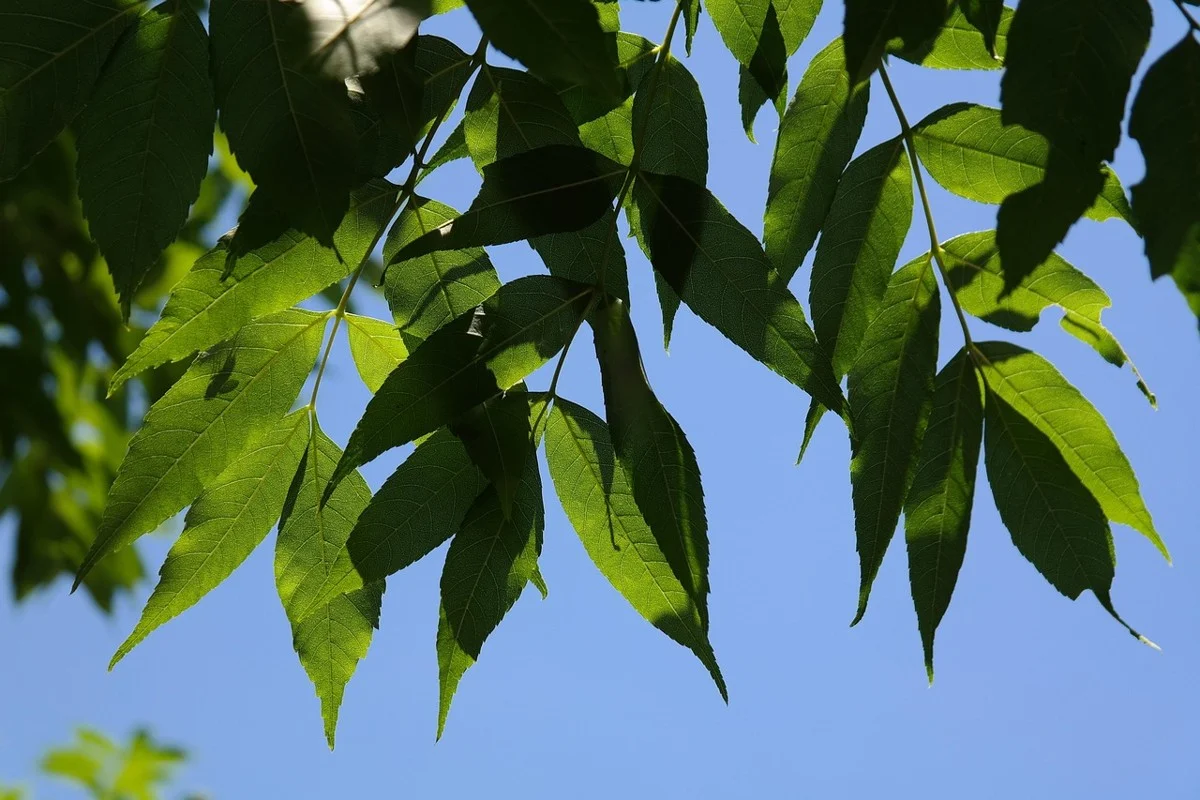
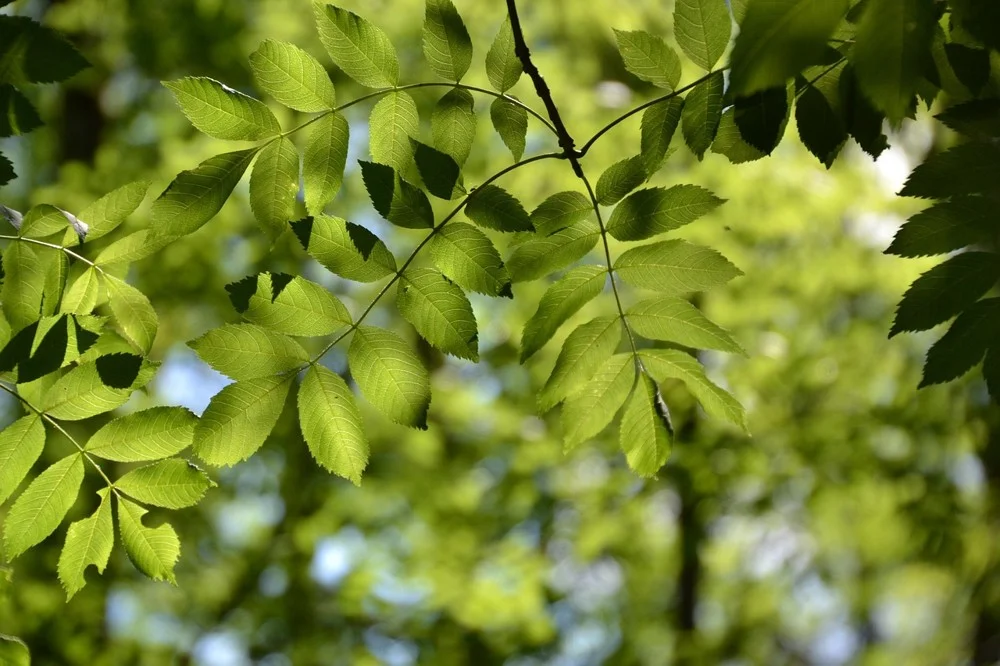
An ash leaf is a compound leaf with 5 to 9 leaflets that grows in pairs directly across the twig from another leaf (opposite arrangement), with one leaflet at the tip. Black ash and blue ash run 7 to 11 leaflets. Count leaflets last, though: boxelder, walnut, hickory and mountain-ash all have compound leaves too, and the opposite arrangement is what rules most of them out.
That order matters for more than curiosity. The emerald ash borer, first detected in North America in 2002 in southeast Michigan, kills ash, and mistaking a healthy lookalike for ash (or the reverse) leads to wasted treatment or missed warning signs. This guide gives a three-step leaf test, a lookalike table built from university extension keys, the leaf differences between species, and the leaf-level signs of borer damage. If you want the full picture of the tree, see what an ash tree looks like.
The Three-Step Ash Leaf Test
Best Tree ID Guide Pick
 |
The Sibley Guide to Trees, by David Allen Sibley An illustrated field guide to North American trees, useful for double-checking a leaf against the lookalikes covered below.
|
As an Amazon Associate we earn from qualifying purchases.
Extension services in Michigan and North Dakota describe the same core features, so the test below follows them. Work through the steps in order and stop as soon as a step rules the tree out.
- Check the arrangement first. Find where a leaf stalk joins the twig. In ash, the leaf stalks, buds and branches sit directly across from each other, not staggered. Michigan State University Extension makes this the first fork in its key: opposite branches lead toward ash, alternate branches lead away from it.
- Confirm the leaf is compound. A compound leaf has several leaflets attached to one leaf stem (the rachis). Ash has a single terminal leaflet at the very tip and pairs of leaflets below it. Look at where the whole leaf joins the twig: that is where the bud sits, and the individual leaflets do not have buds at their bases.
- Count the leaflets and check the edge. Michigan State University Extension gives 5 to 9 leaflets per leaf for ash, on leaves 8 to 12 inches long, with leaflet edges that are smooth or finely toothed. If you count 3 to 5, suspect boxelder. If you count 9 to 15 on a leaf that alternates on the twig, suspect walnut or mountain-ash.
Steps 1 and 3 can be done from the ground: step 1 by looking at how side branches come off the trunk, and step 3 by looking at a fallen leaf. Do not rely on step 3 alone.
Ash Leaf Lookalikes: Boxelder, Walnut, Hickory and Mountain-Ash
Most misidentifications come from a short list of trees. The table combines the Michigan State University Extension bulletin Distinguishing Ash from Other Common Trees and the North Dakota State University Extension page Ash Tree Identification.
| Tree | Leaf and branch arrangement | Leaflets per leaf | Quick giveaway |
|---|---|---|---|
| Ash (Fraxinus) | Opposite | 5 to 9 (black and blue ash 7 to 11) | Single-winged seeds (samaras) in clusters; mature bark in diamond-shaped ridges |
| Boxelder | Opposite | 3 to 5 | Few coarse teeth or none; twigs green to purplish, often with a waxy white coating; seeds in pairs |
| Amur corktree | Opposite | Up to 13 | Opposite like ash, so check bark and the leaflet count together |
| Black walnut | Alternate | 9 to 15 | Leaves 15 to 24 inches long; crushed leaves smell like turpentine; chambered pith in a split twig |
| Mountain-ash | Alternate | 9 to 15 | Leaves 5 to 9 inches long; white flowers, red-orange berries in fall |
| Hickory | Alternate | 5 to 7 | Three terminal leaflets larger than the rest; hard-shelled nuts |
Notice the pattern: only boxelder and Amur corktree share ash’s opposite arrangement, and they are separated by the leaflet count and the twig. Walnut, hickory and mountain-ash are all alternate, so a single glance at the twig removes them. That is why the arrangement test comes before counting leaflets.
A Myth Worth Dropping: Leaflet Count Is Not a Safe Test
Many identification pages lead with the number of leaflets. The extension data shows why that is risky. Ash spans 5 to 11 leaflets depending on species, Amur corktree reaches 13, and walnut and mountain-ash start at 9. Those ranges overlap, so a leaf with 9 leaflets could be ash, walnut or mountain-ash. The arrangement (opposite or alternate) does not overlap, which is why it is the more reliable first check.
Michigan State University Extension also notes one more ash feature: a single bud at the end of the branch (terminal bud), with twigs that are gray to brown and not waxy. Boxelder twigs, by contrast, are often coated in a white wax that rubs off.
Leaf Differences Between Ash Species
Once you know it is an ash, the species matters because leaflet counts and habitat differ. Michigan State University Extension says the most common ash trees planted in landscapes are white ash (Fraxinus americana) and green ash (Fraxinus pennsylvanica), while black ash (Fraxinus nigra) and blue ash (Fraxinus quadrangulata) are less common.
| Species | Leaflets per leaf | Other identifying detail |
|---|---|---|
| White ash | 5 to 9 | Leaf scar under each bud shaped like a C turned on its side |
| Green ash | 5 to 9 (NDSU lists 5 to 11) | Leaf scar shaped like a D; leaflets often serrated |
| Black ash | 7 to 11 | Found in wet woods |
| Blue ash | 7 to 11 | Four-angled corky wings on the stem |
An earlier version of this page listed green ash at 5 to 7 leaflets. The extension sources above use 5 to 9 for the group and up to 11 for green ash, so treat any single number as a rough guide, not a rule.
Fall color and leaf timing are separate topics. For when ash leaves normally drop, and when early drop is a warning sign, read when ash tree leaves fall.
Leaf Clues That an Ash Tree Is in Trouble
Leaves are also the first place many owners notice a problem. The USDA Animal and Plant Health Inspection Service emerald ash borer page lists visible symptoms as dead branches near the top of ash trees, excessive branching on the trunk and vertical cracks in the bark. It describes larvae feeding on the inner bark and leaving S-shaped markings, and adults as metallic green with a coppery-red abdomen, about one-half inch long.
- Thin or bare upper crown while the lower branches still have leaves.
- Leafy sprouts on the lower trunk or branches, a stress response that can follow borer tunneling.
- Small D-shaped exit holes, about 1/8 inch wide according to state extension and forestry pages, often high in the tree and hard to see.
- Patches of lighter bark where woodpeckers have stripped it while feeding on larvae.
Look for at least two signs before deciding, since other pests and diseases can also thin a crown. If you suspect borer damage, contact your state forestry agency or an ISA-certified arborist, and do not move ash firewood. APHIS advises buying only local firewood or certified heat-treated firewood. For a step-by-step check, see how to tell if your ash tree is infected.
Ash Leaves Are Gone: What to Check in Winter
Leaf-based identification only works from spring to fall. In winter, fall back on the features that stay on the tree. Buds and twigs still grow in opposite pairs, ash seeds are single-winged samaras that occur in clusters and may stay on the tree well into winter (NDSU Extension), and mature bark has diamond-shaped ridges, while younger bark is relatively smooth and may have an orange cast. Our guide to ash bark versus oak bark walks through the twig test.
From Leaf to Lumber: Why the ID Matters in the Shop
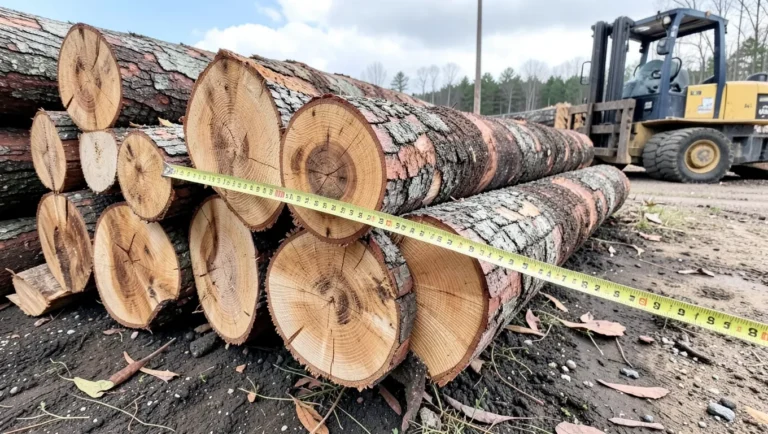
If you are salvaging a fallen tree or buying logs, a leaf check before cutting is cheap insurance that you are milling ash and not boxelder or walnut, which are different woods with different working properties. Once you have confirmed ash, our pages on ash wood color and ash wood furniture pros and cons cover what to expect from the wood itself. For a wider comparison, see the types of wood guide.
Frequently Asked Questions
How many leaflets does an ash leaf have?
Most ash leaves have 5 to 9 leaflets, according to Michigan State University Extension. Black ash and blue ash run 7 to 11, and North Dakota State University Extension lists green ash at 5 to 11. Because those ranges overlap with other trees, use the opposite arrangement of the leaves and branches as your main test, not the leaflet count.
What tree looks like an ash but is not?
Boxelder is the most common lookalike. It also has opposite branches and compound leaves, but only 3 to 5 leaflets with few coarse teeth. Black walnut, hickory and mountain-ash have compound leaves too, but their leaves are alternate, not opposite. Amur corktree is opposite like ash and can have as many as 13 leaflets.
How do you tell white ash from green ash by the leaf?
The leaf alone is a weak clue, since both have compound leaves with about 5 to 9 leaflets. Michigan State University Extension points to the twig instead: below each bud, white ash has a leaf scar shaped like a C turned on its side, and green ash has a D-shaped scar.
Do ash leaves have serrated edges?
It varies. Michigan State University Extension describes ash leaflets as finely toothed or smooth-edged, and North Dakota State University Extension describes green ash leaflets as serrated. Check several leaves, and rely on the leaf arrangement before edge shape.
Can you identify an ash tree in winter without leaves?
Yes. Look for buds and twigs that grow directly across from each other, then check for clusters of single-winged seeds (samaras) that can stay on the tree into winter, and for diamond-shaped ridges on mature bark. Our ash bark and twig test guide covers this in detail.
Should you worry if a leaf-identified ash tree is thinning at the top?
It is worth a closer look. Dead branches near the top of the tree, sprouts on the trunk and vertical bark cracks are listed by USDA APHIS as visible emerald ash borer symptoms. Look for at least two signs before concluding anything, since other problems cause similar thinning.
Final Thoughts
To identify an ash leaf, check arrangement first, leaf structure second and leaflet count last. Opposite compound leaves with 5 to 9 leaflets point to ash, and the twig and seeds settle close calls. When a tree you have confirmed as ash starts thinning from the top, take the borer signs seriously and get a local expert to look at it.
Sponsored / affiliate links. As an Amazon Associate I earn from qualifying purchases. I may earn additional commission from eligible campaigns.