How Much Wood Ash to Raise Soil pH (Real Amounts)
Wood ash is a genuinely useful, free way to raise soil pH, but it’s also easy to overdo since it reacts faster than the lime most gardening advice defaults to. Here’s how much to actually use, and why the speed matters as much as the amount. For which specific plants actually want this pH shift, see our full breakdown on how to use wood ash for plants.
The Real Amount: 10-20 lbs per 1,000 Sq Ft
Test Before, Test After
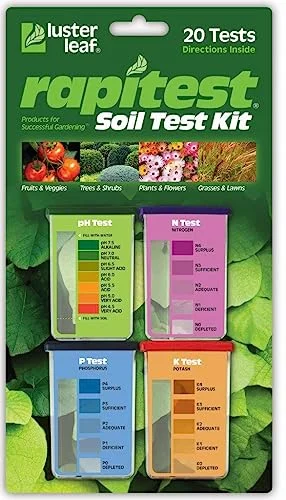 |
Rapitest Soil Test Kit – $15.31 Wood ash reacts fast, which means overshooting the pH target is easy without a real reading before and after — not just a guess based on how the soil looks.
|
A safe starting rate is 10 to 20 pounds of wood ash per 1,000 square feet, which typically raises soil pH by roughly 0.5 to 1 full unit — test your soil’s current pH first, apply on the lower end of that range, then retest before adding more. For a single plant rather than a bed (tomatoes are a common example), a half-cup of ash worked into the soil around the base is a reasonable, low-risk amount. Don’t scale that per-plant number up linearly across a large bed; use the per-square-foot rate instead once you’re covering real area.
Does Wood Ash Raise pH Quickly?
Yes, faster than agricultural lime in most cases — wood ash is more water-soluble, so its alkaline compounds start affecting soil chemistry sooner after application. That speed is a real advantage if you need a quick correction, but it’s also exactly why overshooting is easier with ash than with lime: lime’s slower action gives you more of a buffer to catch an overapplication before it fully takes effect, while ash’s effect shows up faster and can push pH higher than intended if you’ve applied too much. The tradeoff is that ash’s effect is also less durable than lime’s over a full season, so a bed treated with ash may need retesting and a touch-up sooner than one treated with lime.
Why Soil Type Changes the Math
| Soil Type | Reaction Speed | Practical Note |
|---|---|---|
| Sandy | Fast | Smaller particles hold less buffering capacity — retest sooner |
| Loam | Moderate | Most forgiving for a first-time application |
| Clay | Slow | Takes longer to show the full pH change — don’t rush a second application |
Wood Ash vs. Other Amendments
Wood ash isn’t the only tool for this job, and it isn’t always the right one. Agricultural lime (calcitic or dolomitic) is the standard comparison — it acts more slowly and predictably than ash, and dolomitic lime specifically adds magnesium alongside calcium, which ash doesn’t provide in meaningful amounts. Wood ash’s real advantage over lime is that it also delivers potassium, a genuine plant nutrient lime doesn’t supply, so it’s doing two jobs (pH adjustment and fertilization) where lime only does one. If your soil needs magnesium specifically (a dedicated soil test will tell you this), dolomitic lime is the better tool even though it’s slower. If you’re trying to lower pH instead of raise it, neither ash nor lime is the right amendment — that’s a job for elemental sulfur or an acidifying fertilizer, which work through the opposite chemical mechanism.
Which Plants Actually Want a Higher pH
Most vegetable garden staples — tomatoes, peppers, beans, squash, and leafy greens — grow best in a slightly acidic to neutral range (roughly pH 6.0-7.0), so wood ash is genuinely useful for nudging naturally acidic soil into that window rather than something to apply automatically to every bed. Lawns generally prefer a similar range and respond well to the same treatment. The plants that actively suffer from wood ash are the acid-loving specialists — blueberries, azaleas, rhododendrons, camellias, and potatoes (which are more prone to scab disease in alkaline soil) — so know what’s actually growing in a bed before treating it, not just what’s growing nearby.
Adding It to Compost Instead of Soil Directly
Mixing wood ash into a compost pile rather than applying it straight to a bed is a genuinely gentler approach — the microbial activity and other organic material in the pile buffer the ash’s alkalinity, so it’s less likely to shock plants or spike pH sharply the way a direct bed application can. A reasonable rate is a thin dusting per compost layer, no more than about 1 cup per cubic foot of material, worked in as you build the pile rather than dumped in one spot. This approach also solves the timing problem: composted ash has already partially reacted and stabilized by the time you spread the finished compost, so you’re working with a gentler amendment than raw ash straight from the fireplace.
How to Apply It
- Test your soil’s current pH with a kit — don’t apply ash based on assumption.
- Spread ash evenly across the bed with a rake rather than piling it in one spot.
- Mix it into the top few inches of soil rather than leaving it sitting on the surface.
- Apply in fall or winter when possible, giving it time to integrate before the growing season.
- Retest a few weeks later before considering a second application — once a year is typically enough.
Signs Your Soil Might Already Be Too Alkaline
A soil test is the only reliable way to know, but a few visible clues suggest you should test before adding any ash at all. Yellowing between the veins of otherwise green leaves (a condition called chlorosis) on plants like blueberries, azaleas, or rhododendrons often signals soil that’s already too alkaline for them to take up iron properly — adding ash to that bed would make the problem worse, not better. Certain weeds (clover and plantain, for example) tend to thrive in more alkaline soil, so a lawn or bed with a heavy concentration of these compared to the rest of your yard is worth testing before you assume it needs more alkalinity. When in doubt, test — these are hints, not a substitute for an actual reading.
Handling and Storage Safety
Wear gloves when handling wood ash — it’s genuinely caustic on skin contact in the same family as lye, and repeated bare-hand contact can dry and irritate skin. A dust mask is worth using on a windy day or when handling a large quantity, since fine ash particles are easy to inhale. Store unused ash in a dry, sealed metal container; damp ash clumps and loses potency, and a plastic container is a real fire risk if any embers are still present in what looks like fully cooled ash.
What to Avoid
- Applying near acid-loving plants (blueberries, azaleas, rhododendrons, camellias) — wood ash actively works against what these plants need
- Piling ash in one spot instead of spreading it — concentrated ash can spike local pH high enough to damage roots
- Repeating applications without retesting — soil pH doesn’t reset on a schedule, it resets when you actually check it
- Using ash from painted, stained, or treated wood, or from charcoal briquettes — these can introduce real chemical contaminants into your soil
Rainfall matters more for wood ash than for lime, too — ash’s water-soluble alkaline compounds leach out of soil faster in a wet climate or a heavily irrigated bed, which is another reason its effect fades sooner than lime’s. If you garden somewhere with regular heavy rain, expect to retest and potentially reapply more often than the once-a-year rule of thumb suggests for a drier climate.
Frequently Asked Questions
How much does wood ash raise soil pH?
About 0.5 to 1 pH unit at a rate of 10-20 pounds per 1,000 square feet, though the exact change depends on your soil type and how acidic it already is. Always test before and after applying.
Does wood ash raise soil pH quickly?
Yes, faster than agricultural lime, because it’s more water-soluble. That speed makes it easy to overshoot your target pH if you don’t test before and after applying, and its effect also fades faster than lime’s over a season.
Which plants dislike wood ash?
Acid-loving plants like blueberries, azaleas, rhododendrons, and camellias. Wood ash raises pH toward alkaline, which works directly against what these plants need to thrive.
Conclusion
10-20 lbs per 1,000 square feet is a safe, real starting point, but the number that actually matters most is your own soil test — before applying, and again a few weeks after. Wood ash’s speed is genuinely useful and genuinely easy to overshoot; testing is what keeps it in the useful column. Treat the dosage numbers here as a starting range for your specific soil and climate, not a fixed prescription that applies identically to every yard.
Sponsored / affiliate links. As an Amazon Associate I earn from qualifying purchases. I may earn additional commission from eligible campaigns.