Will Butcher Block Countertops Sag Over Time
It’s common to wonder, Will Butcher Block Countertops Sag Over Time, especially when you’re setting up your kitchen. New homeowners or those updating their spaces often have this question. It can feel a bit tricky to know for sure if your beautiful new wood counters will stay flat.
Don’t worry, this post will break it all down in an easy way. We’ll show you exactly what to do to keep your butcher block looking great for years to come, covering everything you need to know step-by-step.
Understanding Butcher Block Sag Over Time
When Do Butcher Block Countertops Sag
The question of whether butcher block countertops will sag over time is a valid concern for many people considering this beautiful and functional material for their kitchens. Butcher block, known for its natural warmth and durability, is made from strips of wood joined together. While it offers a unique aesthetic and a great surface for food preparation, its susceptibility to environmental factors can lead to changes in its form.
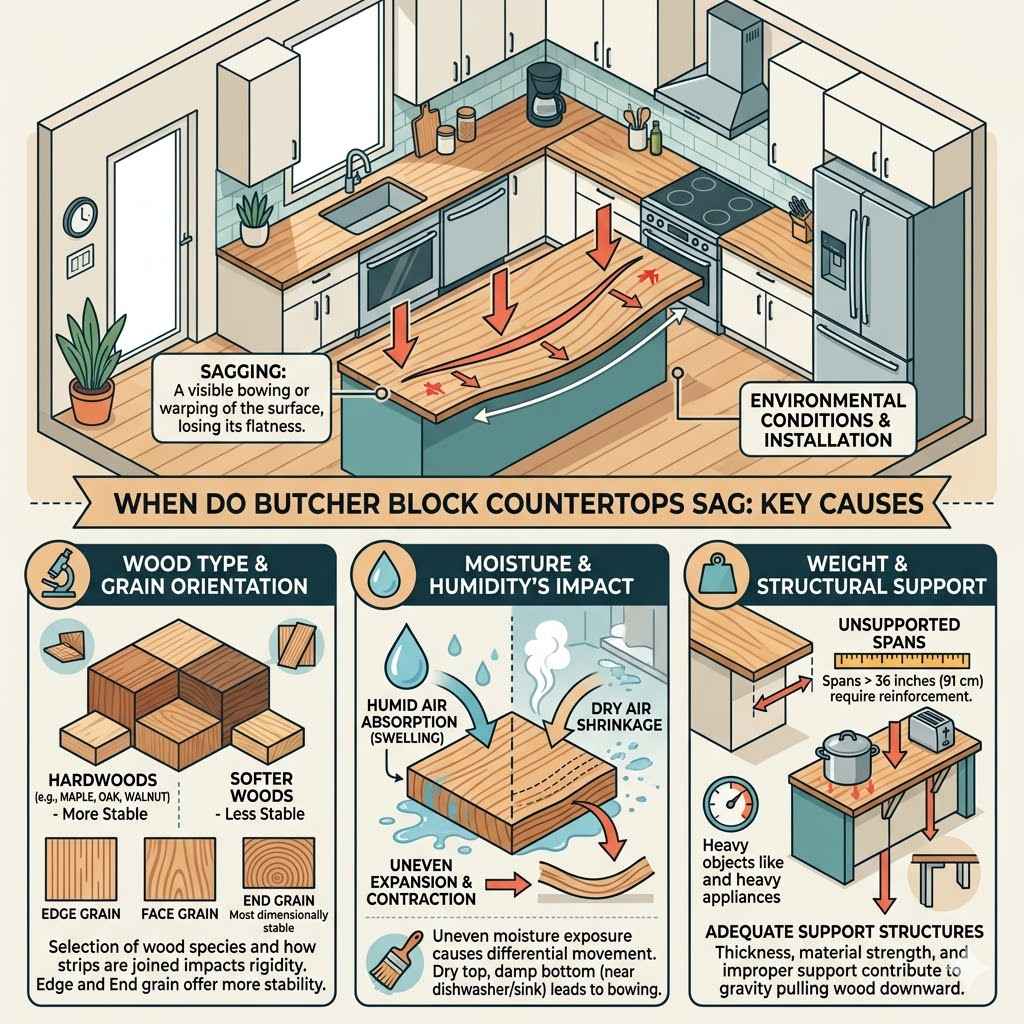
Sagging, in the context of countertops, refers to a visible bowing or warping of the surface, where the wood loses its flatness. This can be particularly noticeable across longer spans or in areas that experience uneven stress. For those new to maintaining wood surfaces, this potential issue might seem intimidating, leading to hesitation.
However, understanding the causes and implementing preventative measures can significantly mitigate the risk and ensure the longevity of your butcher block.
Several factors contribute to whether butcher block countertops might sag. The type of wood used, its grain orientation, the thickness of the block, the installation method, and environmental conditions all play a role. For instance, hardwoods like maple, oak, or walnut are generally more stable than softer woods.
The way the wood strips are arranged (e.g., edge grain, face grain, or end grain) also affects its structural integrity and resistance to bending.
This section will explore the primary reasons why butcher block might sag, giving you a clear picture of what to watch out for. We will discuss the role of moisture, temperature fluctuations, and weight distribution. By understanding these elements, you can better appreciate how to care for your countertops and prevent them from losing their shape.
Wood Type and Grain Orientation
The selection of wood for your butcher block is a key factor in its overall stability and resistance to sagging. Different wood species have varying densities, hardness, and natural expansion/contraction rates when exposed to moisture and temperature changes. Hardwoods such as maple, oak, and walnut are often preferred for butcher block applications because of their inherent strength and resilience.
Maple, for example, is dense and hard, making it very resistant to dents and scratches. Oak, with its open grain, is also strong but can be more prone to absorbing moisture if not properly sealed. Walnut offers a rich color and good stability, though it might be softer than maple or oak.
The density of the wood helps it resist bending under normal use.
Beyond the species, the way the wood is cut and assembled into the butcher block also matters. There are three main grain orientations: edge grain, face grain, and end grain. Edge grain butcher block consists of wood strips glued together along their edges.
This is a very stable and durable construction, often used for countertops. Face grain involves gluing the wide faces of the boards together, which is less stable and more prone to cupping or warping over time.
End grain butcher block, where the ends of the wood pieces are glued together to form a checkerboard pattern, is the most dimensionally stable and is highly regarded for its self-healing properties, making it excellent for cutting boards but also very resilient for countertops. The stability of the grain orientation helps distribute stress evenly, reducing the likelihood of individual strips bending or causing the entire block to sag. This inherent stability is crucial for preventing the countertop from losing its flatness.
Moisture and Humidity’s Impact
Wood is a natural material that breathes and reacts to its environment, particularly to changes in moisture and humidity. This is one of the most significant factors influencing whether butcher block countertops will sag over time. When wood absorbs moisture, it swells.
Conversely, when it dries out, it shrinks.
If moisture levels fluctuate unevenly across the butcher block, different parts of the wood will expand or contract at different rates. This differential movement creates internal stresses within the wood. Over time, these stresses can lead to visible changes in the countertop’s shape, such as cupping (edges rising higher than the center), bowing (a curve along the length), or warping.
These are all forms of sagging.
Kitchen environments are particularly susceptible to humidity fluctuations. Steam from cooking, water splashes from the sink, and even changes in the weather can all affect the moisture content of the wood. For instance, if the top surface of the butcher block is consistently kept dry while the underside is exposed to more moisture (perhaps from a dishwasher or sink area), it can cause the top to shrink relative to the bottom, leading to a downward bow, or sag.
This is why proper sealing and regular maintenance are so important. A good sealant creates a barrier that helps regulate the wood’s exposure to ambient moisture. Understanding that wood expands and contracts is key to preventing premature damage and maintaining the flatness of your butcher block.
Protecting it from prolonged exposure to water and ensuring balanced humidity levels are critical steps.
Weight and Structural Support
The way butcher block countertops are supported is another critical element in preventing them from sagging. Like any solid surface material, butcher block has its limits when it comes to bearing weight over unsupported spans. If a countertop is too long or heavy without adequate structural reinforcement beneath it, gravity will inevitably pull it downwards, leading to a sag.
The thickness of the butcher block itself plays a role here. Thicker countertops are inherently more rigid and can span longer distances without support than thinner ones. However, even thick countertops can sag if the span is excessive or the underlying support is insufficient.
The material’s strength is tested by the cumulative weight of objects placed on it, as well as its own weight over time.
Cabinets and support structures are designed to bear the load of countertops. These supports should be placed at appropriate intervals to ensure the countertop remains level. For standard cabinet installations, the top edges of the cabinets provide the necessary support.
However, for areas that extend beyond cabinets, like an island overhang or a breakfast bar, additional support legs or a reinforcing framework may be required.
A common guideline is that for spans exceeding 36 inches (about 91 cm), additional support might be needed. Without proper structural backing, the constant downward force can cause the wood fibers to yield, leading to a permanent bend or sag in the countertop. This is a physical limitation of the material that must be addressed during the design and installation phase.
Preventing Butcher Block Sag
Proper Installation Techniques
The way your butcher block countertop is installed is paramount to preventing it from sagging over time. A professional installation ensures that all structural considerations are met, from the cabinet support to the fastening methods. Even if you are a DIY enthusiast, understanding these techniques is vital for long-term durability.
One of the most crucial aspects is ensuring the cabinets beneath are level and securely fastened. Any unevenness in the cabinet tops will transfer directly to the countertop, potentially creating stress points that can lead to warping. The cabinets themselves must be strong enough to bear the weight of the butcher block and anything placed on it.
Using sturdy, well-constructed cabinetry is the first line of defense.
When attaching the butcher block to the cabinets, the method of fastening is important. While some prefer to use screws from underneath, others opt for specialized countertop adhesive or biscuits. Screwing directly through the butcher block from below into the cabinet frames can create localized stress points if not done carefully.
Over-tightening screws can compress the wood, leading to premature damage.
It is also important to allow for slight wood movement. Some installers recommend using slotted holes or undersized holes for screws in certain areas, especially where the butcher block meets longer spans or overhangs, to accommodate natural expansion and contraction. This prevents the wood from binding against fixed points, which can cause it to buckle or warp.
Proper expansion gaps around the perimeter are also key.
Finally, considering the overall span and any potential overhangs during installation is critical. If a section of the countertop will extend significantly beyond the supporting cabinets, adding extra bracing or support legs becomes necessary. Professional installers have the experience to assess these needs and incorporate the right structural elements from the start.
Cabinet Support and Spacing
The foundation of a stable butcher block countertop lies in the cabinets and their arrangement. For butcher block to remain flat, it needs consistent support from below. This means that the top edges of the cabinets must be level and directly beneath the countertop surface.
Any gaps or unevenness can lead to the countertop bending under its own weight or the weight of items placed on it.
Cabinet spacing is also a key factor, especially for longer runs of countertop. Standard kitchen cabinets are typically spaced 24 to 36 inches apart. For butcher block, it’s advisable to keep this spacing consistent and ensure that the cabinet tops are flush and sturdy.
In some cases, especially with thinner butcher block or very long spans, you might consider adding additional support strips to the top of the cabinets, bridging any gaps between them.
If you have an island or a peninsula without full cabinet support, you will need to plan for a robust substructure. This might involve reinforcing the cabinet structure with an additional frame or adding decorative furniture legs at strategic points. The goal is to eliminate any unsupported spans that are too large for the thickness and inherent strength of the butcher block.
A general rule of thumb is that for any unsupported span over 30-36 inches, additional support should be considered. This could be in the form of an additional cabinet, a sturdy bracket system, or even a solid wood apron running underneath the countertop. Neglecting adequate cabinet support is one of the most common reasons for butcher block to sag, so it’s an area that warrants careful attention during the planning and installation phases.
Sealing and Finishing Techniques
Proper sealing and finishing are your best defense against moisture-related damage and ultimately, sagging. Wood is naturally porous, meaning it can absorb liquids and moisture from the air. Without a protective barrier, it will expand and contract more readily, leading to stress and potential warping.
There are several types of sealants suitable for butcher block. Food-grade mineral oil is a popular choice for an oiled finish. It needs to be applied regularly, often monthly at first, to build up a protective layer.
This type of finish penetrates the wood, offering some protection and a natural look, but it requires consistent upkeep.
For a more durable, water-resistant finish, you can opt for a polyurethane or varnish. These create a film on the surface of the wood that is highly effective at preventing moisture ingress. However, some people prefer the natural feel of an oiled finish and may find polyurethanes too plasticky or prone to chipping if not applied perfectly.
Another option is a hardwax oil finish, which combines the benefits of oil penetration with a protective wax layer. These finishes offer good durability and a natural feel, and are often considered a good compromise between oil and polyurethane.
Regardless of the type of finish you choose, the key is consistent application and maintenance. Reapplying sealant as needed, especially in areas prone to spills or heavy use, helps maintain the integrity of the protective layer. If the finish wears away, the wood becomes more vulnerable.
A well-sealed and maintained butcher block is much less likely to absorb moisture unevenly and thus, less likely to sag.
Allowing for Wood Movement
Understanding and accommodating natural wood movement is crucial for the longevity of butcher block countertops. Wood expands and contracts in response to changes in humidity and temperature. This phenomenon is known as “wood movement,” and if not accounted for during installation, it can lead to significant issues, including sagging, cracking, or separation of the wood strips.
When installing butcher block, particularly over longer spans or when it’s fixed to a cabinet structure, it’s important to allow the wood to move freely to some extent. One common method is to use oversized screw holes or slotted holes when fastening the countertop to the cabinets. This allows the wood to expand or contract without being constrained by fixed screws, which could otherwise create internal stresses.
For example, if screws are fastened too tightly in perfectly round holes across the entire length of a long countertop, the wood’s expansion could push against these fixed points, causing it to buckle upwards or downwards. Using slotted holes that allow the screw to slide slightly as the wood moves is a simple yet effective way to prevent this. The screws in the center might be more fixed, while those at the ends allow for more play.
Another consideration is the orientation of the wood grain relative to the supporting structure. While most butcher block countertops are installed with the grain running horizontally, any movement in the wood’s width can still occur. Allowing for expansion gaps at the edges where the countertop meets the wall or other fixed elements is also a smart practice.
These small gaps, often covered by trim, give the wood room to breathe and move without causing damage.
By respecting wood’s natural tendency to move, you are essentially building flexibility into the system. This flexibility helps absorb the stresses that arise from environmental changes, thereby significantly reducing the risk of your butcher block countertops sagging or warping over time. It’s a proactive approach to material behavior.
Maintaining Butcher Block Countertops
Regular Cleaning Practices
Keeping your butcher block countertops clean is fundamental to their maintenance and helps prevent many common issues, including those that could lead to sagging. Spills and food particles left sitting on the wood can penetrate the surface, potentially leading to stains or promoting the growth of mold and mildew, which can compromise the wood’s integrity over time.
The best approach for daily cleaning is to use a damp cloth or sponge with a mild dish soap. Wipe down the surface after each use, especially after preparing raw meats or handling sticky or acidic foods. It’s important to wipe up spills immediately.
Don’t let liquids sit on the surface for extended periods, as wood is porous and can absorb them.
After cleaning with soap and water, always follow up by drying the countertop thoroughly with a clean, soft cloth. This removes any residual moisture that could soak into the wood. Never use abrasive cleaners, steel wool, or harsh chemicals, as these can scratch the surface, remove the protective finish, and make the wood more vulnerable to damage and moisture absorption.
For tougher spots or sticky residues, a gentle scrub with a paste of baking soda and water can be effective. Apply the paste, let it sit for a few minutes, and then gently scrub and wipe clean. Remember to always dry the area completely afterwards.
Consistent, gentle cleaning is far more beneficial than infrequent harsh scrubbing.
By adopting these simple cleaning habits, you not only keep your butcher block looking beautiful but also actively protect it from the kind of moisture saturation or damage that can contribute to structural issues like sagging over many years of use.
Re-oiling and Re-sealing
The protective finish on your butcher block countertop is its first line of defense against moisture, stains, and wear. Over time, this finish will naturally degrade, especially in high-traffic areas or areas frequently exposed to water and heat. Therefore, periodic re-oiling or re-sealing is essential to maintain the countertop’s integrity and prevent issues that could lead to sagging.
If you have an oiled finish (using mineral oil or a similar food-safe oil), you will need to reapply it regularly. The frequency depends on usage, but typically, you should oil your butcher block monthly for the first six months, and then every 2-3 months or as needed. You’ll know it’s time when water no longer beads up on the surface and starts to soak in quickly.
To re-oil, simply wipe down the clean, dry surface with a clean cloth soaked in oil, let it penetrate for about 15-20 minutes, and then wipe off any excess.
For polyurethane or varnish finishes, the process involves cleaning the surface thoroughly, lightly sanding it with fine-grit sandpaper (e.g., 220-grit), wiping away dust, and then applying one or more new coats of the sealant. The goal is to refresh the protective film. If there are areas where the finish has completely worn away, you might need to strip and refinish those specific spots or the entire countertop for a uniform look.
The frequency of re-sealing varies greatly depending on the type of sealant used and the intensity of countertop use. A well-maintained seal prevents moisture from penetrating the wood. If moisture gets in, it can cause the wood fibers to swell unevenly, leading to cupping, bowing, and ultimately, sagging.
Consistent maintenance of the finish is a proactive step against this.
When you notice the protective layer is no longer effective (water soaks in, not beads up), it’s time to act. Don’t wait until you see visible signs of damage like staining or warping. Regular upkeep of the seal is a simple yet powerful way to ensure your butcher block remains flat and beautiful for many years.
Dealing with Scratches and Minor Damage
Butcher block countertops are designed to be used, and with use comes minor wear and tear, such as scratches and small nicks. Addressing these cosmetic issues promptly is not only for aesthetics but also for the health of the countertop and its ability to resist sagging over time.
For light scratches on oiled finishes, often a simple re-oiling of the affected area can help blend the scratch in as the oil penetrates the wood fibers. For deeper scratches, you can use a fine-grit sandpaper (around 150-grit) to lightly sand the scratched area, following the grain of the wood. After sanding, wipe away the dust and reapply your chosen oil finish.
The sanded area will darken slightly as it absorbs oil, blending with the surrounding wood.
If you have a sealed finish (like polyurethane), deeper scratches might expose the wood underneath. In this case, you can use a wood filler that matches the color of your countertop to fill the scratch. Once the filler is dry, you can lightly sand it smooth and then reapply the sealant to that spot.
For very minor surface scratches on sealed finishes, sometimes a good quality furniture polish or wax can help fill them and restore some shine.
Dealing with these imperfections promptly is important because any break in the protective seal or any area where moisture can more easily penetrate creates a vulnerability. Over time, if these small damages are ignored, they can lead to more significant problems. For example, a deep scratch that allows water to seep into the wood might start a process of uneven swelling, which, if concentrated in one area, could contribute to a localized sag or warp.
Regularly inspecting your butcher block for any signs of damage and addressing them promptly ensures that the protective layer remains intact and the wood itself is shielded from excessive moisture exposure. This proactive approach significantly contributes to the overall structural integrity of the countertop, helping to prevent sagging over the long haul.
Troubleshooting Sagging Issues
When to Call a Professional
While many minor issues with butcher block countertops can be handled with DIY methods, there are times when it’s best to call in a professional. Recognizing these situations can save you time, money, and prevent further damage to your countertops.
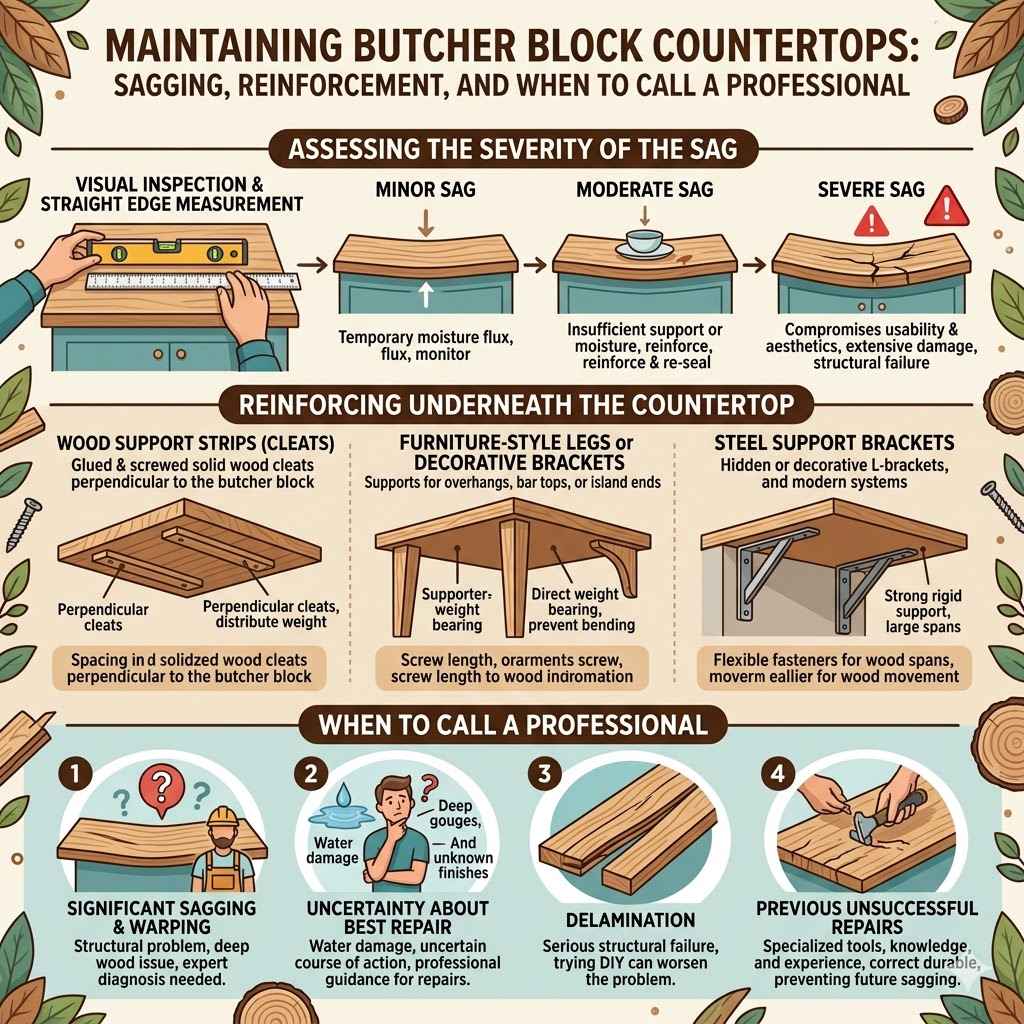
If you notice significant sagging or warping that extends across a large portion of the countertop, or if the sag appears to be getting worse despite your efforts, it’s a clear sign that a professional is needed. This could indicate a structural problem with the underlying support or a deep-seated issue within the wood itself that requires expert diagnosis.
Another situation where professional help is advisable is if you are unsure about the best course of action for a repair. For instance, if there’s significant water damage, deep gouges, or if the existing finish is unknown and you’re concerned about using the wrong products, a professional cabinet maker or countertop installer can provide guidance and perform the necessary repairs.
If the butcher block has delaminated (the strips of wood are pulling apart), this is a serious structural failure that requires professional attention. Trying to fix this yourself can often make the problem worse and may lead to the complete failure of the countertop section.
Finally, if you’ve attempted repairs and they haven’t worked or have created new issues, it’s time to step back and consult an expert. Professionals have specialized tools, knowledge, and experience to address complex problems and ensure that repairs are done correctly and durably, preventing future sagging and maintaining the beauty of your butcher block.
Assessing the Severity of the Sag
Before you can effectively address any potential sagging in your butcher block countertops, it’s important to accurately assess the severity of the issue. This will help determine the best course of action, whether it’s a simple fix or a more involved repair.
Begin by visually inspecting the entire surface of the countertop. Look for any noticeable dips, bows, or cupping. Run a straight edge, like a level or a long ruler, across the surface to get a more objective measurement of any curvature.
Place the straight edge at various points: across the width, along the length, and diagonally.
A minor sag might be barely perceptible, perhaps a slight unevenness that doesn’t affect functionality. This could be due to temporary moisture fluctuations or minor pressure. These often resolve on their own once humidity levels normalize or the pressure is removed.
However, even minor sags should be monitored.
A moderate sag is more visible and might cause items placed on the counter to tilt slightly. This could be a sign of insufficient support or ongoing moisture issues. It might require adding reinforcements or re-sealing.
A severe sag is a significant drop or curve that compromises the usability and aesthetics of the countertop. This is often accompanied by visible cracks or separation of wood strips. Severe sagging usually indicates a more serious underlying problem, such as extensive water damage, structural failure, or inadequate support that has been neglected for too long.
In such cases, professional assessment is almost always necessary.
By carefully assessing the extent of the sag, you can make an informed decision about whether you can manage it yourself or if it’s time to seek expert advice. This initial assessment is key to a successful outcome.
Reinforcing Underneath the Countertop
If you’ve determined that your butcher block countertop is starting to sag due to insufficient support, reinforcing the underside can be a very effective solution. This involves adding structural elements that distribute weight more evenly and prevent further bowing.
One common method is to add wood support strips, often called “cleats” or “battens,” to the underside of the countertop. These are typically made from solid wood and are glued and screwed to the butcher block, running perpendicular to the wood strips of the butcher block itself. The spacing of these supports will depend on the thickness of your countertop and the extent of the sag.
For a standard 1.5-inch thick butcher block, you might place supports every 12-18 inches.
If the sag is in an area with an overhang, such as a bar top or an island end, adding furniture-style legs or decorative brackets can provide crucial support. These should be strategically placed to bear weight directly, preventing the unsupported section from bending downwards.
For larger spans or heavier countertops, you might consider installing a steel support bracket system. These are often L-shaped brackets that attach to the cabinet backs and extend outwards, providing a strong, rigid support beneath the countertop. Some modern designs incorporate hidden support systems that offer excellent strength without being visually intrusive.
When adding support, it’s crucial to ensure that the new supports are installed level and that they don’t create new stress points. If you’re screwing into the butcher block, use appropriate length screws to avoid penetrating the top surface, and consider using a flexible fastening method (like slightly oversized holes) to allow for minor wood movement.
Reinforcing the underside is a proactive measure that can significantly extend the life of your butcher block and prevent the need for more costly repairs or replacement. It’s a practical way to address the physical limitations of the material and ensure its long-term stability.
Frequently Asked Questions
Question: Will butcher block countertops sag if I put a heavy appliance on them
Answer: Placing a very heavy appliance on an unsupported section of butcher block could potentially cause it to sag over time, especially if the appliance is left in place for an extended period. It is always best to ensure that any heavy items are placed on a well-supported section of the countertop or directly on the cabinets. Distributing weight is key to preventing undue stress.
Question: How much overhang can butcher block countertops handle without sagging
Answer: The amount of overhang butcher block can handle without sagging depends on its thickness and the type of wood. Generally, a 1.5-inch thick countertop might support a 10-12 inch overhang if the wood is very stable and properly supported along the edge. For larger overhangs, additional support brackets or legs are usually necessary to prevent bowing.
Question: Is end grain butcher block less likely to sag than edge grain
Answer: Yes, end grain butcher block is generally considered more dimensionally stable and less likely to sag or warp than edge grain or face grain butcher block. This is because the wood fibers are oriented vertically, allowing for more flexibility and less susceptibility to seasonal moisture changes that can cause movement in edge or face grain constructions.
Question: How often should I re-oil my butcher block countertops to prevent issues
Answer: For new butcher block countertops with an oil finish, you should re-oil them monthly for the first six months. After that, re-oiling every 2-3 months or whenever water stops beading on the surface is usually sufficient. This regular maintenance helps maintain the protective barrier against moisture and prevents the wood from drying out, which can contribute to sagging.
Question: Can temperature changes cause my butcher block countertops to sag
Answer: Yes, significant and rapid temperature changes, especially when combined with humidity fluctuations, can cause wood to expand and contract. If this movement is uneven across the countertop, it can create internal stresses that may lead to sagging or warping over time. Proper sealing helps to moderate these effects.
Final Thoughts
So, will butcher block countertops sag over time? While it’s a possibility, it’s not a certainty. With proper installation, regular maintenance like sealing and cleaning, and by allowing for natural wood movement, you can greatly reduce the risk.
Understanding how moisture, weight, and support affect your countertops empowers you to keep them looking flat and beautiful for many years.