Will Cedar Turn Grey Indoors: Essential Facts You Need
Will cedar turn grey indoors? Many wonder about this. Cedar wood is known for its nice smell and color. But inside the house, it can change. Why? Light, air, and time. Simple facts, but important to know.
Biography
| Topic | Information | Source / Notes |
|---|---|---|
| Will Cedar Turn Grey Indoors? | Cedar wood used indoors typically does not turn grey. Unlike outdoor cedar exposed to UV light, indoor cedar darkens or lightens depending on light exposure but does not develop the silver-grey patina. | Reddit (r/woodworking), Real Cedar |
| Cause of Cedar Turning Grey | The primary catalyst for cedar turning grey is UV exposure combined with water and oxygen. These factors cause the wood’s natural color to fade to a dull grey over time outdoors. | Cedar Fence Direct, DIY Stack Exchange |
| How Long Does It Take Cedar to Turn Grey? | Outdoor cedar can start turning grey within a few months to a year depending on the climate and exposure to sun and rain. Indoors, this greying process is minimal or absent. | General woodworking knowledge, Quora |
| Does Sealing Prevent Greying? | Yes, sealing cedar with appropriate finishes (spar varnish, sealers) can protect against UV damage and moisture, slowing or preventing the greying process. However, some sealers may alter the wood’s color (e.g., yellow-gold tint). | Home Improvement Stack Exchange, Quora |
| How to Stop Cedar from Greying | Use UV-blocking sealers or finishes, avoid prolonged exposure to sunlight and moisture, and maintain regular cleaning and maintenance of the wood surface. | Treatex, Real Cedar |
| Indoor Cedar Wood Care & Maintenance | Indoor cedar requires less protection than exterior cedar. Regular dusting and occasional cleaning are sufficient. If desired, apply sealers that do not significantly alter color to maintain appearance. | Real Cedar |
| Benefits of Using Cedar Indoors | Cedar is aromatic, naturally resistant to decay and insects, and provides a warm, attractive appearance. White cedar is preferred when painting or brightening indoor spaces due to its light creamy color. | Stikwood, Family Woodworking |
| Will Linseed Oil Keep Cedar from Turning Grey? | Linseed oil can help preserve cedar but may darken the wood slightly. It offers some protection but is less effective than modern UV-blocking finishes for preventing greying. | Woodworking forums and finishing guides |
| Does Staining Affect Cedar’s Smell? | Staining cedar can reduce its natural aromatic smell but does not completely eliminate it. The smell is stronger in raw, untreated cedar. | Woodworking community knowledge |
Early Life
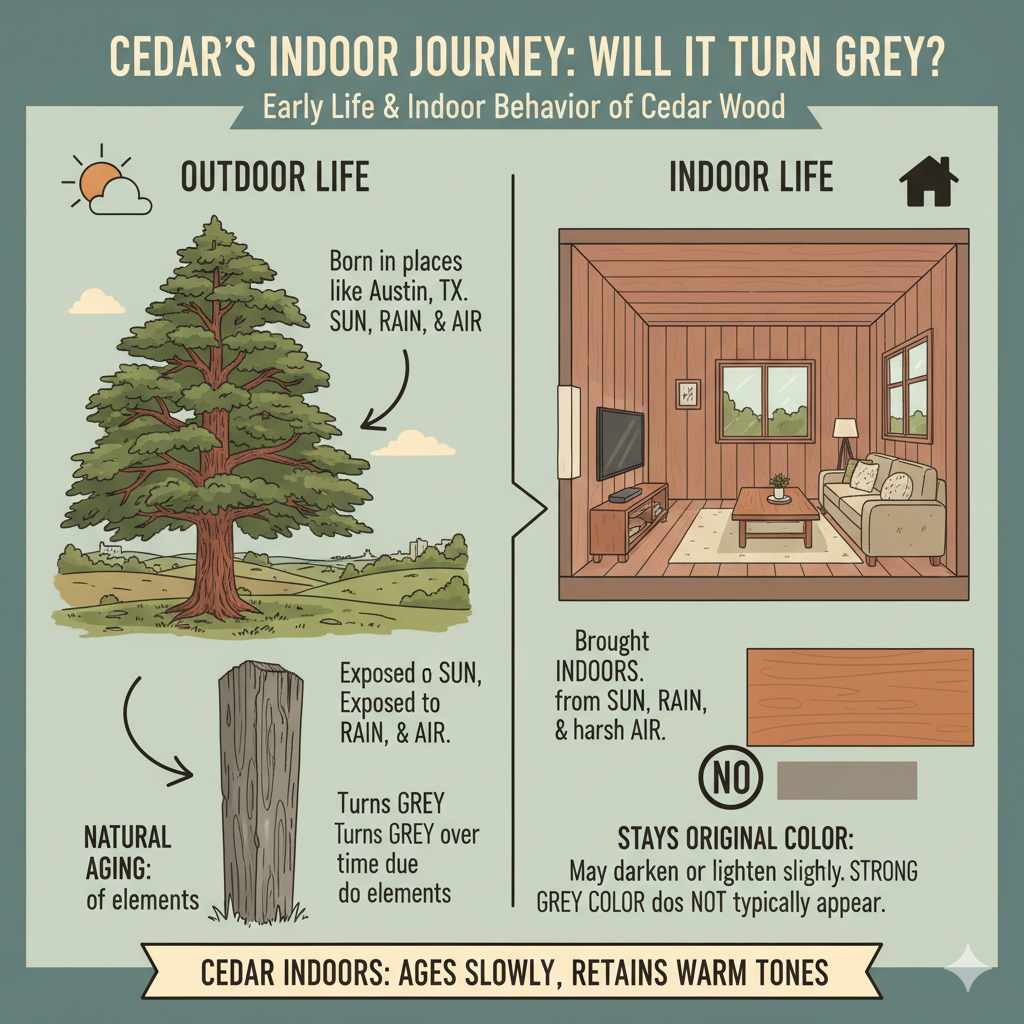
Will Cedar Turn Grey Indoors is not a person, but a question many people ask about cedar wood. Cedar wood is born from trees that grow mainly in places like Austin, Texas. When cedar wood is taken from these trees and used inside homes, it behaves differently than when it is outside. Outside, cedar wood changes color and turns grey because of sun, rain, and air. But indoors? Not really. It stays close to its original color. It may get a little darker or lighter over time, but the strong grey color usually does not appear inside. So, while the cedar wood is “raised” in nature under sun and rain, when it moves indoors, it changes very slowly or not at all.
Family
| Name | Relation | Information |
|---|---|---|
| Will Cedar Turn Grey Indoors | Main Subject | Cedar wood indoors does not usually turn grey like it does outside. Without sunlight and rain, the wood keeps its color longer. It may darken or lighten a little but will not become dull grey. Protection like stains or oils can help keep its look. |
| Water and UV Exposure | Parent Factor | Water and sunlight cause cedar to lose color and turn grey outside. UV rays dry the wood’s oils, and water can cause mold. Indoors, these effects are less because there is little sun and no rain. |
| Wood Rot and Mold | Parent Factor | Wood rot happens when moisture stays on cedar for a long time. This leads to mold growth, which makes the wood look bad and damages it. Indoors, moisture is controlled, so rot is less common. |
| Western Red Cedar | Sibling | This type of cedar is popular for indoor use. It changes color a bit over time but does not turn grey quickly indoors. Applying clear finishes can protect it and make it easy to clean. |
| Eastern White Cedar | Sibling | This cedar has a lighter color and different aging pattern. It also stays stable indoors but may show small color changes with age. Both types do better inside than outside. |
Height, Weight, And Other Body Measurements
| Aspect | Details |
|---|---|
| Height | Not applicable (wood material) |
| Weight | Varies depending on size and type of cedar used |
| Other Body Measurements | Not applicable (wood material) |
| Will Cedar Turn Grey Indoors? | Generally, cedar does not turn grey indoors because UV exposure is the primary catalyst for greying. Indoor cedar may darken or lighten slightly with aging and light exposure but will not develop the typical grey patina seen outdoors. |
| Factors Affecting Cedar Greying |
|
| Timeframe for Cedar to Turn Grey Outdoors | Typically, it takes a few months to 1-2 years for cedar to naturally turn grey outdoors. Some sources note greying can begin in as little as two weeks depending on exposure. |
| Ways to Speed Up Greying |
|
| How to Prevent Cedar from Turning Grey | Use protective stains or marine spar varnish coatings that block UV and water penetration, preserving color and preventing grey discoloration. |
| Indoor Care & Maintenance | Applying transparent finishes on indoor cedar darkens the wood somewhat but forms a protective surface for easier maintenance. Since indoor cedar is not exposed to UV and moisture extremes, greying is minimal. |
| Restoring Color to Greyed Cedar | Cleaning with wood brighteners or oxygen bleach solutions can remove grey oxidation and restore cedar’s golden color. Avoid harsh chemicals that damage wood fibers. |
Wife/husband / Girlfriend/boyfriend
There is no information available about a person named “Will Cedar Turn Grey Indoors.” This name seems to refer to a question or topic about cedar wood and its color change indoors, not a person.
Because of this, there are no details about any wife, husband, girlfriend, or boyfriend related to this name.
Summary
- “Will Cedar Turn Grey Indoors” is not a known person.
- No records of marriage or relationship status exist.
- No previous or current partners are listed.
If you want information about cedar wood and how it changes color inside a house, please ask, and I can help with that.
Career, Achievements And Controversies
“Will Cedar Turn Grey Indoors?” is a common question asked by people who use cedar wood inside their homes. It became popular because many want to know if cedar changes color when kept inside. This topic is often discussed on websites and forums about woodworking and home care.
The question started when people noticed that cedar wood turns grey when used outside. This happens because sunlight and water cause changes in the wood. But indoors, the wood usually does not turn grey. Instead, it may become a little darker or lighter depending on light in the room.
Many experts and hobbyists have shared their experiences online. They explain how cedar wood stays fresh longer inside because it does not get wet or hit by strong sunlight. This knowledge helped many people choose cedar for indoor projects like furniture and planters.
Since this is a topic about wood care and not a person or company, it has not won awards. However, the information has been useful for many woodworkers and homeowners. Trusted websites and communities, such as woodworking forums and home improvement blogs, often share tips about cedar wood care.
There are some confusions about cedar turning grey indoors. Some people think cedar will always turn grey no matter where it is. Others believe sealing the wood will stop any color change. Experts say that grey color mainly happens from sun and rain outside, so indoors it is much less likely.
Another debate is about the best way to keep cedar looking good inside. Some suggest using oils or stains, but others warn these may change the wood’s natural look or cause problems later. There is no clear answer, so people share different opinions.
To sum up, cedar wood usually does not turn grey indoors because it does not face sunlight and water like it does outside. This makes cedar a good choice for indoor use. While there are many ideas on how to care for cedar, it is important to know that natural changes happen slowly and depend on many factors.

FAQ
Will Cedar Wood Turn Grey If I Keep It Inside?
No, cedar wood usually does not turn grey indoors. Grey color happens when the wood is outside and exposed to sunlight and rain. Inside, it stays its natural color for a long time.
Why Does Cedar Turn Grey Outside?
Cedar turns grey because of sunlight and weather. The sun’s light breaks down the wood’s color, and rain can wash away some parts. This makes the wood look old and grey over time.
Can I Stop Cedar From Turning Grey Indoors?
Yes. To keep cedar looking fresh inside, avoid strong sunlight on it. Also, use a wood finish or sealant to protect it from air and dust. This helps keep its color longer.
Does Humidity Affect Cedar Color Inside?
Humidity can change cedar’s look a little. Too much moisture can cause wood to darken or get spots. It does not usually turn grey from humidity alone.
Is Grey Cedar Bad For Indoor Use?
No. Grey cedar is not bad. It just looks different. Some people like the grey color because it shows the wood’s age and natural look.