Paint & Finish Quantity Calculator
One tool for every paint and wood-finish estimate: standard rooms, litres/metric rooms, circular rooms, wood varnish, and a full sand-stain-topcoat refinishing project.
Quick Answer
Paint and finish quantity = wall or surface area (minus doors/windows for rooms) x number of coats, divided by the product’s coverage rate. Porous or weathered wood needs more finish than smooth, sealed wood.
Paint & Finish Calculator
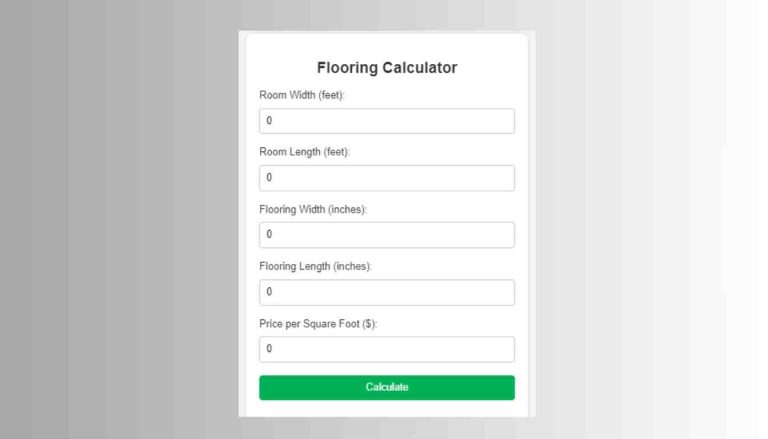
Pick the calculator that matches your project. Each tab uses the right formula and unit for that job.
Enter your values and click calculate.
Enter your values and click calculate.
Enter your values and click calculate.
Enter your values and click calculate.
Enter your values and click calculate.
How to Use These Calculators
For rooms, measure length, width, and wall height. For furniture or flat surfaces, measure the total square footage directly.
A standard door is about 20 sq ft (1.85 m2) and a standard window about 15 sq ft (1.5 m2) — the room tabs above subtract these automatically.
Check the can label — wall paint typically covers 350-425 sq ft/gallon, varnish 250-400 sq ft/gallon, and litre-based paint 12-16 m2/litre. Adjust the field to match.
Porous, rough, or weathered wood soaks up 20-35% more finish than smooth, sealed wood — use the condition dropdown on the Varnish tab.
Reference Table: Coverage Rates by Product
| Product | Typical coverage | Notes |
|---|---|---|
| Interior wall paint (gallon) | 350-425 sq ft/gal | Use ~350 for a safer real-world estimate |
| Wall/ceiling emulsion (litre) | 12-16 m2/L | Dulux and most major brands publish ~16 m2/L |
| Primer/undercoat | 12-14 m2/L or 200-300 sq ft/gal | Lower coverage than topcoat paint |
| Wood varnish/polyurethane | 250-400 sq ft/gal | Lower end for porous or weathered wood |
| Deck/exterior stain | 150-400 sq ft/gal | Depends heavily on wood porosity |
| Sandpaper (refinishing) | 8-10 sq ft/sheet per grit pass | Multiply by number of grit passes |
| Chemical stripper | ~125 sq ft/gallon | Only needed over an existing finish |
Common Mistakes to Avoid
- Forgetting to deduct doors and windows, which inflates the estimate for a typical room by 10-15%.
- Using the can’s best-case coverage number instead of a realistic one for textured or absorbent walls.
- Applying a straight-perimeter formula to a curved or circular room instead of using circumference.
- Mixing up gallon-based and litre-based coverage rates when following a US vs. metric product label.
- Skipping a condition multiplier for stain or varnish on rough, porous, or weathered wood.
- Sanding through a full grit progression without buying enough sheets for each pass separately.
When the Estimate May Be Wrong
These calculators assume flat walls or surfaces and standard product coverage. Heavily textured walls, unusually porous or weathered wood, and multi-color accent designs can all shift real usage well outside the estimate — when in doubt, round up to the next full can or tin and keep leftovers for touch-ups.
FAQs
How many square feet does a gallon of paint cover?
Most interior wall paint claims 375-425 sq ft per gallon on the label, though real-world coverage on typical drywall is often closer to 350 sq ft per gallon — use the lower figure for a safer estimate.
How many litres of paint do I need for a room?
It depends on wall area and coverage, but as a rough guide, a small bedroom (about 30-35 m2 of net wall area) typically needs 2-3 litres for a 2-coat job with standard emulsion.
Should I deduct doors and windows before calculating paint quantity?
Yes — a standard door is about 20 sq ft (1.85 m2) and a standard window about 15 sq ft (1.5 m2). Subtracting them from your wall area prevents over-buying paint, and both the gallon and litre tabs above do this automatically.
How do I calculate paint for a curved or circular room?
Multiply the diameter by pi (about 3.14159) to get the circumference, then multiply by wall height to get the curved wall area, and proceed as with any paint calculation from there — the Circular Room tab handles this automatically.
How many square meters does a litre of paint cover?
Standard wall/ceiling emulsion typically covers 12-16 m2 per litre per coat (many brands, including Dulux, publish about 16 m2/litre), while primer or undercoat often covers less, around 12-14 m2/litre — adjust the coverage field to match your specific product.
How many coats of varnish does an oak kitchen table need?
Three coats is standard for an oak kitchen table: one thinned sealer coat plus two full finish coats. Oak is open-grained so the first coat soaks in heavily — sand lightly with 220-grit between coats.
Does wood porosity or age affect how much finish I need?
Yes. Porous or rough-sawn wood and weathered outdoor surfaces absorb more stain, varnish, or sealant than smooth, dense, or already-sealed wood — the Varnish tab includes a condition multiplier to account for this.
How much sandpaper do I need to refinish a floor or piece of furniture?
Roughly 1 sheet per 8-10 sq ft for each grit pass. A typical 3-grit progression (coarse, medium, fine) on a 200 sq ft floor might use 60-75+ sheets total.
Do I need a chemical stripper if I’m sanding anyway?
Not always — finishes that sand off cleanly don’t need it, but thick old paint, heavy varnish buildup, or finishes in poor condition often strip faster and more evenly with a chemical or heat stripper first, saving sanding time.
How many coats of paint do I need overall?
Two coats is standard for most colors and surfaces. Dramatic color changes (dark over light, or vice versa) may need a third coat or a tinted primer first — factor this into the coats field on any tab above.
Sources and Methodology
These tools use standard area math (perimeter x height for rooms, circumference x height for curved rooms), manufacturer-published coverage rates for paint, varnish, and stain, and typical woodworking-industry sanding and stripping ratios. Figures are planning estimates — always verify final quantities against your specific product’s label.
Sponsored / affiliate links. As an Amazon Associate I earn from qualifying purchases. I may earn additional commission from eligible campaigns.