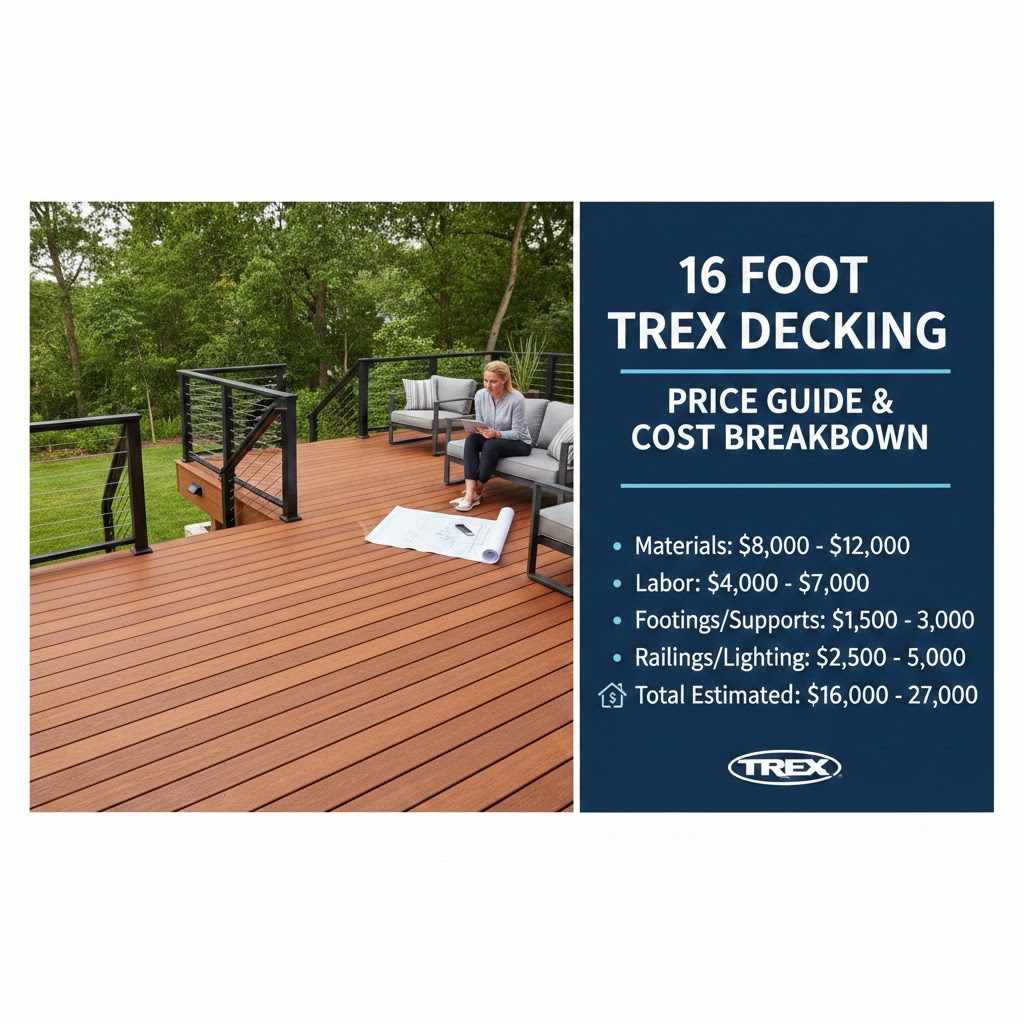
16 Foot Trex Decking Price Guide Cost Breakdown
Figuring out the cost of a 16-foot Trex deck can feel tricky at first. Many homeowners wonder about the total price and how it all adds up. This guide simplifies everything for you.
We will walk through each part of the expense step-by-step. You’ll get a clear picture of what to expect. Get ready to see how easy it is to plan your Trex decking project.
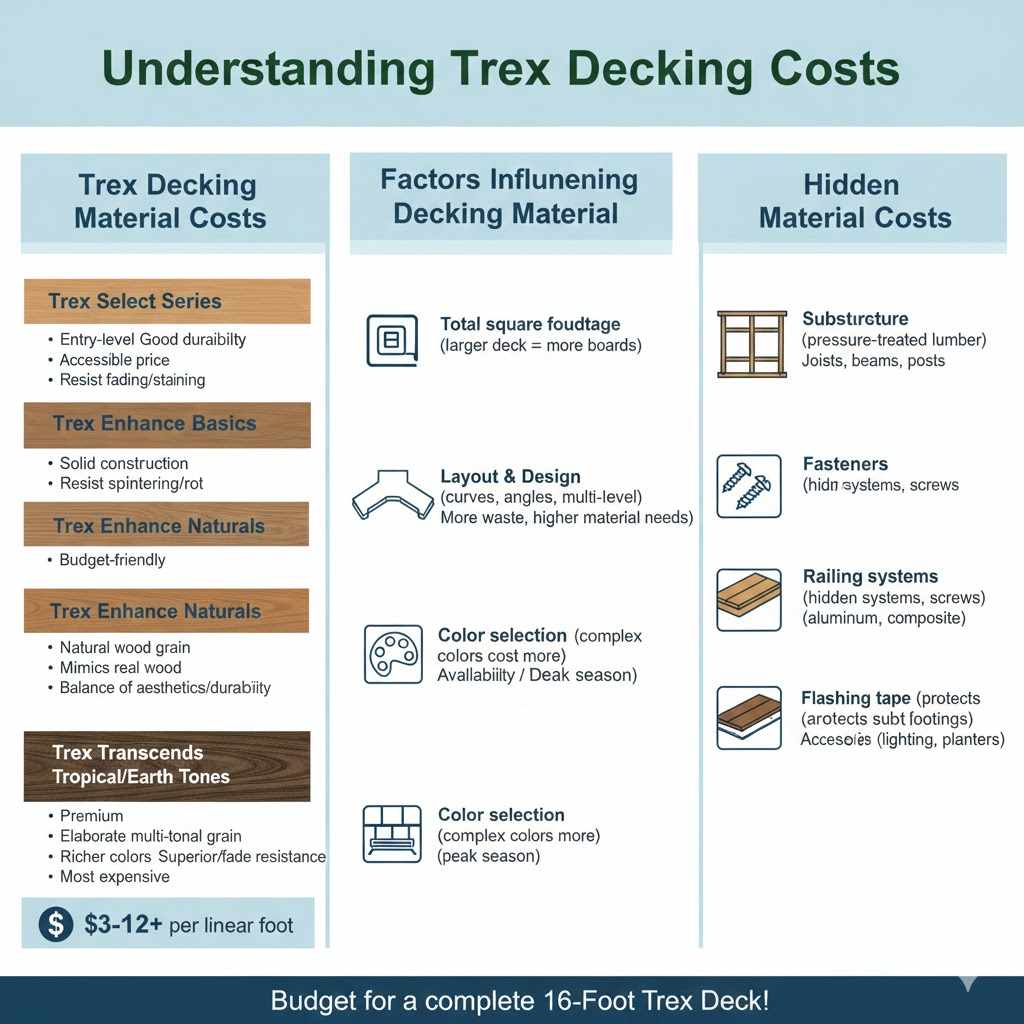
Understanding Trex Decking Costs
When you think about building a deck, especially one made from Trex, the price is a big question. Many people find it hard to pinpoint the exact cost because so many things affect it. This section breaks down the main reasons why a 16 Foot Trex Decking Price Guide & Cost Breakdown can vary.
We will look at the materials, the labor, and other things that add to the final price. This helps you know what to budget for.
Trex Decking Material Costs
The boards themselves are the most noticeable part of your deck cost. Trex offers different product lines, and each has its own price tag. These lines range from the more basic options to premium ones that look very natural.
The color and finish you choose also play a role in the price. Some colors might be more popular or require more complex manufacturing, making them cost a bit more.
- Trex Select Series These are Trex’s entry-level composite decking boards. They offer good durability and a clean look at a more accessible price point. They typically come in a few standard colors.
The surface is designed to resist fading and staining.
- Trex Enhance Basics These boards are similar to the Select series but might offer a slightly different aesthetic. They are known for their solid construction and resistance to common deck problems like splintering and rot. These are also a budget-friendly option for many homeowners.
- Trex Enhance Naturals These offer a bit more visual appeal than the Basics. They have a subtle, natural wood grain pattern. The colors are designed to mimic real wood more closely.
They provide a balance of aesthetics and durability without the highest price tag.
- Trex Transcends Tropical and Earth Tones These are among Trex’s premium offerings. They feature a more elaborate, multi-tonal wood grain pattern that closely resembles exotic hardwoods. The colors are richer and more varied.
They also boast superior stain and fade resistance. These boards will be the most expensive per linear foot.
The cost per linear foot for Trex decking can range significantly. For the Select or Enhance Basics series, you might expect to pay around $3 to $5 per linear foot. The Enhance Naturals could be in the $5 to $7 per linear foot range.
For the premium Transcends lines, the price can climb to $8 to $12 or even more per linear foot. For a 16-foot board, this means a single board could cost anywhere from $48 to $192 or more.
Factors Influencing Decking Material Prices
Beyond the specific Trex product line, other elements affect the material cost. The total square footage of your deck is the primary driver. A larger deck requires more boards, naturally increasing the overall material expense.
The layout and design of the deck also matter. If your deck has many curves, angles, or intricate patterns, you will need more boards cut and fitted, leading to more waste and higher material needs. Special features like built-in seating or multi-level designs also increase the amount of material required.
The color you select can also have a subtle impact on price. While Trex aims for consistent pricing, some of the more complex, multi-tonal colors in their premium lines might carry a slight premium over solid, single-color options. This is often due to the manufacturing process involved in creating those realistic wood grain effects.
Furthermore, the availability and local market demand can influence prices. During peak building seasons, material costs might be slightly higher. Shopping around at different suppliers can sometimes yield better pricing, but it’s important to ensure you are comparing the exact same Trex product lines and quantities.
Hidden Material Costs
It’s easy to focus only on the deck boards themselves, but several other materials are essential for a complete deck. These include the substructure, fasteners, and any decorative elements. The substructure, often made of pressure-treated lumber, forms the foundation and support for your Trex boards.
Its cost depends on the type of wood used and the complexity of the design, requiring lumber for joists, beams, and posts.
Fasteners are crucial for securely attaching the Trex boards to the substructure. Trex recommends specific hidden fastening systems for a clean look, and these can be more expensive than traditional screws. The cost of these systems, along with any necessary screws or bolts for the substructure, adds to the material bill.
You might also need railing systems, which can vary greatly in style and material, from simple aluminum to more elaborate composite or wood railings.
Other items like flashing tape to protect the substructure from moisture, concrete for post footings, and any accessories like deck lighting or built-in planters contribute to the material expenses. For a 16-foot Trex deck, budgeting for these ancillary materials is vital for an accurate overall cost estimate.
Labor and Installation Expenses
Beyond the cost of materials, the expense of hiring professionals to install your 16-foot Trex deck is a significant part of the total budget. Deck installation is a skilled job that requires expertise to ensure the deck is safe, durable, and looks good. The complexity of the design, the accessibility of your property, and the specific contractor you choose will all influence labor costs.
Understanding these labor costs helps in getting accurate quotes and planning your project effectively. This section will explain what goes into installation fees and what factors can make them go up or down.
Professional Installation Costs
Hiring experienced deck builders means you are paying for their expertise, tools, and time. Professional installers have the knowledge to build a deck that meets all local building codes and safety standards. They can also work more efficiently, which can sometimes offset higher hourly rates through quicker completion times.
The cost of labor is typically calculated per square foot or as a fixed project price. For composite decking like Trex, installation can sometimes be slightly more expensive than for traditional wood decks. This is because composite materials can be heavier and sometimes require specialized tools or techniques for cutting and fastening.
However, the long-term benefits of composite decking often make this investment worthwhile.
A common range for professional deck installation labor for composite materials can be anywhere from $30 to $70 per square foot. For a basic 16-foot deck, this could add several thousand dollars to the project cost. For instance, a 16×16 foot deck (256 square feet) could incur labor costs between $7,680 and $17,920, depending on the contractor and the complexity.
Factors Affecting Labor Costs
Several factors influence how much you will pay for installation labor. The most significant factor is the complexity of the deck’s design. A simple, rectangular deck will be less expensive to install than a multi-level deck with intricate angles, curves, or built-in features.
The site’s accessibility also plays a role. If the construction area is difficult to reach, contractors may charge more for hauling materials and equipment.
The local labor market and prevailing wage rates in your area are also critical. Contractors in regions with a higher cost of living or a high demand for construction services may charge more. The experience and reputation of the contractor are also important.
Highly sought-after contractors with a strong portfolio and excellent reviews often command higher prices, but they also tend to deliver superior quality work.
Additionally, the condition of your existing property can affect labor costs. If the ground needs significant preparation, or if there are existing structures that need to be worked around, this can add time and effort, thus increasing the labor expenses. Permits and inspections are also part of the installation process, and while the permit fee itself is usually fixed, the time spent by the contractor coordinating these can add to the overall labor cost.
DIY vs. Professional Installation
The decision to install a deck yourself versus hiring professionals is a major consideration for many homeowners. While a DIY approach can save money on labor costs, it requires a significant investment of time, effort, and specialized skills. If you have experience with construction projects, enjoy hands-on work, and have the necessary tools, a DIY installation might be feasible.
However, it’s important to be realistic about the challenges. Building a deck involves structural integrity, ensuring it is level, square, and securely fastened. Mistakes can lead to safety hazards, costly repairs, or even the need to rebuild parts of the deck.
Trex decking, in particular, has specific installation guidelines that must be followed to maintain its warranty.
Professional installers bring a level of expertise and efficiency that is hard to replicate. They are familiar with local building codes, have the right tools, and can often complete the project much faster than an amateur. While hiring professionals means higher upfront costs, it often provides peace of mind, a higher quality finish, and a guaranteed warranty on the work performed.
For many, the cost of professional installation is a worthwhile investment for a safe, beautiful, and long-lasting deck.
Additional Costs and Considerations
When planning for your 16-foot Trex deck, it’s important to look beyond just the decking boards and labor. Several other expenses can arise that might not be immediately obvious. These additional costs can significantly impact your overall budget, so it’s wise to be aware of them upfront.
This section covers things like site preparation, permits, and potential add-ons.
Site Preparation
Before any building can begin, the area where your deck will be constructed needs to be prepared. This involves several steps. First, existing landscaping, such as plants or garden beds, may need to be removed or protected.
If there is an old deck that needs to be dismantled, that removal cost is also part of site preparation.
Next, the ground needs to be graded to ensure it is level and has proper drainage away from your home. This prevents water from pooling under the deck, which can cause issues with the foundation and substructure. Excavation is often required to dig holes for the deck footings, which are critical for the stability and safety of the entire structure.
The depth and diameter of these holes are usually determined by local building codes.
The cost of site preparation can vary. Simple clearing and grading might be minimal if you are doing some of the work yourself. However, if extensive excavation is needed, or if the area is particularly challenging (e.g., sloped terrain, rocky soil), you might need to hire specialized equipment or professionals, which will add to the expense.
Permits and Inspections
In most municipalities, building a new deck or significantly altering an existing one requires obtaining building permits from your local government. These permits ensure that the construction meets safety standards and building codes. The cost of these permits varies widely depending on your location.
Some cities charge a flat fee, while others base the cost on the estimated value of the project or the square footage of the deck.
Along with the permit, your project will likely require inspections at various stages of construction. This is to verify that everything is being built correctly according to the approved plans. Inspectors will check things like the footing depth, the framing, and the final installation.
While these inspections are crucial for safety and compliance, they represent an additional cost to the project. Coordinating these inspections and ensuring your project passes can also take time and effort.
It’s essential to research your local building department’s requirements early in the planning process. Failing to obtain the necessary permits can lead to fines, delays, or even the requirement to tear down unpermitted work. The cost of permits and inspections, while sometimes seeming like an unnecessary expense, is a vital part of ensuring your deck is safe and legally compliant.
Optional Add-Ons and Upgrades
Once the basic deck structure is in place, many homeowners choose to enhance its functionality and appearance with optional add-ons. These upgrades can transform a simple deck into a more elaborate outdoor living space. They also contribute to the overall cost of your 16-foot Trex deck project.
- Railing Systems Railings are often a code requirement for decks that are a certain height off the ground, but they also add a significant design element. Trex offers a range of railing styles and materials, from sleek aluminum to sophisticated composite options that complement their decking. The cost varies greatly depending on the style, material, and length of railing needed.
- Deck Lighting Outdoor lighting can dramatically improve the ambiance and usability of your deck after dark. Options include subtle post cap lights, accent lights for stairs, and functional downlights. These can be wired into your home’s electrical system.
The cost depends on the type and number of fixtures you choose.
- Stairs and Landings If your deck is elevated, you will need stairs. The design and number of staircases, as well as any landings, will add to the material and labor costs. Stairs often require substantial framing and more decking material.
Additional landings can provide a transition space or a place for furniture.
- Built-in Features Many people opt for custom features to enhance their deck’s functionality. This can include built-in benches, planters, or even outdoor kitchens. These custom elements require specific design and construction, which adds to both material and labor expenses but can greatly increase the value and enjoyment of your outdoor space.
These optional upgrades, while not strictly necessary for a functional deck, allow for personalization and can significantly enhance the overall aesthetic and utility of your 16-foot Trex deck. It’s important to factor these potential additions into your budget early in the planning phase to avoid surprises.
Calculating Your 16 Foot Trex Decking Price
Now that we’ve explored the various components that make up the cost of a 16-foot Trex deck, it’s time to put it all together. This section will guide you through a process for estimating your total expenses. We will use hypothetical figures to illustrate how the numbers come together, giving you a practical way to approach your own budget.
Sample Cost Breakdown for a 16-Foot Deck
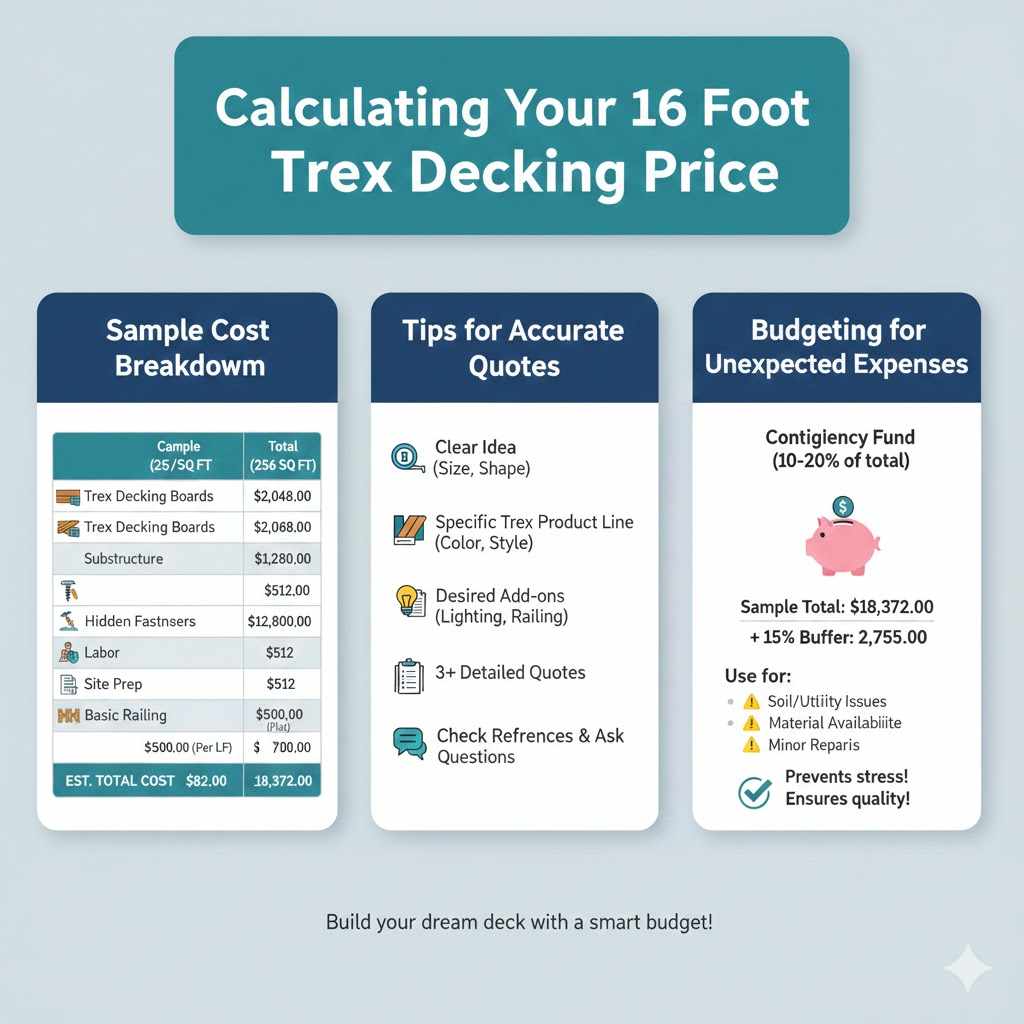
Let’s consider a hypothetical 16-foot Trex deck. For this example, we’ll assume a standard 16×16 foot deck, giving us 256 square feet of surface area. We’ll use mid-range pricing for the materials and labor to provide a realistic estimate.
Remember, your actual costs will vary based on your specific choices and location.
| Category | Estimated Cost Per Square Foot | Total Estimated Cost (256 sq ft) |
|---|---|---|
| Trex Decking Boards (Mid-Range) | $8.00 | $2,048.00 |
| Substructure (Pressure-Treated Lumber) | $5.00 | $1,280.00 |
| Hidden Fasteners & Hardware | $2.00 | $512.00 |
| Labor (Composite Decking Installation) | $50.00 | $12,800.00 |
| Site Preparation (Basic) | $2.00 | $512.00 |
| Permits & Inspections | $500.00 (Flat Fee Estimate) | $500.00 |
| Basic Railing System | $15.00 (Per Linear Foot – Assuming 48 linear feet) | $720.00 |
| Estimated Total Cost | $82.00 | $18,372.00 |
This sample calculation shows how the total cost can accumulate. The labor component is often the largest single expense. The decking boards themselves are a significant material cost, but when broken down per square foot, they become more manageable within the overall project budget.
The railing adds a notable but often necessary cost for safety and aesthetics.
Tips for Getting Accurate Quotes
To get the most accurate estimate for your 16-foot Trex decking project, it’s crucial to be prepared when you contact contractors. Start by having a clear idea of the size and shape of your deck. Knowing whether you want a simple rectangular design or something more complex will help contractors provide a more precise quote.
Decide on the specific Trex product line you are interested in. If you have a particular color or style in mind, mention it. This helps contractors price out the exact materials.
Also, consider any desired add-ons like railings, lighting, or built-in features. The more detail you can provide, the better the contractor can assess the scope of work.
Request quotes from at least three different reputable contractors. Ensure that each quote is detailed and itemizes all costs, including materials, labor, permits, and any other fees. Ask for references and check them.
A good contractor will also be happy to walk you through their estimate and explain any line items you don’t understand. Don’t be afraid to ask questions. A thorough and transparent quote is a sign of a professional contractor.
Budgeting for Unexpected Expenses
Even with the best planning, unforeseen issues can arise during any construction project. It is always wise to include a contingency fund in your budget to cover these unexpected expenses. A common recommendation is to set aside 10-20% of your total estimated project cost for contingencies.
For our sample 16-foot Trex deck, with an estimated total of $18,372, a 15% contingency fund would be approximately $2,755. This fund could be used for various situations. For example, if during site preparation, workers discover unusually hard soil or hidden utility lines, excavation costs could increase.
Or, if a particular Trex product becomes temporarily unavailable, you might need to opt for a slightly more expensive alternative.
Having this buffer can prevent the stress of budget overruns and ensure that your project can proceed smoothly even if minor unexpected costs emerge. It allows you to address any issues that arise without compromising the quality or integrity of your new deck.
Frequently Asked Questions
Question: What is the average cost per square foot for a 16 foot Trex deck?
Answer: The average cost per square foot for a 16 foot Trex deck can range widely, typically from $80 to $150 or more, depending on material choices, labor rates, and design complexity. This includes materials and professional installation.
Question: How much do Trex deck boards cost for a 16 foot length?
Answer: Trex deck boards for a 16 foot length can cost anywhere from $48 to over $190 per board. This depends on the Trex product line chosen, with basic options being less expensive and premium, multi-tonal boards being more costly.
Question: Is labor more expensive for Trex decking compared to wood decking?
Answer: Labor can sometimes be slightly more expensive for Trex decking due to its weight and the need for specialized installation techniques or tools to ensure proper fastening and to maintain warranties. However, the durability and low maintenance of Trex often justify this difference.
Question: Do I need to budget for permits when getting a 16 foot Trex deck?
Answer: Yes, you absolutely need to budget for permits and inspections. Most local governments require permits for deck construction to ensure compliance with building codes and safety standards. Permit fees vary by location.
Question: What are the main factors that influence the total price of a 16 foot Trex deck?
Answer: The main factors influencing the total price include the specific Trex product line and color chosen, the overall size and complexity of the deck design, the cost of professional installation labor in your area, site preparation needs, and any additional features like railings or lighting.
Summary
Building a 16-foot Trex deck involves several costs beyond just the boards. Material prices vary by Trex line, with premium options costing more. Labor for professional installation is a significant expense, influenced by design complexity and local rates.
Site preparation, permits, and optional add-ons like railings add to the total budget. Planning carefully with detailed quotes and a contingency fund helps manage the overall expense effectively.