How to Remove Rust Stains From Composite Decking (Safe PSI Guide)
Oxalic acid deck brighteners dissolve rust stains that plain vinegar only fades, but every composite brand has a different safe pressure-washing limit — Trex tolerates up to 3,100 PSI while Clubhouse PVC caps out at 1,100 PSI. Using the wrong PSI or a metal brush can scratch or swell the capstock permanently. This guide covers which cleaners actually work, the safe PSI by brand, and the three mistakes that cause the most damage.
This post contains affiliate links. If you buy through them, we may earn a commission at no extra cost to you.
Why Composite Decking Gets Rust Stains
Best Rust Stain Remover Pick
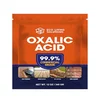
ECO Living Solutions Oxalic Acid 99.9% Deck & Rust Stain Remover – $9.99
A dedicated oxalic-acid brightener for the stubborn, set-in stains this guide covers — the step up from a plain vinegar soak when a rust ring won’t lift.
- Best for: dissolving set-in rust rings that a vinegar rinse alone won’t fully lift
- Why we picked it: matches the oxalic-acid brightener category this guide recommends for stubborn stains, and mixes to a dilute solution safe for capstock when label directions are followed
- Main drawback: needs gloves and eye protection and a full rinse — it’s a skin and eye irritant in concentrate form
Compare more deck rust-removal options
 Option 1 Simple Green Oxy Solve Deck Cleaner – $23.99
|
 Option 2 DQB Tampico Deck Scrub Brush – $11.55
|
 Option 3 Stainless Composite Deck Screws (350ct) – $64.89
|
As an Amazon Associate we earn from qualifying purchases.
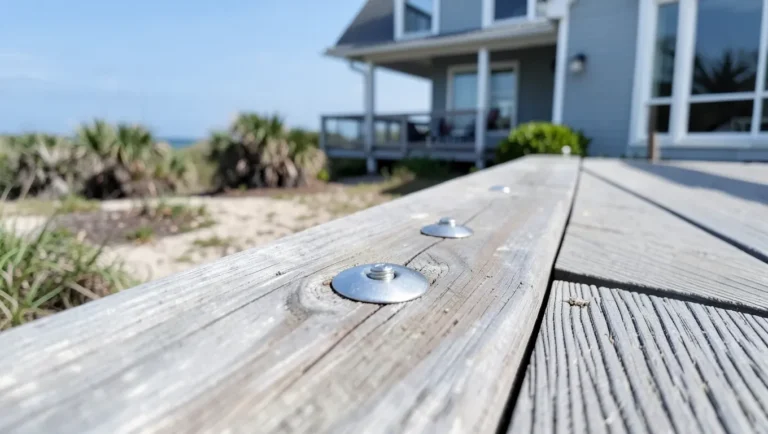
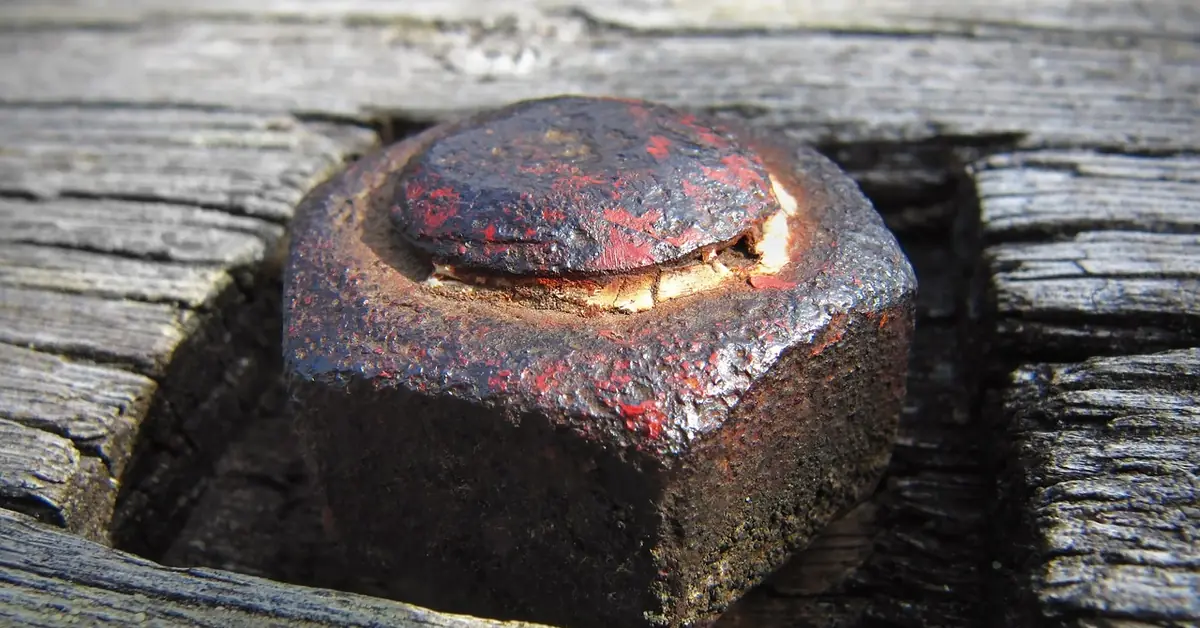
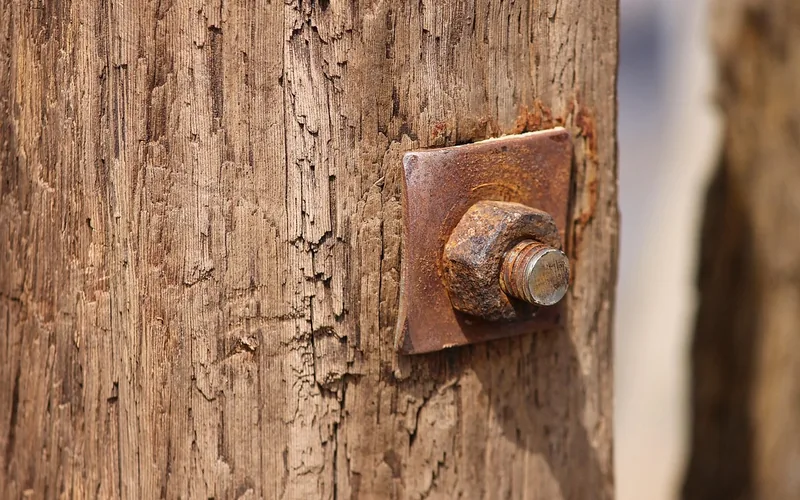
Rust stains on composite decking almost always come from a metal object sitting on the boards long enough to corrode — a forgotten tool, a grill leg, a patio chair foot, or the deck’s own fasteners. Zinc-plated screws and nails are the most common source: they corrode within one to three seasons of rain exposure and leave a reddish-brown ring that soaks into the board’s capstock rather than sitting on top of it.
The stain itself is iron oxide bonding to the capstock surface, not damage to the board’s structure. That’s good news: a fresh stain (a few weeks old) usually lifts with a mild treatment, while a stain that’s set for a full season needs a stronger oxalic-acid brightener. Check board areas under grills, planters, and furniture feet first — that’s where 90% of rust stains on composite decking actually start.
What You’ll Need Before You Start
Gather a soft-bristle brush (never metal or wire — see mistakes below), a bucket, a garden hose, dish soap, white vinegar or lemon juice, and an oxalic-acid deck brightener for set-in stains. Wear gloves and eye protection any time you’re mixing an acid-based cleaner, and keep kids and pets off the area until it’s rinsed. Test any new product on a hidden corner of the deck first — composite capstock color can react differently between brands.
Effective Cleaning Solutions for Rust Stains on Composite Decking
Start with the mildest option and work up. Dish soap and warm water loosens surface dirt but rarely touches an actual rust stain on its own. For real rust, mix equal parts white vinegar and water, pour it over the stain, and let it sit 10 minutes before scrubbing — this is the same dwell time manufacturers list on their own care pages. Salt and lime juice works the same way but needs 30 minutes of contact time.
For a stain that doesn’t lift with vinegar, switch to a dedicated oxalic-acid deck brightener (sometimes labeled “wood brightener” even though it’s rated for composite too). Apply it directly to the stain and let it sit 15–20 minutes — roughly double the vinegar dwell time — before scrubbing and rinsing thoroughly. Oxygen-based powder cleaners work as a gentler middle step: dampen the stain, sprinkle the powder on, scrub, and rinse.
Step-by-Step Rust Removal Process
- Rinse the board first: hose down the stained area with plain water to clear loose dirt before applying any cleaner.
- Apply a mild dish soap solution: mix a few drops of dish soap with warm water, pour over the stain, and let it sit 15 minutes.
- Scrub gently with a soft-bristle brush: use circular motions — never a metal or wire brush, which scratches the capstock and leaves new marks.
- Treat stubborn stains: apply vinegar (10-minute dwell) or an oxalic-acid deck brightener (15–20 minute dwell) per the label, then scrub again.
- Rinse thoroughly: use a garden hose or a pressure washer on a fan-tip nozzle at a safe PSI for your decking brand (see table below), held at least 8 inches from the boards.
- Air dry and inspect: let the deck dry completely and check for remaining discoloration; repeat the treatment step on stains that have set for a full season.

Can You Pressure Wash Composite Decking to Remove Rust? (Safe PSI by Brand)
Yes, but the safe pressure depends on the brand — there’s no single “safe PSI” number that applies to every composite deck, and using a generic recommendation can crack the capstock on some boards while barely rinsing others.
| Decking Type | Max Safe PSI | Nozzle & Distance |
|---|---|---|
| Trex composite | Up to 3,100 PSI | Fan-tip, 8+ inches away |
| Most composite brands | Up to 2,500 PSI | Fan-tip, 12 inches away |
| Conservative universal rule | 1,500 PSI | Fan-tip, 12 inches away |
| Clubhouse PVC decking | 1,100 PSI | Fan-tip, 12+ inches away |
📊 Trex-branded composite decking is rated for pressure washing up to 3,100 PSI, while some PVC decking brands cap out at 1,100 PSI — always check your board’s own manufacturer page before pressure washing. Source: Trex Care & Cleaning Guidance; general PSI guidance via Decks.com.
A fan-tip nozzle (never a rotating “turbo” or pinpoint tip) spreads the water over a wider area and is the single biggest factor in avoiding gouges — more important than the exact PSI number itself. If you don’t know your board’s rated PSI, start at the 1,500 PSI conservative baseline and only increase it if the manufacturer’s own page confirms a higher rating.
Preventing Future Rust Stains
Rust stains on composite decking can be prevented with regular cleaning and by keeping metal objects off the boards. Sweep debris off the deck weekly and wash it with soap and water monthly — a clean, dry surface gives rust nothing to bond to.
Regular Maintenance
Dry the deck after rain when you can, and check nails and screws for rust spots at least twice a year. If you find corroding fasteners, swap them for stainless steel or coated composite-decking screws — the right fastener type matters more than most people realize for avoiding this exact problem long-term.
Protective Measures
Use furniture pads or rugs under metal chair legs and grills, and choose mats that drain rather than trap water. Fix roof or gutter leaks promptly — standing water on a board is what turns a stray screw into a season-long stain.
Common Mistakes to Avoid When Removing Rust Stains
- Using a metal or wire brush: it scratches the capstock and can leave its own metal residue behind, creating a second rust source.
- Reaching for acetone, bleach, toilet bowl cleaner, or WD-40: all four can strip or etch the composite surface and, in WD-40’s case, leave a slippery residue behind.
- Skipping the small-area test: some capstock colors react differently to acid-based brighteners — test a hidden spot before treating the whole stain.
- Over-pressure washing: too much water pressure, or the wrong nozzle, can leave the surface slippery or force water under the capstock, causing swelling over time.
Frequently Asked Questions
What Is the Best Rust Stain Remover for Composite Decking?
A dedicated oxalic-acid deck brightener is the most reliable option for a set-in stain — apply it, let it sit 15–20 minutes, then scrub and rinse. For a fresh stain, a 50/50 vinegar-and-water solution with a 10-minute dwell time often works just as well at a fraction of the cost.
Does Vinegar Damage Composite Decking?
No, a diluted 50/50 vinegar solution is generally safe for composite decking and won’t damage the capstock. Avoid using it at full strength, and always rinse thoroughly afterward so no residue is left to attract more dirt.
Can You Use WD-40 on Composite Decking?
No. WD-40 is not recommended for composite decking — it can leave a slippery residue and, over repeated use, degrade the capstock’s surface finish. Stick to a cleaner formulated for composite or PVC decking instead.
Will Rust Stain Trex Decking?
Yes — Trex decking can stain from rust just like any other composite brand, since the capstock absorbs iron oxide the same way. Regular cleaning and keeping metal objects off the boards prevents most stains before they start.
What PSI Is Safe for Pressure Washing Composite Decking?
It depends on the brand: Trex rates its boards up to 3,100 PSI, most other composite brands cap around 2,500 PSI, and some PVC decking (like Clubhouse) is rated for only 1,100 PSI. When in doubt, use the conservative 1,500 PSI baseline with a fan-tip nozzle held at least 8–12 inches from the surface.
How Often Should You Clean Composite Decking to Prevent Rust Stains?
Wash composite decking about twice a year with soap and water, and sweep off debris weekly. Checking for rusting screws or forgotten metal objects during each cleaning catches most stains before they have time to set in.
Conclusion
Most rust stains on composite decking come off with vinegar or an oxalic-acid deck brightener and a soft-bristle brush — the key is matching the dwell time and pressure-washing PSI to your specific board. Skip the metal brushes and harsh chemicals, replace corroding fasteners when you spot them, and a rust-free deck stays that way with a simple twice-a-year cleaning routine.
Sponsored / affiliate links. As an Amazon Associate I earn from qualifying purchases. I may earn additional commission from eligible campaigns.