Does Composite Decking Get Hotter Than Wood? (Real Temperatures)
Composite decking usually runs 10-35°F hotter than wood decking in direct summer sun, and the gap gets bigger on darker colors. But color, not material, does most of the damage – a light-colored composite board can actually stay cooler than a dark-stained wood one. See how each composite decking brand handles heat in our full brand comparison.
Why Composite Decking Usually Runs Hotter Than Wood
Standard composite decking (the plastic-and-wood-fiber blend most brands sold before the last decade or so) tends to run hotter than wood for a few overlapping reasons: the plastic components absorb and hold heat more readily than wood fibers, the darker colors that were popular in early composite lines soak up more solar radiation, and the smooth, non-porous surface on some boards slows down how fast that heat escapes once the sun goes down.
Best for Testing Your Own Deck’s Surface Temp
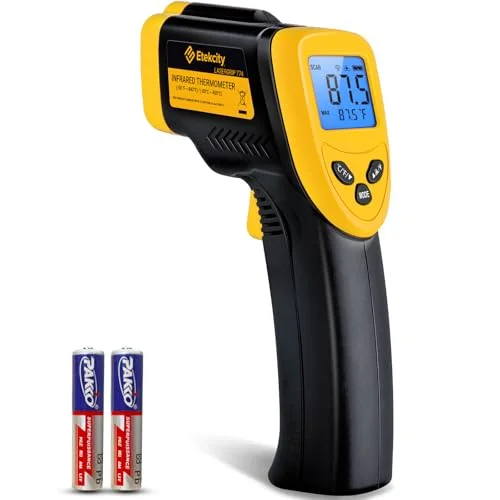 |
Etekcity Infrared Thermometer Laser Temperature Gun – $16.99 Point it at any board in direct sun and get an exact reading in under a second, so you know precisely how hot a color or material really gets on your deck before you commit to it.
|
None of that means composite is automatically the wrong choice. It means color and product generation matter more than most people assume when they’re comparing “composite vs. wood” as if every board in each category behaves the same way.
The Real Reason Composite Feels Hotter Underfoot (Not Just Surface Temp)
Here’s the part most comparisons skip: even when a composite board and a wood board read the same temperature on a thermometer, the composite can still feel hotter the instant you step on it. That’s a heat-transfer difference, not a heat-reading difference. Wood’s natural cellular structure is full of tiny air pockets that slow down how fast heat moves into your skin. Composite’s denser, plastic-heavy structure conducts that same heat into your foot much faster. So on a 90F day, a dark composite board might hit 140-170F while nearby pressure-treated wood sits closer to 110-125F, and even a composite board that reads only slightly warmer than wood can still feel more uncomfortable in that first step.

Composite vs. Wood: Real Temperature Ranges
Exact numbers shift with your climate, the hour, and how much direct sun a given board gets, but the ranges below reflect what shows up consistently in manufacturer and installer heat testing. Treat these as ballpark figures for planning, not a guarantee for your specific deck.
| Decking Material | Typical Color | Surface Temp in Direct Sun | Notes |
|---|---|---|---|
| Standard Composite | Dark brown, gray, black | 140°F – 175°F+ | Can become painful to walk on barefoot within seconds. |
| Standard Composite | Light tan, beige | 130°F – 160°F | Cooler than dark composite, still noticeably warm. |
| Cool-Touch / Capstock Composite | Various, including darker shades | 120°F – 145°F | Engineered pigments and caps reflect more solar radiation. |
| Pressure-Treated Wood | Light green to brown | 110°F – 150°F | Varies with age and finish; can splinter as it weathers. |
| Cedar / Redwood | Reddish-brown to tan | 120°F – 145°F | Natural insulating structure keeps it comparatively cool. |
| Hardwood (e.g., Ipe) | Deep brown | 135°F – 165°F | Dense grain absorbs and holds heat longer than softwoods. |
Two things stand out in that spread. First, a light composite and a light natural wood land in almost the same range – color is doing more work than material. Second, cool-touch composite has closed most of the gap with wood entirely, which is a real shift from how composite decking used to perform a decade ago.
Your Climate Changes the Math
The same board behaves differently in Phoenix than it does in Portland. High-UV, low-humidity climates push every material toward the top of its temperature range because there’s less atmospheric moisture to soak up radiation before it reaches the deck. Coastal and northern climates with more cloud cover and humidity tend to land nearer the bottom of the ranges above, even in a dark composite. If you live somewhere with 100F+ summer days, treat the dark-composite numbers in the table above as a floor, not a ceiling, and weight your color decision more heavily than someone shopping in a milder region would need to.
Newer “Cool-Touch” Composite Technology
The reputation composite decking earned for being scorching hot came largely from first-generation boards. Manufacturers have since built two real answers to that problem:
- Capstock composite: a durable polymer shell bonded over the recycled wood-plastic core. The cap is engineered to reflect more sunlight and resist heat absorption, and it also protects against staining and fading that older uncapped boards were prone to.
- Cool-touch pigment technology: some product lines use specific pigment formulations that reflect infrared light rather than absorbing it, so even darker-colored boards run measurably cooler than a standard dark composite of the same shade.
If you’re shopping for composite and heat is a real concern (bare feet, small kids, pets), look specifically for these terms on the product spec sheet rather than assuming all composite decking behaves the same.
Practical Tips to Keep Any Deck Cooler
- Go lighter, regardless of material. Light tan, gray, or natural wood tones consistently beat dark brown, black, or espresso finishes by 20-30F in the same sun.
- Build in shade at the design stage. A pergola, retractable awning, or a couple of strategically placed umbrellas will do more for comfort than any single material choice.
- Don’t block airflow underneath. Keep the standard 1/8-inch board gaps clear of debris and leave real clearance between the deck framing and the ground so heat can vent instead of getting trapped.
- Test before you buy. Ask for a full-size sample board, leave it in full sun for a few hours, and check it with an infrared thermometer rather than relying on a manufacturer’s marketing claim.
- Price out your actual board options before deciding. If you’re leaning composite, our 16-foot composite decking board guide and 20-foot Trex decking guide break down real per-board costs so heat isn’t the only factor in the decision.

Frequently Asked Questions
Will a dark composite deck be too hot to walk on barefoot in summer?
Often, yes. Dark, standard composite boards commonly hit 140-170°F in direct summer sun, hot enough to be genuinely painful underfoot within a few seconds. Lighter colors or a cool-touch capstock composite stay noticeably more comfortable.
Does composite decking really get hotter than wood, or is that outdated?
For older, uncapped composite in dark colors, yes, it still runs hotter than most wood in the same conditions. But newer capped and cool-touch composite lines have closed most of that gap, especially in lighter colors, so the honest answer depends on which specific product you’re comparing.
Why does composite feel hotter than wood even when a thermometer shows a similar temperature?
Composite conducts heat into skin faster than wood does. Wood’s natural cellular structure traps air and slows heat transfer, so even at the same surface reading, composite can feel hotter the instant your foot touches it.
What’s the single biggest factor in how hot a deck gets?
Color, by a wide margin. A dark composite or dark-stained wood board absorbs far more solar radiation than a light tan or gray one of the same material, often a 20-30°F difference between the darkest and lightest options in the same product line.
Can I do anything to cool down a deck I already built?
Yes. Add shade with a pergola, umbrella, or sail over the hottest section, improve airflow underneath by clearing any blocked vents, and rinse the boards with a hose for quick temporary relief before guests arrive.
No. Manufacturer warranties typically cover material defects like cracking, splitting, or fading, not surface temperature, which depends on your color choice, sun exposure, and climate rather than a manufacturing flaw.
Is pressure-treated wood cooler than composite decking?
Usually a little, especially compared to dark standard composite, because its natural light-to-medium color and lower density help it shed heat. But a light-colored cool-touch composite can match or beat pressure-treated wood in the same sun.
Conclusion
So does composite decking get hotter than wood? Usually, yes, especially older, darker composite compared to light-colored wood, but the real driver is color and product generation, not the material label alone. A light cool-touch composite board can beat a dark-stained wood deck on the same afternoon. If heat is a real concern for your household, prioritize light colors, look for cool-touch or capstock technology if you go composite, and build shade into the plan from the start rather than trying to fix it after the deck is already down.
Sponsored / affiliate links. As an Amazon Associate I earn from qualifying purchases. I may earn additional commission from eligible campaigns.
 SuperStructuring Plugs for Decking - 1/4" Trex Composite Decking Wood Plugs, Weather-Resistant, UV Protection, Hole Covers for Outdoor Home Improvement & Repair - Enhance Naturals Foggy Wharf, 100-PcSuperStructuring Plugs for Decking - 1/4" Trex Composite Decking Wood Plugs, Weather-Resistant, UV Protection, Hole Covers for Outdoor Home Improvement & Repair - Transcend Tiki Torch, 100-Pc