Cost of Trex Decking Vs Wood: Choose the Right Investment
Trex costs $15-35 per square foot installed vs. $10-25 for wood, but the real comparison is total cost of ownership, not sticker price. Wood needs annual-to-biennial cleaning and resealing that adds up over a couple decades; Trex needs almost none, but costs more upfront and can run noticeably hotter underfoot in direct sun – a real tradeoff most quick comparisons skip.
Side-By-Side Comparison
Best Cleaner For Composite Or Wood Decking
 |
Home Armor Outdoor Cleaner Concentrate, 1 Gal – $14.98 Composite still needs occasional cleaning even though it skips sealing – this handles mold/mildew/algae on either material without scrubbing.
|
| Factor | Trex (Composite) | Wood |
|---|---|---|
| Upfront cost/sq ft installed | $15 – $35 | $10 – $25 (varies a lot by species) |
| Lifespan | 25-30 years, manufacturer-backed warranty | 10-15 years for pine; 20-40 for cedar/redwood with real upkeep |
| Annual maintenance | Occasional wash, no sealing/staining | Cleaning + resealing every 1-3 years |
| Heat in direct sun | Can run noticeably hotter than wood, especially dark colors | Stays cooler underfoot |
| Repairability | Damaged boards replaced whole; color-matching an old board can be hard years later | Sand, spot-repair, or refinish; easier to patch |
What Trex (Composite) Actually Is
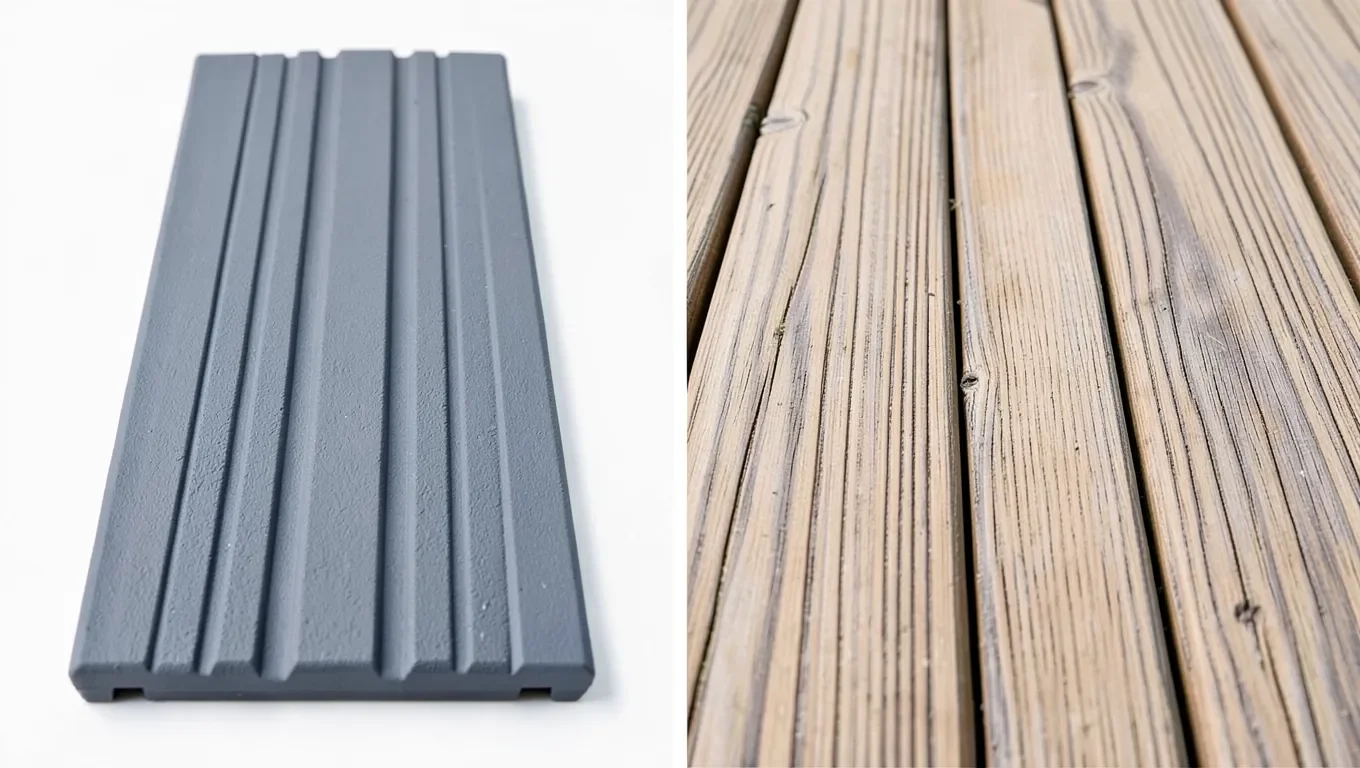
- Made from recycled wood fibers and plastic film, pressed into boards – not solid plastic and not real wood, but a hybrid.
- Resists rot and insects by design, since there’s no exposed organic wood surface for them to attack.
- “Low maintenance” doesn’t mean zero – composite still collects mold, mildew, and algae over time and needs occasional cleaning (see the product above), it just never needs sealing, staining, or painting.
What Wood Decking Actually Is
- Not all wood decking is equal – pine is the cheapest and least durable without diligent maintenance; cedar and redwood are naturally more rot-resistant and last meaningfully longer even with average upkeep; exotic hardwoods like ipe rival composite’s lifespan at a premium price.
- Real wood grain and color variation is the main draw for people who want the natural look composite can’t fully replicate.
- Every wood species needs real maintenance – cleaning and resealing every 1-3 years is what actually delivers the lifespan a given species is capable of; skipping it shortens all of them.
The Heat Tradeoff Most Comparisons Skip
Composite decking, especially in darker colors, can get noticeably hotter than wood in direct summer sun – hot enough to be uncomfortable barefoot in some climates. This is a real, well-documented tradeoff, not a minor footnote: if you live somewhere with intense summer sun and plan to walk on the deck barefoot often, lighter-colored composite boards or a wood deck are both worth weighing against this specifically, not just against price.
Long-Term Cost: Where The Numbers Actually Land
- Wood’s lower upfront cost gets eaten into over 15-20 years by repeated cleaning, staining, and occasional board replacement – the maintenance labor and materials add up, especially if you’re paying a contractor rather than doing it yourself.
- Composite’s higher upfront cost is largely a one-time hit – most owners genuinely spend very little on it afterward beyond occasional washing.
- Over a 20-30 year horizon, composite is frequently the lower total-cost option specifically because of avoided maintenance – but a well-maintained cedar or redwood deck can still make financial sense if you enjoy doing the upkeep yourself and value the aesthetic.
Making The Choice
- Choose composite/Trex if: you want minimal upkeep, plan to stay in the home long-term to recoup the higher upfront cost, and aren’t highly sensitive to surface heat in your climate.
- Choose wood if: upfront budget matters most right now, you want the natural look and are willing to do the maintenance, or you’re building in a hot-sun climate where composite’s heat retention is a real daily annoyance.
Frequently Asked Questions
What Is The Cost Difference Between Trex And Wood Decking?
Trex/composite runs $15-35 per square foot installed versus $10-25 for wood, which varies a lot by species. Wood is cheaper upfront but usually costs more over 15-20 years due to repeated cleaning, staining, and occasional replacement.
Is Trex Decking More Durable Than Wood?
Generally yes for lifespan (25-30 years vs. 10-15 for pine, though cedar/redwood can last much longer with real upkeep) and resistance to rot/insects. Trex does have its own weak point – it can run noticeably hotter than wood in direct sun.
Does Composite Decking Really Need No Maintenance?
It needs less, not none. Composite still collects mold, mildew, and algae over time and needs occasional cleaning – it just skips the sealing, staining, and painting that wood requires.
Does Trex Decking Get Hot In The Sun?
Yes, and it’s a real tradeoff often left out of quick comparisons – composite, especially darker colors, can get noticeably hotter underfoot than wood in direct summer sun. Lighter colors reduce but don’t eliminate this.
Conclusion
Trex costs more upfront but usually less over 20+ years thanks to near-zero sealing/staining, while wood is cheaper to start but needs real ongoing maintenance to hit its potential lifespan. The tradeoff most comparisons skip is heat – composite genuinely runs hotter in direct sun, which matters more than price in some climates.
Sponsored / affiliate links. As an Amazon Associate I earn from qualifying purchases. I may earn additional commission from eligible campaigns.
 SuperStructuring Plugs for Decking - 1/4" Trex Composite Decking Wood Plugs, Weather-Resistant, UV Protection, Hole Covers for Outdoor Home Improvement & Repair - Enhance Naturals Foggy Wharf, 100-PcSuperStructuring Plugs for Decking - 1/4" Trex Composite Decking Wood Plugs, Weather-Resistant, UV Protection, Hole Covers for Outdoor Home Improvement & Repair - Transcend Tiki Torch, 100-Pc