3 Wood HL vs 3 Wood: Proven Advantage
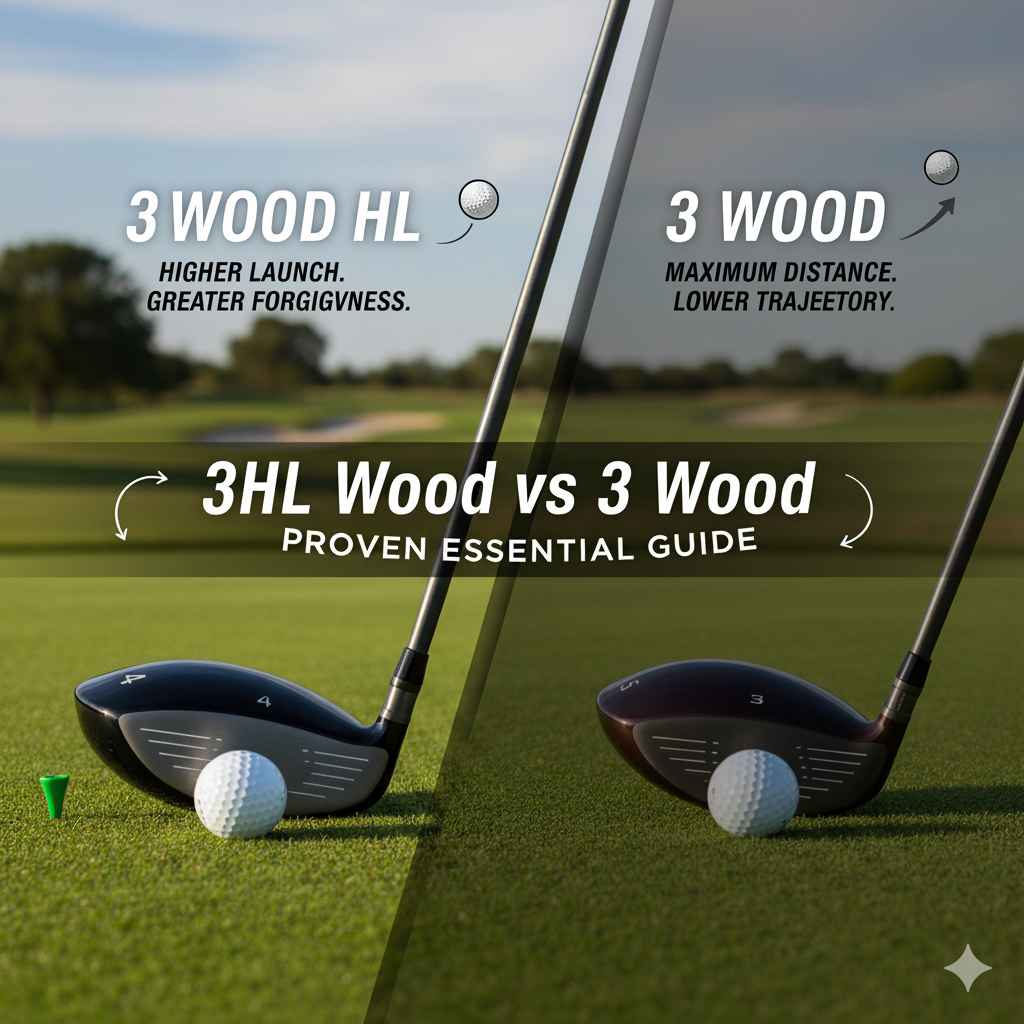
Discover the proven advantages of a 3 Wood HL (Higher Launch) versus a standard 3 Wood. The HL model is expertly designed for golfers seeking easier launch, more loft, and greater forgiveness, making it a superior choice for those with moderate swing speeds or who struggle to get the ball airborne.
Hey there, fellow woodworkers! Md Meraj here, ready to talk about something that often gets beginners a bit puzzled: the difference between a 3 Wood HL and a regular 3 Wood. If you’ve ever stood on the driving range or the first tee, scratching your head wondering which club will give you that perfect, soaring shot, you’re not alone. Many folks find getting the ball up in the air a challenge, and the right club can make a world of difference. Today, we’re going to demystify these two clubs, break down exactly what makes them different, and explain the “proven advantage” the 3 Wood HL offers for many golfers. By the end, you’ll have a clear picture of which one might be your new best friend on the course!
Understanding Golf Club Lofts: The Foundation
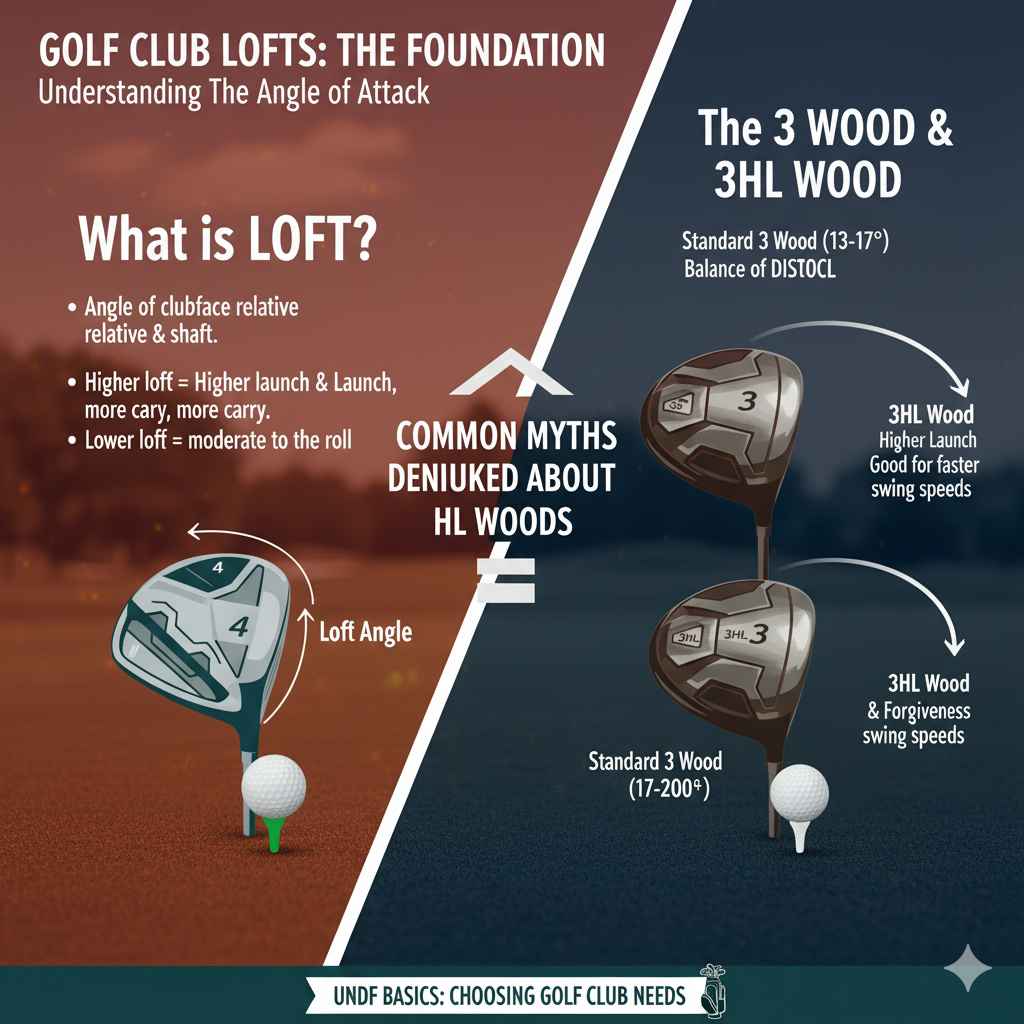
Before we dive into the specifics of the 3 Wood HL versus the standard 3 Wood, let’s quickly touch on a fundamental concept in golf: loft. Loft is simply the angle of the clubface in relation to the shaft. Think of it like tilting a putter face; the more you tilt it back, the higher the ball will tend to go. Different clubs have different lofts, and this angle is crucial for determining how high the ball will launch and how far it will travel. For woods, especially the 3 wood, loft plays a big role in how versatile the club is.
A standard 3 Wood typically has a loft somewhere between 13 and 17 degrees. This range is designed to offer a good balance between distance and launch for golfers with a reasonable swing speed. It’s a staple in many golfers’ bags, often used off the tee for accuracy or for long approach shots. However, for some, this standard loft might not be enough to achieve an optimal launch angle, leading to shots that don’t reach their full potential.
What Exactly is a 3 Wood HL?
Now, let’s talk about the “HL” – Higher Launch. A 3 Wood HL, as the name suggests, is specifically engineered with more loft than its standard counterpart. While a standard 3 Wood might have around 15 degrees of loft, you’ll often find a 3 Wood HL in the range of 16 to 18 degrees, and sometimes even higher. This increased loft is the primary difference and unlocks a range of benefits for a specific group of golfers.
Think of it this way: if a standard 3 Wood is like a sturdy, all-purpose tool, a 3 Wood HL is a specialized tool designed for a particular job – getting that ball up in the air easily and consistently. This isn’t about making the club “easier” in terms of swing mechanics, but rather about optimizing the clubhead’s design and loft to work with your swing, rather than against it.
The Design Philosophy Behind the HL
The engineers behind golf clubs are brilliant! They tweak everything from the clubhead’s shape and internal weighting to the loft and lie angle to create clubs that perform best for different types of players. For the 3 Wood HL, the design philosophy is straightforward: provide more help in getting the ball airborne and landing softly.
This means the clubface is often set with a slightly steeper (higher) loft angle right out of the box. This is coupled with design features that can encourage a higher trajectory. Some HL models might also feature a slightly more forward center of gravity (CG) in the clubhead. A more forward CG can help reduce spin, which, when combined with higher loft, can lead to a more penetrating yet still high ball flight if used by someone with sufficient clubhead speed, or a higher, softer landing trajectory for those with moderate speeds. The goal is to improve launch angle and descent angle for better stopping power on the green.
The Proven Advantage: Who Benefits Most from a 3 Wood HL?
This is where the real value of the 3 Wood HL shines. Its “proven advantage” isn’t about being “better” for everyone, but about being significantly better for certain golfers who struggle with traditional fairway woods. Let’s break down who stands to gain the most:
1. Golfers with Moderate to Slower Swing Speeds
This is perhaps the biggest group that benefits from the 3 Wood HL. For many amateur golfers, especially those who aren’t professional athletes, achieving a high enough clubhead speed to launch a standard 3 Wood effectively can be difficult. A standard 3 Wood requires a certain amount of speed to compress the ball properly and get it up into the air for good distance. If your swing speed is on the lower side, a standard 3 Wood might result in:
- Low, piercing shots that don’t carry far.
- A lot of “worm burners” or ground-skimming shots.
- Difficulty getting the ball airborne from the fairway or the tee.
The higher loft of the 3 Wood HL helps to compensate for this. It effectively “pre-launches” the ball, allowing golfers with moderate swing speeds to achieve a higher launch angle and better carry distance without having to swing harder or less accurately. It’s about working with your natural swing, not fighting against it.
2. Golfers Who Struggle to Get the Ball Airborne
Even if your swing speed isn’t necessarily slow, some golfers just have a natural tendency to hit the ball low. This can be due to a variety of factors, including swing mechanics, flexibility, or even the type of ball you’re using. If you find yourself consistently struggling to get your driver or fairway woods up in the air, a 3 Wood HL can be a game-changer.
The increased loft acts as a helper, giving you that extra boost to get the ball flying higher. A higher ball flight typically leads to more air time, which translates to more distance and a softer landing on the green. For these golfers, the difference can be night and day, transforming frustrating shots into confident, well-executed ones.
3. Golfers Seeking More Forgiveness
While forgiveness can be influenced by many factors (like the size of the clubhead and sole design), loft also plays a role. With a higher loft, the 3 Wood HL generally offers a more forgiving strike, especially on shots hit slightly thin or off the toe. The steeper loft can help lift the ball more effectively from these less-than-perfect contacts, keeping the ball in the air and potentially closer to your intended target than a standard 3 Wood might.
This added forgiveness can boost confidence on the course. Knowing that mishits are more likely to stay in play and achieve a reasonable outcome can free up your swing and allow you to play more aggressively and enjoy the game more.
4. Golfers Who Prefer a High, Soft Landing Shot
For some golfers, especially those playing courses with firmer greens or undulating fairways, a high-flying shot with a steep descent angle is incredibly valuable. A 3 Wood HL, when struck correctly, can facilitate this type of flight. The higher trajectory means the ball spends more time in the air, and the higher loft promotes a steeper angle of descent. This helps the ball stop more quickly upon landing, which is crucial for approach shots from the fairway or even for aggressive tee shots on par 5s where you want the ball to sit down rather than roll out uncontrollably.
A standard 3 Wood, with its lower loft, might produce a more piercing, lower-flying shot that rolls out considerably. While this can be beneficial for maximum roll on firm fairways or dry conditions, it’s often less controllable than a high, soft landing shot offered by the HL model.
Key Differences: 3 Wood HL vs. Standard 3 Wood
To make things crystal clear, let’s summarize the main distinctions. While both are fairway woods designed for distance, their optimal use cases diverge due to their lofts and intended benefits.
| Feature | 3 Wood HL (Higher Launch) | Standard 3 Wood |
|---|---|---|
| Loft (Typical Range) | 16° – 18°+ | 13° – 17° |
| Launch Angle | Higher | Moderate to Higher (Swing Dependent) |
| Spin Rate | Can be lower (design dependent), promoting higher flight. | Moderate to Higher (design dependent) |
| Ideal Golfer Profile | Moderate/lower swing speed, struggles with launch, seeks forgiveness, wants high soft landing. | Moderate/higher swing speed, consistent ball striker, seeking maximum distance and roll. |
| Primary Benefit | Ease of launch, improved carry distance for slower swings, stopping power. | Maximum distance, penetrating ball flight for optimal roll. |
| Forgiveness | Generally higher, especially on thin or off-center hits. | Moderate to high, depending on specific model. |
This table highlights that it’s not about one club being universally superior; it’s about its suitability for your individual game. A standard 3 Wood is a fantastic tool for those who can generate significant clubhead speed and prefer a lower, more penetrating trajectory that maximizes roll. However, if you find yourself swinging hard but not getting the ball to launch effectively, the 3 Wood HL is likely your more advantageous pick.
How to Determine Which 3 Wood is Right for You
Choosing the right club is a crucial step in improving your game. It’s not just about brand names or what your playing partners use. Here’s a practical approach to figuring out if a 3 Wood HL or a standard 3 Wood is your better option:
- Assess Your Swing Speed This is paramount. If you don’t know your swing speed, consider a club fitting. Many golf shops and ranges offer this service, sometimes for free with the purchase of a club. A fitter can measure your swing speed and ball flight characteristics and provide recommendations. Generally, drivers swing speeds below 90 mph for men, and below 75 mph for women, may find an HL more beneficial. For a deeper dive into understanding swing speed, resources like the Golf Distillery offer comprehensive explanations.
- Analyze Your Current Ball Flight Pay attention to your shots with your current 3 Wood (or even your driver). Do they tend to launch high and fall out of the sky, or do they fly low and struggle to carry? Are you seeing a lot of shots that start low and stay low (“worm burners”)? If so, you’re likely a prime candidate for a 3 Wood HL. If your shots have a nice, high trajectory and good carry, a standard 3 Wood might be fitting your needs.
- Focus on Launch Angle Beyond just speed, think about the launch angle. A good launch angle for a driver is typically between 10-14 degrees, while for a 3 Wood it’s often 8-12 degrees. If your 3 Wood is consistently launching below 8 degrees (and you’re not a low-spin player), the higher loft of an HL model will help you achieve a more optimal launch.
- Consider Your Goals What do you want from your 3 Wood? Are you looking for maximum distance and roll on wide-open fairways, or are you more concerned with getting the ball up and down onto the green from further out? If stopping power and approach accuracy are key, the higher launch and steeper descent of an HL can be very advantageous. If raw distance with maximum roll is the priority, a standard 3 Wood might still be preferred, provided you can launch it effectively.
- Get Fitted! The best advice, hands down, is to get fitted by a qualified club fitter. They have the technology and expertise to analyze your swing and recommend the best club specs, including loft. They can let you hit both a standard 3 Wood and a 3 Wood HL side-by-side, using launch monitors to show you the objective data on carry distance, total distance, spin rates, and launch angles. You can find professional club fitters through manufacturers like Callaway or Titleist.
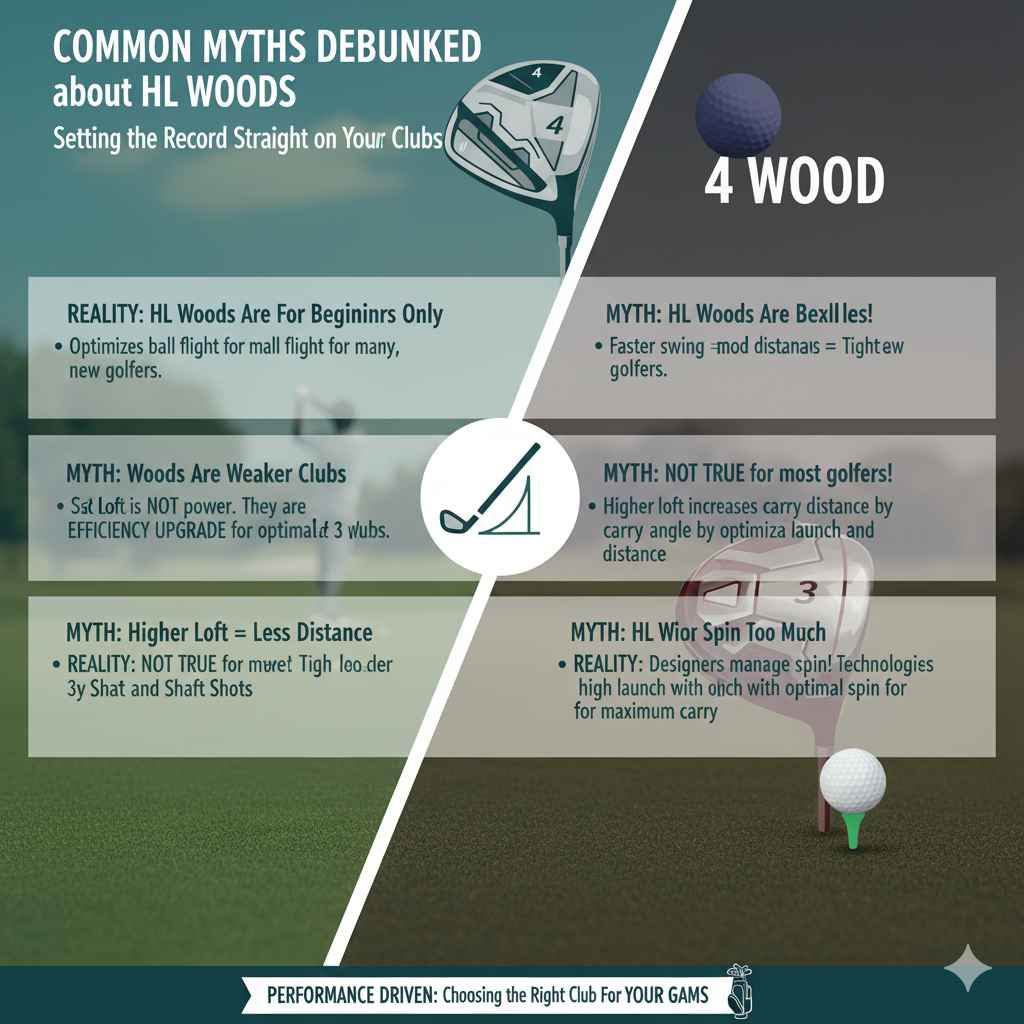
Common Myths Debunked about HL Woods
There’s often some confusion or misguided information about clubs designated with “HL” (Higher Launch) or similar designations. Let’s set the record straight:
- Myth: HL woods are for beginners only. Absolutely not! While beginners often benefit greatly from the higher launch, many skilled amateur golfers and even some professionals use HL designs (or custom-lofted clubs that function similarly) if it optimizes their ball flight and performance. It’s about finding what works for your swing, not about perceived skill level.
- Myth: HL woods are weaker than standard woods. This is a common misconception. An HL designation refers to the loft of the clubface, not its overall power or distance potential. When used by the right golfer, an HL wood can achieve greater distance because it helps them achieve a more optimal launch angle and reduces the likelihood of hitting shots that don’t carry far. Think of it as an efficiency upgrade, not a downgrade.
- Myth: Higher loft means less distance. This is only true if you have a very high swing speed and are already launching the ball too high. For many golfers, especially those with moderate swing speeds, a higher loft is necessary to achieve an optimal launch angle that maximizes carry distance. Without enough loft, the ball launches too low, has insufficient air time, and thus less distance. The 3 Wood HL’s higher loft helps achieve that sweet spot for many.
- Myth: HL woods spin too much. This isn’t inherently true. While higher loft can sometimes increase spin, club manufacturers design HL woods with various technologies (like adjustments to the center of gravity) to manage spin. Often, the goal is to achieve a higher launch with manageable spin for optimal carry. If spin is too high, it can cause the ball to balloon and lose distance, so designers work to balance this.
Understanding these myths helps demystify the technology and encourages golfers to consider HL options based on performance, not preconceived notions.
Frequently Asked Questions (FAQ)
Q1: What does “HL” stand for in a 3 Wood HL?
A1: “HL” stands for “Higher Launch.” This indicates that the club is designed with more loft than a standard 3 Wood, intended to help the ball get into the air more easily.
Q2: Will a 3 Wood HL make me hit the ball shorter than a regular 3 Wood?
A2: Not necessarily. For golfers with moderate swing speeds, a 3 Wood HL often results in greater carry distance because it helps them achieve an optimal, higher launch angle. For golfers with very high swing speeds, a standard 3 Wood might be better for maximizing downrange roll, but the HL is designed to optimize for those who need help getting the ball airborne.
Q3: How much more loft does a 3 Wood HL typically have?
A3: A standard 3 Wood usually has between 13-17 degrees of loft, with 15 degrees being common. A 3 Wood HL typically has a loft in the range of 16-18 degrees, or sometimes even slightly more.
Q4: Is a 3 Wood HL good for beginners?
A4: Yes, a 3 Wood HL is often an excellent choice for beginners, especially those who struggle with getting the ball up in the air consistently with traditional fairway woods. Its higher loft makes it more forgiving and easier to launch.
Q5: Can I use a 3 Wood HL from the fairway?
A5: Absolutely! The higher loft of the 3 Wood HL can be particularly beneficial from the fairway, as it helps get the ball airborne quickly for a softer landing on the green. This is often a key advantage over a standard 3 Wood for many players.
Q6: How do I know if I need a 3 Wood HL or a standard 3 Wood?
A6: The best way is to get fitted by a golf professional. They can assess your swing speed, attack angle, and current ball flight to determine which loft will provide you with the optimal launch and distance. If you consistently hit your current fairway woods low and struggle with carry, an HL is likely a good option.