Maloof Dining Chair: Sam Maloof’s Sculpted Joint Explained
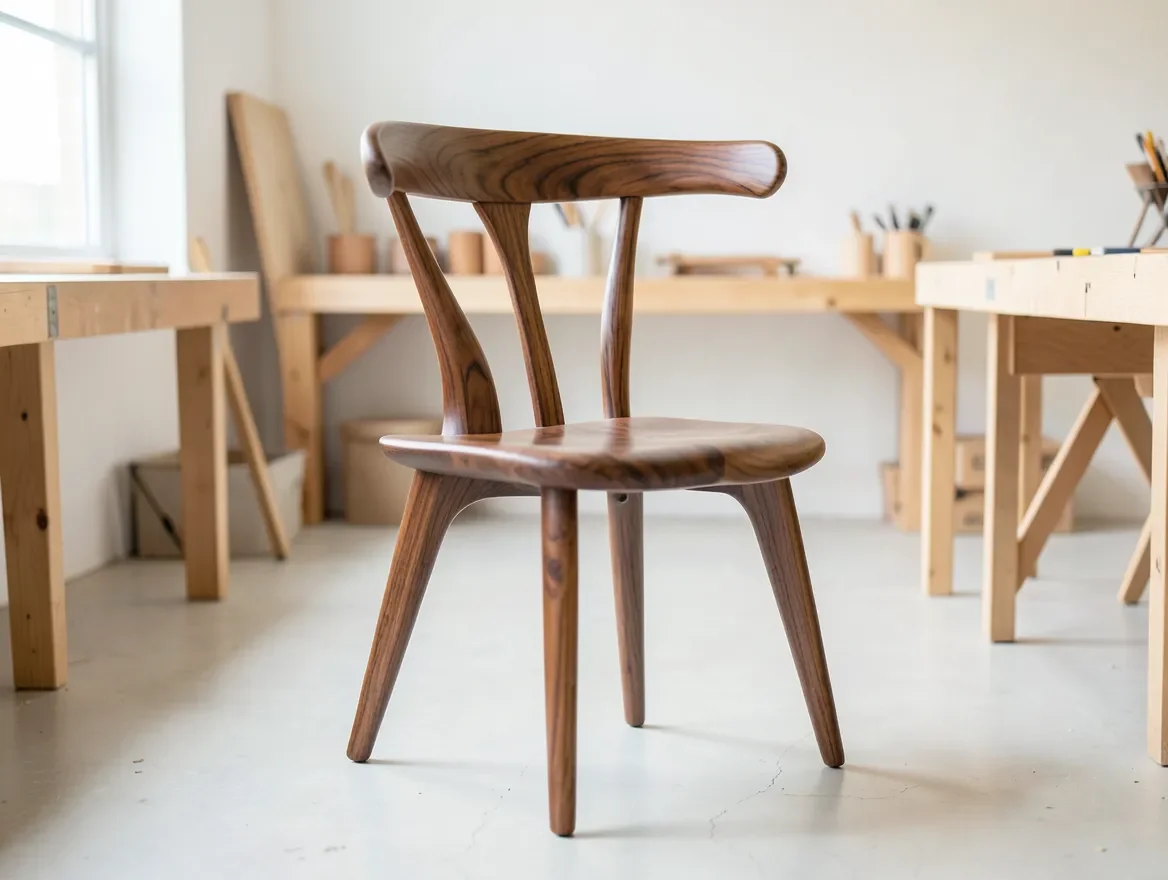
The Maloof Dining Chair is the low, sculpted side chair style developed by American furniture maker Sam Maloof, best known for its continuous flowing joint where the seat, back spindles, and legs appear to grow out of one another rather than meet at a square corner. Maloof (1916-2009) built his originals almost entirely by hand and shaped that joint with a spokeshave and scrapers rather than cutting it as a simple mortise-and-tenon, which is the detail that separates a genuine Maloof-influenced chair from an ordinary spindle-back dining chair.
Who Was Sam Maloof, and Why His Dining Chair Design Still Matters
Sam Maloof was born in 1916 in Chino, California, to Lebanese immigrant parents, and he was almost entirely self-taught as a woodworker. He started building furniture in 1949 after working as a graphic artist, and by the 1950s his low-back chairs, rockers, and dining sets had become sought after by collectors and museums. In 1985 he became the first furniture maker ever awarded a MacArthur Foundation “genius grant” fellowship, a recognition usually reserved for scientists, writers, and artists rather than craftsmen. His chairs were commissioned for Presidents Carter, Reagan, and Clinton, and pieces of his work are held in the White House Collection of American Crafts and the Smithsonian American Art Museum. He kept working in his Alta Loma, California workshop until his death in 2009 at age 93.
What makes his dining chair relevant to woodworkers today is not just who owned one, but how it was built: Maloof treated the joinery itself as sculpture, not just a structural connection, and that approach has shaped how several generations of furniture makers think about joining curved wood.
Best Tool for Hand-Shaping the Joint
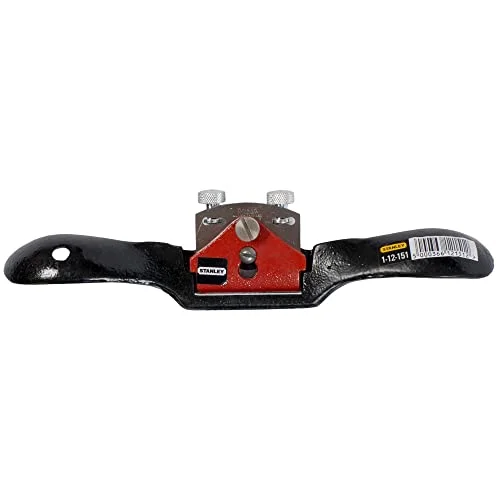 |
Stanley 1-12-151 Flat Spokeshave – $33.69 The classic flat-sole shave woodworkers reach for when hand-carving a Maloof-style joint down to its final sculpted curve.
|
The Maloof Joint: How the Seat, Spindle, and Leg Become One Curve
The detail collectors and woodworkers both call “the Maloof joint” is a variation on a housed tongue-and-groove, sometimes described as a dado-and-rabbet joint, that Maloof developed to maximize glue surface area between a chair leg and the seat. On the earliest chairs from the 1950s and 1960s, he actually used a simpler method: the seat rails were clamped together edge to edge, a hole was bored through both at once, and when unclamped it left a matching half-round socket for a lathe-turned leg. The joint most associated with his mature work came later and used more surface-area contact for strength.
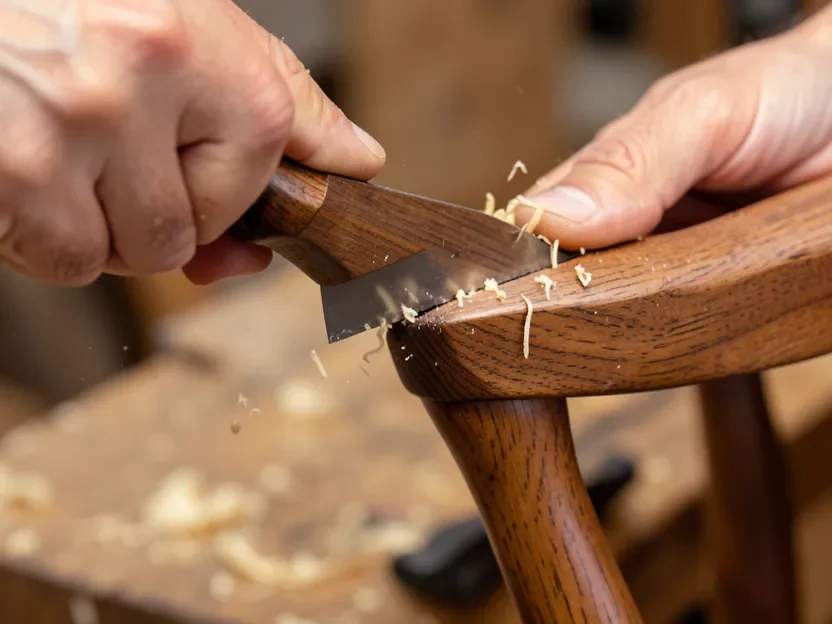
The part that is easy to miss in photos is that Maloof did not cut these joints to their final shape and call it done. He assembled them oversized and, by his own account, deliberately crude and “clunky” looking, then carved the entire glued-up assembly down by hand with spokeshaves, rasps, and scrapers until the seat rail, spindle, and leg read as one continuous sculpted line. That hand-shaping step, done after glue-up rather than before, is what gives a genuine Maloof-style joint its organic look and is also the single hardest part of the design for a woodworker to reproduce, since it has to be shaped by eye and feel rather than measured off a plan.
Authentic Maloof Originals vs. Maloof-Style Chairs You Can Build Today
It is worth separating two very different things that both get called a “Maloof dining chair.” An authentic, Maloof-attributed original is a museum-grade collectible: Bonhams set an auction record for a Sam Maloof rocking chair at $80,500 in 2012, and other Maloof rocking chairs have sold in the $30,000 to $50,000 range at design-focused auction houses like Rago Auctions and Los Angeles Modern Auctions in recent years. Sets of his dining chairs and other original pieces are handled by specialist design dealers rather than typical furniture retailers, and pricing is negotiated per piece rather than listed.
A “Maloof-style” or “Maloof-inspired” dining chair is something else entirely: a chair built by a woodworker who is following Maloof’s design language and joinery approach without claiming it is one of his originals. Building one is a well-documented advanced project in the furniture-making world, often treated as a rite of passage because it forces a maker to combine curved joinery, hand-shaping, and comfortable ergonomic seating in a single piece. It is not a beginner project, but it is realistic for an intermediate woodworker who has already built simpler mortise-and-tenon chairs and is comfortable with a spokeshave. Maloof’s rocking chair, his single most famous design, uses the same joint philosophy and is usually where woodworkers attempt this style first before moving on to a dining chair.
Design Characteristics That Define the Style
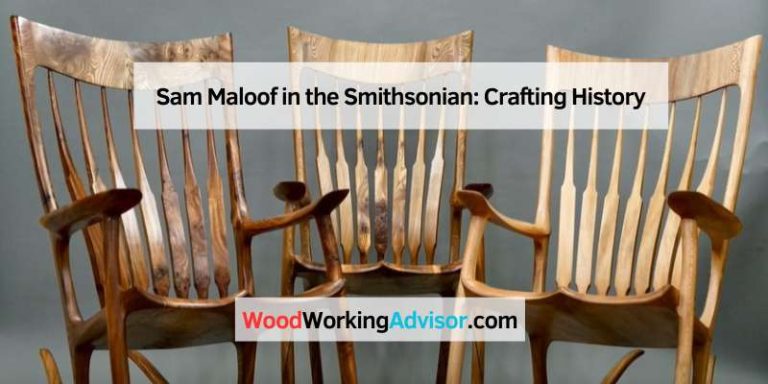
A handful of features show up consistently across Maloof-style dining chairs, whether it is an original or a contemporary build:
| Element | What to look for |
|---|---|
| Back rail | Low, gently curved horizontal rail rather than a tall ladder back, usually sculpted thinner at the ends than in the middle |
| Spindles | Three to five vertical spindles, each individually shaped rather than turned identically on a lathe |
| Seat | Wide, contoured, saddle-shaped seat carved to follow the body rather than a flat board |
| Legs | Gently splayed and tapered, blending into the seat through the sculpted joint rather than doweled straight in |
| Wood | Dense hardwoods that carve and polish well, most often black walnut, but also cherry, maple, and occasionally ebony accents |
| Finish | A hand-rubbed oil and wax finish that stays close to the wood surface rather than a thick built-up film finish |
Building or Buying One
If you want to build a Maloof-style dining chair rather than buy an original, plan on it taking considerably longer per chair than a standard dining chair, mostly because of the hand-shaping stage described above. Full-size templates and cutting plans exist to get the joinery geometry right before you start carving; a set of plans is the more economical starting point if you already know how to loft your own patterns, while ready-made templates save time transferring the curved parts. Either way, budget extra stock, since the hand-shaping stage removes far more material than a typical chair build and a mistake late in shaping usually means starting that part over.
Caring for a Maloof or Maloof-Style Dining Chair
Because most of these chairs wear an oil-and-wax finish rather than polyurethane, care is closer to caring for a butcher block than a lacquered chair. Dust with a dry or barely damp soft cloth, and avoid all-purpose spray cleaners, which can strip or cloud an oil finish. Keep the chair out of direct sun for long stretches, since walnut in particular will lighten and lose its rich color with sustained UV exposure. Re-oil the exposed wood every six to twelve months with a food-safe finishing oil, applied with the grain and wiped fully dry after it soaks in, rather than left to build up on the surface. Because the joints are glued and shaped as one continuous piece rather than mechanically fastened, avoid rocking the chair back on two legs or dragging it across a hard floor, both of which put shear stress on the joint in a direction it was not shaped to take.
Frequently Asked Questions
What is a Maloof dining chair?
It is a low-back dining chair style developed by furniture maker Sam Maloof, defined by a hand-shaped joint where the seat, back spindles, and legs flow together as one continuous sculpted curve instead of meeting at a standard mortise-and-tenon corner.
How is the joint on a Maloof-style chair actually made?
The parts are joined with a dado-and-rabbet style joint, glued up deliberately oversized, then carved down by hand with a spokeshave, rasps, and scrapers until the seat, spindle, and leg read as one smooth shape rather than three separate pieces.
What wood is typically used?
Black walnut is the wood most associated with Maloof’s work, though cherry and maple are also common choices for both original and Maloof-style dining chairs, usually finished with a hand-rubbed oil and wax rather than a film finish.
Is an authentic Sam Maloof chair worth a lot of money?
Yes. Auction houses have sold authenticated Maloof rocking chairs for tens of thousands of dollars, including an $80,500 sale at Bonhams that set an auction record, and his dining chairs and sets are handled by specialist design dealers rather than sold as ordinary used furniture.
Can a beginner woodworker build a Maloof-style dining chair?
It is better suited to an intermediate or advanced woodworker who already has experience with curved joinery and hand-shaping tools like a spokeshave, since the joint is carved by eye after glue-up rather than cut to a fixed measurement.
Conclusion
The Maloof dining chair is worth understanding on its own terms rather than as a generic “elegant chair”: the value, historically and functionally, is in the hand-carved joint that turns three separate parts into one sculpted line, a technique Sam Maloof spent decades refining before it earned him the first MacArthur fellowship ever given to a craftsman. Whether you are shopping for a piece with real design history or planning to shape your own version at the bench, that joint is the detail to study first.
Sponsored / affiliate links. As an Amazon Associate I earn from qualifying purchases. I may earn additional commission from eligible campaigns.