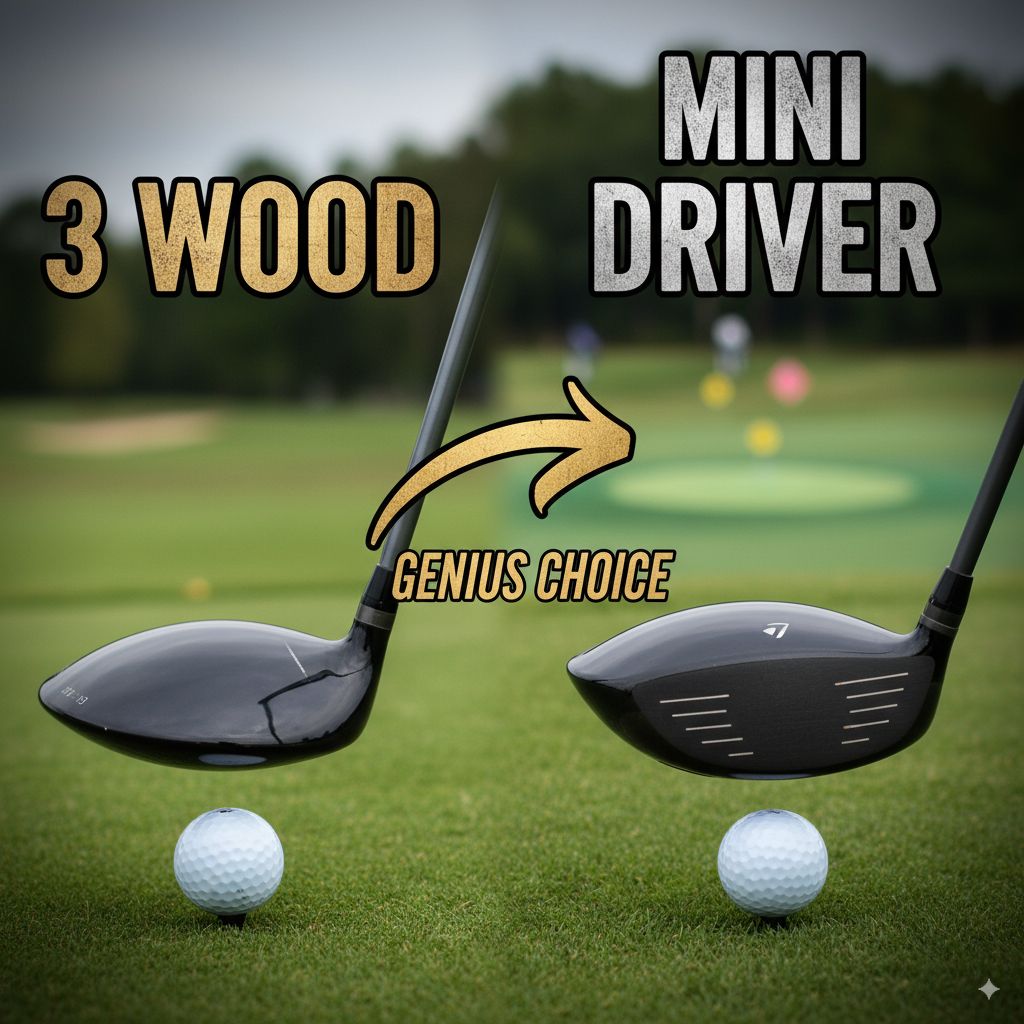
3 Wood vs Mini Driver: Genius Choice
Choosing between a 3 wood and a mini driver depends on your swing speed and desired shot. A 3 wood is versatile for fairway shots and longer par 3s, while a mini driver offers more power off the tee for faster swingers needing extra distance. Both can be “genius choices” when selected correctly for your game.
Ever stood on the tee box, feeling like you need just a little more oomph, and wondered if your trusty 3 wood is up to the task? Or maybe you’ve seen those sleek mini drivers and thought, “What’s that all about?” It’s a common puzzle for golfers looking to optimize their bag. Finding the sweet spot between distance and control can feel like a game of trial and error. But don’t worry! We’re here to clear up the confusion and help you make a smart decision for your game. Let’s dive into the differences between the 3 wood and the mini driver and figure out which one is your “genius choice.”
Understanding the Clubs: 3 Wood vs. Mini Driver
Golf clubs are designed with specific purposes in mind. The 3 wood and the mini driver, while both fairway woods, cater to slightly different needs and playing styles. Understanding their fundamental design will help you see why one might outperform the other for you.
The Reliable 3 Wood
The 3 wood is a staple in many golfers’ bags. It’s known for its versatility. You can hit it off the tee on shorter par 4s, use it to reach par 5s in two shots, and often, it’s your go-to club for long par 3s. Its design typically features a larger clubhead than higher-numbered woods, offering a good balance of distance and forgiveness. The loft, usually around 15 degrees, is lower than a driver, making it easier to control for many players, especially those with moderate swing speeds.
Key Characteristics of a 3 Wood:
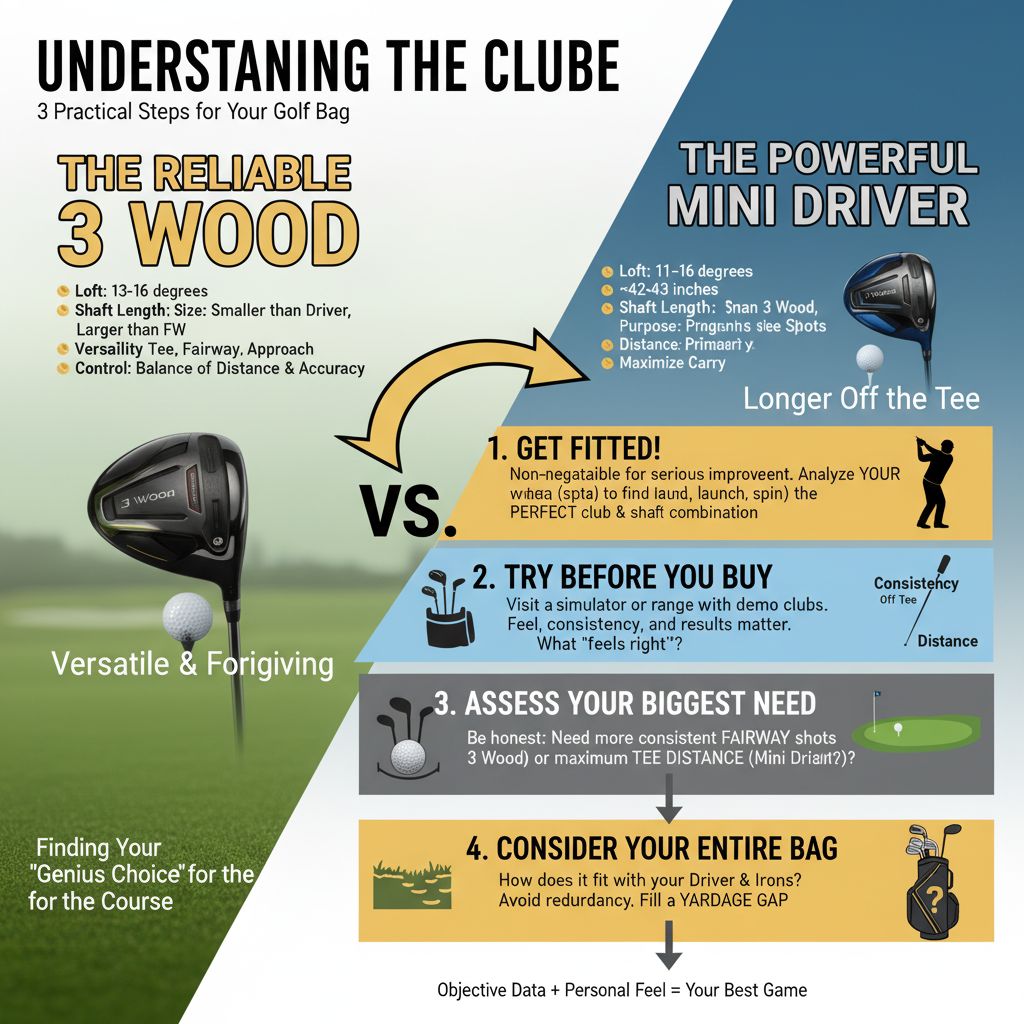
- Loft: Typically 13-16 degrees.
- Shaft Length: Shorter than a driver, usually around 42-43 inches.
- Clubhead Size: Generally smaller than a driver, but larger than other fairway woods.
- Versatility: Excellent for tee shots, fairway shots, approach shots, and long par 3s.
- Control: Offers a good blend of distance and accuracy for a wide range of golfers.
The Powerful Mini Driver
A relatively newer concept, the mini driver (sometimes called a “2-wood” or “strong 3-wood”) is designed to bridge the gap between a traditional driver and a 3 wood. It often looks very similar to a driver but has a slightly smaller clubhead and a bit more loft than a standard driver (though often less loft than a typical 3 wood). The primary goal of a mini driver is to deliver more distance off the tee than a 3 wood, without sacrificing too much control. They are often built with the same technology as modern drivers, allowing for high ball speeds.
Key Characteristics of a Mini Driver:
- Loft: Can range from 11-14 degrees, often lower than a standard 3 wood.
- Shaft Length: Usually shorter than a driver but can be similar or slightly longer than a 3 wood.
- Clubhead Size: Typically larger than a 3 wood, but smaller than a standard driver.
- Purpose: Primarily designed for tee shots, offering maximum distance for players who can handle it.
- Distance Focus: Engineered for higher ball speeds and longer carry.
3 Wood vs. Mini Driver: Which One is Right for You?
So, you’ve seen what they are, but how do you pick? The best club for you isn’t just about brand or looks; it’s about matching the club’s characteristics to your body, your swing, and your game goals. Let’s break down the decision-making process.
Swing Speed: The Great Differentiator
This is perhaps the most crucial factor. Your swing speed dictates how effectively you can launch the ball and generate power. If you have a faster swing speed, you can likely benefit more from the technologies in a mini driver designed for maximum speed. If your swing speed is more moderate, a 3 wood might offer a more consistent and forgiving path to good distance.
For golfers with higher swing speeds (generally above 100 mph for men, 85 mph for women), a mini driver can unlock significant yardage off the tee. You’ll be able to generate the speed needed to take advantage of lower lofts and the club’s aerodynamic design. If your swing speed is moderate (around 85-100 mph for men, 70-85 mph for women), a 3 wood might be a more forgiving and accessible option, providing ample distance without the potential for wild slices or hooks that can come with trying to overpower faster clubs.
To get an idea of your swing speed, you can utilize a launch monitor at a golf course or driving range. Many golf professionals also offer swing analysis that can help determine this metric. Learning more about swing speed can be beneficial as discussed in resources like those from Golf Distillery, which offers insights into improving your game.
Course Management and Playing Style
Think about the courses you play most often. Are there many tight fairways that demand accuracy off the tee, or are there wide-open holes where maximizing distance is key? Your strategy on the course should heavily influence your club choice.
If you often find yourself playing courses with narrow fairways or a lot of trouble on the sides, the slightly larger head and often higher loft of a 3 wood can offer more confidence and forgiveness. The shorter shaft also contributes to greater control. On the other hand, if you play courses where bombing it down the fairway is rewarded and accuracy is less of a penalty, a mini driver might be your ally for gaining extra yards and potentially picking up strokes on longer courses.
Consider famous courses known for their length. For instance, some holes at Augusta National or Chambers Bay might reward the extra distance a mini driver can provide for players capable of controlling it.
Control vs. Distance: Finding Your Balance
This is the core trade-off. A 3 wood generally offers better control for the average golfer. Its loft allows for a higher, more stable ball flight that lands softer. The shorter shaft typically translates to a more compact and repeatable swing, leading to more consistent contact and straighter shots. This makes it a very reliable club for many situations.
A mini driver, by its design, leans more towards maximizing distance. It often has technologies similar to modern drivers, such as adjustable weights and aerodynamic shaping, to promote higher ball speeds. However, this often comes at the expense of some control, especially for golfers who don’t have a swing speed fast enough to properly compress the ball with its lower loft and longer shaft (relative to a 3 wood). If your priority is pure distance and you have the swing speed to back it up, the mini driver shines.
Here’s a simple table to help visualize the differences in these priorities:
| Club | Primary Focus | Secondary Focus | Best For |
|---|---|---|---|
| 3 Wood | Versatility, Control | Good Distance | Tee shots, fairway shots, long approaches for players with moderate swing speeds. |
| Mini Driver | Maximum Distance (off tee) | Some Control | Tee shots for faster swingers seeking extra carry and roll. |
Lie and Strike Consistency
How consistently do you strike the ball off the deck with your current fairway woods? Some mini drivers, due to their larger heads and lower lofts, can be more challenging to hit effectively from the turf than a more traditional 3 wood. If you plan to use your club primarily off the tee, this is less of a concern. However, if you envision using it for fairway approaches, the 3 wood’s design often makes it more forgiving off different lies.
For those who struggle with hitting down on longer clubs from the fairway, a 3 wood typically offers an easier path to solid contact. The extra loft helps the ball get up in the air, and the shape of the clubhead is often designed to glide through the turf more easily. A mini driver, especially one with a lower loft, might require a more precise strike to achieve optimal results from the fairway.
Pros and Cons: A Clear Comparison
To make an informed decision, it’s helpful to lay out the advantages and disadvantages of each club type. This can highlight which club aligns best with your personal golfing strengths and weaknesses.
3 Wood: Pros and Cons
Pros:
- Exceptional Versatility: Usable from the tee box, fairway, and even for long approaches on par 3s.
- Greater Control and Forgiveness: Generally easier to hit straight and land softly compared to a mini driver for moderate swing speeds.
- Easier to Hit from Fairway: The design typically makes it more forgiving off the turf.
- Reliable Ball Flight: Often produces a higher, more playable trajectory.
- Widely Available: A standard in nearly every golf manufacturer’s lineup.
Cons:
- Potentially Less Distance: May not offer the absolute longest drives compared to a mini driver for very fast swingers.
- Can Be Too Much Club: For some, the loft might still be a bit low for consistent tee shots if their swing isn’t optimized.
Mini Driver: Pros and Cons
Pros:
- Maximum Off-the-Tee Distance: Engineered to maximize ball speed and carry for players with sufficient swing speed.
- Driver-Like Technology: Often incorporates advanced materials and adjustability for customization.
- Confidence Booster: Can be a game-changer on courses where a few extra yards off the tee make a big difference.
- Stronger Loft Option: May offer a lower, more penetrating flight that is good for windy conditions or golfers who typically balloon shots.
Cons:
- Less Versatile: Primarily designed for tee shots; can be difficult to hit well from the fairway.
- Requires Higher Swing Speed: Less effective and potentially less controlled for golfers with moderate swing speeds.
- Less Forgiving: The combination of lower loft and potentially longer shaft can make it harder to control.
- Niche Product: Not as common in every player’s bag as a 3 wood.
Performance Metrics: What the Numbers Say
When analyzing golf clubs, performance is often measured by metrics like ball speed, launch angle, spin rate, and carry distance. While precise numbers vary greatly based on the golfer and the specific club model, general trends can be observed.
A mini driver is optimized for higher ball speeds off the tee. This means that if you have the swing speed to match, you will likely see a significant increase in ball speed compared to your 3 wood. This higher ball speed, combined with potentially lower loft, aims to promote a lower spin rate and a more piercing ball flight, which can lead to more roll and greater total distance.
A typical 3 wood, while still capable of generating high ball speeds, is designed more for a balanced performance. It will usually produce a higher launch angle and a slightly higher spin rate than a mini driver for the same swing speed. This higher launch and spin contribute to a softer landing and can be more beneficial for accuracy and control, especially when accuracy is paramount or when trying to stop the ball on the green. Understanding these differences can involve looking at data from sources like USGA equipment rules and standards, which provide a framework for club design and performance.
Here’s a comparative look at general performance expectations:
| Metric | 3 Wood | Mini Driver | Notes |
|---|---|---|---|
| Peak Ball Speed | High | Very High (for appropriate swingers) | Mini driver is designed to maximize speed. |
| Launch Angle | Moderate to High | Low to Moderate | 3 wood typically produces a higher launch. |
| Spin Rate | Moderate | Low to Moderate | Lower spin with mini driver can increase roll. |
| Carry Distance | Long | Potentially Longer (especially for fast swingers) | Mini driver aims for maximum carry. |
| Control | High | Moderate to High | 3 wood usually offers better control for more golfers. |
| Forgiveness (from turf) | High | Moderate to Low | 3 wood is generally easier to hit off the fairway. |
Making Your Choice: Practical Steps
Now that you understand the nuances, let’s put it into practice. How do you make the final call? It’s not just about theory; it’s about what feels and performs best for you on the course. Consider these practical steps:
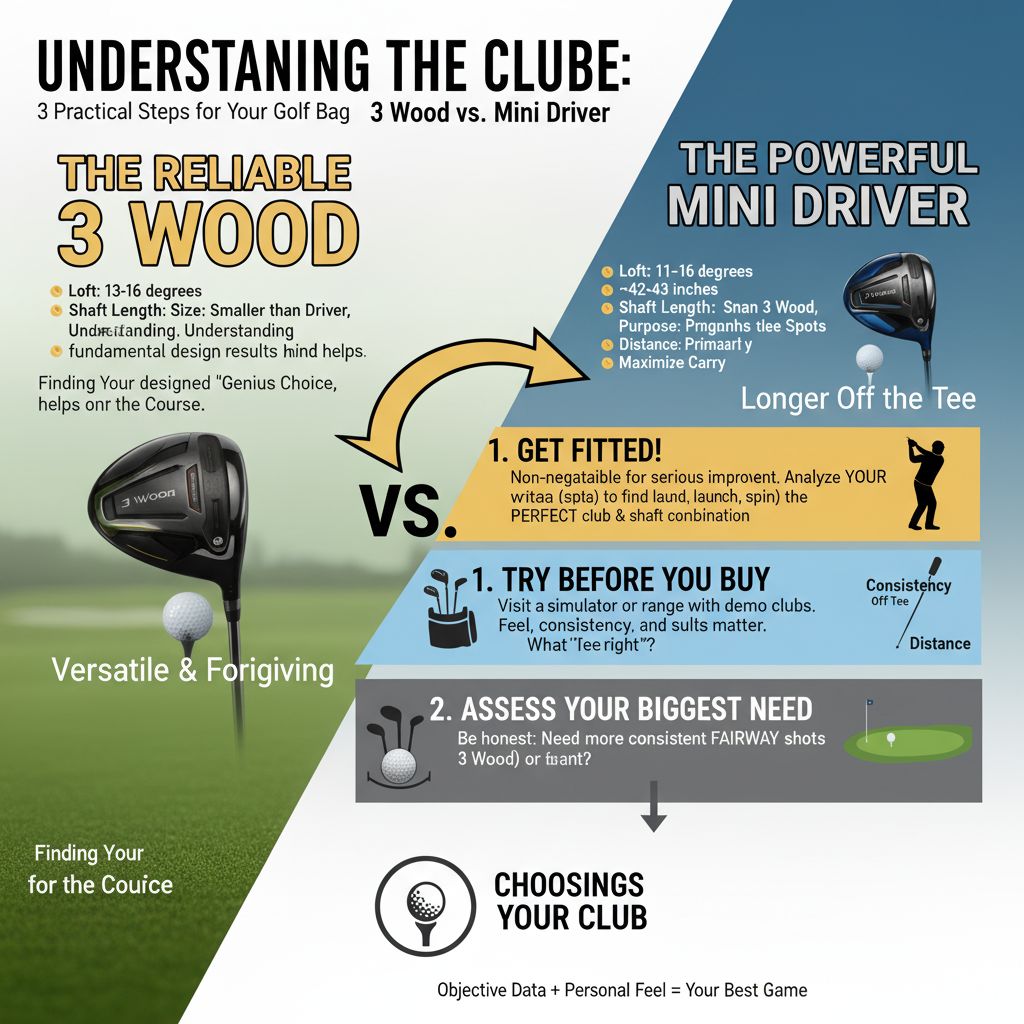
1. Get Fitted!
This is non-negotiable for serious improvement. A professional club fitter can analyze your current swing, measure your speed, and let you test various 3 woods and mini drivers. They’ll look at loft, shaft flex, shaft length, and lie angle to recommend the absolute best combination for your game. A good fitting can save you a lot of frustration and money in the long run.
During a fitting, you’ll likely hit balls on a launch monitor, which provides data on your swing speed, ball speed, launch angle, spin rate, and carry distance. This objective data, combined with the fitter’s expertise, is invaluable. For more on the importance of equipment fitting, you can explore resources from reputable golf organizations or equipment manufacturers that often detail their fitting processes.
2. Try Before You Buy
If a full fitting isn’t immediately an option, visit a golf store with a simulator or a driving range that offers demo clubs. Hit several different models of 3 woods and mini drivers. Pay attention to how each club feels in your hands, how easy it is to make solid contact, and most importantly, the results you’re getting in terms of distance and accuracy. Sometimes, a club just feels right.
3. Assess Your Biggest Need
Be honest with yourself. What aspect of your game needs the most improvement? If you’re consistently falling short of greens or giving up strokes to longer hitters, and you have a reasonably fast swing, a mini driver might be the answer. If you struggle with consistency off the tee, find yourself in the rough often, or need a reliable club for fairway approach shots, a 3 wood is likely the safer and more effective bet.
4. Consider Your Entire Bag
Think about how the club will fit into your overall set. Do you have a driver that you hit well? Or is driver distance a major weakness? If your driver is long and reliable, a mini driver might be redundant. If your driver is erratic or you don’t carry one, a mini driver could be a great way to add tee-shot distance without committing to a full conventional driver. Conversely, if you already have a strong arsenal of irons and hybrids, a versatile 3 wood might offer more overall utility.
For example, if you have a strong driver (e.g., averaging 270 yards carry) and a reliable 3 wood (e.g., averaging 240 yards carry), adding a mini driver that only adds another 5 yards might not be enough to justify its inclusion. However, if your driver is inconsistent and averages 250 yards, and your 3 wood 220 yards, a mini driver optimized for distance might help you reach that 250-260 yard neighborhood more consistently off the tee.
FAQ: Answering Your Burning Questions
Q1: Can a mini driver replace my driver?
A1: For most golfers, no. Drivers are designed for maximum distance and forgiveness. A mini driver can be a great alternative for specific tee shots or for players who struggle with a traditional driver, but it’s generally not a full replacement for most.
Q2: Is a mini driver harder to hit than a 3 wood?
A2: Generally, yes, if you don’t have a fast enough swing speed. Mini drivers often have lower lofts than 3 woods and can be longer, which can make them more challenging to control and hit well, especially from the fairway. A 3 wood is typically more forgiving for the average player.