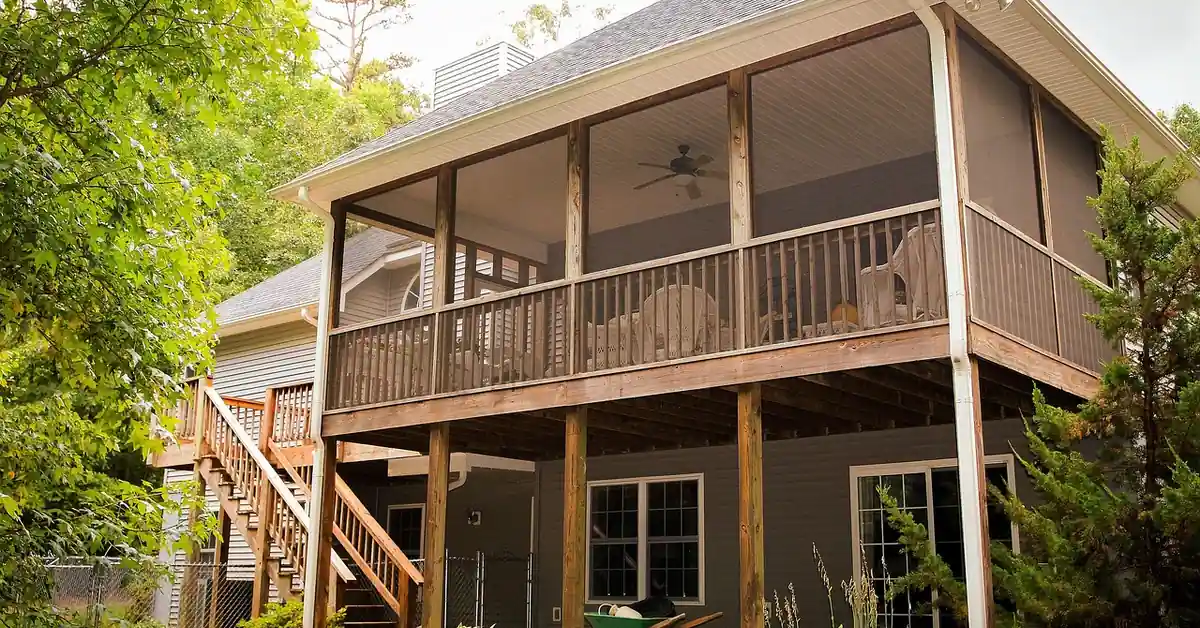
Pressure-Treated Wood Deck Cost: $25–$50 per Sq Ft
A pressure-treated wood deck costs $25 to $50 per square foot installed — roughly $4,000 to $12,000 for a typical 300–400 sq ft deck — unless you’re building on a second story or steep slope, where extra footings and framing push costs 20–40% higher. Skipping proper footings to save money is the single most common mistake that turns a budget deck into a costly repair. This guide covers materials, labor, 2026 lumber-price trends, and real ways to cut costs.
What Is a Pressure-Treated Wood Deck?
Best Deck Screws Pick
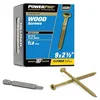
Power Pro Premium Exterior Wood Deck Screws (100-Pack) – $12.99
The self-drilling tip and epoxy coating this guide recommends for pressure-treated lumber — no pilot hole needed, and the star-drive bit is included.
- Best for: Deck boards and general framing on a standard-size deck
- Why we picked it: 75% less splitting on pressure-treated lumber per the manufacturer, and a 4.7-star rating across nearly 3,700 reviews
- Main drawback: A 100-pack only covers a small deck — larger builds need multiple boxes
Compare more deck-building hardware options
 Option 1 Type 17 Self-Drilling Deck Screws (5 lb Box) – $24.99
|
 Option 2 Deck Plus Deck Screws (365-Pack) – $29.98
|
 Option 3 3-Inch Exterior Deck Screws (350-Pack) – $19.99
|
As an Amazon Associate we earn from qualifying purchases.
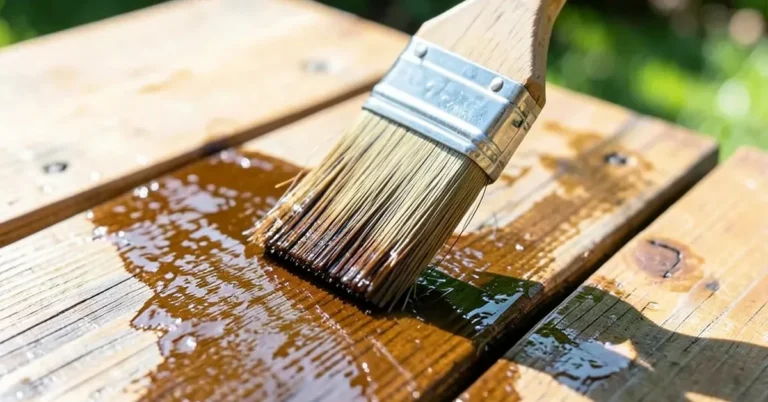
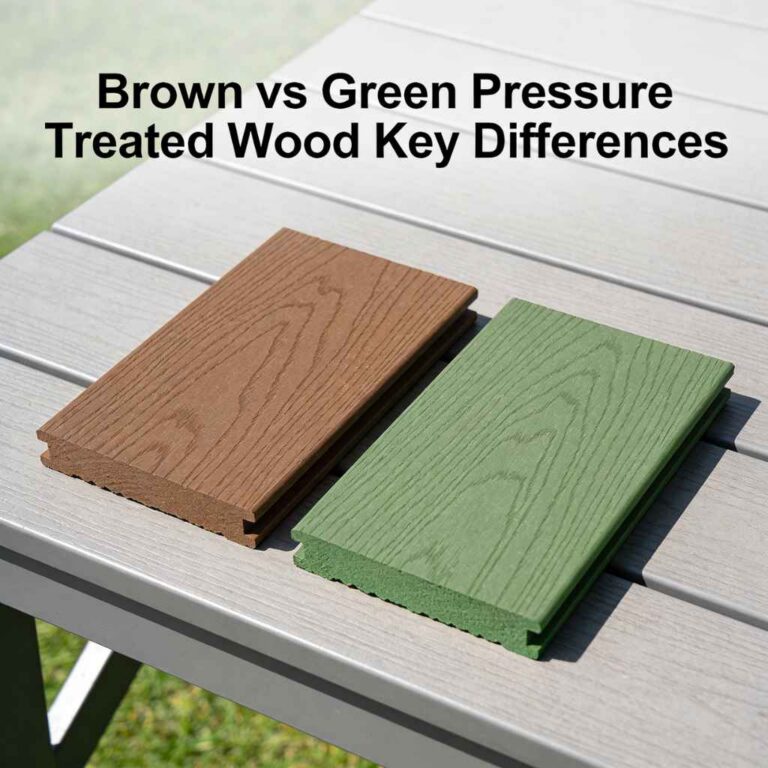
Pressure-treated wood is softwood lumber — almost always Southern yellow pine — forced under pressure to absorb preservative chemicals that resist rot, fungal decay, and insect damage. It typically lasts 10–25 years outdoors with regular sealing, and it costs roughly half as much to install as composite decking. The tradeoff is maintenance: it needs a fresh coat of sealer every 2–3 years, or it will gray, crack, and warp.
Why Pressure-Treated Wood Costs Less Than the Alternatives
Southern yellow pine is fast-growing and widely farmed for lumber, which keeps raw material costs down compared to cedar, redwood, or manufactured composite boards. The chemical treatment process (not the wood itself) is what makes it rot- and insect-resistant enough for ground contact and structural framing, which is why it remains the default framing material even on decks with composite or PVC decking boards on top.
How Much Does a Pressure-Treated Wood Deck Cost?
A pressure-treated wood deck costs $25 to $50 per square foot installed on national average, with a realistic range of $15 to $75 per square foot depending on deck height, site access, and local labor rates. Materials alone run $2–$8 per square foot; labor is typically 60–70% of the total bill. Most complete projects land between $4,000 and $12,000.
Cost Breakdown by Deck Size
Total cost scales directly with square footage. Here’s what the low-end, average, and high-end per-square-foot rates work out to for three common deck sizes — if you’re planning something smaller, see our dedicated breakdown of small deck costs around a pool.
| Deck Size | Low-End ($15/sq ft) | Average ($40/sq ft) | High-End ($75/sq ft) |
|---|---|---|---|
| 10’×10’ (100 sq ft) | $1,500 | $4,000 | $7,500 |
| 12’×12’ (144 sq ft) | $2,160 | $5,760 | $10,800 |
| 16’×20’ (320 sq ft) | $4,800 | $12,800 | $24,000 |
Table 1: Estimated pressure-treated deck costs by size, based on the $15–$75 per sq ft installed range reported across 2026 remodeling-cost data.
Factors That Change Your Total Cost
Square footage is only the starting point. A ground-level deck is the cheapest configuration to build; a second-story or walkout deck costs 20–40% more because it needs deeper footings, additional posts, and stair or railing structures rated for the extra height. Rocky or sloped sites raise footing costs too — expect $150–$300 per footing, more if you hit ledge rock or need engineered piers. Add-ons compound fast: railings run $20–$50 per linear foot, and stairs add $500–$2,000 depending on rise and width.
Tools and Hardware You’ll Need
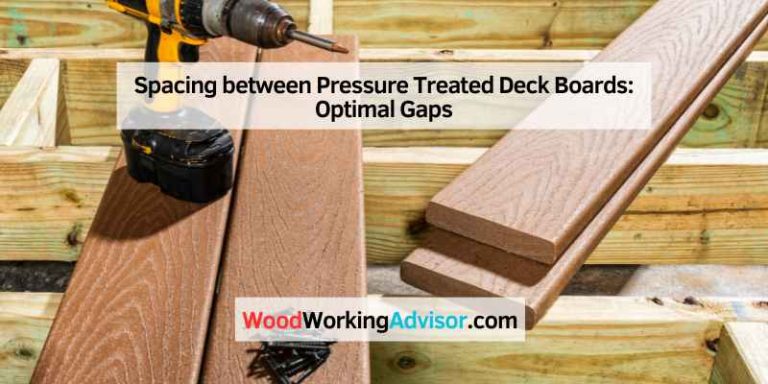
Beyond the deck boards and framing lumber, budget separately for hardware — it’s easy to underestimate and it adds up on a full deck. You’ll need exterior-rated deck screws or structural screws (never standard interior screws, which rust and stain the wood), galvanized joist hangers and post bases, and concrete for footings.
Basic hand tools cover most of the build: a drill/driver, a circular saw, a 4-foot level, a speed square, and a tape measure. Wear gloves when handling pressure-treated lumber — the copper-based preservative can irritate skin on repeated contact — and check local code before you dig the first footing; most jurisdictions require a permit for any deck with in-ground footings.
Why Deck Costs Are Higher in 2026
If deck quotes feel higher than they did a couple of years ago, they are. A Section 232 tariff added a 10% duty on imported softwood lumber in October 2025, and Canadian softwood duties climbed from 14.38% to 35.19% over the same period — a big deal for U.S. deck lumber, since Canada supplies a large share of the softwood framing market. On top of that, Canada’s industrial carbon tax rose to $110 per tonne on January 1, 2026 (up from $80), adding cost pressure directly at the sawmill and treatment-plant level.
📊 Combined, these pressures have pushed deck-lumber material costs roughly 8–15% higher than early-2025 quotes. — Source: Lumber Forecast 2026, GardenStructure.com
Practically, this means a quote you got in 2024 is not a reliable estimate for a 2026 build. Get fresh, written quotes before budgeting, and ask your lumberyard whether they lock material pricing for the length of the project — some do, which protects you if prices move again mid-build.
Step-by-Step Guide to Estimate Your Deck Cost
Follow these five steps in order to build a realistic budget before you buy a single board:
- Measure your space: Use a tape measure to get exact length and width, or run the numbers through our deck calculator to estimate board count and total square footage automatically.
- Choose your design and height: Ground-level decks are cheapest; multi-level and second-story decks cost significantly more due to added footings and railings.
- Choose your lumber grade: Use ground-contact-rated lumber for posts and any wood within 6 inches of soil, and standard above-ground-rated boards for the decking surface to save 30–50% versus using ground-contact lumber everywhere.
- Get at least three contractor quotes: Labor rates vary widely by region and contractor workload — a written quote is the only reliable number, not an online average.
- Add permits and extras: Budget $50–$250 for a permit, plus railings ($20–$50 per linear foot), stairs ($500–$2,000), and lighting ($80–$300 per fixture) if you want them.
For a full line-item breakdown of these same costs – framing, footings, hardware, and labor by project size – see our complete wood deck installation cost guide.
Pressure-Treated vs. Composite: Which Costs Less?
Pressure-treated lumber wins on upfront cost every time. It typically installs for 30–40% less than composite decking — the 2025 Zonda Cost vs. Value data puts a national-average 16×20 wood deck at $18,263 installed versus $25,096 for the same footprint in composite. Composite closes the gap over 15–20 years by skipping the recurring cost of sealer, but if your budget or timeline is tight today, pressure-treated wood costs less to build right now.
| Material | Material Cost/Sq Ft | Maintenance | Best For |
|---|---|---|---|
| Standard pressure-treated | $2–$5 | Reseal every 2–3 years | Lowest upfront cost |
| Ground-contact pressure-treated | $3–$8 | Reseal every 2–3 years | Posts and footings |
| Composite decking | $9–$14 | Occasional cleaning only | Low long-term maintenance |
Does a Deck Add Value to Your Home?
Yes — a wood deck is one of the few home improvements that pays for itself close to fully at resale.
📊 Wood deck additions recoup 94.9% of their cost at resale nationally — Source: 2025 Cost vs. Value Report, JLC/Zonda
That figure varies by region — the Pacific region sees wood decks recoup as much as 111% of cost, since outdoor living space is especially valuable there. Composite decking recoups less on average (88.5% nationally) despite its higher upfront cost, since the resale bump doesn’t scale with the extra money spent on materials.
Alternatives to Pressure-Treated Wood
- Composite decking: Low maintenance but 30–40% more expensive to install ($9–$14 per sq ft in materials).
- Cedar or redwood: Naturally rot-resistant with a warmer look, but costs more than pressure-treated pine and still needs periodic sealing.
- PVC decking: The most weather-durable option and the most expensive; rarely the budget choice.
Ways to Save Money on Your Deck Build
- Go smaller: Dropping from a 16×20 to a 12×12 footprint alone can save $5,000–$7,000 at average rates.
- DIY the finish work: Sealing and staining are the easiest tasks to do yourself even if you hire out the framing, and they’re billed separately by most contractors.
- Buy lumber during seasonal sales: Big-box retailers regularly discount pressure-treated lumber in early spring and late fall.
- Skip optional add-ons initially: Built-in lighting and elaborate railings can be added in a later phase once the structural budget is locked in.
Avoid these mistakes — they cost more to fix later than to do right the first time:
- Skipping the permit — fines and forced teardowns cost far more than the $50–$250 permit fee.
- Using undersized or too-few footings — a common shortcut that shows up as a wobbly deck within a year or two.
- Forgetting to seal on schedule — unsealed pressure-treated wood checks and cracks noticeably faster.
Maintenance Costs for Your Deck
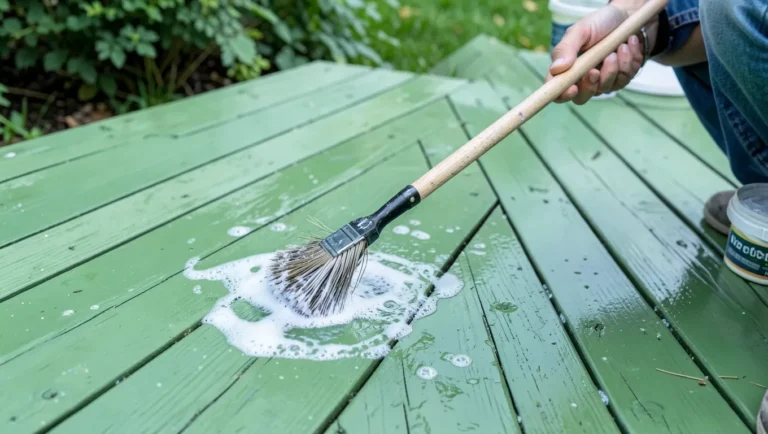
Sealing is the single most important maintenance task and the one most homeowners skip — see our full deck stain and sealer guide for product types and application steps. Budget $1.50–$4.50 per square foot every 2–3 years, plus an annual clean with a mild soap and stiff brush to clear dirt and algae before it stains the wood. Check for loose or popped fasteners at the same time — catching one loose board early is a five-minute fix; ignoring it usually turns into a full board replacement.
Safety First
Wear gloves when handling pressure-treated lumber, since the copper-based preservative can irritate skin with repeated contact, and never burn pressure-treated offcuts — the smoke concentrates the preservative chemicals. Use a level on every post and joist as you go; a deck that’s slightly out of level at the framing stage only gets worse, not better, once boards are on top of it.
“The number one deck cost mistake we see isn’t the lumber choice, it’s undersized footings — poured too shallow or too narrow for the region’s frost line. It doesn’t show up on day one. It shows up as a wobbly deck two winters later, and re-pouring footings under a finished deck costs far more than getting them right the first time.”
— WoodworkingAdvisor.com team
Frequently Asked Questions
How much does a pressure-treated deck cost per square foot?
$25 to $50 per square foot installed on national average, with a full range of $15 to $75 per square foot depending on deck height, site conditions, and local labor rates. Materials alone run $2–$8 per square foot.
Why are deck costs higher in 2026?
A 10% Section 232 tariff on softwood lumber took effect in October 2025, and Canadian softwood duties rose from 14.38% to 35.19% over the same period, alongside a higher Canadian carbon tax starting January 2026. Combined, these have pushed deck-lumber material costs roughly 8–15% above early-2025 pricing.
How long does pressure-treated wood last?
10 to 25 years with proper care, including resealing every 2–3 years. Lifespan drops significantly if the deck is never sealed or if drainage under the deck is poor.
Do I need a permit to build a deck?
Yes, in most jurisdictions, for any deck with in-ground footings or that’s attached to the house. Permit fees typically run $50–$250. Check with your local building department before digging, since requirements vary by height and footprint.
Can I build a deck myself to save money?
Yes, DIY is realistic for a ground-level deck with basic tools and a weekend or two, and it saves the labor portion of the bill — typically 60–70% of total cost. Second-story or complex multi-level decks are a better fit for a licensed contractor given the structural stakes.
Is pressure-treated wood cheaper than composite decking?
Yes, pressure-treated wood typically costs 30–40% less to install than composite. Composite narrows the gap over 15–20 years by avoiding resealing costs, but pressure-treated wins on upfront budget every time.
How often should I seal a pressure-treated deck?
Every 2 to 3 years, at $1.50–$4.50 per square foot. Sealing sooner rather than later prevents the checking and warping that leads to costly board replacement.
Conclusion
A pressure-treated wood deck remains the most budget-friendly way to add real outdoor living space, at $25–$50 per square foot installed and roughly 95% resale recovery nationally. Measure your space, get real contractor quotes instead of relying on averages, and don’t cut corners on footings or fasteners — that’s where a budget deck either holds up for decades or turns into an expensive repair.
Sponsored / affiliate links. As an Amazon Associate I earn from qualifying purchases. I may earn additional commission from eligible campaigns.