70 vs. 72 Link Chainsaw Chain: How to Tell Which One Your Saw Needs
If you’re staring at a parts-store shelf trying to decide between a 70-link and a 72-link chainsaw chain, here’s the short answer: you’re not actually choosing based on preference. Drive link count isn’t a “beginner vs. pro” decision like some guides suggest – it’s a fixed spec tied to your exact bar and sprocket, and picking the wrong one means the chain either won’t fit around the bar at all or won’t tension properly. The real question isn’t “which cuts better,” it’s “which one does my saw actually need,” and the answer is usually stamped right on your bar or your old chain.
70 vs. 72 Link Chainsaw Chain: The Quick Answer
A 70-drive-link (70DL) and a 72-drive-link (72DL) chain are most often seen on saws with a “20-inch” bar – and that’s exactly where the confusion starts. Two bars can both be labeled 20 inches and still need a different chain length, because the drive-link count depends on how the bar is shaped and where it mounts on the powerhead, not just the tip-to-tail measurement. Homelite, Olympic, and many Echo-style 20-inch bars commonly run a 70DL chain, while Husqvarna- and Stihl-pattern 20-inch bars in 3/8-inch pitch typically run 72DL. Neither number is “better” – they simply aren’t interchangeable on the wrong bar.
Best Tool For Converting Chain Length
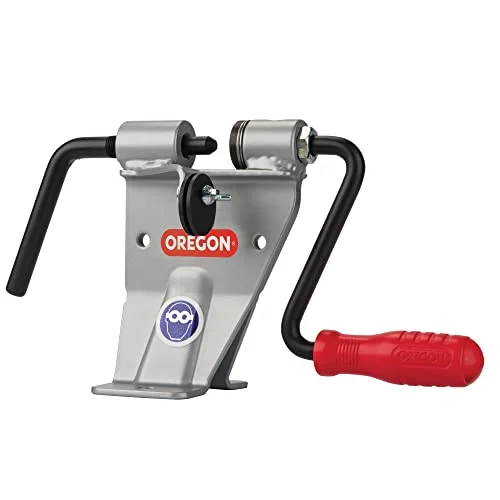 |
Oregon 24549B Bench Rivet Spinner – $87.78 If you’ve got a 72DL loop and your saw actually needs 70DL (or vice versa), you don’t need to buy a whole new chain – a rivet spinner lets you break the loop, remove or add the right number of links, and re-rivet it to the exact count your bar needs.
|
Why Two “20-Inch” Bars Can Need a Different Chain
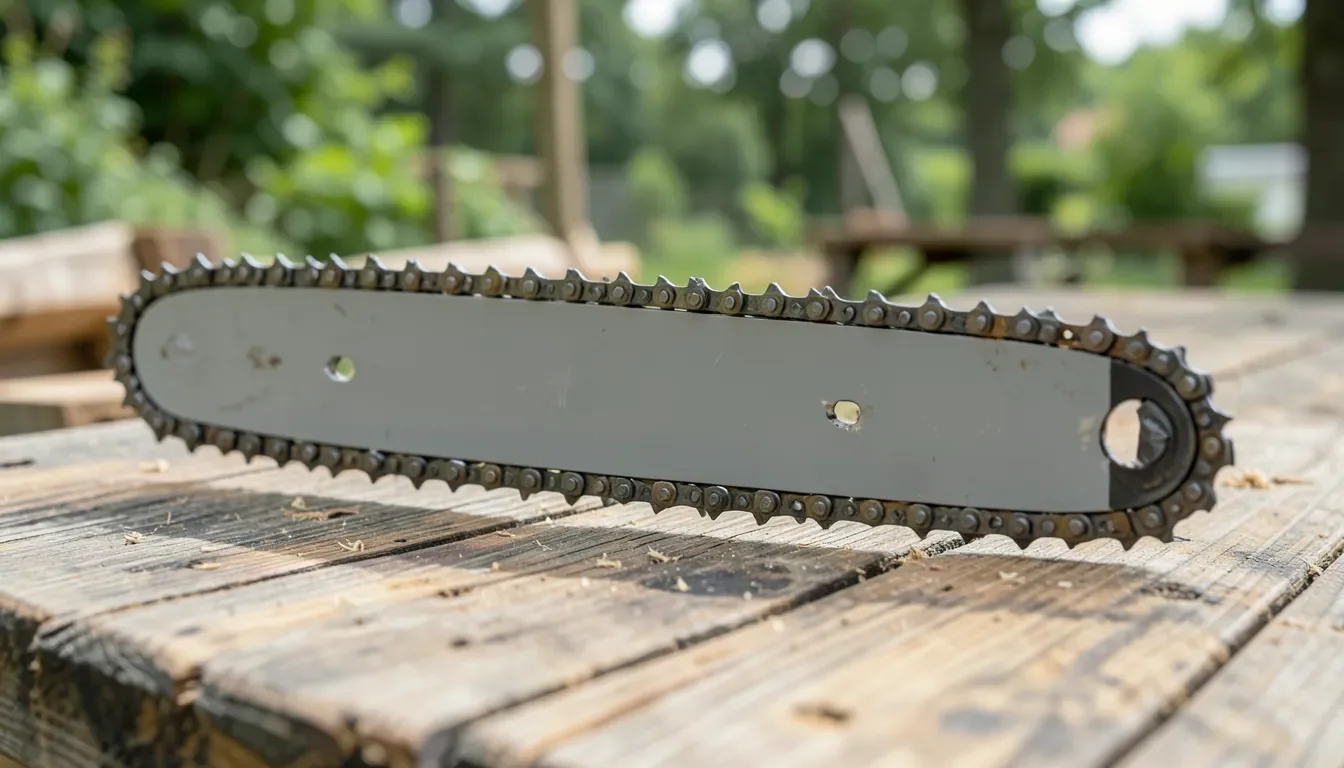
This is the part most chain-buying guides skip entirely. A guide bar’s stated length is measured from the tip to the point where it exits the saw’s clutch cover – it doesn’t account for how far the bar’s tail sits inside the powerhead, how far forward or back the drive sprocket is mounted, or whether the bar uses a sprocket nose versus a solid nose. Two manufacturers can both round their measurement to “20 inches” while building bars with a slightly different working loop length. A bar that mounts a bit closer to the sprocket needs fewer links to close the loop; a bar that sits a bit farther out needs more.
That’s the actual reason 70DL and 72DL both exist at the same nominal bar length – not because one is a “homeowner” chain and the other is a “professional” chain, which is a myth repeated across a lot of chainsaw content. Chain manufacturers like Oregon confirm this with published drive-link scale charts that list several valid link counts for the same stated bar length, sorted by pitch and gauge, precisely because bar geometry varies by brand and even by bar model within the same brand.
Drive Link Count by Bar Length, Pitch, and Gauge
Drive link count is never a standalone number – it only means something alongside pitch (the distance between chain links) and gauge (the thickness of the drive link that sits in the bar’s groove). The table below shows commonly used combinations, but treat it as a starting reference, not a substitute for checking your own saw – the same bar length legitimately ships with more than one valid link count depending on the brand.
| Bar Length | Pitch | Gauge | Typical Drive Links |
|---|---|---|---|
| 14 in | 3/8″ Low Profile | .050″ | 52 DL |
| 16 in | 3/8″ Low Profile | .050″ | 55 DL (55–57 DL depending on bar) |
| 16 in | .325″ | .050″ | 66 DL |
| 18 in | .325″ | .050″ | 72 DL |
| 20 in | 3/8″ (standard) | .050″ / .058″ | 70 DL or 72 DL, depending on bar/brand |
| 20 in | .325″ | .050″ | 78–80 DL |
Notice the 20-inch, 3/8-inch pitch row: that’s your 70-vs-72 comparison, and it’s genuinely brand-dependent rather than a fixed rule. If your saw’s pitch is actually .325 inch instead of 3/8 inch, don’t use link counts from the 3/8-inch rows – the two pitches aren’t interchangeable even at the same bar length, which is a separate spec covered in our .325 vs 3/8 chain pitch guide. And if you’re not sure whether a 16-inch or 18-inch bar is even the right size for your work in the first place, that’s a different decision covered in our 16-inch vs. 18-inch chainsaw guide.
How to Find Your Saw’s Actual Drive Link Count
Don’t guess based on how the saw is used or how “powerful” you want it to feel – there are three reliable ways to get the real number, in order of preference:
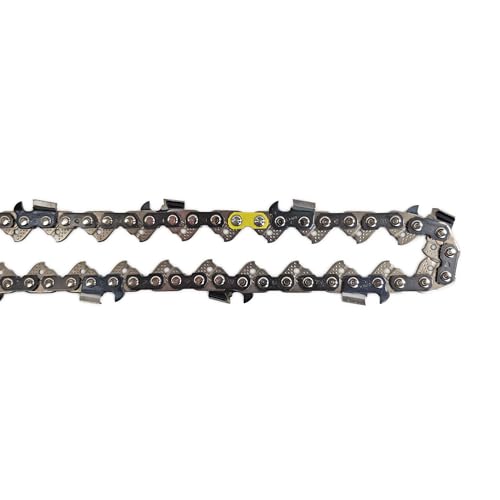
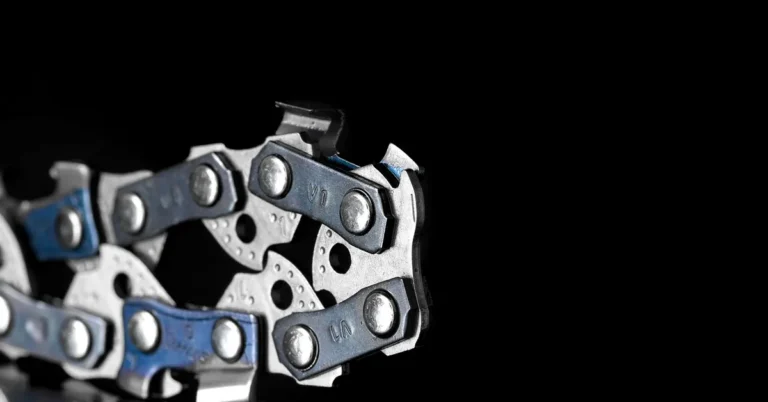
- Read the stamp on your old chain. Chain manufacturers stamp a size code directly onto the drive links (often something like “72LGX070” or similar), where the trailing number typically encodes the drive-link count. This is the single most reliable source, because it reflects the chain that’s already proven to fit your bar.
- Check the underside of your guide bar. Most bars have the pitch, gauge, and sometimes the drive-link count stamped near the mounting slot. If the count isn’t listed, the pitch and gauge alone will narrow your chain choice to one or two valid link counts.
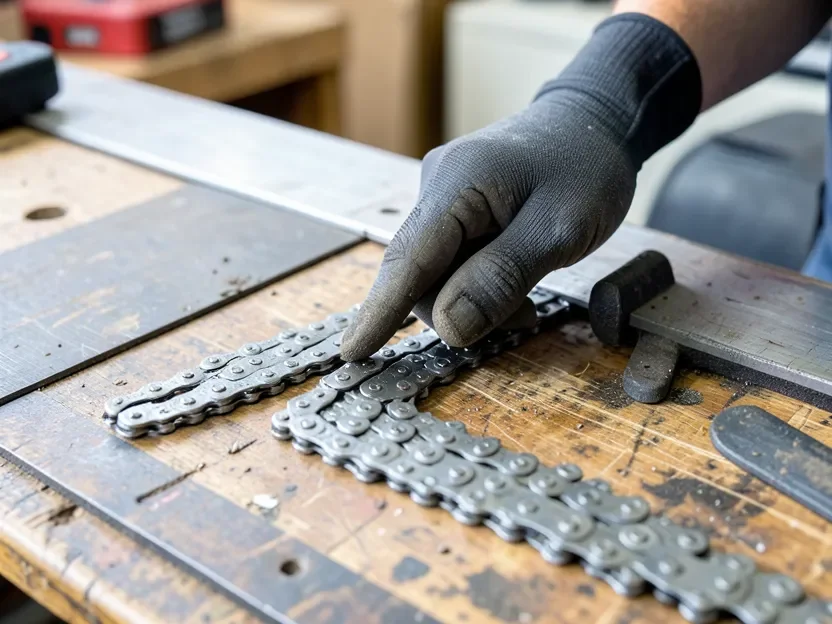
- Count the drive links on your existing chain by hand. Lay the old chain flat, mark a starting drive link with a paint pen, and count every drive link (the small tab that rides in the bar’s groove, not the cutting tooth) all the way around the loop back to your mark. Do this on a chain that’s still intact, not a broken or heavily worn one, since a stretched chain can throw the count off.
If none of those are available – say, the bar came with a used saw and the original chain is long gone – measure your bar’s overall length in inches, note the pitch and gauge if they’re stamped anywhere, and cross-reference a manufacturer’s chain-fit lookup (Oregon, Stihl, and Husqvarna all publish one) using your saw’s brand and model rather than the bar length alone.
What Happens If You Use the Wrong Count
This isn’t a minor fit issue you can adjust around. A chain with too few drive links for your bar will be physically too short to wrap around the bar and sprocket – it simply won’t close the loop. A chain with too many drive links will close, but you’ll run out of adjustment on the tensioning screw before the chain sits snug against the bar’s rails, leaving it permanently loose. A loose chain can jump the bar’s rails mid-cut, which is a genuine safety hazard, not just an inconvenience – it’s one of the more common causes of a chain derailing while the saw is running.
If a chain you just bought won’t tension properly on a bar it’s supposedly rated for, don’t force it or assume the bar is defective – double-check the drive-link count, pitch, and gauge against what’s stamped on your old chain or bar first. It’s a far more common explanation than a bad bar.
Does Link Count Alone Change Cutting Speed or Power?
Not directly, and this is where a lot of the “70-link is for beginners, 72-link is for professionals” advice online gets it backwards. Drive link count doesn’t set your saw’s cutting speed or power – that comes from the engine or motor’s output, the bar length itself, the chain’s tooth profile (full-chisel cuts more aggressively than semi-chisel or low-profile), and how sharp the chain actually is. A dull 72DL chain will cut slower than a freshly sharpened 70DL chain on the same saw, every time.
Where link count does matter for performance is indirectly, through bar length: since 70DL and 72DL chains are both commonly paired with 20-inch bars, whichever one your saw uses will cut at whatever speed and capacity that 20-inch bar and your saw’s power output allow. The link count itself is just the mechanism that lets the chain physically fit and tension on that bar – it’s a compatibility spec, not a performance tier.
Maintenance and Sharpening: Same Process, Regardless of Count
A 70-link and a 72-link chain are maintained exactly the same way – there’s no separate sharpening technique or schedule tied to link count. File or use a chain sharpener at the same angle stamped on the chain’s cutters (commonly 25° to 35° depending on the chain type), keep the depth gauges filed down as the cutters wear back, and clean and oil the chain after use to prevent rust and stretch. The only maintenance difference between the two is that a longer chain has slightly more total links to inspect for cracked or worn drive tabs, which takes a bit more time but isn’t meaningfully different work.
Chain stretch happens to both counts equally over time as the rivets wear. If your saw starts sagging the chain below the bar’s rails even after you’ve tightened the tensioner to its limit, that’s a sign the chain has stretched past its usable life – not a sign you have the wrong link count.
Frequently Asked Questions
Does the number of links matter on a chainsaw chain?
Yes – drive link count determines whether a chain physically fits and tensions correctly on your specific bar and sprocket. It has to match your bar’s pitch, gauge, and working length; a chain with the wrong count either won’t close the loop or won’t tension properly, regardless of how “good” the chain is otherwise.
What does the 72 mean on a chainsaw chain?
The 72 refers to the chain’s drive link count – the total number of drive links (the tabs that ride in the bar’s groove) around the full loop. It’s typically part of a longer size code that also encodes pitch and gauge, and it must match your bar exactly for the chain to fit and tension.
Is a 70-link chain the same length as a 72-link chain?
No. At the same pitch, a 72-link chain is physically longer than a 70-link chain because it has two additional drive links in the loop. They’re generally not interchangeable on the same bar – a bar built for a 70DL chain won’t have enough tensioning adjustment left to properly fit a 72DL chain, and a 72DL bar won’t let a 70DL chain close the loop at all.
How do I know if I need a 70 or 72 drive link chain?
Check the size code stamped on your old chain’s drive links, look for a stamp on the underside of your guide bar near the mount, or count the drive links on your existing chain by hand. Don’t decide based on bar length alone – brands like Husqvarna and Stihl commonly use 72DL on a 20-inch bar, while Homelite, Olympic, and many Echo-style 20-inch bars commonly use 70DL.
Bottom Line
Skip the “70 for beginners, 72 for pros” framing – it’s not how drive link count actually works. Match the chain to your bar’s stamped pitch, gauge, and drive-link count (or count your old chain by hand), and both options will perform identically for their intended bar. Get the count wrong and you’re looking at a chain that either won’t fit or won’t tension safely, no matter which number you picked.
Sponsored / affiliate links. As an Amazon Associate I earn from qualifying purchases. I may earn additional commission from eligible campaigns.