AdvanTech Flooring vs Plywood: Which Subfloor Wins?
Choosing the right subfloor can feel tricky when you’re starting a home project. You want your floors to be strong and last a long time, but sometimes the options sound complicated. Many people wonder about AdvanTech Flooring vs Plywood: Which Subfloor Wins? It’s a common question! Don’t worry, this guide will make it simple. We’ll break down the differences step-by-step so you can feel confident about your decision. Let’s figure out what works best for your home.
AdvanTech Flooring vs Plywood Which Subfloor Wins
Deciding between AdvanTech flooring and traditional plywood for your subfloor is a big choice for any building project. Both have been used for ages, but they offer different things. This section will help you see how they stack up. We’ll look at what makes each one good and where they might fall short. This way, you can pick the best option for your needs.
What Is AdvanTech Flooring
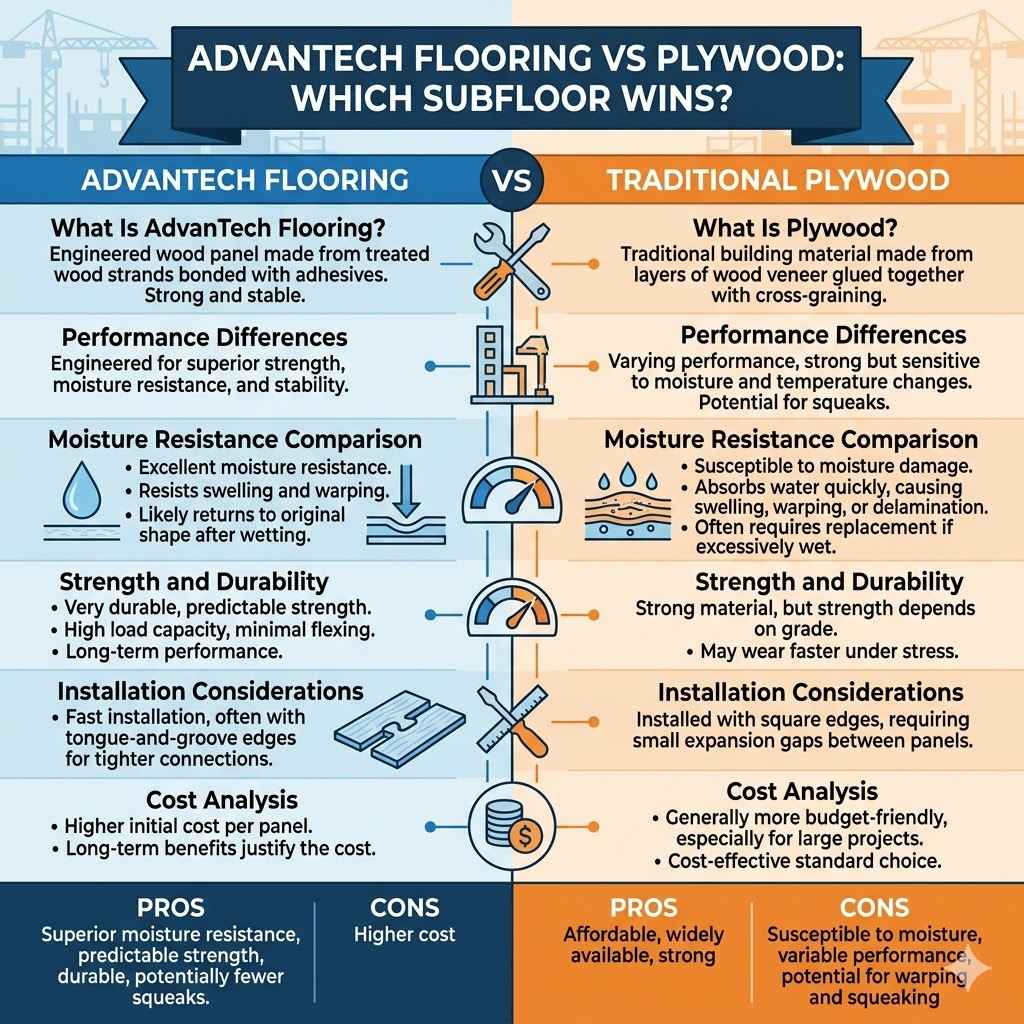
AdvanTech is a brand of engineered wood subflooring. It’s made from specially treated wood strands. These strands are bonded together with adhesives under high pressure. This process creates a very strong and stable panel.
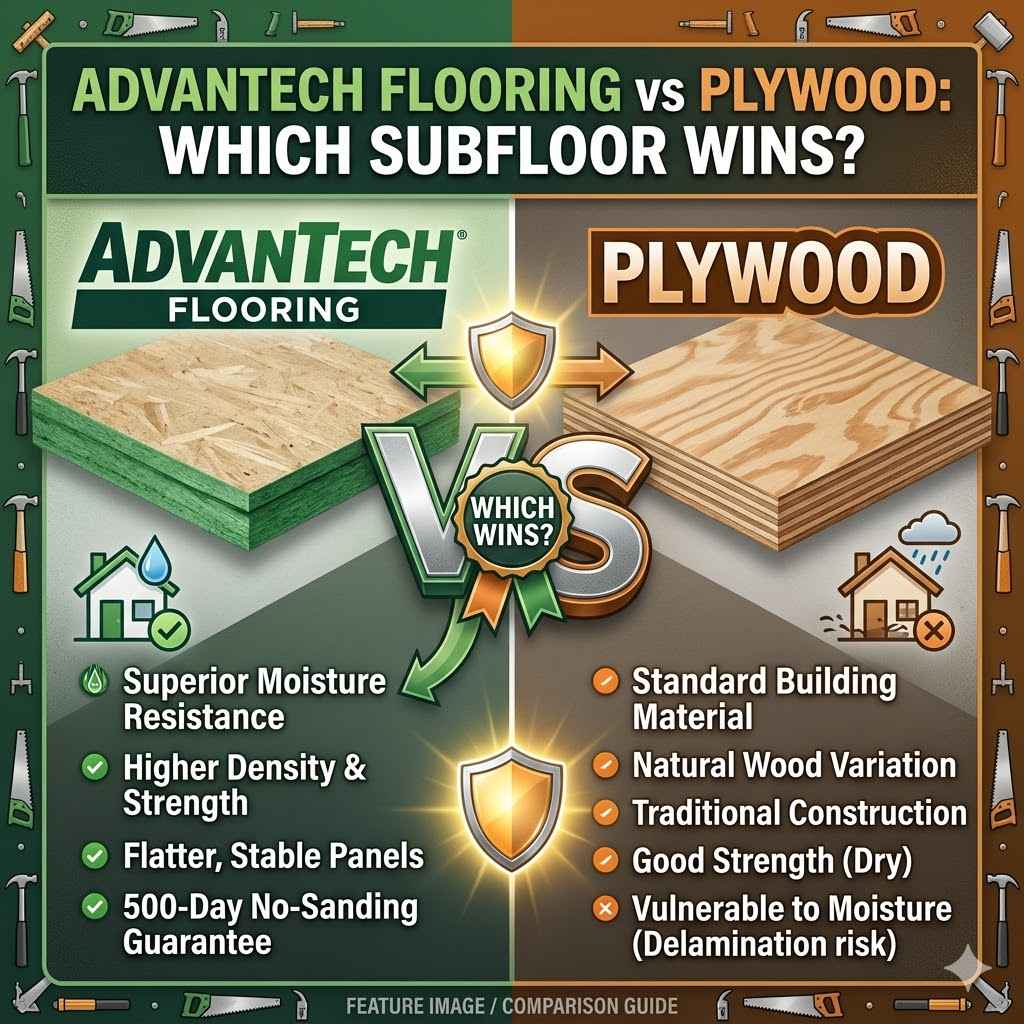
AdvanTech panels are known for their strength and resistance to moisture. They are designed to not warp or swell as much as regular plywood when they get wet. This makes them a popular choice for areas where moisture might be a concern.
The panels are also engineered for consistent performance. This means they have fewer knots and voids than plywood. This leads to a quieter floor and fewer squeaks over time. They are also easy to cut and install.
What Is Plywood
Plywood is a popular building material made from thin layers of wood veneer. These veneers are glued together with their grain running in different directions. This cross-graining makes plywood strong and less likely to split.
Plywood has been a standard for subflooring for many years. It is readily available and generally more affordable than AdvanTech. It comes in different grades and thicknesses to suit various building needs.
However, plywood can be more susceptible to moisture damage. It can swell, warp, or delaminate if exposed to water for too long. This is why it’s important to protect plywood subfloors from moisture.
Performance Differences: AdvanTech Flooring vs Plywood
When you look at how AdvanTech and plywood perform, there are clear differences. AdvanTech is engineered for superior strength and moisture resistance. It’s made to be a more stable product.
Plywood is strong too, but its performance can vary more. It’s more sensitive to water and temperature changes. This can lead to issues like squeaking or unevenness over time if not properly maintained.
AdvanTech often comes with a warranty that covers things like edge swells. This offers extra peace of mind. Plywood typically doesn’t have such specific warranties for its performance in damp conditions.
Moisture Resistance Comparison
Moisture is a big enemy of subflooring. AdvanTech is built to fight off moisture better than standard plywood. Its manufacturing process and the types of wood used help it resist swelling.
If you spill some water on AdvanTech, it’s less likely to be ruined. It might still need to dry out, but it’s more likely to return to its original shape. This is a big plus for basements or bathrooms.
Plywood, on the other hand, can absorb moisture quickly. This can cause it to expand, leading to a bumpy floor or even structural problems. Once plywood swells, it can be very hard to fix. It might need to be replaced.
Strength and Durability
Both AdvanTech and plywood are strong materials. However, AdvanTech is often seen as more durable over the long run, especially in challenging conditions. Its engineered nature means it has a more predictable strength.
AdvanTech panels are made to support heavy loads without flexing. They provide a solid base for your finished floors. They are less prone to issues like cracking or breaking under stress.
Plywood’s strength can depend on its grade and how it was manufactured. While it’s a strong material, it might show wear and tear more readily than AdvanTech. Especially in high-traffic areas or under heavy furniture.
Installation Considerations
Installing both AdvanTech and plywood subflooring is similar. They are both installed over floor joists using screws or nails. The process involves laying the panels and securing them firmly.
However, AdvanTech panels are often designed with tongue-and-groove edges. This system helps create a tighter, more solid connection between panels. It can also make installation faster and easier.
Plywood panels have square edges. This means there’s a small gap needed between them for expansion. This gap can sometimes be a place where dust and debris collect.
Cost Analysis
When comparing costs, plywood is generally the more budget-friendly option. It has been the go-to for decades because it’s cost-effective for large projects.
AdvanTech flooring is typically more expensive per panel. The higher cost reflects its advanced manufacturing process and superior performance characteristics. For many, the added cost is worth the long-term benefits.
The total cost also depends on the project size and specific product chosen. It’s important to compare prices for the exact type and thickness of material needed.
AdvanTech Flooring vs Plywood Which Subfloor Wins For Your Project
Now that we know what AdvanTech and plywood are, let’s talk about which one is better for your specific project. The answer really depends on what you need your subfloor to do. Think about where you’re building and what kind of floors you plan to put on top.
Choosing For High-Moisture Areas
If you are building in an area where moisture is a common problem, like a basement or bathroom, AdvanTech is usually the smarter choice. Its ability to resist swelling and warping when wet is a huge advantage. You won’t have to worry as much about future problems like mold or rot.
Plywood can work in these areas, but it requires extra care. You might need to add special moisture barriers or sealants. Even then, it’s still more at risk than AdvanTech. For peace of mind in damp places, AdvanTech stands out.
Best Subfloor For Durability
For a subfloor that needs to stand up to a lot of use and last for many years, both can be good. However, AdvanTech’s engineered design often gives it an edge in long-term durability. It’s built to be strong and stable under continuous stress.
This means it will likely remain a solid foundation for your flooring for the lifetime of your home. It’s less likely to develop squeaks or other issues as it ages. If you want a floor that will stay quiet and firm for decades, AdvanTech is a strong contender.
When Budget Is The Main Factor
If your budget is tight and you need to save money on materials, plywood is likely the way to go. It’s significantly cheaper than AdvanTech. You can cover a large area with plywood for less money than it would cost to use AdvanTech.
However, remember that a lower upfront cost might mean more maintenance or potential repair costs down the line. Especially if moisture or heavy traffic is a concern. Always consider the total cost of ownership.
AdvanTech Flooring vs Plywood For DIYers
For those tackling a project themselves, both are manageable. AdvanTech’s tongue-and-groove system can make installation a bit easier. It helps panels fit together snugly without big gaps. This can lead to a faster build.
Plywood is also very easy to work with. It’s forgiving and familiar to most DIYers. The main difference is managing the expansion gaps and ensuring good adhesion. Both require careful measurement and secure fastening.
What About Sound Dampening
A good subfloor helps keep your home quiet. It reduces noise from footsteps and other impacts. AdvanTech is known for providing a quieter floor compared to standard plywood. Its denser construction helps absorb sound.
This is because AdvanTech panels are made with fewer voids and a more uniform structure. This means there are fewer places for air pockets that can transmit sound. When you walk on an AdvanTech subfloor, it feels solid and quiet.
Plywood can also offer sound dampening, but it can be less consistent. The quality of the plywood and how it’s installed can affect how well it reduces noise. Adding an underlayment can help improve soundproofing with either material.
Understanding Subfloor Strength And Stability
A subfloor’s main job is to be a strong and stable base for your finished flooring. This foundation supports everything from furniture to people walking around. When we talk about strength and stability, we mean how well it holds up under weight and how much it moves with changes in temperature and humidity.
AdvanTech is engineered to be very stable. This means it doesn’t expand or contract much when the weather changes. It’s made in a way that makes its strength very predictable. This is why it’s a preferred material for many builders.
Plywood’s strength is also good, but it can be more variable. Wood naturally moves with the environment. So, plywood can sometimes warp or twist if it gets too wet or too dry. This movement can cause finished floors to crack or buckle.
Joist Spacing And Subfloor Strength
The distance between your floor joists is really important for subfloor strength. Joists are the beams that support the floor. If your joists are far apart, your subfloor needs to be stronger to span the distance without sagging.
AdvanTech flooring is often rated for specific joist spacing, like 16 inches on center or even 19.2 inches on center for certain products. This means it can handle longer spans without extra support. It’s designed to prevent floor deflection, which is when the floor bends.
Plywood also has recommendations for joist spacing. Usually, it’s 16 inches on center for a standard 3/4-inch thick panel. If you have wider spacing, you might need a thicker plywood or add more support. Using the wrong thickness or spacing can lead to a bouncy or squeaky floor.
The Role Of Underlayment
An underlayment is a layer that goes between the subfloor and the finished flooring. It can add comfort, sound insulation, and moisture protection. It also helps to smooth out any minor imperfections in the subfloor.
With AdvanTech, an underlayment might still be recommended, especially for certain types of finished floors like laminate or luxury vinyl plank. It can enhance the performance and comfort of the floor. However, AdvanTech’s own properties often mean less need for specific subfloor preparation than with plywood.
For plywood subfloors, an underlayment is often more crucial. It can help bridge small gaps, reduce squeaks, and provide a smoother surface for the finished floor. It’s especially important if the plywood is not perfectly flat or smooth.
Dealing With Floor Squeaks
Floor squeaks are often caused by movement between the subfloor and the joists, or between subfloor panels themselves. This happens when fasteners loosen or the wood shifts. It’s a common annoyance for homeowners.
AdvanTech flooring’s design and installation method, often using subfloor adhesive and screws, help to create a very tight bond. This tight bond between panels and to the joists greatly reduces the chances of squeaks developing.
Plywood subfloors can sometimes develop squeaks over time. Proper installation with plenty of screws and subfloor adhesive is key to minimizing this. Sometimes, squeaks in plywood can be fixed by driving screws into the area or using special squeak-repair kits.
AdvanTech vs Plywood For Different Finished Floors
The type of finished flooring you plan to install can influence your subfloor choice. For example, some very thin or sensitive flooring might require a perfectly flat and stable subfloor.
AdvanTech provides a consistently flat and stable surface that works well for almost any type of finished flooring. This includes hardwood, tile, laminate, and vinyl. Its strength and moisture resistance make it versatile.
Plywood is also a good base for most finished floors. However, for very delicate flooring like high-gloss laminate or certain types of tile, ensuring the plywood is perfectly smooth and stable is very important. Any unevenness in the plywood could show through the finished floor.
Case Studies And Real-World Examples
To really understand the difference between AdvanTech and plywood, looking at real projects helps. These examples show how each material performed in actual homes.
Case Study 1 A Basement Renovation
A homeowner decided to finish their basement. This area was prone to dampness. They chose AdvanTech subflooring for the entire basement floor.
The installers reported that the panels were easy to work with. They noticed that the AdvanTech didn’t seem to absorb moisture from the concrete slab below as much as other wood products might. After a year, the basement floor remained flat and solid. There were no signs of warping or moisture damage, even after a minor pipe leak that was quickly cleaned up.
Case Study 2 A New Home Build On A Budget
A couple was building a new home and had a tight construction budget. They opted for standard plywood for their subflooring throughout the house. They made sure to use a good quality, exterior-grade plywood and followed all installation best practices, including using subfloor adhesive and plenty of screws.
Over the years, they’ve had a few minor issues. In one area near a bathroom, a small spill caused a slight swelling of the plywood. They were able to sand it down, but it was an extra step. They also occasionally hear faint creaks when walking across certain areas, which they attribute to minor movement in the subfloor.
Example Scenario 1 High-Traffic Family Room
Imagine a busy family room where kids and pets often play. This floor needs to be tough and able to handle a lot of walking and furniture.
If you used AdvanTech, you’d likely have a very durable and quiet floor for years. The panels are designed to resist wear and tear and provide a solid base that doesn’t flex. This means fewer worries about damage or noise.
If you used plywood, it would also be a strong base. However, over time, you might notice more wear. The floor could become more prone to squeaks or minor dents depending on the quality of the plywood and the amount of traffic.
Example Scenario 2 A Workshop Floor
Consider a workshop where heavy tools might be dropped or moved around. This area needs a subfloor that can take a beating.
AdvanTech’s strength and density make it a good choice here. It can withstand impacts and heavy loads without significant damage. Its moisture resistance is also a plus if spills are common in a workshop.
Plywood could also work, but you might need to use a thicker grade. You’d also want to ensure it’s well-sealed to protect against spills and potential damage from tools.
AdvanTech Flooring vs Plywood What Professionals Say
Many professional builders and contractors have strong opinions on subflooring. Their experience in building many homes gives them valuable insights into what works best.
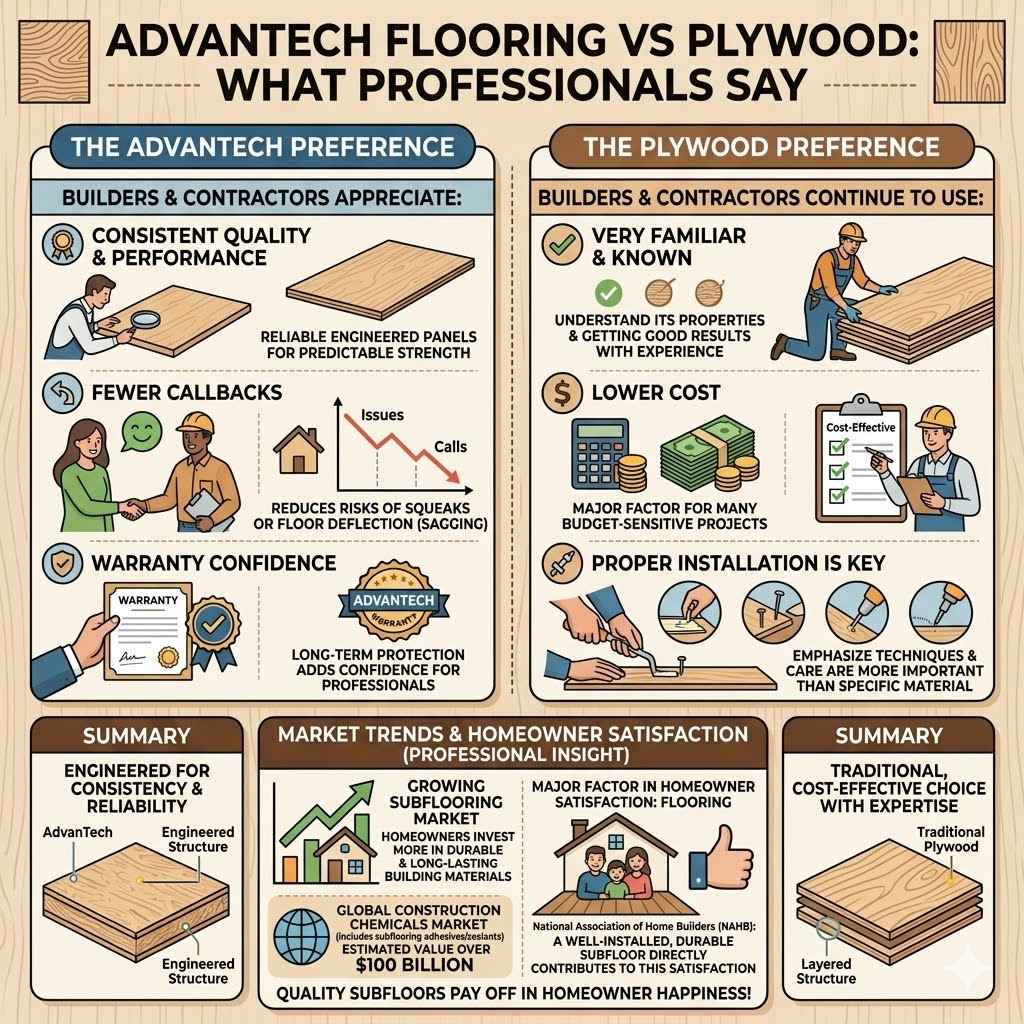
Some professionals prefer AdvanTech because of its consistent quality and performance. They appreciate that it leads to fewer callbacks for issues like squeaks or floor deflection. The warranty offered by AdvanTech also gives them confidence.
Other professionals continue to use plywood because they are very familiar with it. They know how to work with it to get good results, and its lower cost is a major factor on many projects. They emphasize proper installation techniques as being more important than the specific material.
Statistics show that the subflooring market is growing. Homeowners are investing more in durable and long-lasting building materials. A report by Grand View Research estimated the global construction chemicals market, which includes adhesives and sealants used in subflooring, was valued at over $100 billion. This highlights the importance of quality materials in building projects.
Another statistic from the National Association of Home Builders (NAHB) indicates that flooring is a major factor in homeowner satisfaction. A well-installed, durable subfloor directly contributes to this satisfaction. This suggests that investing in a quality subfloor can pay off in homeowner happiness.
Frequently Asked Questions
Question: Is AdvanTech significantly more expensive than plywood?
Answer: Yes, AdvanTech is generally more expensive per panel than standard plywood. The higher cost reflects its engineered properties and performance benefits.
Question: Can I install tile directly on AdvanTech subflooring?
Answer: Yes, AdvanTech provides a stable and strong base that is suitable for tile installation. However, always check the tile manufacturer’s specific recommendations for subfloor requirements and any needed underlayment.
Question: Does plywood subflooring need to be sealed before installing finished floors?
Answer: It is highly recommended to seal plywood subflooring, especially if moisture is a concern or if you are installing moisture-sensitive flooring like vinyl. Sealing helps protect the plywood and provides a smoother surface.
Question: How much longer does AdvanTech flooring typically last compared to plywood?
Answer: While difficult to put an exact number on lifespan, AdvanTech is designed for superior durability and resistance to moisture and wear, meaning it is likely to last longer and maintain its integrity better than plywood in many conditions.
Question: Which subfloor is better for preventing floor squeaks?
Answer: AdvanTech flooring is generally better at preventing floor squeaks due to its engineered design and tongue-and-groove system, which creates a tighter bond and reduces movement between panels and joists.
Summary
Choosing between AdvanTech flooring and plywood for your subfloor comes down to your project needs and budget. AdvanTech offers superior moisture resistance and long-term durability, making it ideal for basements or areas prone to spills. Plywood is a more budget-friendly option that works well with proper installation and care. Both can create a solid foundation for your home’s floors.