Painted Plywood Floor Ideas That Actually Hold Up
A painted plywood floor can look like anything from a checkerboard tile floor to a whitewashed cottage floor to a bold geometric statement piece — and it costs a fraction of new flooring. The ideas are the easy part. What actually determines whether the finish lasts five years or peels in five months is the plywood grade you start with, the primer you use, and how long you wait before walking on it. Here’s both.
Start With the Right Plywood, Not Just Any Sheet
Best Paint For Plywood Floors
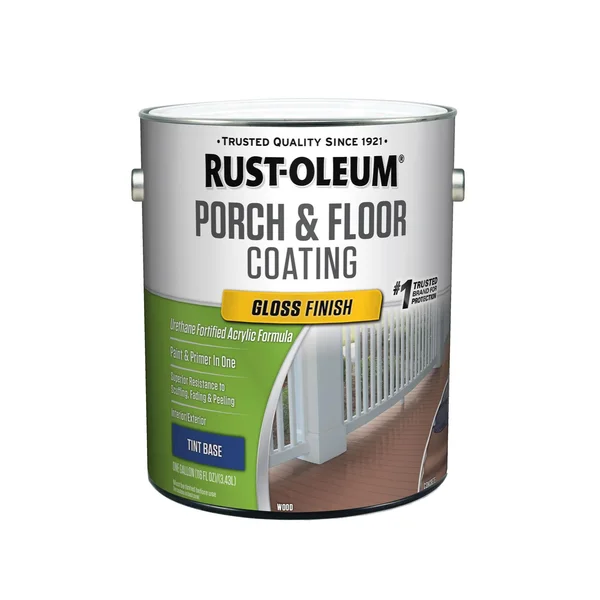 |
Rust-Oleum Porch & Floor Paint – $55 A paint-and-primer-in-one enamel built specifically for foot traffic, with the abrasion resistance a wall paint doesn’t have on a floor.
|
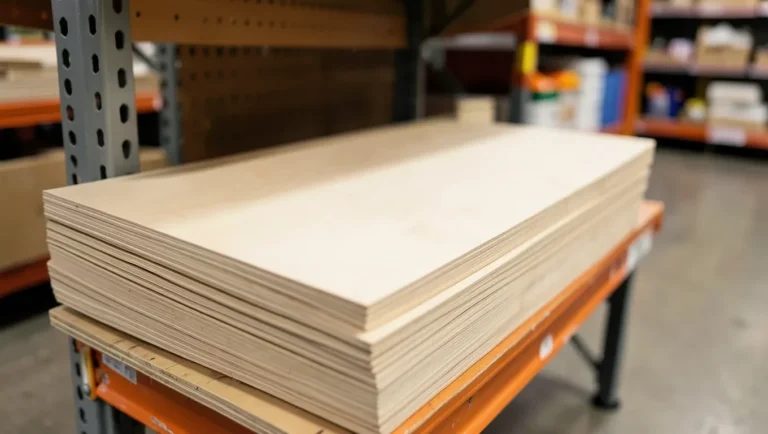
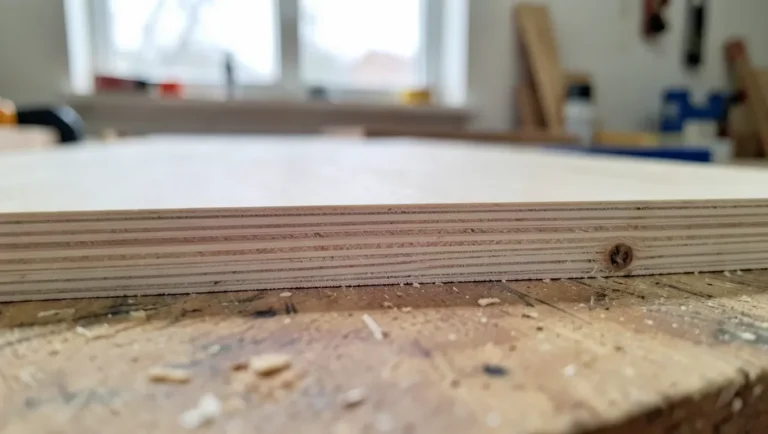
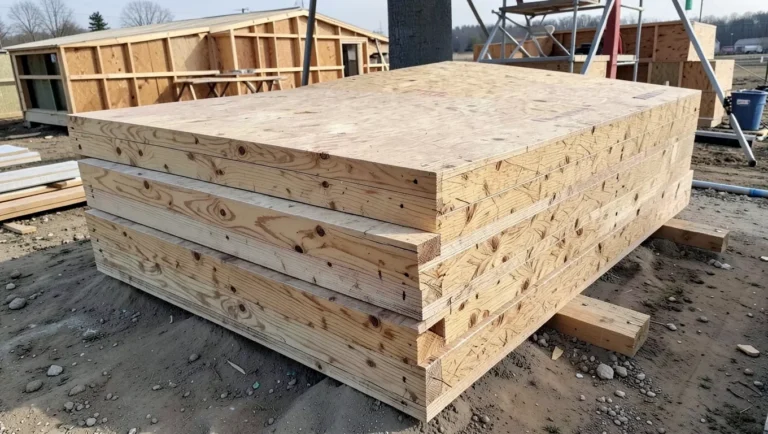
Standard CDX plywood (the stuff sold for roof and wall sheathing) has voids, knots, and a rough face that will telegraph through even several coats of paint. For a floor you’ll actually walk on and want to look intentional, use a sanded, cabinet-grade plywood — often labeled “AC” (A-side smooth, C-side rougher) or Baltic birch for a tighter, void-free surface. If you’re covering an existing subfloor rather than building a new one, a 1/4-inch luan or sanded underlayment panel works as a thin top layer without raising the floor height much.
Fill every screw head, seam, and knot with wood filler before sanding — not after the first coat of paint reveals them. Sand progressively (120 grit, then 220), vacuum thoroughly, and wipe with a tack cloth. Any dust left behind shows up as a rough texture under paint that no amount of extra coats will fix.
The Primer Step Most Painted-Floor Projects Skip
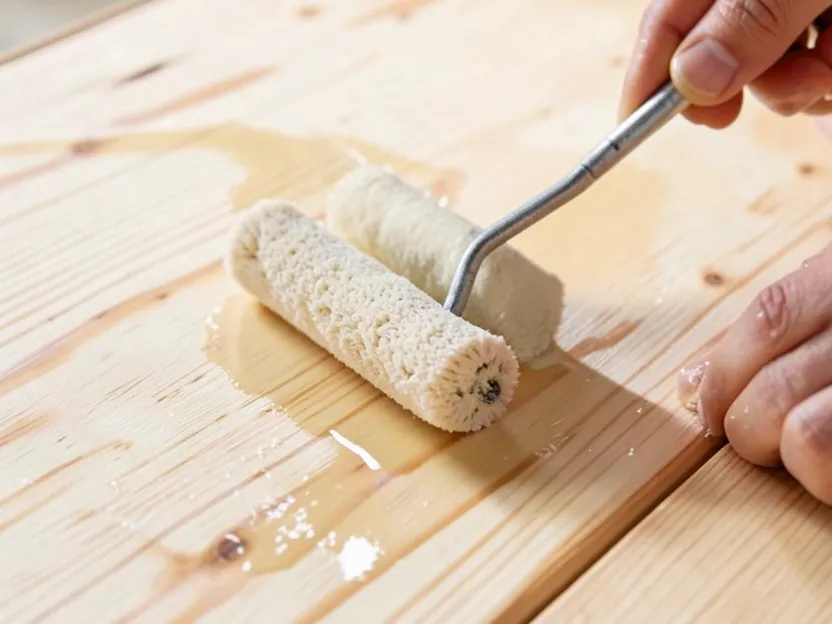
Plywood’s face veneer contains natural tannins and resin pockets around knots that bleed through latex paint over time, showing up as yellow-brown staining weeks or months after the floor looked perfect. A shellac-based or oil-based stain-blocking primer seals that in before it becomes a problem — skipping straight to paint because “it’s just plywood, not real wood” is exactly how those stains happen. Let the primer cure fully per the can’s instructions before the first color coat; primer that’s dry to the touch isn’t necessarily cured enough to bond a topcoat without adhesion problems later.
Six Ideas That Actually Hold Up to Foot Traffic
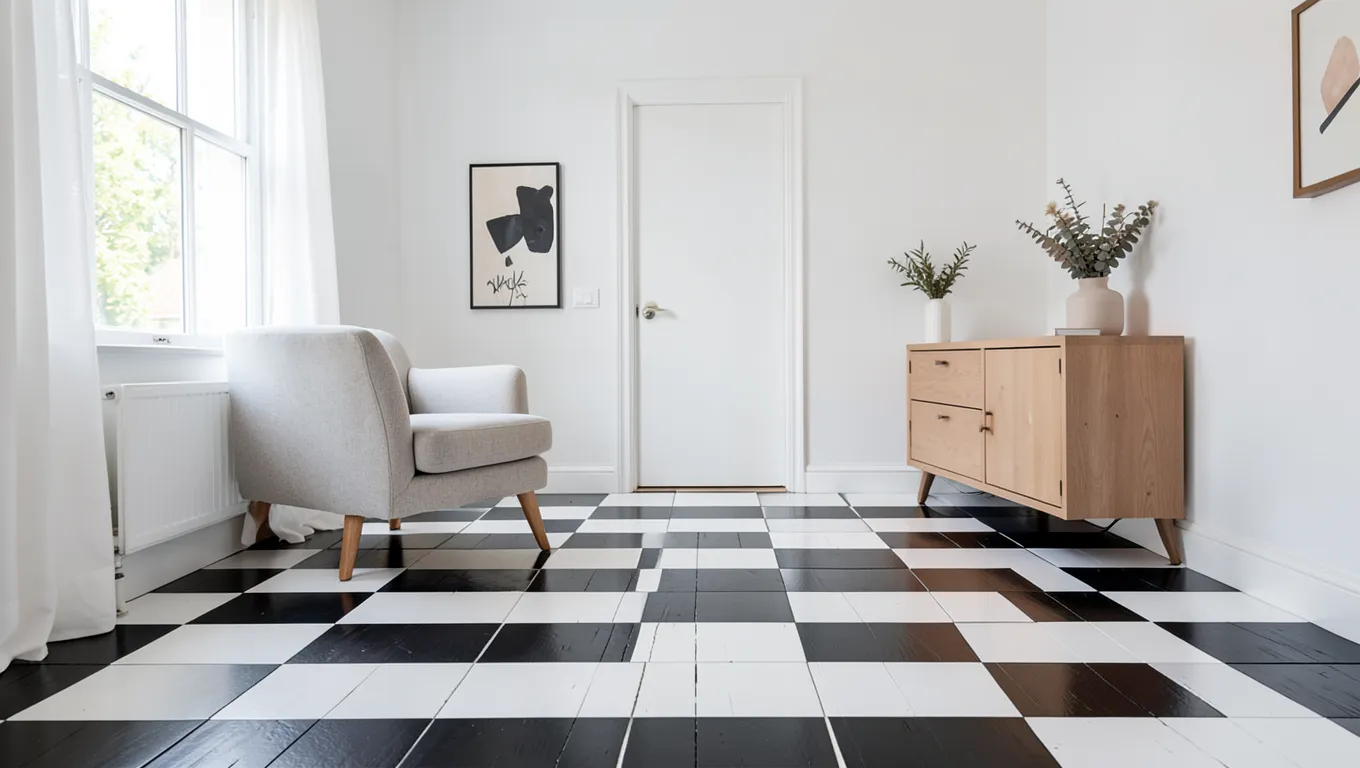
- Painted checkerboard. Tape off a grid and alternate two colors — a classic look that reads as intentional tile from across the room, not “we painted the subfloor.”
- Whitewashed or pickled finish. A heavily thinned white or gray paint wiped back so the plywood grain shows through — forgiving of touch-ups since it’s not a solid opaque color to match perfectly.
- Painted “runner” down a hallway. A single painted stripe or pattern down the center of a hallway or stair tread mimics a stair runner rug without the trip hazard or the vacuuming.
- Faux herringbone using plywood strips. Rip plywood into narrow strips, lay them in a herringbone pattern, then paint or stain as one unified floor — more labor than a stenciled pattern, but the actual seams read as real plank joints instead of a painted illusion.
- Stenciled Mediterranean or cement-tile pattern. A repeating stencil in two or three colors gets the encaustic-tile look at a tenth of the material cost, and it’s forgiving if one tile’s edges aren’t perfectly crisp — the repetition hides small inconsistencies.
- Bold single-color statement floor. A saturated color (deep green, navy, terracotta) in a small room like a mudroom or powder room reads as a deliberate design choice rather than a budget floor, especially with a semi-gloss sheen.
Cure Time Is the Step That Actually Determines Durability
This is the single most common reason a painted plywood floor fails early: the paint feels dry within a few hours, but “dry to the touch” and “fully cured” are not the same thing. A porch-and-floor style enamel typically needs several days before light foot traffic and up to two to four weeks before furniture, area rugs, or anything heavy goes back on top — oil-based formulas generally sit at the longer end of that range. Moving furniture back too soon presses indentations and peeling into a paint film that hasn’t finished hardening, and it won’t heal itself once that happens.
Use rug pads or felt furniture pads once the floor is back in service, and avoid dragging furniture across a painted floor even after full cure — enamel paint scratches more readily than a factory wood finish.
Protect It With a Topcoat, and Watch the Sheen
A porch-and-floor enamel is durable on its own, but adding one to two coats of water-based polyurethane on top meaningfully extends the life of a painted floor in high-traffic rooms — entries, kitchens, hallways — the same way a clear coat protects a car’s paint. It’s an extra step most tutorials leave out, but it’s the difference between repainting in two years and repainting in seven.
Sheen matters for safety, not just looks. A high-gloss floor paint gets genuinely slippery when wet, which matters most in an entryway, mudroom, or bathroom. Satin or matte sheens grip better underfoot; if gloss is the look you want, some floor paints offer a slip-resistant additive that can be mixed in without changing the color.
Frequently Asked Questions
Can you paint any plywood floor, or does it need to be a specific grade?
Use sanded, cabinet-grade plywood (often labeled AC) or Baltic birch rather than construction-grade CDX. CDX has voids, knots, and a rough face that shows through paint no matter how many coats go on.
Do you need to prime plywood before painting a floor?
Yes. A shellac-based or oil-based stain-blocking primer seals in the natural tannins and resin around knots that otherwise bleed through paint as yellow-brown staining weeks or months after the floor is finished.
How long before you can put furniture back on a painted plywood floor?
Plan on several days before light foot traffic and two to four weeks before furniture or rugs, longer for oil-based paints. The paint feels dry to the touch well before it’s fully cured, and putting weight on it too soon causes indentations and peeling.
Should you seal a painted plywood floor with polyurethane?
It’s optional but worth it in high-traffic rooms. One to two coats of water-based polyurethane over the cured paint adds real durability and meaningfully extends the time before the floor needs repainting.
Sponsored / affiliate links. As an Amazon Associate I earn from qualifying purchases. I may earn additional commission from eligible campaigns.
 Baltic Birch Plywood Sheets Box of 45 - Laser Engraving Cutting, Scroll Saw Nature Veneer Color, Stronger Than Basswood, A/A Grade,12 x 12 x 1/8”, 3mm Thickness Perfect for Wood Burning
 Baltic Birch Plywood 1/8'' x 12'' x 18'', 6 Pack, B/BB Grade, Void-Free Core, Laser Cutting Ready, Flat Sheets for CNC, Engraving, DIY Crafts, Art Painting, Wood Burning, Staining