Does Plywood Expand? Myths, Types, and Gap Spacing Guide
Yes, plywood expands and contracts as its moisture content changes – but the amount depends heavily on the grade and glue type, which is exactly what most “yes/no” answers to this question skip. Interior sanded plywood, exterior CDX, and marine-grade plywood do not move the same amount, and the myths repeated across most guides (that plywood is either “totally stable” or “moves just like solid wood”) are both wrong.
This guide focuses on the four myths that trip people up most, how the common plywood grades actually compare, and – the part most articles skip – how much gap to actually leave when you install it, by project type. If you want the exact movement math (inches per 10% moisture-content change, with a full chart), our companion guide on plywood expansion and contraction covers that in depth. Here, the focus is on which myths are false and what to actually do about it.
The Quick Answer: Yes, But It Depends on the Type
All plywood moves with moisture to some degree, because it’s still made of real wood veneers. But the cross-laminated layers mean it moves far less than solid lumber, and the specific grade matters more than most buying guides admit. Before you decide whether that matters for your project, here’s a moisture meter that answers the question that actually determines whether you have a problem: how wet is the sheet right now, not in theory.
Best for Consistent Installation Gaps
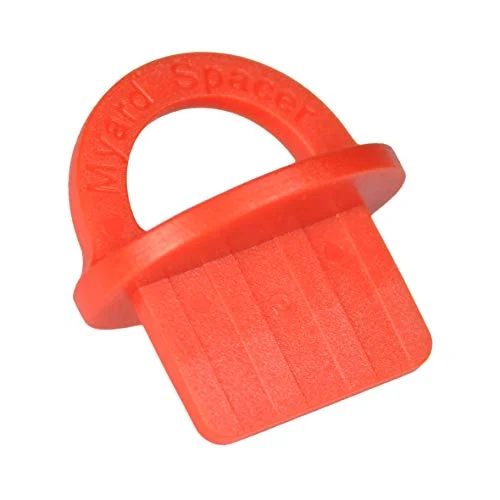 |
Myard 1/8″ Deck Board Jig Spacer Rings, 20-Pack – $16.95 Sets a consistent 1/8-inch gap while you install plywood-based decking or sheathing, so every panel gets the same expansion allowance instead of you eyeballing it.
|
With that out of the way, let’s get into the myths – because most of the confusion around this topic comes from people repeating an oversimplified rule they picked up somewhere else.
4 Myths About Plywood Expansion, Debunked
Myth 1: “Plywood Doesn’t Move Like Real Wood”
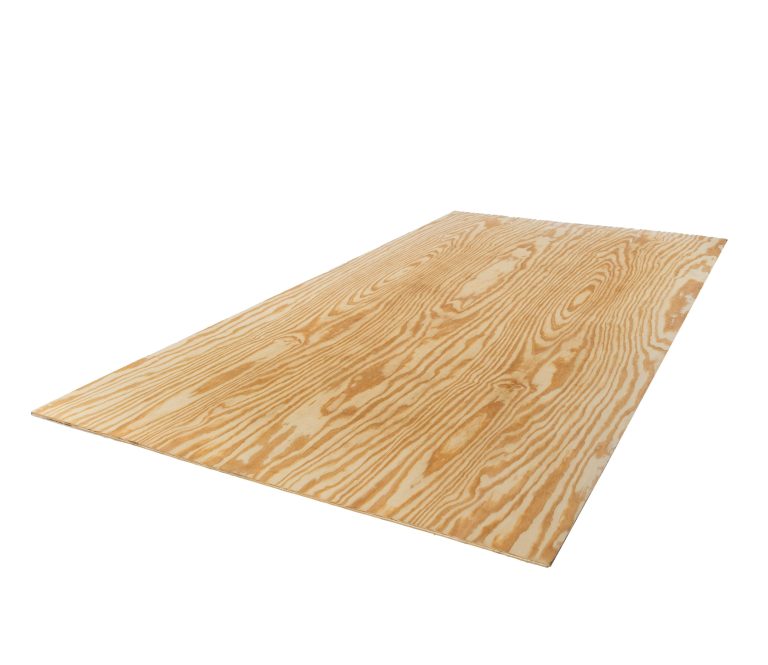
False. Plywood is real wood – thin veneer layers glued with the grain of each layer running perpendicular to the one below it (see exactly how plywood is made for the full process). That cross-lamination cancels out most of the directional swelling that makes solid wood cup and bow, but it doesn’t eliminate movement. The veneers still absorb and release moisture. What changes is how much and how evenly.
Myth 2: “All Plywood Expands the Same Amount”
Also false, and this is the one that causes the most job-site problems. A cheap 3-ply interior underlayment with thin, uneven veneers moves more unpredictably than a 5-ply exterior CDX sheet, and both move differently than marine-grade plywood, which uses void-free veneers and fully waterproof glue specifically to minimize this. Grade and glue type change the answer more than most people assume – see the comparison table below.
Myth 3: “If It’s Sealed, It Won’t Move”
Sealing slows moisture exchange, it doesn’t stop it. Paint, polyurethane, and edge sealant all reduce how fast a sheet picks up or loses moisture, which matters for how quickly a problem shows up, but an unsealed edge, a scratch through the finish, or months of exposure will still let moisture in. Sealed plywood still needs expansion gaps – it just buys you more time before it becomes a visible problem.
Myth 4: “Temperature Is What Causes the Expansion”
Not directly. Wood’s own thermal expansion is tiny – heat and cold barely move it on their own. What actually moves plywood is that temperature changes the surrounding relative humidity, which changes how much moisture the wood fibers hold at equilibrium. A hot, humid crawlspace and a hot, dry attic will do very different things to the same sheet of plywood, even though both are “hot.”
How Different Plywood Types Handle Moisture
This is the part most “does plywood expand” articles skip entirely – they treat plywood as one material, when the grade you buy changes the answer:
| Plywood Type | Typical Glue | Moisture Movement | Best Used For |
|---|---|---|---|
| Interior sanded (BC/underlayment) | Urea-formaldehyde (not waterproof) | Highest – swells and can delaminate if it stays wet | Dry indoor uses only: furniture backs, drawer bottoms |
| Exterior/CDX | Phenol-formaldehyde (water-resistant) | Moderate – handles rain during construction, still needs gaps | Roof sheathing, subfloor, wall sheathing |
| Marine-grade | Fully waterproof, void-free veneers | Lowest of the common grades – most dimensionally consistent | Boat parts, outdoor furniture, constant wet exposure |
| Melamine/laminate-faced | Interior-grade core, sealed face | Low at the face, but edges swell fast once cut and exposed | Cabinets and shelving – seal every cut edge |
The practical takeaway: don’t assume “plywood” behaves one way. Check the grade stamp on the sheet, and match it to the environment the project will actually live in.
How Much Expansion Gap to Leave, by Project
This is the practical question behind most searches for “does plywood expand” – not the theory, but how much room to actually leave so it doesn’t buckle later:
- Subfloor panels: Leave roughly 1/8 inch between panel edges and 1/4 inch around the room’s perimeter – the APA’s standard recommendation for interior sheathing.
- Roof and wall sheathing: Same 1/8-inch panel-edge gap; many sheets now come with H-clips or spacing marks pre-stamped along the edge specifically for this.
- Outdoor decking or fencing panels: 1/8 to 3/16 inch depending on your climate’s humidity swing – wider in humid coastal climates, tighter in consistently dry ones.
- Cabinet doors and shelving: Less about panel-to-panel gaps and more about not trapping the panel rigidly in a frame – leave the edges free to move slightly rather than gluing all four sides.
A pack of color-coded spacer tabs (like the pick above) takes the guesswork out of hitting the same gap consistently across dozens of panels, instead of eyeballing it with a nail or a scrap of cardboard.
Signs Your Plywood Has Already Expanded
If you’re not sure whether movement is already a problem, look for these before you assume it’s fine:
- Ridging along seams: A raised line at panel joints, most common in subfloors under tile or vinyl – usually means panels were installed tight against each other with no gap.
- Cupping or bowing: The sheet is no longer flat across its face – often from uneven moisture exposure (wet on one side, dry on the other).
- Squeaking or slight movement underfoot: Can indicate a subfloor panel has swelled enough to bind against fasteners or neighboring panels.
- Popped nails or screws: Expansion can push fastener heads up over time, especially where no gap was left.
How to Minimize Expansion Problems
- Acclimate before installing. Let plywood sit in the room or environment it will be used in for 48-72 hours before fastening it down, so it reaches equilibrium moisture content first.
- Seal cut edges, not just faces – exposed end grain at a cut edge absorbs moisture far faster than the factory-sealed face.
- Store it flat and off the ground, not leaned against a wall, which lets one side dry faster than the other and causes bowing.
- Match the grade to the environment using the comparison table above, rather than grabbing whatever’s cheapest at the store.
- Keep indoor humidity in a stable range (roughly 30-50%) if the plywood is part of finished interior work like cabinetry or furniture.
Frequently Asked Questions
Does plywood expand with temperature changes?
Only indirectly. Temperature by itself barely moves wood – it’s the humidity shift that usually comes with a temperature change that causes plywood to gain or lose moisture and expand or contract.
How much does plywood expand when wet?
It depends on the grade and how much its moisture content actually changes, but a rough planning figure is about 1/8 inch of movement across a 4-foot panel width per 10% change in moisture content. For the full breakdown with a chart, see our plywood expansion and contraction guide.
Is plywood stable in humid conditions?
More stable than solid wood, but not immune. Marine-grade and exterior CDX handle humidity better than interior-grade sheets. In consistently humid environments, choose a moisture-resistant grade and leave proper installation gaps.
Can plywood shrink after drying?
Yes. As plywood loses moisture it contracts back toward its original size, though not always perfectly evenly, which is part of why cupping and slight gaps can appear after a wet-to-dry cycle.
Conclusion
Plywood does expand and contract with moisture, but not the way the common myths describe it. The grade you choose changes how much it moves, sealing only slows the process rather than stopping it, and the practical fix is leaving the right installation gap for your specific project – not just hoping a “stable” material won’t need one. Match the grade to the environment, leave the gap the project calls for, and check moisture content directly if you’re unsure, and expansion stops being a surprise.
Sponsored / affiliate links. As an Amazon Associate I earn from qualifying purchases. I may earn additional commission from eligible campaigns.