Birch vs Poplar Plywood: Real Cost, Strength & Best Uses
Birch plywood is the stronger, harder, more moisture-tolerant choice for furniture, cabinets, and anything that needs a stained or clear finish. Poplar plywood is lighter, cheaper, and easier to cut, so it wins for painted projects, interior trim, and shop jigs where raw strength doesn’t matter as much.
Both show up on the same “hardwood plywood” shelf at the lumberyard, both are light-colored, and both get recommended for basically every beginner project – which is exactly why so many people get stuck comparing them. The real difference isn’t just “which wood is harder.” It comes down to how the panel itself is built: how many plies, how tight the core is, and whether it’s a true void-free product like Baltic birch or a standard domestic panel with a B/BB veneer grade.
Below is the actual construction difference, current sheet pricing, and where each one is worth paying more for – including a specific case (laser and CNC work) where the “which is stronger” question doesn’t even matter.
Quick Answer: Which Should You Buy?
If you’re building something that gets stained, screwed into repeatedly, or needs to hold its shape under weight – buy birch. If you’re painting it, building a one-off jig, or doing a budget-driven interior project – buy poplar and put the savings into a better finish. For anyone doing laser cutting, CNC work, or detailed scroll-saw projects, true Baltic birch is worth the premium specifically because it’s manufactured void-free – there’s no ugly gap in the edge grain when you cut through it.
Best For Laser & CNC Cutting
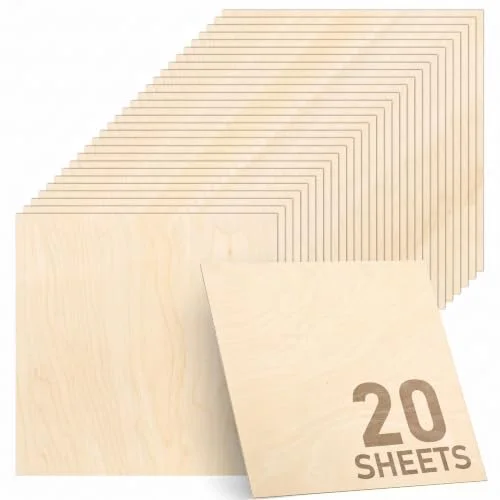 |
TX liteart Baltic Birch Plywood (1/8in, 20 Sheets) – $33.99 True void-free Baltic birch in a size made for the laser/CNC and scroll-saw work this article covers – not a 4×8 construction sheet.
|
How Birch and Poplar Plywood Are Actually Built
This is the part most comparisons skip. “Birch vs poplar” sounds like a species question, but plywood strength comes mostly from how the panel is constructed – not just what species the veneer is.
Ply Count and Core Construction
A standard domestic 3/4-inch poplar plywood panel typically has 5 to 7 plies, with a core that can include small internal voids – gaps left where the core veneer didn’t fully overlap during manufacturing. That’s normal for a B or BB-grade panel and rarely matters for painted furniture or trim.
True Baltic birch, by contrast, is built from thin all-birch veneers stacked cross-grain the entire way through – a 3/4-inch sheet commonly runs 11 to 13 plies. Every layer is full-size, so there are no internal voids. That’s why the edge of a cut Baltic birch panel looks like a clean striped pattern instead of showing gaps, and why it’s the standard choice for exposed-edge cabinetry, drawer boxes, and laser/CNC templates. If you’re weighing Baltic birch against maple instead of poplar, see our Baltic Birch vs Maple Plywood comparison for that specific matchup.
Face Veneer and Grading
Birch face veneer has a tight, fine grain that takes stain evenly – it’s the closest plywood gets to looking like a solid hardwood panel. Poplar’s face veneer is more prone to greenish or purplish mineral streaks, which is exactly why it’s sold as a paint-grade product rather than a stain-grade one. If a panel is going to be stained rather than painted, that streaking is the detail that ruins the look, not the wood’s hardness.
Strength, Hardness, and Weight Compared
On the Janka hardness scale (the standard test for how much force it takes to dent a wood surface), yellow birch measures around 1,260 lbf. Yellow poplar measures around 540 lbf – less than half as hard. That gap is real and it does translate to plywood: birch panels resist dents, dings, and screw-pull-through noticeably better than poplar panels of the same thickness.
But here’s the correction most “birch vs poplar” articles get wrong: a panel’s overall stiffness and load-bearing capacity is driven more by ply count and core density than by face-veneer hardness alone. A 13-ply Baltic birch panel is stiffer and more dent-resistant than a thin 5-ply birch-faced panel with a low-density core – so “it says birch on the label” isn’t the same guarantee as “it’s actually void-free, high-ply-count birch.” Check the edge, not just the face, before you buy.
Weight follows the same logic: a full 3/4-inch birch sheet typically runs noticeably heavier than an equivalent poplar sheet because of the denser core stock, which matters if you’re building anything that gets moved often – wall cabinets, workbenches on casters, or job-site jigs.
Real Cost Comparison
Pricing swings by region and supplier, but the pattern holds everywhere: poplar plywood is the budget option, domestic birch plywood sits in the middle, and true Baltic birch is the premium tier.
- Poplar plywood (3/4″, 4×8): generally the least expensive hardwood-faced panel on the shelf – see our full 3/4-inch plywood price breakdown for current per-sheet ranges by grade.
- Domestic birch plywood (3/4″, 4×8): typically runs a noticeable step above poplar because of the denser face veneer and stricter grading.
- True Baltic birch (3/4″, 4×8): the highest of the three – you’re paying for the void-free, high-ply-count construction, not just the birch face. Our Baltic birch plywood cost guide breaks this down by thickness.
If you’re buying poplar plywood specifically, it’s worth checking the exact panel spec first – not every “poplar plywood” listing is the same core quality. Our breakdown of RevolutionPly poplar sanded plywood covers one common sanded option and what its spec sheet actually promises.
Best Uses for Each
Choose Birch For
Furniture and cabinet boxes that get stained or clear-coated, drawer boxes, shelving that carries real weight, and any exposed-edge design where you want the striped ply edge visible as a design feature. If you’re doing laser cutting, CNC routing, or scroll-saw work, true Baltic birch specifically is the standard material – the void-free core means clean edges and no surprise gaps when the tool cuts all the way through.
Choose Poplar For
Painted furniture and cabinetry, interior trim, drawer bottoms and cabinet backs that aren’t structural, shop jigs and templates, and any beginner project where forgiving, easy-to-cut material matters more than long-term durability. Poplar’s smooth, tight grain takes primer and paint evenly, which is the entire reason it’s the default “paint-grade” hardwood plywood.
Moisture Resistance, Warping, and Finishing
Neither birch nor poplar plywood is naturally moisture-resistant – both use standard interior-grade glue unless you specifically buy a marine-grade or exterior-rated panel. Birch’s denser, more stable core resists warping slightly better under humidity swings, but “slightly better” still means sealing every edge and face before it goes anywhere near a bathroom, kitchen sink base, or exterior application.
For finishing: birch takes stain and clear coats well because of its tight, even grain. Poplar can blotch under a stain (especially around the mineral streaking mentioned earlier), which is why it’s almost always primed and painted rather than stained. If you want a stained poplar look on a budget, a pre-stain conditioner and a gel stain will minimize blotching, but it still won’t match birch’s clarity under a clear finish.
Frequently Asked Questions
What’s the actual difference between birch and poplar plywood?
Birch plywood uses a harder, denser face veneer (around 1,260 lbf on the Janka scale) and is often built with more plies, including void-free Baltic birch. Poplar plywood uses a softer face veneer (around 540 lbf) with fewer plies and is graded as a paint product rather than a stain-grade one.
Is Baltic birch plywood worth the extra cost over regular birch plywood?
Yes, if you need a void-free edge – for laser cutting, CNC work, drawer boxes, or any exposed-ply design. If the edges will be covered or banded, a standard domestic birch panel is usually enough and costs less.
Which plywood is better for painted furniture, birch or poplar?
Poplar. Its smooth, tight face veneer takes primer and paint evenly, and there’s no reason to pay birch prices for a surface that’s going to be fully covered in paint anyway.
Does birch plywood cost a lot more than poplar plywood?
Domestic birch plywood typically costs noticeably more than poplar per sheet, and true Baltic birch costs more again on top of that – you’re paying for the denser face veneer and, with Baltic birch, the void-free multi-ply core.
Conclusion
The birch-vs-poplar decision really comes down to what happens to the surface after you cut it. Staining, clear-coating, structural load, or an exposed void-free edge for laser/CNC work all point to birch – specifically true Baltic birch when the edge will show or get cut through repeatedly. Painting, budget builds, jigs, and beginner projects point to poplar, where the lower cost and easy machining outweigh the strength gap.
If you’re still deciding between the solid lumber versions of these two species rather than the plywood sheet goods, our birch vs poplar (solid wood) guide covers the same comparison for boards, trim stock, and turning blanks.
Sponsored / affiliate links. As an Amazon Associate I earn from qualifying purchases. I may earn additional commission from eligible campaigns.
 Baltic Birch Plywood Sheets Box of 45 - Laser Engraving Cutting, Scroll Saw Nature Veneer Color, Stronger Than Basswood, A/A Grade,12 x 12 x 1/8”, 3mm Thickness Perfect for Wood Burning
 Baltic Birch Plywood 1/8'' x 12'' x 18'', 6 Pack, B/BB Grade, Void-Free Core, Laser Cutting Ready, Flat Sheets for CNC, Engraving, DIY Crafts, Art Painting, Wood Burning, Staining