Are Maple Trees Deciduous: Your Essential Guide
Quick Summary: Yes, maple trees are definitively deciduous. This means they shed their leaves annually, typically in the fall, making them a beautiful and characteristic part of the autumnal landscape. Understanding this trait is key for gardeners, woodworkers, and anyone appreciating nature’s seasonal changes.
Ever wondered if that gorgeous tree shedding vibrant colors in your yard is a maple? You’re not alone! Figuring out if a tree is deciduous or evergreen can sometimes feel like a riddle. But when it comes to maple trees, the answer is wonderfully straightforward. They are indeed deciduous, meaning they put on a spectacular show of changing leaves before gracefully letting them go each year. This is a key characteristic that makes them so beloved by many, from home gardeners admiring their beauty to woodworkers selecting premium lumber. Let’s dive into what makes maple trees tick and why their deciduous nature is so important to know.
What Does Deciduous Mean for Maple Trees?
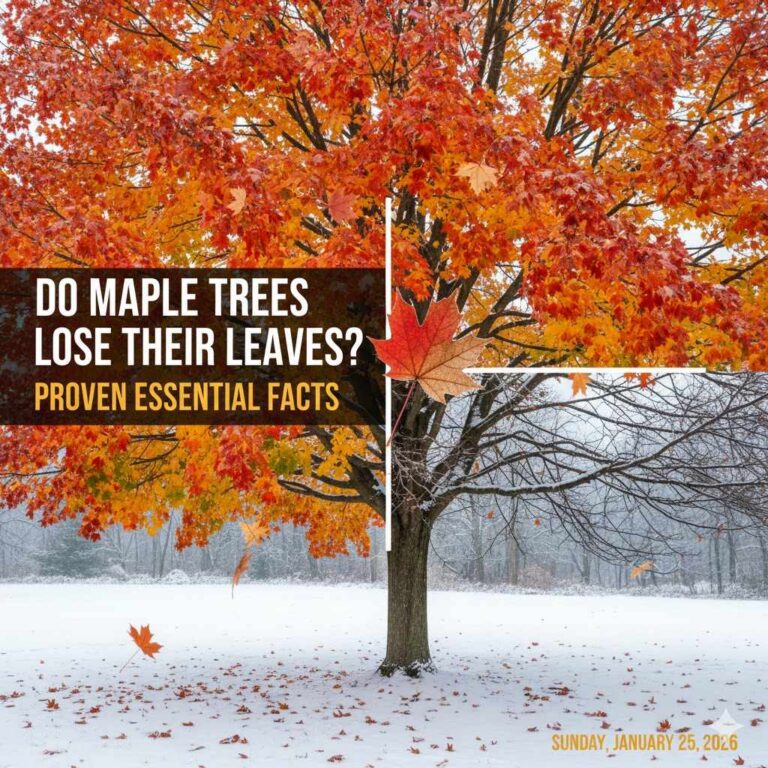
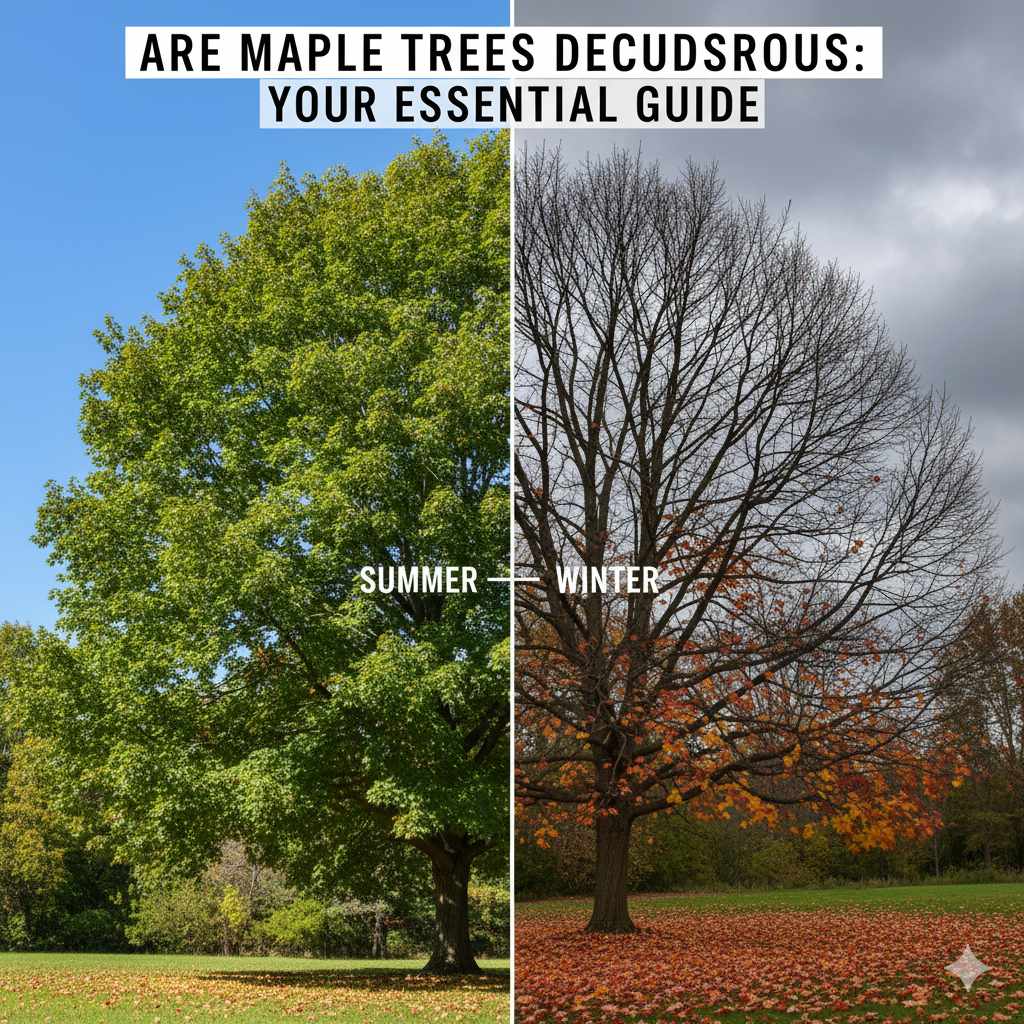
Simply put, “deciduous” means that maple trees lose all of their leaves seasonally. This is in contrast to “evergreen” trees, which keep their foliage year-round. For maples, this shedding process is a vital part of their life cycle, usually triggered by the cooler temperatures and shorter days of autumn. As the days shorten and temperatures drop, the chlorophyll (the green pigment in leaves) breaks down. This allows other pigments, like yellows, oranges, and reds, to become visible, creating the stunning fall color displays we associate with maple trees. Once the sugars can no longer be produced efficiently, the tree forms a layer of cells at the base of the leaf stalk, eventually causing the leaf to detach and fall to the ground. This seasonal leaf drop is a survival strategy, helping the tree conserve water and energy during harsh winter months when water might be frozen and sunlight is less intense.
Why Do Maple Trees Lose Their Leaves?
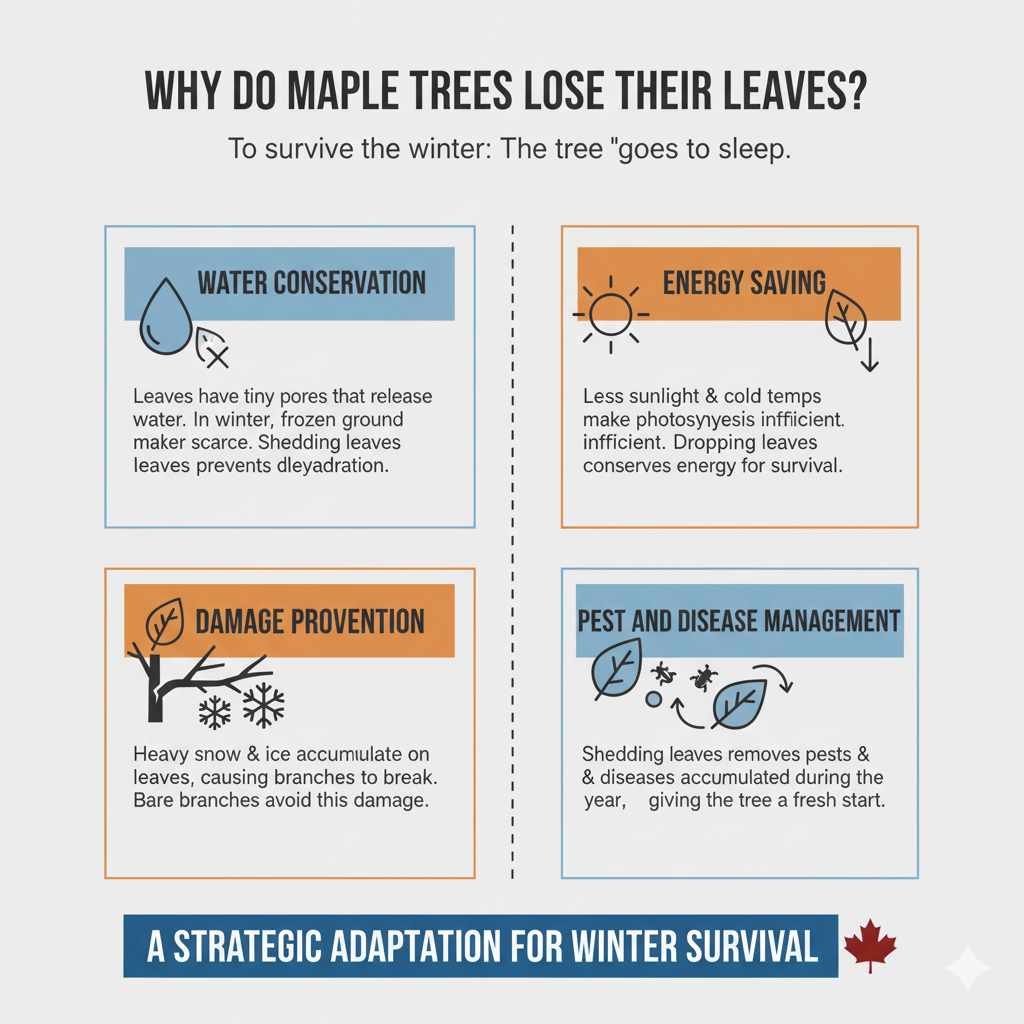
The primary reason maple trees shed their leaves is to survive the winter. Think of it like the tree “going to sleep” for the cold season. Here’s a breakdown of why this happens:
- Water Conservation: Leaves have a large surface area and a lot of tiny pores (stomata) that release water vapor. In winter, when the ground is frozen and water is scarce, continuing to lose water through leaves could dehydrate the tree. Shedding leaves drastically reduces water loss.
- Energy Saving: Photosynthesis, the process by which trees make food from sunlight, is much less efficient in winter due to lower light levels and colder temperatures. It takes energy to maintain leaves, and in winter, the energy gained might not be worth the effort. Dropping leaves conserves energy.
- Damage Prevention: Heavy snow and ice can accumulate on leaves, weighing down branches and potentially causing them to break. Bare branches are much less susceptible to this kind of damage.
- Pest and Disease Management: Shedding leaves can help remove any accumulated pests or diseases that might have settled on them throughout the growing season, giving the tree a fresh start in the spring.
Common Maple Tree Varieties and Their Leaf Habits
While all common maple species are deciduous, there’s a fascinating variety within the genus Acer. Knowing a bit about different types can help you identify them and appreciate their unique characteristics. Here are a few popular examples:
Sugar Maple (Acer saccharum)
Famous for its vibrant fall colors and for being the primary source of maple syrup, the sugar maple boasts a beautiful, classic maple leaf shape with five lobes. Its fall foliage can range from brilliant yellow to fiery orange and deep red, making it a quintessential autumn tree.
Red Maple (Acer rubrum)
As its name suggests, the red maple often displays striking red foliage in the fall, though some varieties can turn yellow or orangey-red. It’s known for its early spring color, with red flowers and buds sometimes appearing before the leaves even emerge. The leaves typically have three to five lobes with serrated edges.
Silver Maple (Acer saccharinum)
This fast-growing maple is easily identified by its deeply cut, five-lobed leaves that are silvery-white on the underside. When the wind rustles its branches, the silvery undersides flash, giving the tree a shimmering appearance. Its fall color is generally a less vibrant yellow.
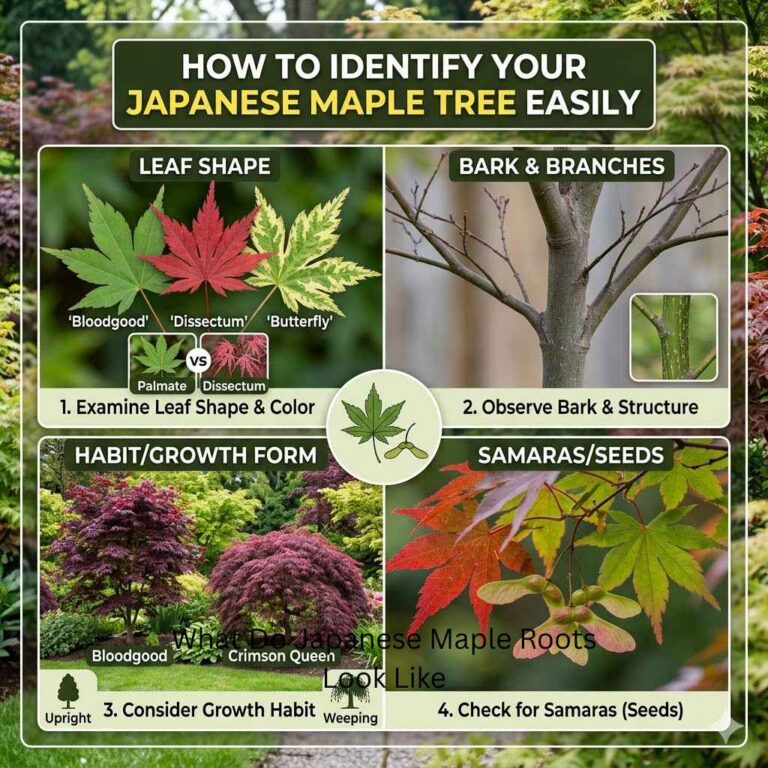
Japanese Maple (Acer palmatum)
Beloved in landscaping for their delicate, often deeply lobed leaves and elegant forms, Japanese maples come in a vast array of cultivars with colors ranging from deep red to vibrant green and variegated patterns. Their fall color is often spectacular, featuring shades of red, orange, and yellow.
Box Elder (Acer negundo)
One of the more unusual maples, the box elder is a compound-leafed species, meaning each leaf stalk has multiple leaflets (usually 3-7). Despite its variation, it is still deciduous and loses its leaves in the fall. It’s often considered a less ornamental maple, but it’s hardy and can grow in a wide range of conditions.
Identifying Deciduous Traits in Maple Trees
Distinguishing a deciduous maple from an evergreen is usually quite simple once you know what to look for. Here are some key indicators throughout the year:
In Autumn: The most obvious sign is the dramatic change in leaf color followed by leaf drop. If you see a tree turning brilliant shades of red, orange, or yellow and then losing its leaves, it’s almost certainly deciduous. Maple trees are famous for this display.
In Winter: A deciduous tree will be bare; it will have no leaves. You can still identify a maple by its bark, branching pattern, and especially by its distinctive buds and twigs. Maple buds are often pointed and sharp, especially the terminal bud, and many species have opposite branching (branches grow directly across from each other on the twig). Evergreen trees, on the other hand, will still be covered in needles or leaves.
In Spring: Deciduous trees will begin to sprout new leaves. You’ll see buds swell and unfurl into fresh foliage. Some maples, like the red maple, even show colorful flowers before their leaves fully emerge.
In Summer: All trees look their greenest in summer. At this stage, leaf shape and arrangement become more important for identification. Maple leaves are typically palmately lobed (like the fingers of a hand radiating from a central point) and arranged oppositely on the stem.
Maple Wood: A Durable Material from Deciduous Trees
The deciduous nature of maple trees doesn’t just affect their appearance; it also influences the characteristics of their wood, making it highly valued in woodworking. Maple wood is known for its hardness, strength, and fine grain, which can contribute to a smooth finish. This makes it ideal for a variety of applications, from furniture and cabinetry to flooring, musical instruments, and of course, kitchen items and cutting boards – my personal favorites!
Here’s a quick look at why maple wood is such a sought-after material:
- Hardness and Durability: Maple is one of the harder domestic hardwoods, making it resistant to dents and wear. This is why it’s excellent for high-traffic areas like flooring or tabletops. The Janka hardness scale, which measures wood hardness, ranks common maple (sugar maple) at around 1450 lbf (pounds-force).
- Fine, Even Grain: Maple typically has a fine, straight, and even grain pattern. This results in a smooth surface when sanded and finished, and it takes stains and finishes exceptionally well.
- Workability: While hard, maple is generally straightforward to work with using sharp tools. Its density means you need good blades and bits, but it avoids the tear-out issues sometimes found in softer woods.
- Appearance: Unfinished maple has a light, creamy color that can be beautifully enhanced with clear coats to reveal its natural grain. Special figures like “bird’s-eye” or “flame” (also known as “tiger” stripe) add unique aesthetic appeal and value.
When selecting maple for a project, you’ll often encounter “hard maple” (like sugar maple) and “soft maple” (species like red maple or silver maple). While both are hardwoods and deciduous, hard maple is significantly denser and more durable, making it the preferred choice for applications requiring maximum toughness. Soft maple is still a great option, often more affordable and easier to work with for certain projects.
For beginners, working with maple can be a rewarding experience. Its predictable nature and beautiful results are inspiring. Always remember to wear safety glasses and a dust mask when cutting or sanding any wood, including maple. Proper tool maintenance, especially keeping your saw blades and router bits sharp, is crucial for clean cuts and a safer working environment.
Table: Maple Wood Characteristics
| Characteristic | Description | Implication for Woodworkers |
|---|---|---|
| Hardness | High (Janka 1450 lbf for Sugar Maple) | Durable, resists dents, requires sharp tools. Excellent for high-wear surfaces. |
| Grain | Fine, straight, even | Smooth finish, takes stains well, can be prone to tear-out if tools are dull. |
| Color | Light, creamy to white | Versatile for finishes, takes stains uniformly, good for light-colored projects. |
| Strength | Strong and stable | Good for structural components and furniture that needs to last. |
Comparing Deciduous Maple to Evergreen Trees
Understanding the difference between deciduous and evergreen is fundamental to horticulture and wood sourcing. Here’s a comparison:
Deciduous Trees (like Maples):
- Lose leaves seasonally (fall/winter).
- Exhibit dramatic fall color changes.
- Require less water in winter.
- Tend to have broad leaves (maples have lobed, broad leaves).
- Wood is typically denser and harder (e.g., oak, maple, cherry).
- Example wood uses: Furniture, flooring, cabinetry, cutting boards.
Evergreen Trees (like Pines, Firs):
- Retain foliage year-round.
- Display consistent green color.
- Require more consistent water availability.
- Have needles or scale-like leaves.
- Wood is often softer and less dense (e.g., pine, fir, spruce).
- Example wood uses: Construction framing, paper pulp, some furniture and paneling.
The leaf structure of evergreens, often needles, allows them to survive colder temperatures and reduced water availability without shedding. Their woody structure is also generally different. For instance, softwood lumber from evergreens like pine has a much lower Janka hardness rating (around 350-850 lbf) compared to maple.
When you’re choosing wood for a project, knowing whether it comes from a deciduous or evergreen source helps you predict its properties. For a durable kitchen cutting board, you’d want hard maple (deciduous), not pine (evergreen).
Are All Maple Trees Deciduous?
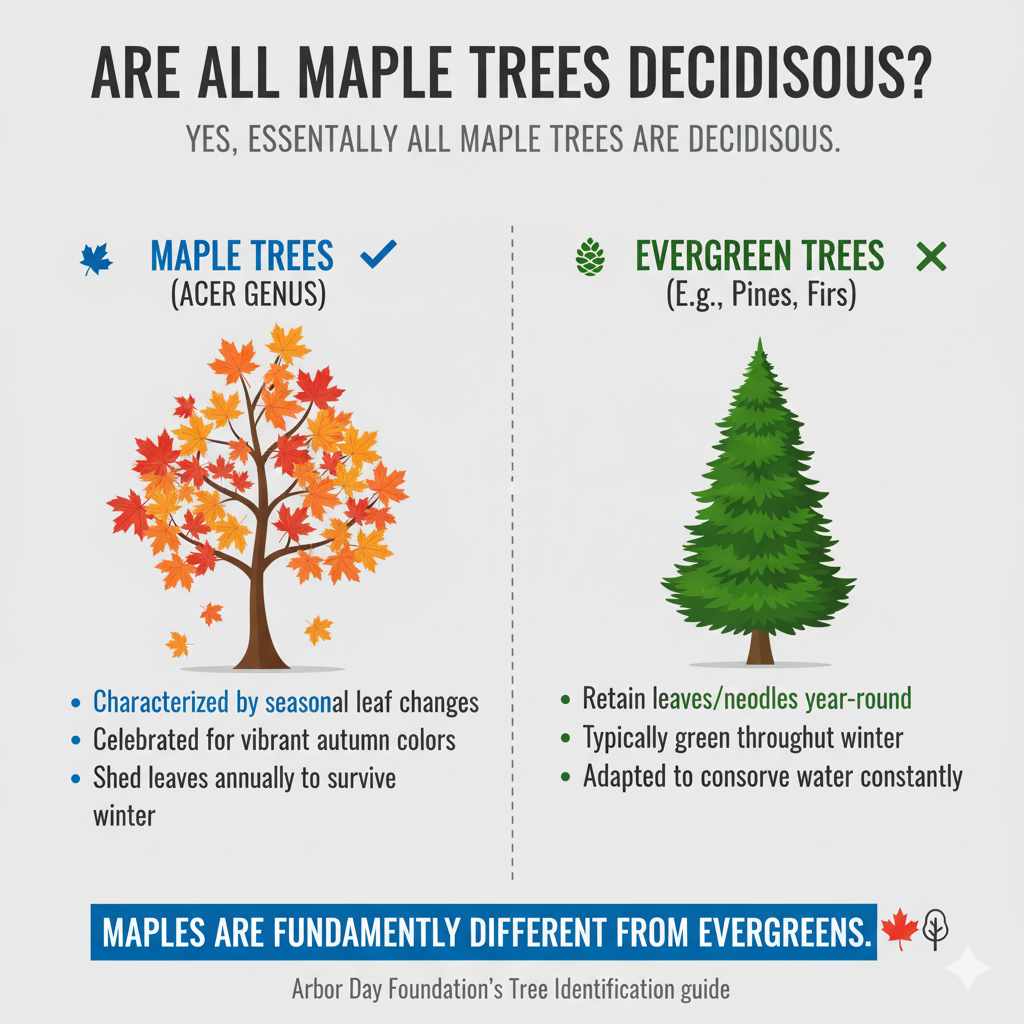
Yes, essentially all trees commonly recognized as “maple trees” belong to the genus Acer, and this genus is characterized by deciduous species. While botanists sometimes categorize trees slightly differently, for all practical purposes and common understanding, you can rely on maple trees being deciduous. They are celebrated for their seasonal leaf displays and are fundamentally different from evergreen trees like pines, spruces, or firs.
A well-known resource for plant identification and characteristics is the Arbor Day Foundation’s Tree Identification guide, which confirms the deciduous nature of maples and provides extensive information on various species.
Frequently Asked Questions About Maple Trees
Q1: Do all maple trees change color in the fall?
A1: While most maple trees exhibit some degree of fall color change, the intensity and specific colors can vary significantly between species and even individual trees. Sugar maples and red maples are famous for their vibrant reds, oranges, and yellows, whereas silver maples tend to have a less dramatic yellow hue.
Q2: When do maple trees lose their leaves?
A2: Maple trees typically begin to shed their leaves in autumn, usually from September through November in temperate climates. The exact timing depends on factors like the specific maple species, geographic location, local climate conditions (temperature, rainfall), and sunlight duration.
Q3: Can you plant maple trees in a vegetable garden?
A3: While maple trees are beautiful, their extensive root systems can compete with vegetable plants for water and nutrients. It’s generally not recommended to plant them too close to a vegetable garden. However, if you have a large property, a maple tree planted at a distance might provide beneficial shade in summer without significantly impacting your garden.
Q4: Are ornamental Japanese maple trees deciduous?
A4: Yes, all varieties of Japanese maple (Acer palmatum) are deciduous. They are prized for their beautiful, often deeply dissected leaves and are known for their stunning fall color displays, ranging from bright reds and oranges to deep purples and yellows.
Q5: How can I tell if a tree is a maple in the winter?
A5: In winter, identify maples by their opposite branching pattern (branches grow directly across from each other on the stem), their distinctive buds (often pointed and sharp), and their bark. The seeds, if still present and winged (samaras), are also a tell-tale sign.
Q6: Is maple wood suitable for carving?
A6: Yes, maple wood is excellent for carving, especially softer varieties or when using finer tools. Its density and fine grain allow for intricate detail and smooth finishes. For large-scale carving, a slightly less dense ‘soft maple’ might be easier to work with than ‘hard maple’.
Q7: What is the difference between hard maple and soft maple?
A7: Both hard maple (e.g., sugar maple) and soft maple (e.g., red maple, silver maple) are deciduous hardwoods. Hard maple is significantly denser, harder, and stronger, making it more durable and more expensive. Soft maple is still hard but is less dense, can be easier to work with, and is generally more affordable. Both are excellent choices for woodworking, with the best pick depending on the project’s requirements.
Conclusion
So, to wrap things up, you can confidently say that maple trees are indeed deciduous, gracefully shedding their leaves each autumn. This characteristic is not just visually striking, contributing to the breathtaking beauty of fall, but it’s also a crucial survival mechanism for the trees, allowing them to conserve water and energy through the colder months. From the vibrant hues of a sugar maple blazing in October to the practical, hard wood that makes stunning furniture and cutting boards, the deciduous nature of maples plays a central role in their life and their value to us.
Whether you’re a homeowner looking to understand your landscape, a gardener planning your plantings, or a budding woodworker excited about using beautiful, natural materials, knowing that maples are deciduous is a fundamental piece of information. It helps you appreciate their seasonal cycle, predict their behavior, and understand the properties of the wood they provide. Keep an eye out this fall for those brilliant colors – it’s the signature of a deciduous maple tree proudly displaying its seasonal transformation before resting for the winter, ready to greet the spring with new growth. Happy crafting and happy observing!