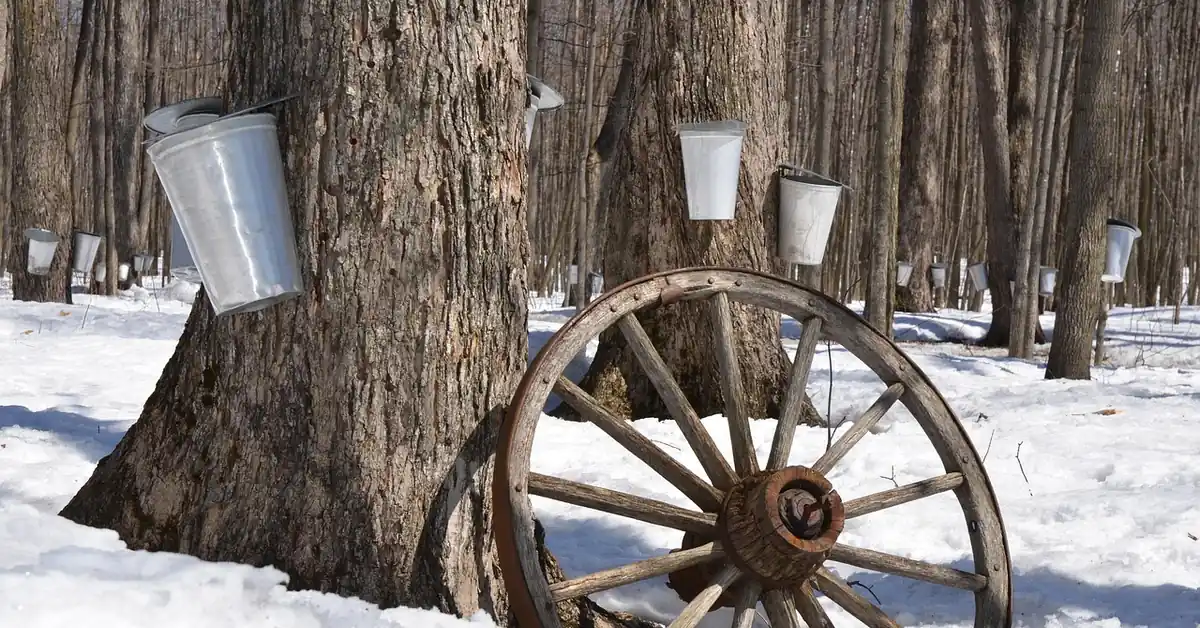
How Much Sap Does a Maple Tree Produce? (6–20 Gallons)
A healthy, mature maple tree yields 6 to 20 gallons of sap per tap over a 4- to 6-week season — the exact number depends on your region, tree size, and collection method, not one fixed figure. Tap too small a tree or miss the freeze-thaw window and yield drops sharply. This guide covers real regional yield ranges, the sugar-content math behind the syrup ratio, and the six factors that determine your own trees’ output.
First, What Is Maple Sap and Why Does It Flow?
Best Maple Tapping Kit Pick
15-Tap Maple Syrup Tapping Kit with Tubing – $19.99
Fifteen 5/16″ spiles with 33 ft of food-grade tubing and a matching drill bit — enough to tap the 2-3 largest, healthiest trees in the diameter guide below without buying separate hardware for each one.
- Best for: anyone tapping 3–5 trees for the first time
- Why we picked it: matches the 5/16″ industry-standard spile size this guide recommends, and includes the drill bit so there’s no second order
- Main drawback: tubing runs need to be cut to length per tree; no pre-cut short sections included
Compare more maple tapping options
 Option 1 3-Tap Trial Size Kit with Sap Sack Holders – $32.98
|
 Option 2 Stainless Steel Sap Spiles (10-Pack) – $35.99
|
 Option 3 2-Gallon Bucket Tapping Kit (5 Taps) – $81.99
|
As an Amazon Associate we earn from qualifying purchases.
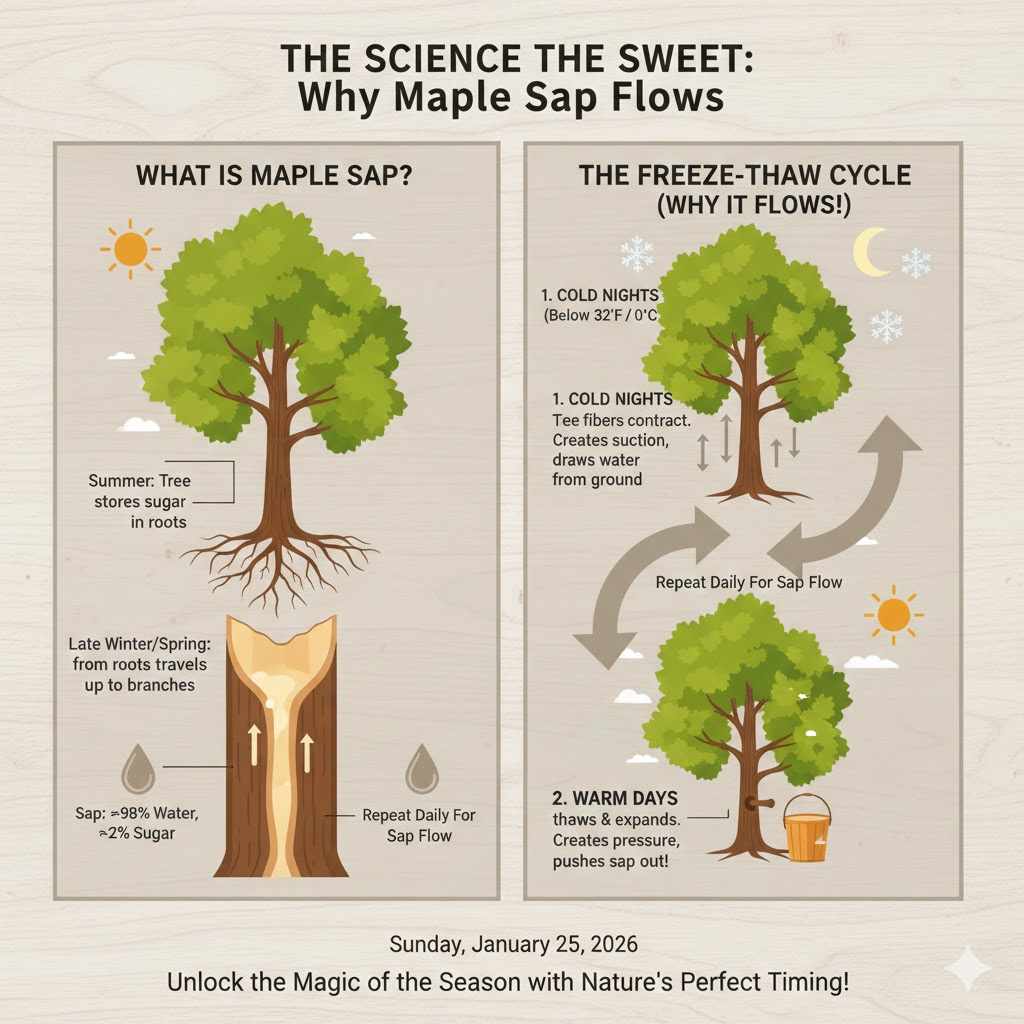
Before we can talk about how much sap you’ll get, it helps to know what it is. Think of maple sap as the lifeblood of the tree. In the summer, the maple tree uses its leaves to make sugar from sunlight. It stores this sugary energy in its roots all winter long.
When late winter and early spring arrive, the tree needs that stored energy to grow new leaves. To move the sugar from the roots up to the branches, it mixes it with water it absorbs from the ground. This slightly sweet, watery mixture is what we call sap.
The flow is driven entirely by weather — specifically, a freeze-thaw cycle.
- During cold nights (below freezing): The tree’s fibers contract, creating suction that draws water up from the roots.
- During warmer days (above freezing): The wood thaws and expands, creating positive pressure inside the tree that pushes sap out through any available opening — like your tap hole.
This natural pressure is what fills your buckets. Without a daily up-and-down swing in temperature, the sap won’t run.
The Golden Rule: How Much Sap Can You Really Expect?
A single tap hole in a healthy maple tree typically yields between 10 and 20 gallons of sap over a full season under New England / New York conditions — but that figure isn’t universal. Ohio State University Extension reports an average tap in Ohio produces only 6 to 10 gallons per season, with 2 to 3 gallons on a good run and some days producing nothing at all. The difference comes down to climate: fewer clean freeze-thaw cycles per week means fewer productive runs, even from an identical tree.
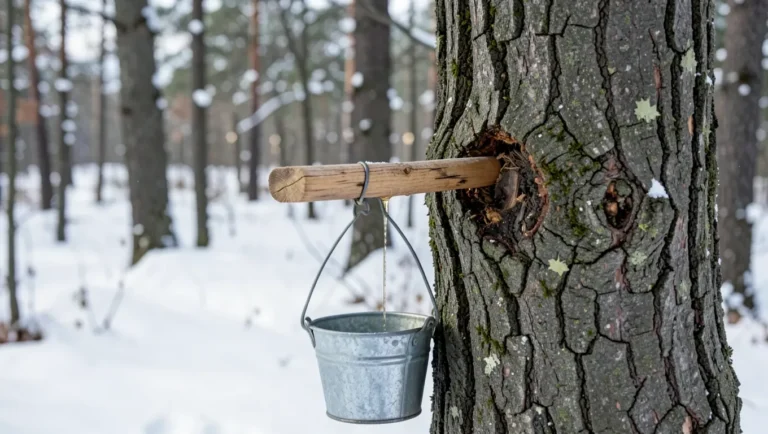
Collection method changes the number too. Trees on gravity lines or hung buckets typically yield 10 to 14 gallons per tap, while vacuum tubing systems — which pull sap out under mechanical suction instead of relying on tree pressure alone — can push that to 15 to 20+ gallons from the same tree in the same weather.
Sap isn’t syrup yet, either. It’s about 98% water and 1% to 5% sugar depending on species and tree. You need to boil off most of that water, and the ratio moves with sugar content: roughly 40 gallons of sap per gallon of syrup at 2% sugar, but closer to 43 to 50 gallons at Ohio’s lower average sugar concentration.
How Much Sap Does a Maple Tree Produce Per Day?
On an active run day, a single tap produces roughly 1 to 3 gallons of sap. A full “run” — sap flowing continuously through one freeze-thaw cycle — often fills a hung bucket in an afternoon during peak weeks. Expect 8 to 10 productive runs across a typical season, with several days in between producing little or nothing while the weather sits outside the freeze-thaw range.
📊 Ohio taps average 6 to 10 gallons of sap per season, versus 10 to 20 gallons commonly cited for New England/New York trees — region and climate matter as much as tree size. Source: Ohio State University Extension, Fact Sheet F-36
“The first hard freeze-thaw swing of the week is almost always the best run — buckets that fill in an afternoon on day one of a cold snap often slow down by day three, even in identical weather. If you can only tap on a limited schedule, get your taps in right before that opening swing instead of waiting for the whole week to play out.”
Key Factor 1: Tree Size and Diameter
Bigger is often better when it comes to sap production. A larger, more mature tree has a bigger root system to absorb water and a larger trunk to store starches (which become sugar). It simply has more resources to produce more sap.
However, the most important part of size is how it relates to safe tapping. You should never tap a young, small tree — tapping puts a small wound on the tree, and only a healthy, mature tree can handle it without problems. Trees are measured by diameter at “breast height,” about 4.5 feet off the ground.
Guidelines for Tapping Based on Tree Diameter
| Tree Diameter (at 4.5 feet high) | Maximum Number of Taps | Important Notes |
|---|---|---|
| Under 10 inches | 0 Taps | Do not tap. The tree is too young and small; tapping can cause serious, long-term damage. |
| 10 to 17 inches | 1 Tap | Ideal starting size. A single tap ensures the tree stays healthy and vigorous. |
| 18 to 24 inches | 2 Taps | A large, healthy tree in this range can safely support a second tap. Place them on opposite sides of the trunk. |
| 25 inches or more | 3 Taps | Only the largest, most vibrant trees should have three taps, spaced evenly around the trunk. |
Never place more than three taps in a single tree, no matter how large it is. Over-tapping is one of the quickest ways to stress and damage a beautiful old maple.
Key Factor 2: Tree Health and Crown Size
A tree’s health is directly linked to how much sap it can produce. Here’s how to tell if a tree is healthy and ready for tapping.
What to Look For in a Healthy Maple
- A large, full crown: the crown is the upper, leafy part of the tree. A big, round crown means more leaves capturing sunlight, which means more sugar production and sweeter, more abundant sap. A sparse crown means a less productive tree.
- Healthy bark: mostly intact, without large cracks, missing sections, or heavy fungal growth. A little moss or lichen is normal and not a health concern.
- No signs of major damage: watch for large dead branches, insect infestation (lots of tiny holes in the bark), or deep storm wounds. A healthy tree heals its own wounds over time.
- Good location: trees growing in the open with plenty of sun and water are generally healthier and more productive than trees crowded in dense forest.
When you walk through your woods, pick the trees that look the most vibrant and strong — these “dominant” trees with wide crowns are almost always your best sap producers.
Key Factor 3: Weather and Temperature Swings
Weather trumps every other factor. You can have the biggest, healthiest sugar maple in the world, but if the weather isn’t right, you won’t get a drop of sap — the sap flow mechanism is entirely dependent on the freeze-thaw cycle.
The Recipe for a Great Sap Run
- Nighttime temperature: mid-20s°F (around -4°C) is ideal. This deep freeze creates the negative pressure that recharges the system.
- Daytime temperature: low 40s°F (around 5°C) is ideal. This warming creates the positive pressure that pushes sap out.
- Sunshine: sunny days warm the trunk and crown faster than cloudy days, leading to stronger, longer runs.
A string of days with this exact pattern produces what sugar makers call a “gusher,” where buckets can fill in a single afternoon. A week that stays below freezing, or above freezing day and night, stops sap flow completely. For local forecasts to plan your tapping days, check the National Weather Service.
Key Factor 4: Length and Timing of the Season
The maple season isn’t defined by a calendar date — it’s defined entirely by weather. Some years the season lasts six or seven weeks; in others, if it warms up too fast, it might only last three.
A longer season with multiple freeze-thaw cycles naturally yields more sap than a short, inconsistent one. Start watching the 10-day forecast in late winter, and when you see a stretch of freezing nights and thawing days on the horizon, it’s time to get your taps in.
The tree tells you when the season is over: as weather warms consistently, leaf buds swell and open, the sap turns cloudy, and it develops an “off” flavor sugar makers call “buddy.” At that point, pull your taps and clean your equipment.
Key Factor 5: Maple Tree Species
Not all maples are created equal for tapping. The difference comes down to both sap volume and, more importantly, sugar content — which drives how much boiling you’ll do. Before tapping an unfamiliar tree, see our guide to identifying maple trees for tapping.
Comparing Common Maple Species for Tapping
| Maple Species | Average Sugar Content | Sap Production Level | Notes for the Beginner |
|---|---|---|---|
| Sugar Maple (Acer saccharum) | 2.0% – 4.5% | Very High | The champion. High sugar content means less boiling time, saving fuel and hours. Strong, consistent sap flow. |
| Red Maple (Acer rubrum) | 1.5% – 2.5% | High | A solid alternative. Produces plenty of sap, but lower sugar content means more boiling. Buds out earlier, ending its season sooner. |
| Silver Maple (Acer saccharinum) | 1.0% – 2.0% | High | High-volume, low sugar content. One of the first trees to bud out, giving it the shortest season of all. |
| Box Elder (Acer negundo) | 1.0% – 2.0% | Moderate | Technically a maple. Tappable, with a slightly different, butterscotch-like syrup flavor. |
For a beginner, start with Sugar Maples if you have them — their high sugar content is far more forgiving and rewarding.
Key Factor 6: Your Tapping Technique
How you tap the tree plays a real role in your yield. A clean, properly drilled tap hole yields more sap and lets the tree heal more effectively.
Best Practices for Tapping
- Use the right drill bit: modern taps (“spiles”) are sized for a 5/16-inch drill bit, the current industry standard. It creates a smaller wound the tree can heal in a year or two. Avoid older, larger 7/16-inch spiles.
- Drill at a slight upward angle: angle the drill about 10 degrees upward as you go in. This helps sap flow downhill and out of the tap.
- Drill to the correct depth: go about 1.5 inches deep into the white wood behind the bark — never more than 2 inches. See our full guide on tap-hole depth for species-specific variations.
- Keep it clean: use a clean, sharp drill bit. A dull bit burnishes and seals the wood, reducing sap flow. Hot water is all you need for cleaning equipment — skip bleach and other disinfectants.
- Find fresh wood: never drill into a previous year’s tap hole. Stay at least 6 inches horizontally and 12 inches vertically from old holes to reach healthy wood.
Taking care with these steps shows respect for the tree and gets you the best possible sap run from your effort.
Key Factor 7: Your Sap Collection Method (Buckets vs. Vacuum Tubing)
The same tree, in the same weather, produces different amounts of usable sap depending on how you collect it. This is the factor most beginner guides skip entirely.
| Collection Method | Typical Yield Per Tap (Season) | Best For |
|---|---|---|
| Gravity line or hung bucket | 10 – 14 gallons | Backyard tappers with 1–5 trees; lowest cost, no equipment beyond spile and bucket. |
| Roadside / open-grown tree, bucket | 15 – 20 gallons | Isolated trees with full sun exposure and a large crown — naturally out-produce forest-grown trees regardless of method. |
| Vacuum tubing system | 15 – 20+ gallons | Anyone tapping more than 5–6 trees; mechanical suction pulls sap the tree’s own pressure alone wouldn’t push out, especially on marginal-weather days. |
Vacuum tubing doesn’t make a tree produce more sap than it’s capable of — it captures a larger share of what the tree is already producing, including on days where a bucket system would get very little. For most backyard operations tapping under 10 trees, the cost and complexity of tubing isn’t worth the yield gain over hung buckets. See our full guide to collecting maple sap for the setup steps either way.
Whichever method you use, collect and refrigerate (or boil down) sap promptly — it doesn’t keep long at room temperature once it starts running. Our guide to how long maple sap lasts covers safe storage windows.
Bringing It All Together: What This Means for You
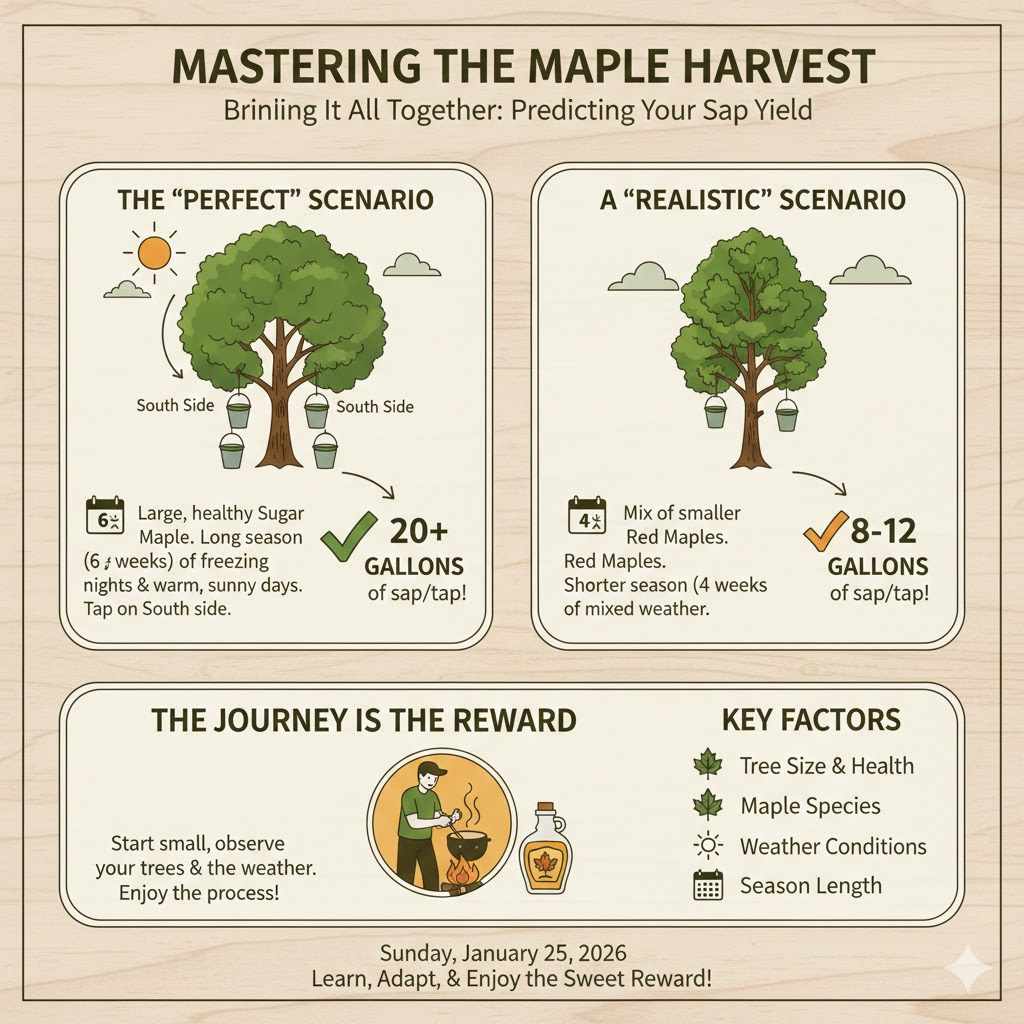
The “best case” scenario is a large, healthy Sugar Maple with a full crown, tapped on the sunny south side with vacuum tubing, during a long six-week season of freezing nights and warm, sunny days — that combination can push well over 20 gallons of sap per tap.
More realistically, expect a mix of conditions. Smaller Red Maples on hung buckets, with only four ideal weeks, might give you 8 to 12 gallons per tap — and that’s perfectly fine. Once you’ve collected your sap, the next step is boiling it down; see our guide to cooking maple sap into syrup for the process.
Start small, pay attention to your trees and the weather, and you’ll get better at predicting your own yield with each season. For more maple content, browse our full maple tree hub.
Frequently Asked Questions
Does tapping the tree hurt it?
When done correctly on a healthy, mature tree, tapping causes minimal and temporary harm. The tree is very good at healing the small tap hole — think of it like donating blood; the body quickly replenishes what was given. Following the tree-size and tap-count guidelines above ensures the tree stays healthy for decades.
How much syrup does 1 gallon of sap make?
This depends on the sap’s sugar content. With high-quality Sugar Maple sap (about 2.5% sugar), it takes roughly 40 gallons of sap to make 1 gallon of syrup. For Red Maple sap (about 2% sugar), it’s closer to 50 to 60 gallons of sap for 1 gallon of syrup.
Can I tap the same maple tree every single year?
Yes. As long as the tree remains healthy, you can tap it year after year. The key is to rotate your tapping locations — never drill in or right next to an old tap hole. Always move to a new spot on the trunk so old holes have time to fully heal.
How do I know when the maple sap season starts and ends?
The season starts when you see a consistent pattern of below-freezing nights and above-freezing days, typically in late winter or early spring. It ends when that pattern stops and the tree’s leaf buds begin to swell and open — once you see buds, the sap’s flavor changes and it’s time to stop collecting.
What does fresh maple sap taste like?
Fresh maple sap looks and feels almost exactly like water, with a very faint, slightly sweet, sometimes woody taste — refreshing to drink straight from the tree. The strong, classic maple flavor only develops after the sap is boiled down and the sugars concentrate into syrup.
Can I use sap that looks cloudy?
No. Sap should run crystal clear. Cloudy or yellowish sap usually means bacteria have started growing in it due to warm weather, which often happens near the end of the season. Discard cloudy sap — it results in off-flavored syrup.
Do vacuum tubing systems really produce more sap than buckets?
Yes, but not by making the tree produce more — vacuum tubing captures a larger share of the sap the tree is already generating, typically pushing yield from the 10–14 gallons a bucket collects up to 15–20+ gallons per tap. For fewer than 5–6 trees, most backyard tappers find hung buckets simpler and not meaningfully less productive.
Conclusion: Your Sweet Reward Awaits
How much sap a maple tree produces is less about a single magic number and more about reading the signs nature gives you: tree size, health, species, collection method, and the daily dance of freeze-thaw weather all play a role in what drips into your bucket.
Choose your healthiest trees, tap them with care, and watch the weather. Collecting sap and turning it into homemade maple syrup connects you to the seasons — with a little knowledge and patience, you’ll be enjoying the sweet results in no time.
Sponsored / affiliate links. As an Amazon Associate I earn from qualifying purchases. I may earn additional commission from eligible campaigns.