Are Redwood Trees Pine Trees? The Truth Explained Simply
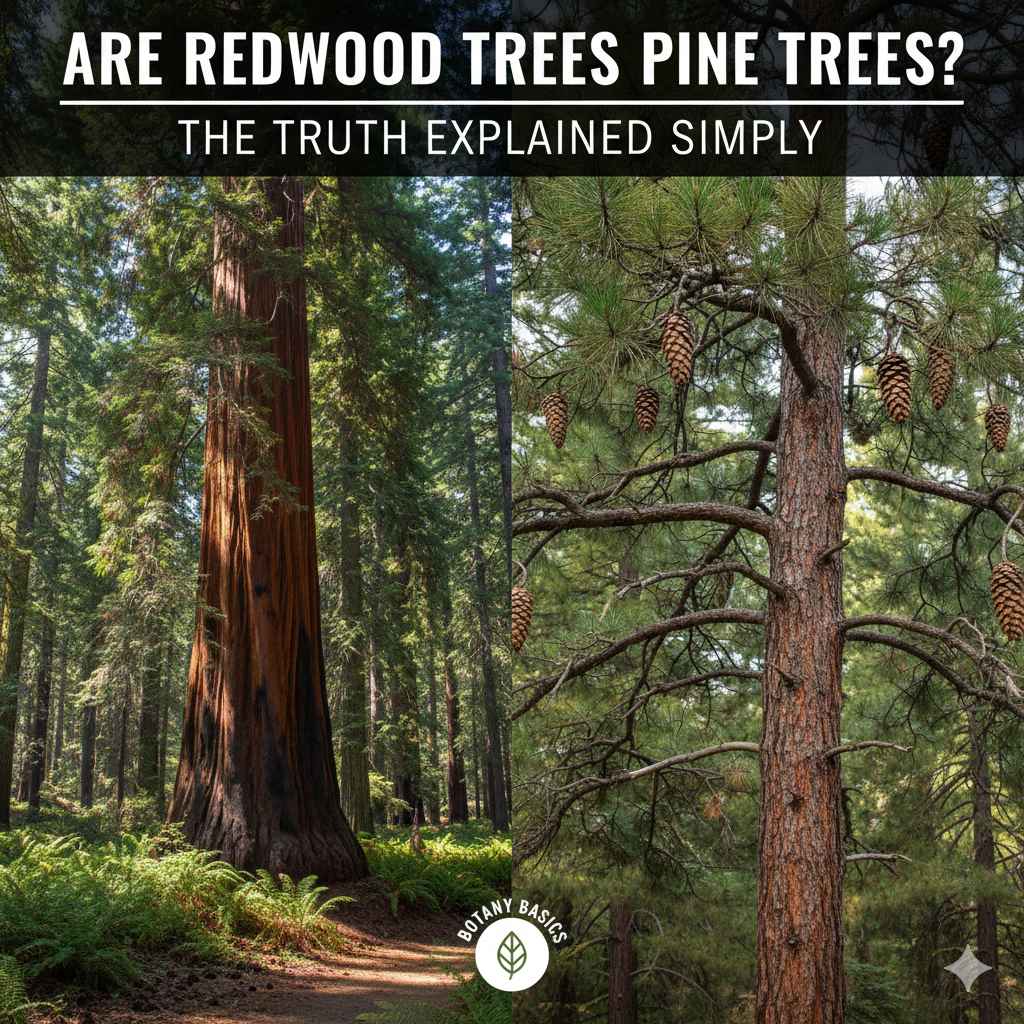
It’s a common question: Are Redwood Trees Pine Trees? The Truth might seem tricky at first. Many people get confused because both are tall, majestic trees. You might think, “They both look similar, so they must be related!” Don’t worry, we’ll break it down step-by-step. This way, you’ll know exactly what makes these trees different. We’ll explore the differences and similarities, and by the end, you’ll be an expert. Let’s get started!
What Makes a Tree a Pine?
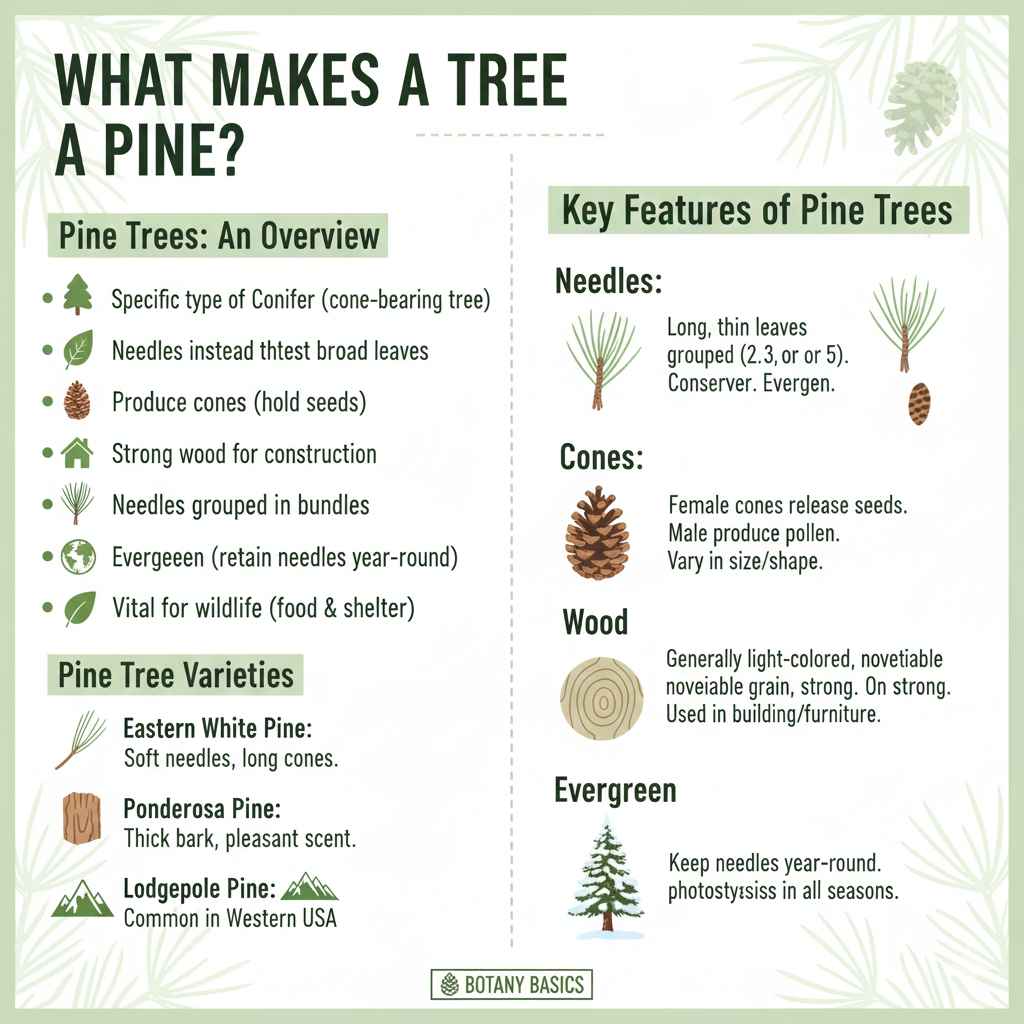
Pine trees are a specific type of tree. They belong to a larger group of trees called conifers. Conifers are trees that usually have needles instead of broad leaves. They also produce cones, which hold their seeds. These cones come in many shapes and sizes. Pine trees are known for their strong wood, which is often used in construction. You can tell a pine tree by its needles, which are usually grouped together in bundles.
Pine trees have a wide variety of species. They can be found in many places around the globe. This adaptability helps them thrive in various climates and locations. The needles are usually green and remain on the tree throughout the year, which is why they are called evergreen trees. They are also vital for wildlife, providing food and shelter for many creatures.
Key Features of Pine Trees
- Needles: Pine trees have needle-like leaves, usually grouped together in bundles. These needles are long and thin, and they help the tree conserve water.
- Cones: Pine trees produce cones, both male and female. The female cones are what we typically think of as pine cones, which release seeds.
- Wood: Pine wood is generally strong and often used in building and making furniture. The wood’s characteristics make it useful for various construction purposes.
- Evergreen: Most pine trees are evergreen, meaning they keep their needles throughout the year. This helps them with photosynthesis during all seasons.
Pine trees’ needles are usually bundled in groups of two, three, or five. The cones of a pine tree vary in size depending on the specific species, and their shapes can also differ. Pine wood is generally light-colored and has a noticeable grain. These features are all indicators of a pine tree.
Pine Tree Varieties
There are many different types of pine trees, each with unique characteristics. For example, the Eastern White Pine is known for its soft needles and long cones. The Ponderosa Pine has thick bark and a pleasant scent. The Lodgepole Pine is common in the Western United States. Each variety has specific adaptations that allow it to live in its particular environment.
The different types of pine trees show their ability to live in many ecosystems. From cold mountain ranges to warmer coastal areas, pines can be found. Their resilience makes them a vital part of many ecosystems, offering benefits to both wildlife and humans
Redwood Trees: What Makes Them Special?
Redwood trees, also known as sequoias, are famous for being some of the tallest trees on Earth. They are not pine trees. They are a different type of conifer with distinct features. Redwood trees have a reddish-brown bark, which is thick and spongy. This bark helps protect them from fire and pests. They also have needles, but their needles are different from those of pine trees.
These trees usually live for hundreds or even thousands of years. They grow in a specific area along the coast of California. Redwood forests create unique habitats for other plants and animals. Their size and lifespan make them important symbols of nature’s power.
Unique Characteristics of Redwoods
- Bark: Redwood trees have a thick, reddish-brown bark that’s very fire-resistant. The bark can be up to a foot thick, providing incredible protection.
- Needles: Redwood needles are flat and scale-like, unlike the needles of pine trees. These needles are adapted to capture sunlight efficiently.
- Size: Redwoods are among the tallest trees on Earth. Some can grow over 300 feet tall.
- Lifespan: Redwood trees can live for thousands of years. Their longevity is a testament to their resilience.
Redwood bark is a deep red color, and the tree’s name comes from this reddish appearance. The needles are arranged spirally around the branches, giving the tree a unique look. The size of these trees is a wonder of nature, with massive trunks and branches.
Where Do Redwood Trees Grow?
Redwood trees grow in a specific coastal region of California and a small part of Oregon. This area provides the right conditions for them to thrive, with a mild climate and plenty of moisture. The dense fog that rolls in from the Pacific Ocean is essential for keeping the trees hydrated. The specific climate allows these trees to achieve such incredible heights.
Their distribution is limited. Protecting these forests is important to conserve these unique trees and their ecosystems. The parks and protected areas help preserve the trees and the habitat. These areas are popular destinations for those who want to experience the grandeur of these giants.
Are Redwood Trees Pine Trees? The Truth Revealed
So, are Redwood Trees Pine Trees? The Truth is no. While both are conifers, they belong to different families and have distinct characteristics. Pine trees belong to the Pinaceae family, and redwood trees belong to the Cupressaceae family. The key differences lie in their needles, cones, bark, and overall structure. Understanding the differences helps you better appreciate the unique qualities of each tree.
It’s easy to get confused because they both are conifers. However, their physical features, growth patterns, and the environments they prefer are distinctly different. This separation is more than just a matter of classification. It highlights the diversity within the plant kingdom. This reveals the specific adaptations that allow trees to flourish in different regions.
Key Differences in a Nutshell
- Needles: Pine trees have needle-like leaves in bundles. Redwood trees have flat, scale-like needles.
- Cones: Pine cones come in various shapes and sizes, holding seeds. Redwoods also have cones, but they are smaller and different in structure.
- Bark: Pine tree bark varies but is not as thick or fire-resistant as redwood bark. Redwood bark is thick, spongy, and reddish-brown.
- Growth: Pine trees grow in many places. Redwood trees only grow in a specific coastal region.
The difference in needle shape, bark texture, and cone structure tells them apart. The geographic limitations also highlight their diverse adaptations. Each type of tree has unique features. These features are perfectly suited for their specific environment.
Similarities Between Pine and Redwood Trees
While redwoods and pines are different, they share some similarities. They are both conifers, meaning they both have cones and needles. Both have evolved to survive in their respective ecosystems. They also play an important role in the environment.
They both help maintain the balance of nature. Both contribute to the carbon cycle, which helps regulate the planet’s climate. They provide food and shelter for wildlife, supporting the overall ecosystem. Understanding the differences and similarities help us value the natural world.
Examples and Scenarios: Spotting the Difference
Let’s look at some examples and scenarios to better grasp the differences between pine and redwood trees. This will help you distinguish them in real-world situations. Practical experience is a great way to remember the key features.
These examples will provide insights into identifying the trees. You’ll gain a deeper appreciation for their characteristics. This also allows you to share your knowledge with friends and family.
Real-Life Example 1: Hiking in a Forest
Imagine you are hiking in a forest. You notice a tree with needles grouped in bundles of three, with small cones. This is likely a pine tree. You might be able to identify the specific type of pine based on the length and arrangement of its needles. You would also look at the color and the size and shape of the cones.
Now, you see a tree with reddish-brown bark and flat, scale-like needles. This tree is very tall. This is likely a redwood tree. The bark is a great indicator. Its size is a very telling detail, as well. These features, along with their location, help identify them.
Real-Life Example 2: Visiting a Park
You visit a park known for its giant trees. You see a tree that towers over all others, with a thick, reddish-brown bark. You can see its scale-like needles. You quickly realize this must be a redwood tree. Walking around, you observe a tree with needles bundled together and cones that have a different appearance. This suggests the presence of a pine tree.
Carefully observing these features will help with identification. Remember that size, bark color, and needle arrangement are key indicators. The difference will then be visible, allowing you to easily identify each tree.
Sample Scenarios for Identification
Scenario 1: You find a cone on the ground with long, bundled needles nearby. What kind of tree is this likely from?
Answer: It’s likely a pine tree due to the needle bundles and cone shape.
Scenario 2: You see a tree with extremely thick, reddish-brown bark. What kind of tree is this?
Answer: It’s likely a redwood tree because of its bark appearance.
Analyzing these examples and scenarios helps you become familiar with each tree’s unique features. Using these examples provides the tools to determine the type of tree. This makes your understanding better.
Comparing Pines and Redwoods: A Table
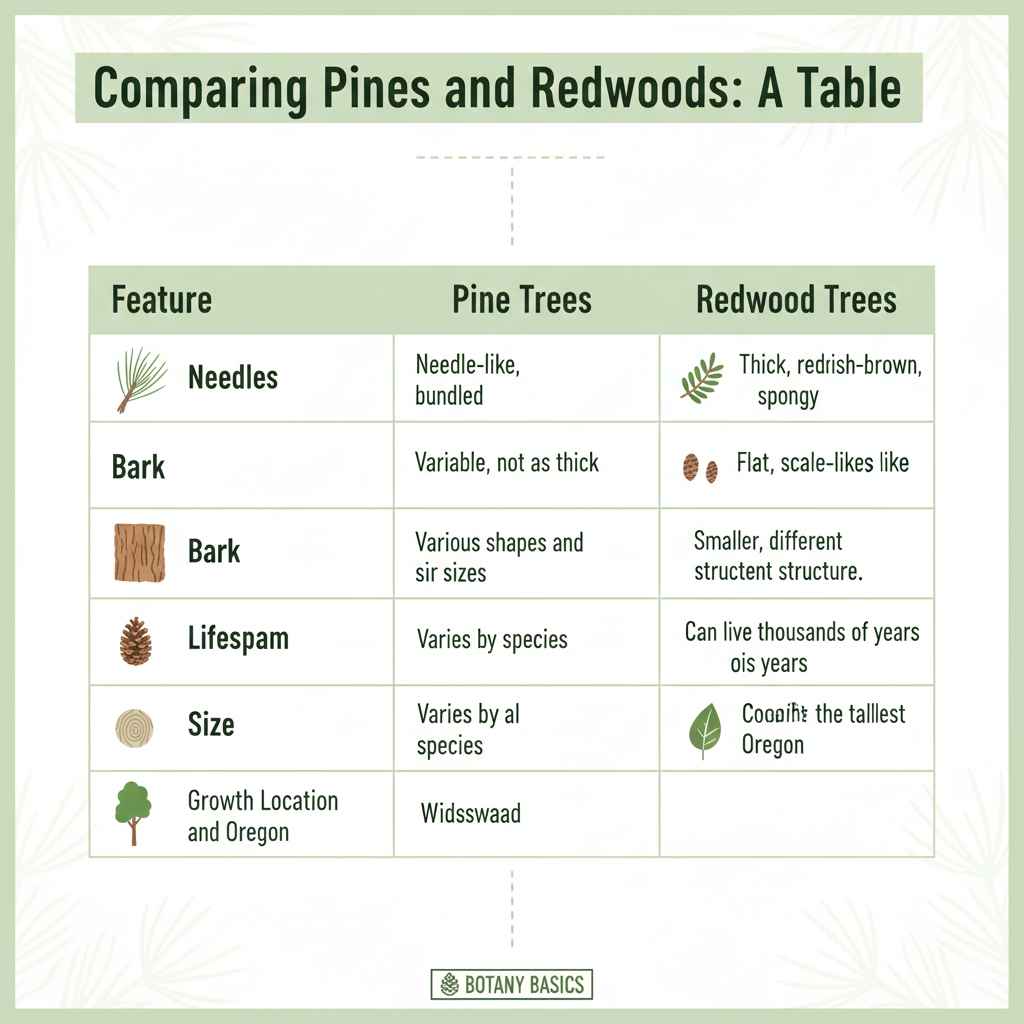
To further clarify the differences, here is a table that compares key features of pine and redwood trees. This table will serve as a quick reference guide.
| Feature | Pine Trees | Redwood Trees |
|---|---|---|
| Needles | Needle-like, bundled | Flat, scale-like |
| Bark | Variable, not as thick | Thick, reddish-brown, spongy |
| Cones | Various shapes and sizes | Smaller, different structure |
| Lifespan | Varies by species | Can live thousands of years |
| Size | Varies by species | Among the tallest trees |
| Growth Location | Widespread | Coastal California and Oregon |
This side-by-side comparison offers quick insights into the two tree types. Each row provides a useful key difference, making it easy to spot the trees. The table can serve as an easy way to understand the main characteristics.
Frequently Asked Questions
Question: Are all conifers pine trees?
Answer: No, not all conifers are pine trees. Pines are a type of conifer, but conifers encompass a much broader group of trees. Other examples of conifers include firs, spruces, and redwoods.
Question: Can pine trees and redwood trees grow together?
Answer: No, pine trees and redwood trees don’t usually grow together naturally. Redwoods prefer a specific coastal environment, while pines can be found in a variety of habitats. However, in parks and some managed areas, there may be some instances where they are planted near each other.
Question: Do redwoods have pine cones?
Answer: No, redwood trees have their own cones, but these cones are smaller and different in structure than the cones of pine trees. The cones are essential for the redwood’s reproduction, but they don’t look like pine cones.
Question: What is the main purpose of the thick bark on redwood trees?
Answer: The thick bark on redwood trees protects them from fire and pests. It acts as an insulation layer that shields the tree’s inner tissues, allowing the trees to survive even if the bark is damaged.
Question: Why are redwood trees so tall?
Answer: Redwood trees grow so tall due to a combination of factors, including abundant moisture from coastal fog and access to sunlight. Their genetic makeup also contributes, as does the absence of strong winds in their environment. These elements allow them to reach great heights.
Final Thoughts
We’ve explored the question of “Are Redwood Trees Pine Trees? The Truth.” We learned that while they share some similarities as conifers, they are different species with distinct characteristics. Pine trees have needle-like leaves in bundles and cones of various sizes. Redwoods have flat, scale-like needles, thick reddish-brown bark, and are some of the tallest trees on Earth. Now, you can easily tell the difference between these two majestic trees. When you see a tree, remember their key features and location. This will help you distinguish them with confidence.
So, the next time you’re in a forest or park, take a closer look at the trees. Observe their needles, bark, and cones. See if you can tell them apart. Appreciating their unique features and knowing their differences will make your time outdoors even more interesting. Keep learning, and enjoy the wonders of nature!