How to Attach Wood to Metal Pipe: Pipe Straps & Clamps Guide
The fastest, most reliable way to attach wood to metal pipe is a pipe strap clamp – a flat metal band that wraps around the pipe and bolts down to a flat mounting point on the wood. It works on any pipe wall thickness, which is the detail that trips people up. Self-tapping screws are a valid shortcut too, but only on thick-wall pipe like Schedule 40 or 80 steel; drive one into thin-wall conduit or EMT and it will strip out, crack the pipe wall, or just spin in place without ever biting. This guide covers both methods, when each one actually holds, and the quick wall-thickness check that decides which to use.
Pipe Straps vs. Self-Tapping Screws: Pick By Wall Thickness
Best Pipe Strap Clamp Kit
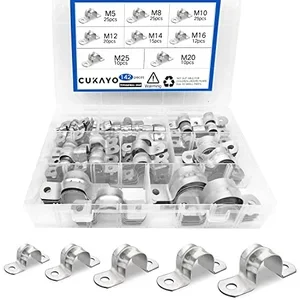 |
CUKAYO 142-Pc Pipe Strap Clamp Assortment Kit – $17.99 Covers the pipe strap method below on 8 common pipe sizes, so one kit fits nearly any round stock you’re mounting wood to.
|
Pipe straps are the standard hardware for this job for a reason: they clamp around the outside of the pipe rather than penetrating it, so wall thickness is irrelevant. A strap holds just as securely on 22-gauge electrical conduit as it does on heavy Schedule 80 pipe. Self-tapping screws only belong in the second case. If you’re not sure which category your pipe falls into, the wall-thickness check below settles it before you pick up a drill.
Why Pipe Wall Thickness Decides the Method
A 1-inch Schedule 40 steel pipe has a wall roughly 0.133 inches thick; Schedule 80 in the same diameter runs closer to 0.179 inches. That’s enough solid metal for a self-tapping screw to cut real threads and hold. Thin-wall conduit and EMT are a different animal – wall thickness on common sizes runs anywhere from about 0.042 to 0.083 inches, barely more than a soda can in places. A self-tapping screw driven into metal that thin usually does one of three things: it strips the shallow threads it just cut, it cracks or bulges the pipe wall outward, or it never bites at all and just spins on the curved surface. None of those failures show up until the joint is loaded and the wood shifts.
There’s a second problem specific to round stock that flat sheet metal doesn’t have: curvature. A screw tip wants to skate sideways across a curved surface instead of biting straight in, which is why pilot holes matter more here than on a flat bracket. A pipe strap sidesteps the whole issue – it only needs two flat screw holes going into the wood, never into the pipe.
Tools and Materials You’ll Need
Both methods below share most of the same tool list, so gather these before starting rather than mid-project:
- Pipe strap clamps sized to your pipe’s measured OD (see the kit above, or a single strap from a hardware store if you only need one size)
- Tape measure or calipers to get the actual outer diameter, not the nominal size printed on the pipe
- Drill/driver with wood-bit and metal-bit sets
- Self-tapping metal screws rated for the pipe’s thickness, if using the screw method on Schedule 40/80 pipe
- Wood screws for the strap method
- Clamp or second pair of hands to hold the wood in position while you work
Step-by-Step: Mounting Wood with a Pipe Strap Clamp
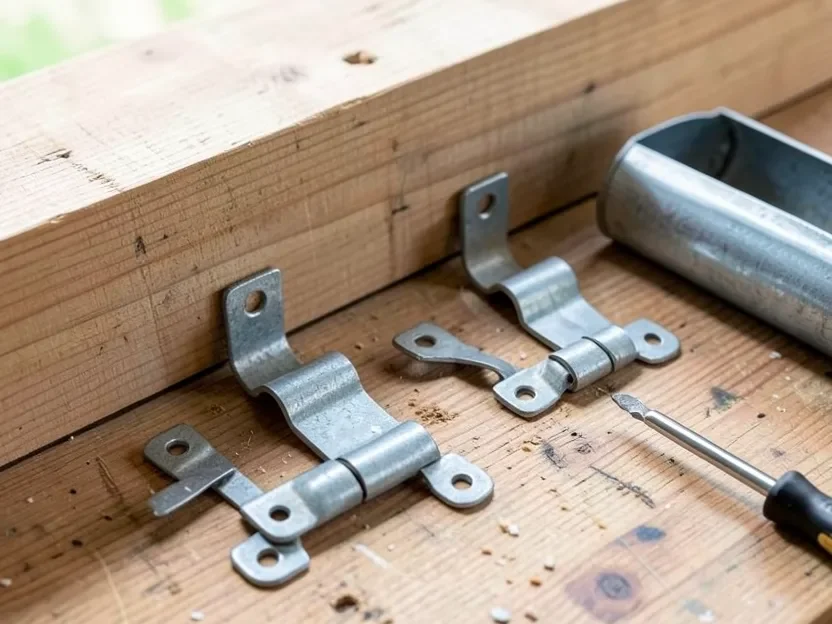
- Measure the pipe’s outer diameter (not the nominal size printed on it – actual OD) and pick the matching strap size from the kit.
- Hold the wood against the pipe in its final position and mark where the strap’s two mounting holes will land on the wood.
- Pre-drill pilot holes at those marks so the wood doesn’t split when you drive the screws.
- Wrap the strap over the pipe and align both ends with the pilot holes.
- Drive a wood screw through each end of the strap into the pilot holes, snugging both evenly rather than tightening one side all the way first.
- Check that the strap sits flush against the pipe with no gap – a gap here means you sized up and the wood will rock under load.
Step-by-Step: Self-Tapping Screws (Schedule 40/80 Pipe Only)
Only use this method once you’ve confirmed the pipe is thick-wall – Schedule 40 or 80, or anything that doesn’t flex or dent when you press on it with a thumb. Confirmed thin-wall? Go back to the strap method above.
- Clamp the wood in place against the pipe so it can’t shift while drilling.
- Drill a small pilot hole through the wood and just into the pipe surface – this keeps the screw tip from skating across the curve.
- Use a self-tapping (self-drilling) metal screw rated for the pipe’s material and thickness; a standard wood screw won’t cut metal threads.
- Drive the screw at a slow, steady speed. Rushing it is the most common way to strip the hole you just cut.
- Repeat with a second screw at least a few inches from the first to stop the wood from pivoting around a single point.
Common Mistakes That Ruin the Connection
- Guessing the strap size instead of measuring OD: a strap that’s slightly too big leaves a gap that lets the wood rock loose over time.
- Self-tapping screws on thin-wall pipe: covered above, and still the most common failure reported with this project.
- No pilot hole on a curved surface: the screw skids sideways instead of starting straight, leaving an angled, weak hole.
- Mixing metals without a barrier: a bare steel screw or strap against galvanized or aluminum pipe in a damp spot sets up galvanic corrosion at the contact point over months.
- Tightening one strap screw fully before the other: this cants the strap sideways and the wood ends up sitting slightly crooked on the pipe.
Related Wood-to-Metal Projects
Not every wood-to-metal job involves round pipe. If you’re mounting wood rails to a vertical fence post, deck post, or other structural round or square post, see how to attach wood to a metal pole for line-post adaptors and fence-specific hardware sized for that job. If the metal you’re working with is flat sheet or bracket stock rather than round pipe, the fastener choice and gauge math are different – see how to fasten wood to metal for that case.
Frequently Asked Questions
How do you attach wood to a metal pipe without drilling into the pipe?
Use a pipe strap clamp. It wraps around the outside of the pipe and bolts only into the wood, so the pipe itself is never drilled or threaded – this also makes it the only reliable option on thin-wall conduit.
Will self-tapping screws work on thin-wall pipe or conduit?
Usually not reliably. Thin-wall conduit and EMT run roughly 0.042 to 0.083 inches thick, which often isn’t enough metal for a self-tapping screw to cut a thread that holds – it tends to strip, crack the pipe wall, or spin without biting. A pipe strap clamp avoids the problem entirely since it doesn’t penetrate the pipe.
What’s the difference between attaching wood to a pipe versus a metal pole or post?
“Pole” and “post” projects on this site usually mean vertical, load-bearing structural members like fence posts or deck supports, which are typically mounted with line-post adaptors or fence-rail brackets sized to a specific post diameter. “Pipe” projects are more often round stock used for furniture, shelving, or fixture mounting, where a pipe strap clamp or self-tapping screw (on thick-wall pipe) is the simpler fix. See the related-projects section above for links to both.
Do I need anti-corrosion treatment between wood and metal pipe?
For indoor, dry projects, no special treatment is needed. Outdoors or anywhere damp, use stainless steel hardware (like the strap kit above) rather than bare steel, and avoid letting galvanized pipe sit in direct contact with a dissimilar bare metal for months at a time – that combination is what actually drives galvanic corrosion at the contact point.
Conclusion
Check the pipe’s wall thickness first and the rest of the decision follows. Thin-wall conduit or anything that flexes under thumb pressure gets a pipe strap clamp, no exceptions. Schedule 40 or 80 pipe can take a self-tapping screw if you pre-drill a pilot hole to stop it skating on the curve. Either way, measure before you buy hardware – a strap sized for the wrong OD or a screw meant for the wrong wall thickness is the difference between a mount that holds for years and one that works loose in a season.
Sponsored / affiliate links. As an Amazon Associate I earn from qualifying purchases. I may earn additional commission from eligible campaigns.
 Woodworking Guide Rails Clamp Dovetail Clamps Adjustable Track Sawing Rails Clamp for Carpentry Table Track Sawing Tool
 Stainless Steel Wood Screws #14 x 1 Inch Self Tapping Screws 50pcs, Flat Head Phillips 18/8 Stainless Steel Sheet Metal Screws for Cabinet, Wooden, Indoor and Outdoor Use by IMSCREWS