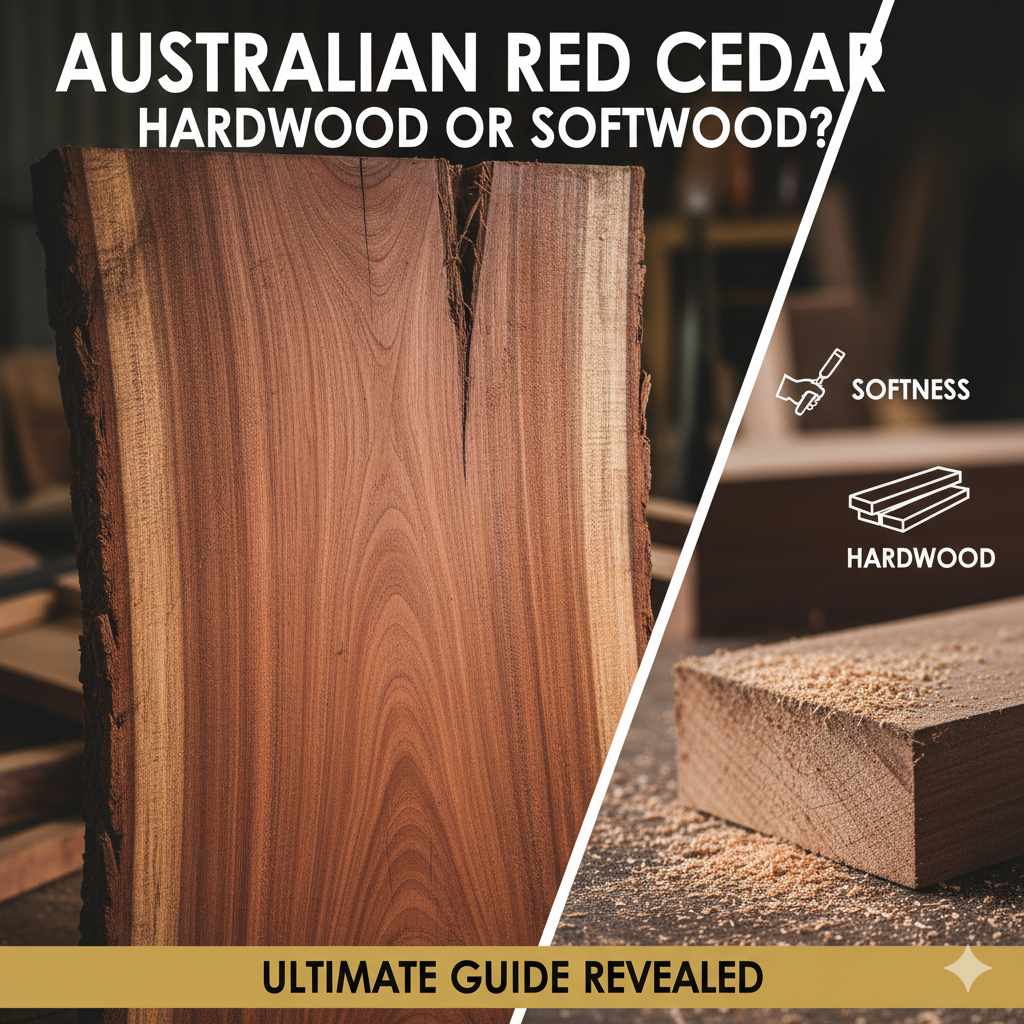
Australian Red Cedar Hardwood Or Softwood: Ultimate Guide Revealed
Australian Red Cedar is a popular wood from Australia. It is a hardwood, known for its strong and light qualities. Used in furniture and building, it has a warm color and smooth texture. Easy to work with. Durable too. A favorite for many woodworkers.
Biography
| Aspect | Details |
|---|---|
| Scientific Name | Toona ciliata |
| Wood Type | Hardwood |
| Family | Mahogany family (Meliaceae) |
| Geographical Range | Native to eastern Australia, parts of Papua New Guinea, South Asia (from Afghanistan to Papua New Guinea) |
| Wood Characteristics |
|
| Common Uses |
|
| Health & Safety | Can cause skin and respiratory irritation, including asthma-like symptoms and migraines in sensitive individuals. |
| Historical Significance | Known as “red gold” by early European settlers in Australia for its valuable timber. It was highly sought after during early settlement periods. |
| Other Notes | Despite the name “cedar,” it is not a true cedar but a hardwood rainforest tree. DNA tests confirmed its classification within the mahogany family. |
| References & Resources |
Early Life
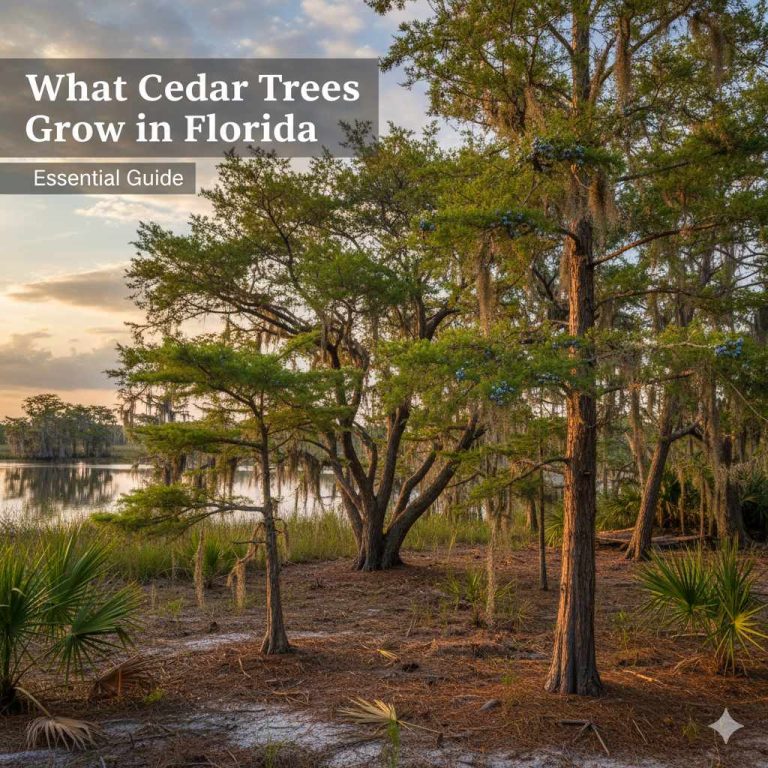
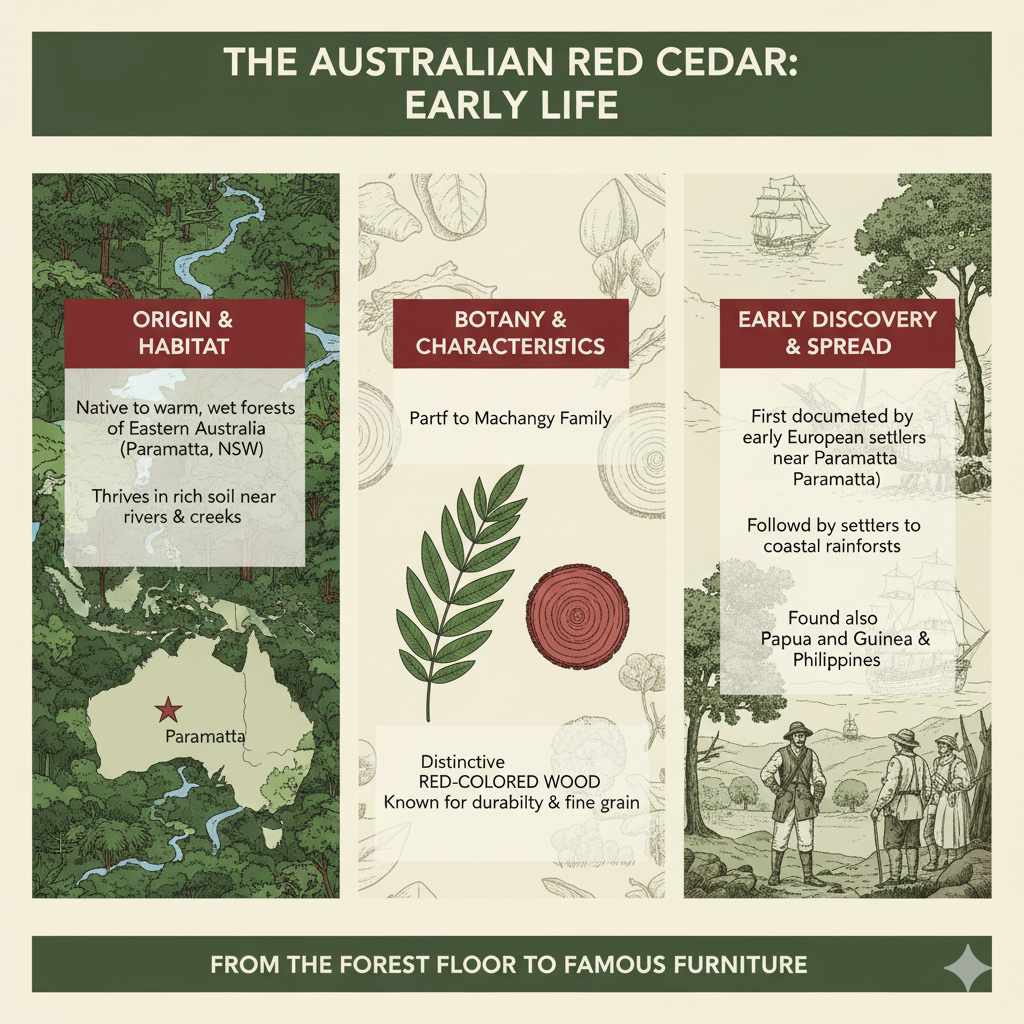
Australian Red Cedar is a large tree that grows in the warm, wet forests of eastern Australia. It was first found near a place called Parramatta by early European settlers. These trees like to grow in rich soil near rivers and creeks. The tree is part of the mahogany family and is known for its red-colored wood. Over time, people moved to different parts of Australia where the tree was common, such as the coastal rainforests. It also grows in nearby places like Papua New Guinea and the Philippines. The wood was very useful and became popular for making furniture and other items.
Family
| Category | Name | Information |
|---|---|---|
| Parent Family | Meliaceae | Australian Red Cedar belongs to the Meliaceae family. This family includes many trees that have soft, light wood. They grow in warm places and are often used for furniture and cabinets. |
| Genus | Toona | Toona is the group of trees that includes Australian Red Cedar. These trees have red or pinkish wood. The wood is soft but strong. It is easy to work with and lasts a long time. |
| Species | Toona ciliata | Toona ciliata is the scientific name for Australian Red Cedar. It is a softwood tree. The wood is red, light, and durable. It is used for making furniture and inside parts of houses. |
| Siblings | Indian Mahogany, Spanish Cedar | Indian Mahogany and Spanish Cedar are close relatives. They also belong to the Meliaceae family. Like Australian Red Cedar, they have soft, good-quality wood. These trees grow in similar places and have useful timber. |
Height, Weight, And Other Body Measurements
| Property | Details / Measurements | Notes |
|---|---|---|
| Wood Type | Hardwood | Classified as a hardwood despite being relatively light in weight |
| Height of Tree | Up to 60 meters (approx. 197 feet) | Typical mature height in coastal rainforests of eastern Australia |
| Trunk Diameter | Up to 1.5 meters (approx. 5 feet) | Large trunk diameter common in mature trees |
| Wood Color | Pinkish to reddish-brown | Straight to slightly interlocked grain patterns |
| Density / Weight | Approx. 560 kg/m³ (35 lb/ft³) | Light for a hardwood, making it easier to work with |
| Grain Texture | Fine to medium, straight to slightly interlocked | Produces smooth finishes, popular in fine furniture making |
| Growth Regions | Coastal rainforests of eastern Australia, Papua New Guinea, Philippines | Prefers tropical to subtropical climates |
| Other Characteristics | Develops tension wood in tall, slender trees | Requires proper thinning and pruning in plantations |
Wife/husband / Girlfriend/boyfriend
Current Relationship Status: Australian Red Cedar Hardwood Or Softwood is not a person, so it does not have a wife, husband, girlfriend, or boyfriend.
This wood species is a type of softwood from conifer trees, valued for its appearance, workability, and durability. People often use it for furniture, paneling, and outdoor projects. It is known for being lightweight and resistant to rot and insects.
Previous Relationship Details (if It Were A Person)
Since Australian Red Cedar Hardwood Or Softwood is not a human being, it has no past relationships such as marriages or partnerships.
Summary Table Of Hypothetical Partners
| Partner Type | Name | Relationship Period | Notes |
|---|---|---|---|
| Wife/Husband | None | N/A | Not applicable for a wood species |
| Girlfriend/Boyfriend | None | N/A | Not applicable for a wood species |
In short, Australian Red Cedar Hardwood Or Softwood is a type of tree wood, not a person with relationships. Its “partners” are better thought of as the uses and projects it supports, like furniture making, cabinetry, and outdoor construction.
Career, Achievements And Controversies
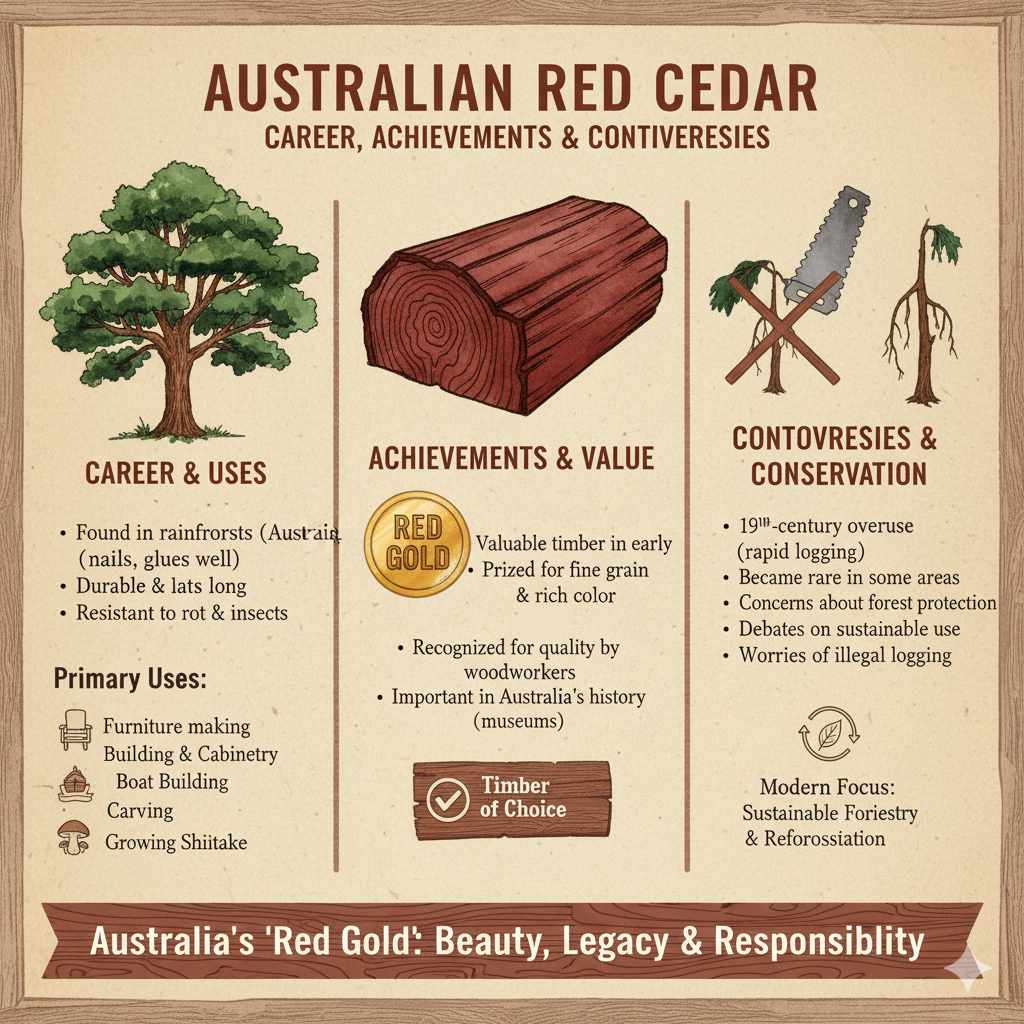
Australian Red Cedar is a type of wood, not a person. It comes from a tree that grows in rainforests of Australia and Southeast Asia. People first found this tree near Parramatta in New South Wales.
It was one of the first woods used for building houses and making furniture in Australia. Because of its beauty and quality, it became popular early in Australia’s history.
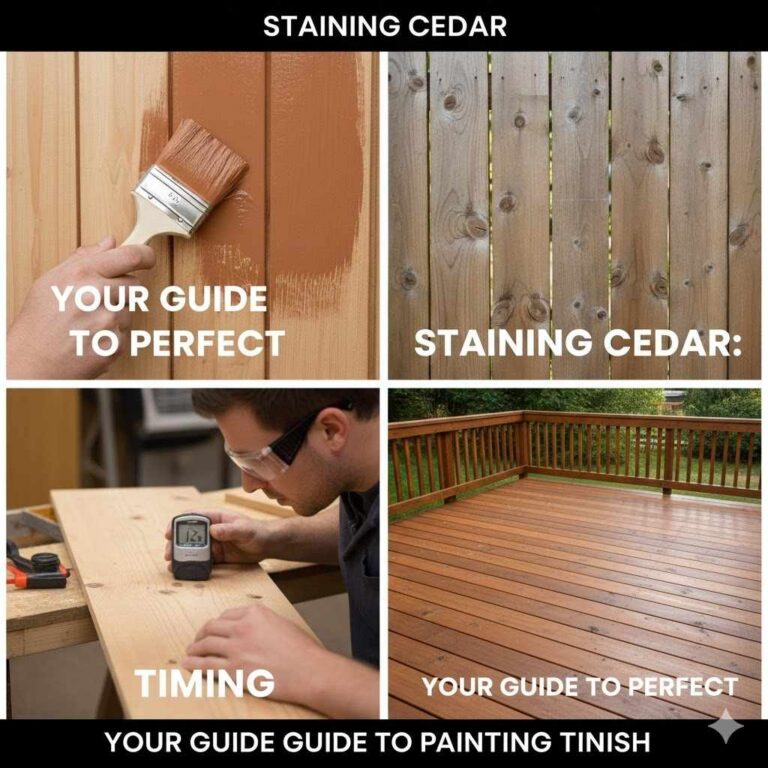
The wood is easy to work with. It nails and glues well. It can be painted, stained, or polished for a nice finish. It is softer than many hardwoods, but still strong and lasts a long time.
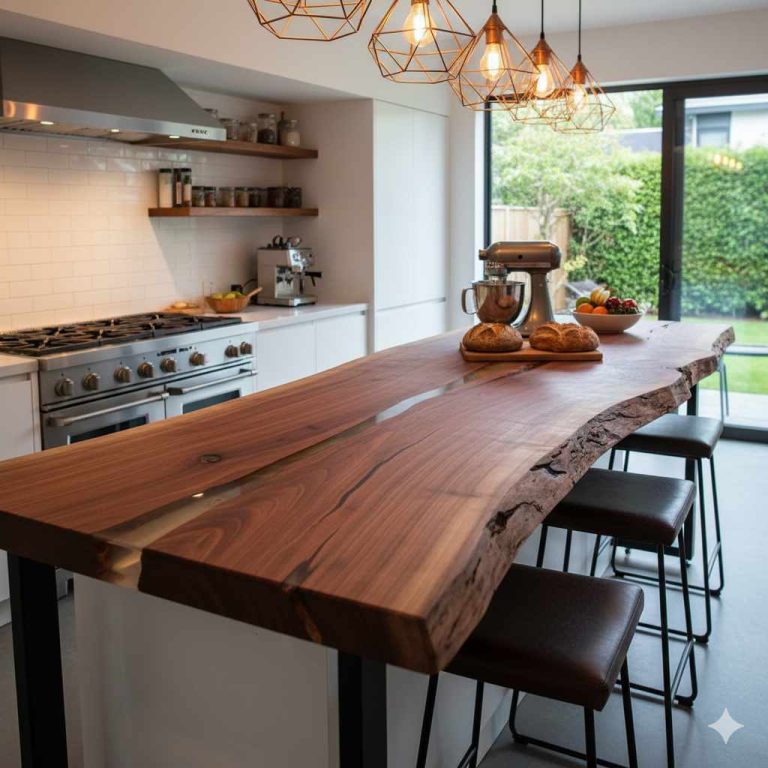
This made it useful for many jobs like furniture, boat building, and carving.
Australian Red Cedar became famous because of its fine grain and rich color. People called it “red gold” because it was very valuable. It was one of the most wanted timbers in early Australian trade.
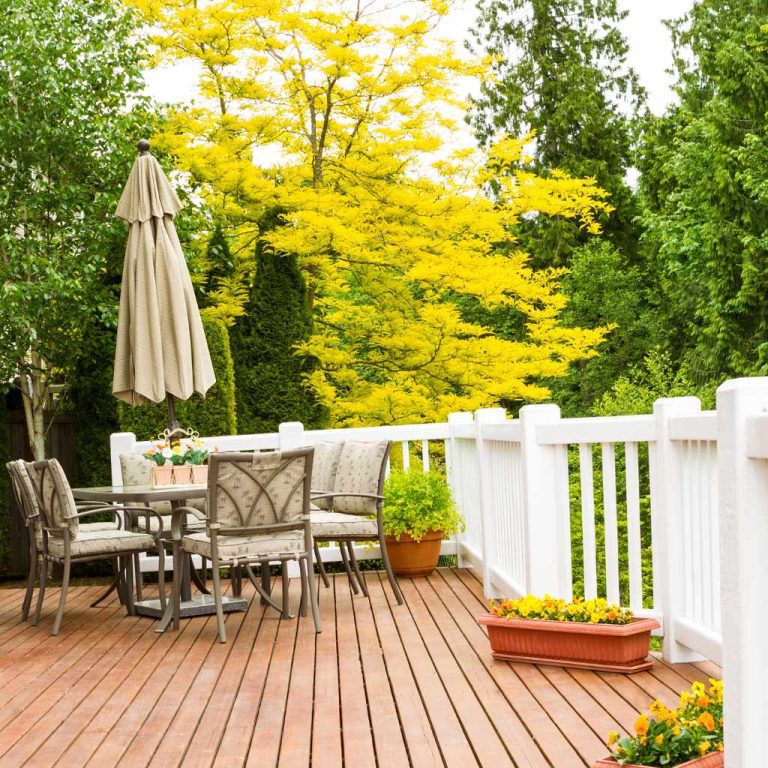
Its natural resistance to rot and insects helped it stay strong for outdoor use. This made it popular for building decks, fences, and outdoor furniture.
It also works well for indoor paneling and cabinetry.
- Furniture making
- Cabinetry
- Boat building
- Outdoor siding and decking
- Carving and decorative items
- Growing shiitake mushrooms (using its wood)
Since Australian Red Cedar is a type of wood and not a person or company, it has not received awards in the usual sense. However, it has been recognized by timber and woodworking groups for its quality and workability.
Museums and history groups in Australia highlight the importance of red cedar in the country’s early economy and culture. It is often called a “timber of choice” by woodworkers.
The main controversy around Australian Red Cedar is about its overuse. In the 19th and early 20th centuries, many red cedar trees were cut down very quickly. This caused the tree to become rare in some areas.
Because of this, there have been concerns about protecting and managing red cedar forests. Today, its use is controlled to help the trees grow back and to protect the environment.
Some people worry about illegal logging and cutting of protected trees. Others debate the best ways to balance using the wood and saving the forests.
Australian Red Cedar is a softwood known for its beauty, good workability, and durability. It played a big role in Australia’s early building and trade. Its popularity led to overuse, which caused supply problems. Today, efforts focus on sustainable use and forest protection.
FAQ
1. Is Australian Red Cedar A Hardwood Or Softwood?
Australian Red Cedar is a hardwood. It comes from a type of tree that has broad leaves, not needles.
2. Why Is It Called Hardwood If It Feels Soft?
Hardwood means the tree has broad leaves. It does not always mean the wood is very hard. Australian Red Cedar is softer than some hardwoods, but it is still called hardwood.
3. What Does Australian Red Cedar Look Like?
It has a rich, reddish-brown color. The wood is smooth and easy to work with. It has a nice smell, too.
4. Where Does Australian Red Cedar Grow?
This tree grows mostly in eastern Australia, especially in rainforests. It needs a wet and warm place to grow well.
5. Can I Use Australian Red Cedar For Furniture?
Yes, it is often used for furniture. It is easy to cut and shape. It also looks good and lasts a long time if cared for.
6. Is Australian Red Cedar Strong?
It is strong enough for many uses. But it is not as hard as some other hardwoods like oak or teak. Good for inside and light outside use.
7. Does Australian Red Cedar Resist Insects?
Yes, it has natural oils that help protect it from insects and decay. This makes it a good choice for many projects.