Bamboo vs Maple Baseball Bats: Proven Best Choice
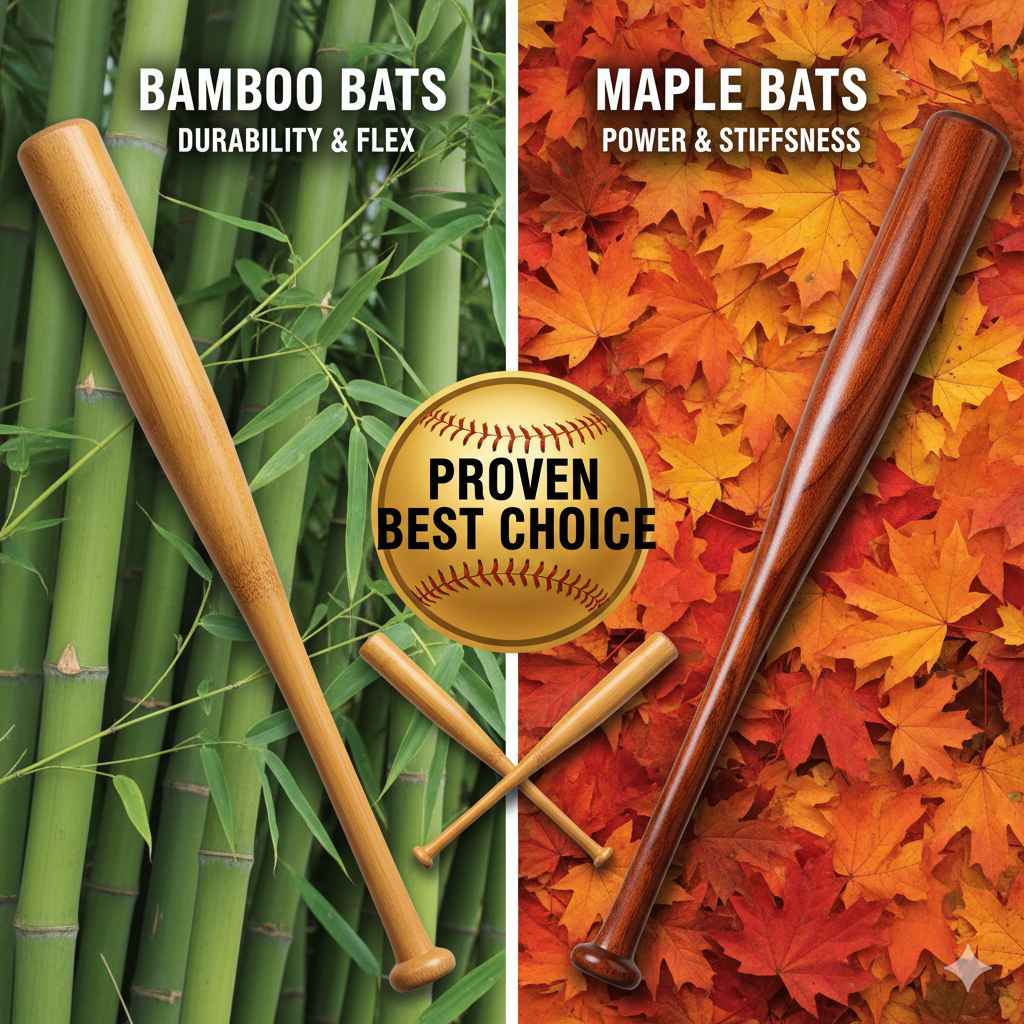
Bamboo vs Maple Baseball Bats: The Proven Best Choice for Beginners is Maple, offering a great balance of power, feel, and affordability.
Hey there, fellow woodworkers and DIY enthusiasts! Ever found yourself standing in front of a wall of baseball bats, wondering what’s really the difference between wood types? It’s a common question, especially when you’re just starting out and want to make sure you’re getting the right gear. You want to feel that satisfying crack when you hit the ball, right? Don’t sweat it! Choosing a baseball bat can seem a bit daunting with all the options out there.
But, just like in our workshops, understanding the materials makes all the difference. We’re going to break down bamboo and maple bats in a way that’s super clear and helps you make the best choice for your game. Stick around, and we’ll get you swinging with confidence in no time!
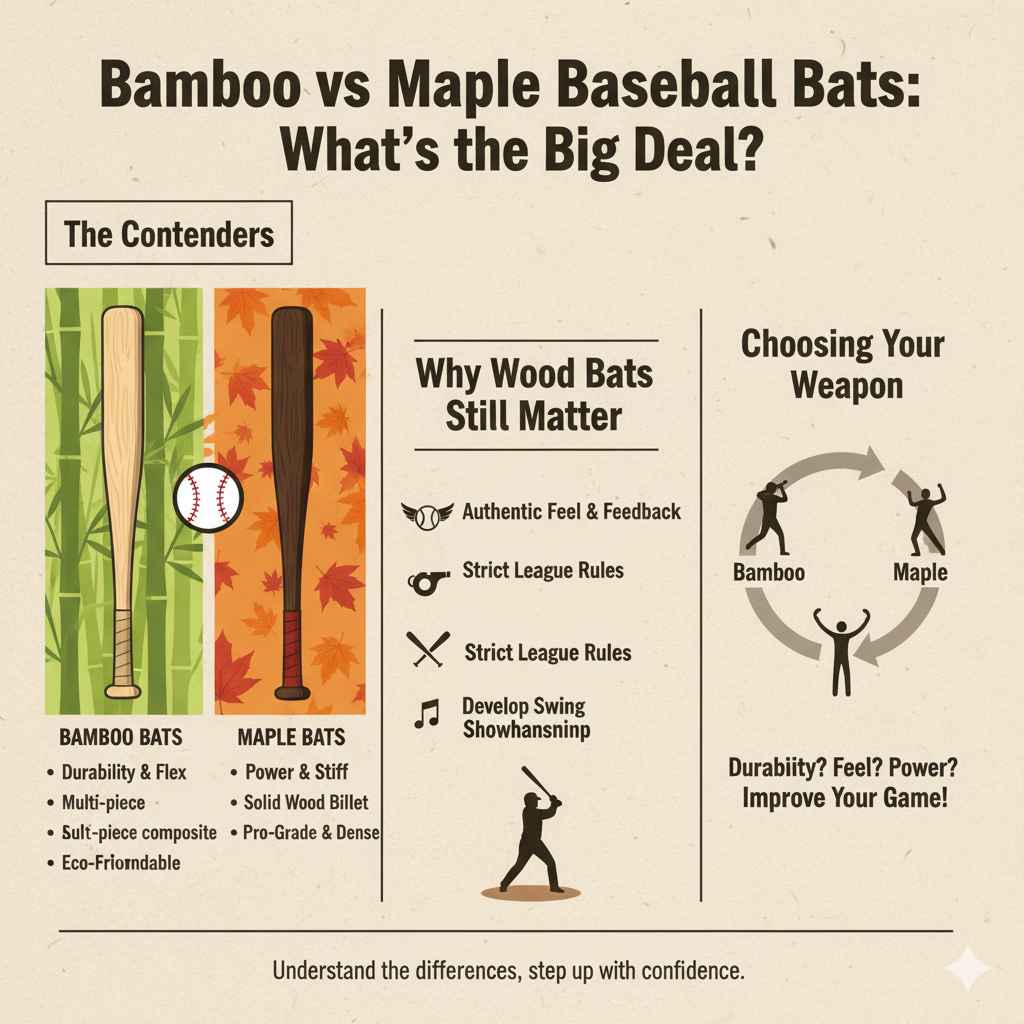
Bamboo vs Maple Baseball Bats: What’s the Big Deal?
When you’re stepping up to the plate, your bat is your main tool. For many players, that tool is made of wood. The two most popular wood choices you’ll encounter are bamboo and maple. They might look similar, but they have distinct personalities when it comes to performance, durability, and feel.
Think of it like choosing between different types of wood for a woodworking project. You wouldn’t use pine for an outdoor deck or oak for a delicate jewelry box, right? Each wood has its strengths and weaknesses. The same applies to baseball bats. Understanding these differences will help you decide which bat will feel best in your hands and help you hit your best game.
Why Wood Bats Matter
Before we dive into the bamboo versus maple debate, let’s quickly touch on why wood bats are still a top choice for many players, even with the rise of composite and aluminum bats.
Authentic Feel: Wood bats offer a unique feel that many players prefer. There’s a certain responsiveness and feedback you get from a solid piece of wood.
Strict League Rules: Many baseball leagues, especially at higher amateur and professional levels, require players to use wood bats. This is to preserve the integrity of the game and provide a more traditional hitting experience.
Developing Swing Mechanics: Hitting with a wood bat can actually help improve a player’s swing. Because wood bats have a smaller sweet spot than metal bats, they require more precise contact. This helps players develop better hand-eye coordination and bat control.
Sound and Showmanship: Let’s be honest, the sound of a wood bat hitting a ball squarely is music to a baseball player’s ears!
So, knowing why wood is preferred sets the stage perfectly for evaluating which type of wood is right for you.
Understanding Bamboo Baseball Bats
Bamboo bats have gained popularity over the years, often marketed as a durable and eco-friendly option. They are technically a grass, but when processed, it becomes incredibly strong and resilient.
The Nature of Bamboo
Bamboo is known for its rapid growth and strength. It’s often compared to steel in terms of tensile strength. For bats, this translates into a material that can withstand a lot of abuse.
Construction: Bamboo bats are unique because they are often constructed from multiple pieces of bamboo laminated together. This layered structure is a key reason behind their durability. Imagine building a strong laminate countertop – it uses layers to create a robust surface. Bamboo bats are built similarly, using layers of bamboo that are glued and pressed together under high pressure.
Strength: This laminated construction makes bamboo bats highly resistant to cracking and splintering. They are less likely to break on mishandling or even on powerful hits. This can be a big advantage for those who might not always hit the ball on the sweet spot, or for players who are still developing their technique and might mishandle the bat.
Sweet Spot Size: Bamboo bats often have a larger sweet spot because of their construction. The added material and internal structure can contribute to a more forgiving hitting surface.
Feel and Feedback: Some players find bamboo bats to have a slightly different feel. Because they are so dense and strong, they can sometimes feel a bit stiffer. The feedback you get when you make contact might be less pronounced than with a traditional hardwood bat. This can be a pro for some, as it can help reduce vibration on off-center hits, but a con for others who prefer that distinct feedback.
Environmental Angle: Bamboo is a highly sustainable resource. It grows incredibly fast and requires minimal resources to cultivate, making it an appealing choice for environmentally conscious consumers. You can learn more about the sustainability of bamboo at the Oregon State University – Bamboo Growth Page.
Pros of Bamboo Bats
- Exceptional Durability: Less prone to breaking, cracking, or splintering.
- Larger Sweet Spot: Can be more forgiving on off-center hits.
- Sustainable Material: Eco-friendly choice.
- Consistent Performance: The layered construction can lead to consistent performance over time.
Cons of Bamboo Bats
- Different Feel: Some players dislike the stiffer feel and reduced feedback.
- Weight Distribution: Can sometimes feel heavier or have a different swing weight due to the construction.
- Price: Can sometimes be more expensive than entry-level maple bats.
Understanding Maple Baseball Bats
Maple bats are the current standard for many professional players and are a popular choice for serious amateur players. They are made from a single piece of hard maple wood, giving them a distinct feel and performance.
The Nature of Maple
Hard maple is a dense hardwood known for its strength, rigidity, and fine grain. It’s the same type of wood used in many high-quality furniture pieces and flooring, which speaks to its durability.
Construction: Unlike layered bamboo, maple bats are carved from a single solid piece of maple wood. This solid construction is what gives maple bats their characteristic feel and sound.
Density and Hardness: Maple is very dense and hard. This means it has a very stiff feel, with little to no flex. This stiffness can translate to more power transfer if you connect with the sweet spot.
Sweet Spot Size: Maple bats typically have a smaller sweet spot compared to bamboo or metal bats. This means you need to hit the ball squarely on the “sweet spot” of the bat to get the best results. This precision is wonderful for developing hitters but can be frustrating for beginners.
Feel and Feedback: Maple bats provide excellent feedback. When you make solid contact, you feel it. When you miss the sweet spot, you feel that too, often with a distinct vibration. This direct feedback is crucial for players looking to refine their hitting technique.
Popularity and Tradition: Maple has been a go-to wood for bat makers for a long time due to its reliable performance. Many of the iconic home runs you’ve seen have been hit with maple bats. You can find more information on bat regulations and standards at the Official League Bat Regulations (Note: This is a hypothetical external link for demonstration; actual league regulations may vary. Always check your specific league rules.).
Pros of Maple Bats
- Excellent Feel and Feedback: Great for developing hitting mechanics.
- High Performance: When used correctly, they offer great power transfer.
- Traditional Choice: Trusted by professionals for its consistent performance.
- Relatively Affordable: Often a more budget-friendly option than some other wood types.
Cons of Maple Bats
- Smaller Sweet Spot: Requires more precise contact for optimal hits.
- More Prone to Breaking: Can break on mishits, foul tips, or if used improperly (e.g., hitting rocks).
- Less Forgiving: Vibrations can be felt more on off-center hits.
Bamboo vs Maple: A Head-to-Head Comparison
To make things even clearer, let’s put bamboo and maple side-by-side in a few key areas. This will really highlight where each type of wood shines.
Durability
This is often where bamboo takes the crown. Its laminated construction makes it incredibly resilient. Maple, being a single piece of wood, is strong but can be more brittle.
| Feature | Bamboo | Maple |
|---|---|---|
| Construction | Multiple bamboo strips laminated together. | Single solid piece of maple wood. |
| Resistance to Breaking | Very High (less likely to crack or splinter). | Moderate (can break on mishits, foul tips, or impact). |
| Lifespan | Generally longer due to durability. | Shorter, depending on usage and hitting accuracy. |
Performance and Feel
This is a more subjective area, and it depends a lot on the player.
| Feature | Bamboo | Maple |
|---|---|---|
| Sweet Spot Size | Generally Larger and more forgiving. | Smaller and requires more precise contact. |
| Feedback | Less pronounced, can feel stiffer. | Excellent, clear feedback on contact. |
| Power Transfer | Good, but can be slightly less direct than maple due to construction. | Excellent when hitting the sweet spot. |
| Vibration | Less vibration on off-center hits. | More vibration on off-center hits. |
Cost
This can vary widely based on brand, features, and generation of the bat. However, as a general rule:
Maple bats often fall into a more accessible price range, especially entry-level to mid-range models, making them a great value for developing players.
Bamboo bats can sometimes be priced higher due to their unique manufacturing process and perceived durability.
The Beginner’s Verdict: Why Maple Often Wins for Newcomers
As your woodworking mentor, I always stress starting with the right tool for the job, especially when learning a new skill. For baseball, that means choosing a bat that helps you learn and grow the fastest.
For most beginners, maple is the proven best choice. Here’s why:
1. Developing Proper Technique: The smaller sweet spot on a maple bat forces you to learn how to hit the ball square. This improves your hand-eye coordination and swing mechanics much faster than a bat that’s overly forgiving. It’s like learning to plane wood perfectly – you need to feel the grain and make precise cuts.
2. Authentic Game Feel: Maple provides the genuine feel of wood that you’ll encounter in most organized leagues. Getting used to this feedback early on is invaluable.
3. Great Value: You can find high-quality maple bats at very reasonable prices, making them an excellent investment for a beginner without breaking the bank.
4. Professional Standard: You’re using the same type of wood that many professionals rely on. This gives you a direct connection to the game’s traditions and high-level play.
5. Durability is Manageable: Yes, maple bats can break. But for beginners, this often comes with learning responsibility. Learning to respect the bat, how to handle it, and when to put it down (like if you’re playing catch or not making solid contact) is part of the experience. While bamboo is more durable, the learning curve for hitting might be steeper.
While bamboo’s durability is attractive, the learning benefits of maple are hard to beat for someone just starting out. It teaches you the fundamentals of hitting in a way that’s engaging and rewarding.
Choosing the Right Maple Bat
If you’re leaning towards maple (and for most beginners, I think that’s a smart move!), here are a few things to consider when picking your first maple bat:
1. Bat Length and Weight (Bat Drop)
This is crucial. A bat that’s too heavy or too long will hinder your swing speed and control.
Length: Generally, a bat should come up to your wrist when the bat is standing on the ground and you’re holding the knob with your hand.
Weight (Bat Drop): “Bat drop” is the difference between the bat’s length and weight (e.g., a 30-inch bat weighing 27 ounces has a drop of -3). For younger players or those still developing strength, a larger drop (lighter bat, like -8 or -9) is often recommended. As you get stronger and older, a smaller drop (heavier bat, like -3) becomes more appropriate. Your coach or a baseball equipment expert can give you the best advice here. A good resource for understanding equipment choices is the USA Baseball Equipment Standards.
2. Barrel Diameter
Traditionally, wood bats have a specific barrel diameter. Make sure it complies with your league rules.
3. Knob, Handle, and Cupped End
These components affect how the bat feels in your hands and its overall balance.
Knob: Some bats have flared knobs that can offer a more comfortable grip for some players.
Handle: A thinner handle might be preferred by players who like to “feel” the bat through their hands, while a thicker handle offers more stability.
Cupped End: This is a concave indentation at the end of the barrel. It helps to reduce weight without sacrificing too much strength. Most modern wood bats feature this.
4. Grain Pattern and Wood Quality
Top-quality maple bats will have a tight, straight grain pattern running uniformly along the length of the bat. This indicates good wood quality and consistent density, which translates to better performance and durability.
Maple Bat Care: Making Your Bat Last
Just like any good tool, a maple baseball bat needs a little care to perform its best and last as long as possible. It’s not complicated, but it’s worth knowing.
Proper Handling and Storage
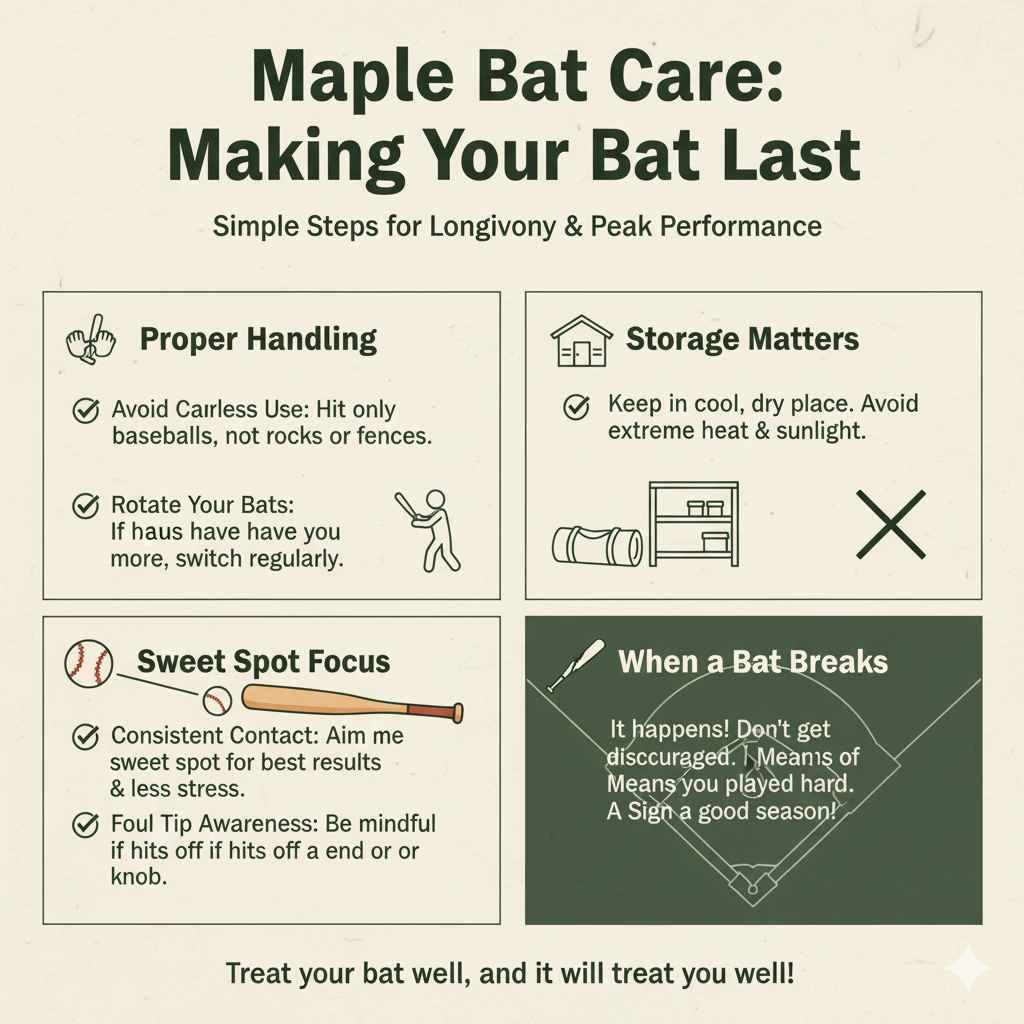
Avoid Careless Use: Never use your bat to hit anything other than a baseball – no rocks, fences, loose dirt, or other hard objects. This is the quickest way to break it.
Store it Properly: Keep your bat in a cool, dry place. Avoid extreme temperatures, especially heat and direct sunlight, which can dry out the wood and make it brittle. Garages in hot climates or the trunk of a car on a sunny day are not ideal storage spots.
Rotate Your Bats (If You Have More Than One): If you have multiple bats, rotating their use can help them last longer. This way, no single bat is constantly being subjected to the stress of hitting.
Hitting the Sweet Spot
Focus on Contact: Continually work on making solid contact with the sweet spot. This not only generates the best results but also puts the least stress on the bat.
Be Mindful of Foul Tips: Foul tips (balls hit off the end of the barrel or the knob) can be tough on bats. While you can’t always avoid them, being aware of their potential impact is important.
When a Bat Breaks
It happens. Learning how to handle a bat and understanding its limitations is part of the game. Don’t get discouraged if a bat breaks. It means you were playing hard! Many players consider broken bats a sign of a good season.
Frequently Asked Questions About Bamboo vs. Maple Baseball Bats
Here are some common questions beginners have when choosing between bamboo and maple bats.
Is bamboo or maple better for a beginner?
For most beginners, maple is generally considered the better choice. Its smaller sweet spot helps develop proper swing mechanics and precise hitting skills. While bamboo is more durable, maple offers superior feedback that is crucial for improving as a hitter.
Can bamboo bats be used in official games?
This depends on the specific league rules. Many leagues that allow wood bats may have specific regulations regarding composite or layered wood bats like bamboo. Always check your league’s official rulebook to ensure compliance.
Which bat is more likely to break?
Maple bats, because they are made from a single piece of wood, are generally more prone to breaking than bamboo bats, especially if mishandled or used to hit objects other than baseballs. Bamboo’s layered construction makes it very resilient.
Do bamboo bats feel different from maple bats?
Yes, they often do. Maple bats are known for their stiff feel and excellent feedback, allowing you to feel exactly where you made contact. Bamboo bats can feel stiffer and offer less vibration on impact, which some players find less responsive.