Behr Paint Dry Time: Essential Tips
Behr Paint Dry Time: Get a Smooth Finish with These Essential Tips! Learn how to properly time your coats to avoid sticky situations and achieve a beautiful, durable paint job every time.
Painting a room can be a really rewarding DIY project. You pick out a color you love, roll up your sleeves, and envision a fresh new look. But then comes the waiting. How long do you really have to wait for Behr paint to dry before applying another coat? It’s a question many beginners ask, and getting it wrong can lead to sticky surfaces, brush marks, and a less-than-perfect finish. Don’t worry! With a few simple tips, you can master Behr paint’s dry times and ensure your painting project goes smoothly from start to finish. We’ll walk you through everything you need to know.
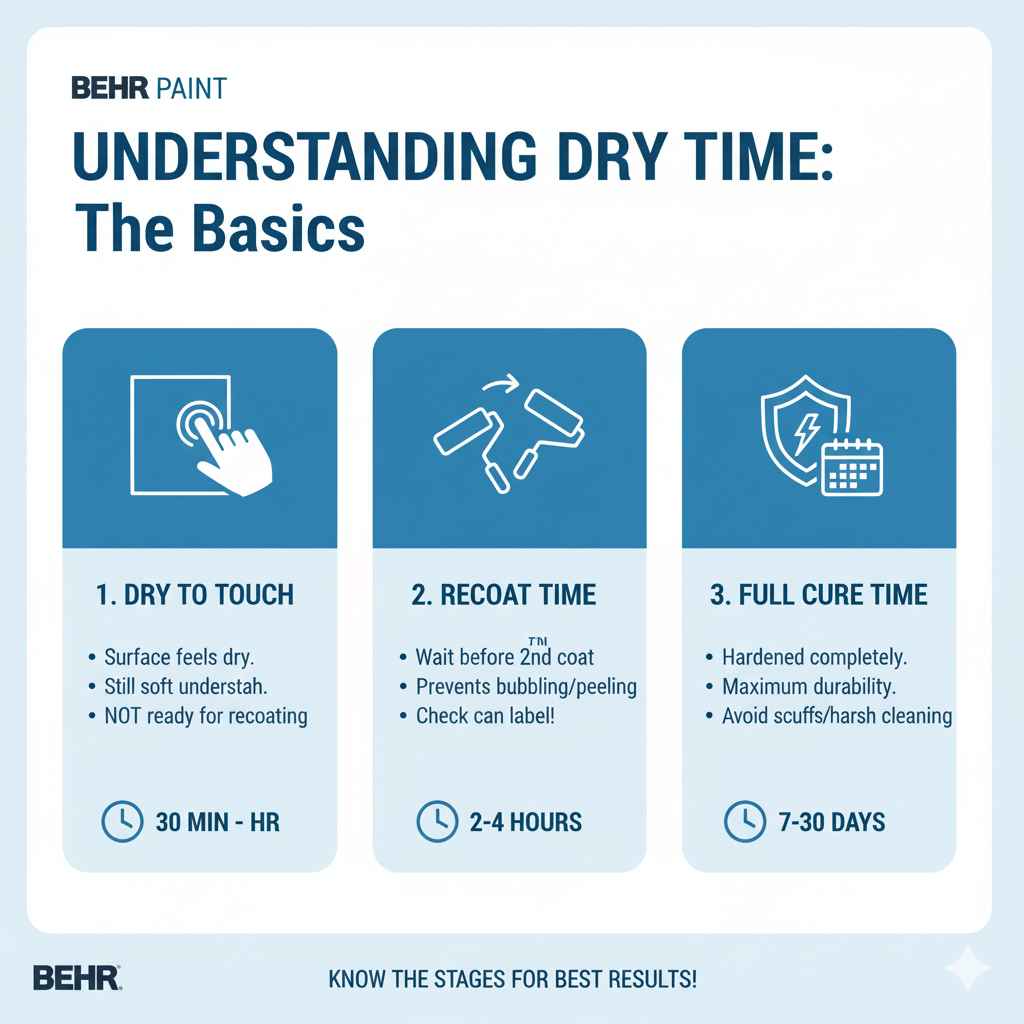
Understanding Dry Time: The Basics
When we talk about “dry time” for paint, we’re usually referring to a few different stages. It’s important to know the difference between these stages to get the best results.
What is “Dry to Touch”?
This is the first stage of drying. When paint is “dry to touch,” it means the surface feels dry if you lightly tap it with your finger. However, the paint film is still quite soft underneath. It’s not ready for recoating or heavy handling at this stage. Think of it as the paint skinning over.
What is “Recoat Time”?
This is the crucial time you need to wait before applying a second coat of paint. If you recoat too soon, you can actually pull up the first layer of paint, causing bubbling, peeling, or an uneven texture. Behr, like most paint manufacturers, provides recommended recoat times on their paint can labels. Always check these!
What is “Full Cure Time”?
This is the longest stage. “Full cure” is when the paint has hardened completely and reached its maximum durability. This can take anywhere from a few days to several weeks, depending on the paint type and environmental conditions. During the full cure period, the paint film is still vulnerable to scuffs, scratches, and harsh cleaning.
Factors Affecting Behr Paint Dry Time
Several environmental and application factors can influence how quickly your Behr paint dries. Understanding these will help you manage expectations and adjust your approach as needed.
Temperature
Paint dries faster in warmer temperatures. Extremely cold conditions can significantly slow down the drying process. The ideal temperature range for most paints is typically between 50°F and 80°F (10°C and 27°C).
Humidity
High humidity levels mean there’s more moisture in the air, which can slow down evaporation and thus, paint drying. In very humid environments, paints can take much longer to dry than usual.
Ventilation
Good airflow is key to allowing the solvents in the paint to evaporate quickly. Open windows and doors, or use fans, to create a steady circulation of fresh air. Without proper ventilation, the trapped moisture and solvents will prolong drying.
Paint Thickness
Applying paint too thickly is a common mistake. Thicker coats take longer to dry because there are more solvents and binders that need to evaporate to form a solid film. It’s always better to apply two thin coats than one thick one for a smoother finish and faster drying.
Type of Behr Paint
Different types of Behr paint have different drying properties. For example, water-based (latex or acrylic) paints generally dry faster than oil-based paints. Specialty finishes or primers might also have unique drying requirements.
Behr Paint Dry Time Between Coats: Essential Tips for Success
Now, let’s get down to the practical tips for getting that Behr paint dry time just right between coats. This is where you’ll see the biggest difference in your final results.
Tip 1: Read the Can! (Seriously!)
This might sound obvious, but it’s the most important step. Every can of Behr paint will have specific recommendations for dry time and recoat time printed on it. These are tailored to that particular product. Don’t guess; find the label and read it carefully. This is your most reliable guide.
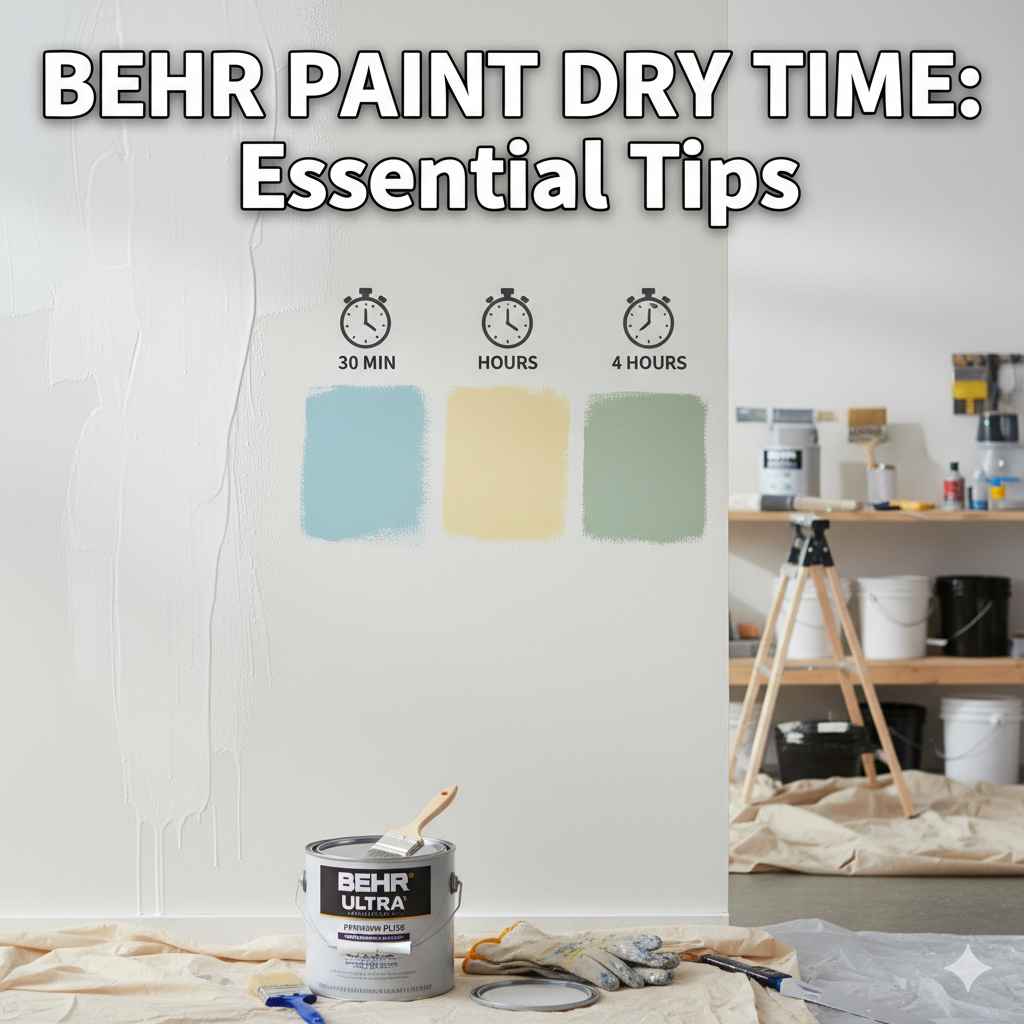
For instance, a standard Behr Premium Plus interior paint might have a recoat time of as little as 2 hours, while a more durable or specialty product could require up to 4 hours or more.
Tip 2: Aim for Optimal Environmental Conditions
Before you even open the can, assess your painting environment.
- Temperature: Try to paint when the room temperature is between 50°F and 80°F (10°C and 27°C). If it’s too cold or too hot, the paint won’t dry as efficiently.
- Humidity: Avoid painting on very humid days. If you absolutely must, use a dehumidifier in the room to help remove moisture from the air.
- Ventilation: Open windows and doors to create a cross-breeze. You can also set up fans to gently move the air, but avoid blowing them directly onto the freshly painted surface, as this can cause uneven drying or even roller/brush marks.
Tip 3: Apply Thin, Even Coats
As we touched on earlier, thickness matters.
- Use a good quality brush or roller that’s appropriate for your paint type and the surface you’re painting.
- Load your brush or roller with paint, but avoid overloading.
- Apply the paint in smooth, even strokes, overlapping your previous strokes slightly.
- Don’t try to cover every inch with the first pass. It’s better to have a slightly uneven look after the first coat, which will be easily corrected by the second.
Applying thin coats means more surface area is exposed to the air, allowing solvents to evaporate and the paint to dry more quickly and evenly.
Tip 4: The “Touch Test” (With Caution!)
You can gently test a small, inconspicuous area if you’re unsure. Lightly touch a spot with your finger. If it feels tacky or sticky, it’s not ready for another coat. If it feels dry and doesn’t leave residue on your finger, it might be ready.
Important safety note: Be very gentle! You don’t want to mar the finish. This test is best for checking if it’s dry to touch, not necessarily ready for recoating unless you’re confident about the recoat times.
Tip 5: Consider the Paint Sheen
Generally, flatter finishes tend to have a shorter dry time than higher gloss finishes. This is because higher gloss paints often contain more binders and solvents that need time to evaporate to achieve that smooth, reflective surface.
Tip 6: Prime Smart (Primers Also Need to Dry!)
If you’re using a primer, remember that it also has its own drying and recoat times. Always let your primer dry completely according to the manufacturer’s instructions before applying your topcoat. Skipping this step will undermine the performance of your paint.
Tip 7: Don’t Rush the Final Cure
Even after you’ve applied all your coats and the paint feels dry to the touch and ready for light use, it’s still curing. This is the time when the paint film achieves its full hardness and durability.
- Avoid harsh cleaning, scrubbing, or placing heavy objects against freshly painted walls for at least 7-14 days (check your specific product for exact cure times).
- Minor scuffs can often be gently wiped away with a soft, damp cloth during this period, but be very careful.
The full cure is when your paint job will be truly resilient against wear and tear.
Behr Paint Dry Time Chart: A General Guide
While it’s always best to refer to the specific can, here’s a general guide for Behr’s popular interior paint lines. These are approximate times and can vary based on the factors we’ve discussed.
If you need to know more about specific paint types, the ScienceDirect platform provides in-depth information on paint and coating science, including drying mechanisms.
Behr Interior Paint Recoat Time Estimates
| Behr Paint Line | Typical Recoat Time (Hours) | Notes |
|---|---|---|
| Behr Premium Plus® | 2-4 hours | Behr’s most popular, excellent all-around performance. A good benchmark. |
| Behr Dynasty® | 2-4 hours | Advanced stain resistance, easier cleaning, but similar dry times to Premium Plus. |
| Behr MARQUEE® | 4 hours | Formulated for one-coat coverage, but still requires a 4-hour wait for recoating for best results. |
| BEHR® Ultra® | 4 hours | Excellent coverage and durability, often used for high-traffic areas. |
| Behr Ultra Scuff-Defense® | 4 hours | Designed for extreme durability and scuff resistance. |
| BEHR® Interior Chalky Finish | 2hours | Specialty finish, often doesn’t require primer, but recoat times are relatively quick. |
| BEHR® Interior Wood Stain & Polyurethane | Refer to can (often 4-12 hours) | Stains and finishes differ greatly. Always check label for wood products. |
This table provides a general overview. Always confirm the specific recoat times on your Behr paint can, as formulations can change, and environmental factors will always play a role.
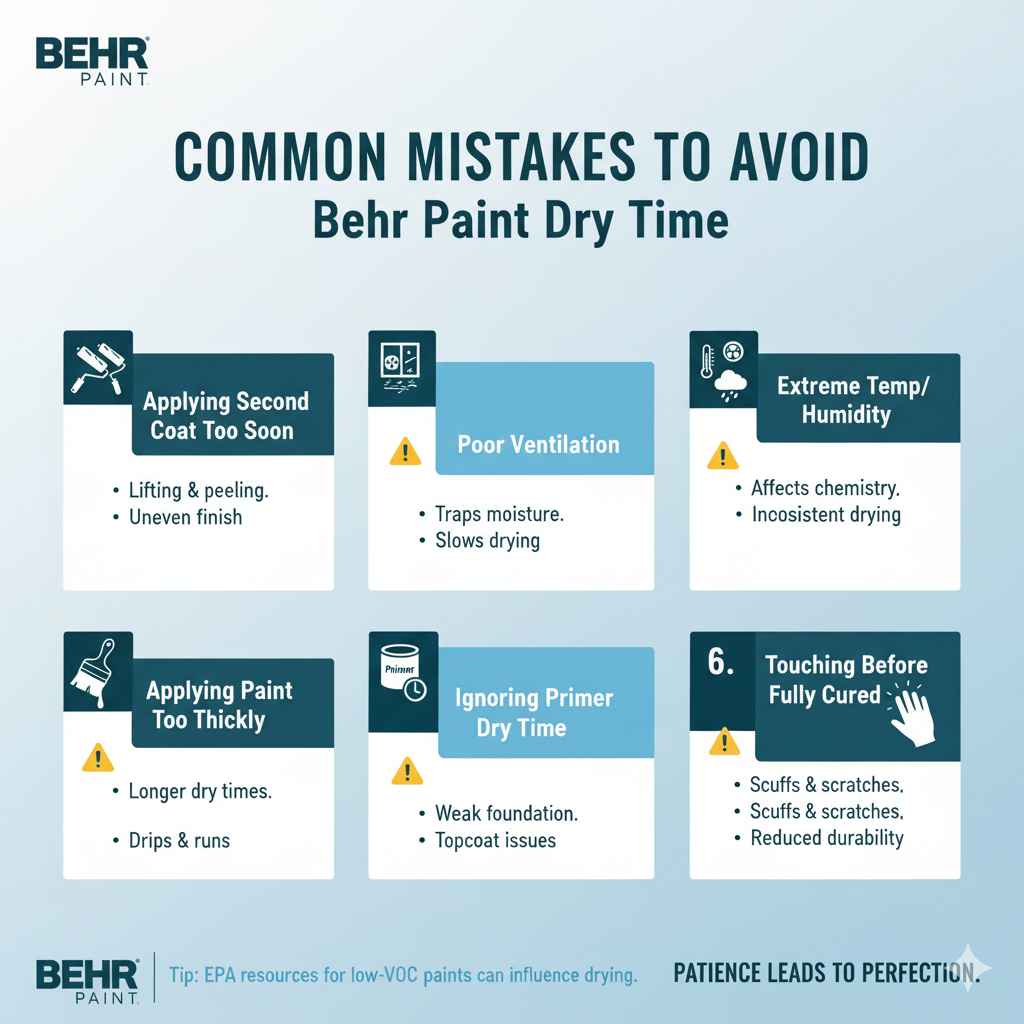
Common Mistakes to Avoid with Behr Paint Dry Time
Knowing what not to do is just as important as knowing what to do. Here are some common pitfalls beginners encounter when dealing with paint drying times.
- Applying a second coat too soon: This is the most common mistake. It leads to lifting, peeling, and a poor finish.
- Not ensuring adequate ventilation: Trapped moisture thwarts drying. Treat your painting area like a sauna if you want slow drying!
- Painting in extreme temperatures or humidity: Paint isn’t magic; it’s chemistry. And chemistry is sensitive to its surroundings.
- Applying paint too thickly: More paint doesn’t equal better coverage; it equals longer drying times and a greater chance of drips and runs.
- Ignoring the primer’s dry time: The primer is the foundation. If it’s not ready, neither is the topcoat.
- Touching the paint before it’s fully cured: Be patient! A little wait now saves you from frustration later.
The U.S. Environmental Protection Agency (EPA) offers great resources on choosing low-VOC paints and understanding their application, which can sometimes influence drying properties and indoor air quality, especially when working in enclosed spaces: EPA Home Painting Tips.
What If My Behr Paint Isn’t Drying? Troubleshooting
Sometimes, despite your best efforts, paint can seem stubbornly wet. Here’s how to troubleshoot:
- Check the environment: Is the temperature too low? Is the humidity too high? These are the most likely culprits.
- Are you sure about the paint type? Some specialty paints have longer drying times.
- Is there something unusual about the surface? Very dense or non-porous surfaces can sometimes slow down drying.
- Too much paint applied? If the coat is too thick, it will take substantially longer to dry.
If your paint is taking an exceptionally long time (e.g., days to become touch-dry in normal conditions), there might be an issue with the paint itself or a significant environmental problem that needs immediate attention. Ensure you’re storing any leftover paint correctly to maintain its integrity for future use.
Frequently Asked Questions About Behr Paint Dry Time
Here are some common questions beginners have about Behr paint’s drying times:
Q1: How long does Behr Premium Plus take to dry between coats?
For Behr Premium Plus interior paint, the typical recoat time is 2-4 hours. Always check the specific can for the most accurate recommendation, and consider environmental factors like temperature and humidity.
Q2: Can I speed up the drying time of Behr paint?
Yes, you can indirectly speed up drying by ensuring good ventilation (using fans, opening windows), maintaining an ideal temperature (around 70°F or 21°C), and keeping humidity levels low. Avoid using direct heat or applying paint too thickly, as this can cause problems.
Q3: What’s the difference between dry to touch and recoat time for Behr paint?
“Dry to touch” means the surface feels dry if you lightly press it. The underneath layers are still soft. “Recoat time” is the minimum amount of time you must wait before applying another layer of paint to ensure the first coat is sufficiently dry to bond properly with the next.
Q4: Does Behr paint dry faster in sunlight?
While sunlight can contribute to warmth, applying paint directly in strong sunlight can cause it to dry too quickly on the surface, creating lap marks and an uneven finish. It’s generally better to paint in indirect light with good airflow.
Q5: How long until I can clean Behr painted walls?
Your walls are typically ready for light cleaning (gentle wipe-down with a damp cloth) after 7 days, but full cure – when the paint reaches maximum durability and can withstand more robust cleaning – can take 2-4 weeks. Avoid abrasive cleaners for at least 30 days.
Q6: My Behr paint is still sticky after 24 hours. What should I do?
If your Behr paint is still sticky after 24 hours in average conditions, it might be due to high humidity, low temperatures, or too thick an application. Try increasing ventilation and temperature if possible. If it persists, there might be an issue with the paint or surface preparation. For more insights into paint technology, resources like the American Coatings Association offer industry information.
Conclusion
Mastering Behr paint’s dry time is all about preparation and patience. By understanding the different stages of drying, paying attention to environmental factors, and following the simple tips outlined above – especially reading the can! – you’ll be well on your way to achieving a professional-looking, durable paint finish. Remember, rushing the process often leads to more work down the line. Allow yourself and your paint the respect of proper drying time, and your walls will look fantastic for years to come. Happy painting!