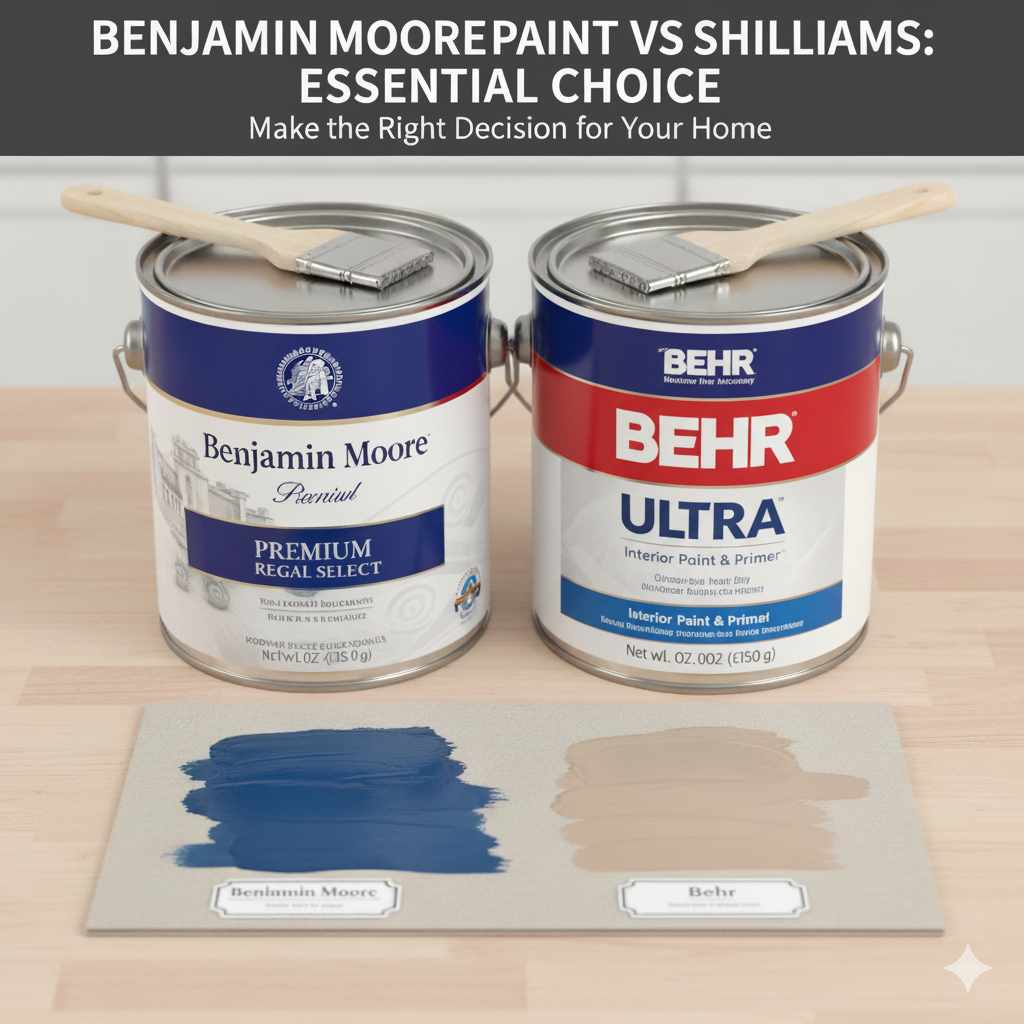
Benjamin Moore Paint vs Behr: Essential Choice
Benjamin Moore paint vs Behr: Understand the key differences in quality, price, and application to choose the best paint for your DIY project. Both are great, but one might be a better fit for your needs and budget.
Choosing the right paint is a big step for any home project, whether you’re refreshing a room or tackling a new build. It can feel a bit overwhelming when you stand in front of a wall of paint cans, wondering which brand will give you the best results without breaking the bank. Two names that pop up constantly are Benjamin Moore and Behr. They’re both popular, but what really sets them apart? This guide will break down Benjamin Moore paint vs Behr, making it easy for you to pick the perfect can for your next painting adventure. We’ll look at what makes each one special, how they perform, and which one might be the best fit for your DIY skills and budget.
Benjamin Moore Paint vs Behr: A Beginner’s Guide to the Essential Choice
As your woodworking mentor, I know that the right materials make all the difference, and that’s true for painting too! Just like picking the perfect wood for a project, choosing the right paint can make your hard work shine. Benjamin Moore and Behr are two giants in the paint world, and deciding between them often leaves DIYers scratching their heads. They each have loyal fans, and for good reason. But they’re not quite the same. Understanding their strengths and weaknesses will help you make a confident choice for your home.
Let’s dive in and explore what makes Benjamin Moore and Behr tick, so you can feel good about the paint you bring home and the beautiful results you’ll achieve. We’ll keep it simple, just like we do in the workshop, focusing on what matters most for your project.
Understanding Paint Quality: What to Look For
When you’re painting, you want a finish that looks great, lasts, and is easy to work with. For beginners, this means avoiding frustrating problems like patchy coverage, drips, and paint that peels too soon. The quality of paint often comes down to its ingredients. Higher-quality paints typically have more of the good stuff – like pigments (for color) and binders (which hold everything together and make the paint stick and last) – and fewer fillers. This means better coverage, durability, and a smoother finish. You’ll often find that premium paints offer deeper, richer colors that are true to the swatch, and they stand up better to cleaning and wear and tear.
Coverage: Getting the Most Bang for Your Buck
One of the biggest concerns for any DIYer is how far the paint will go. Good coverage means you’ll likely need fewer coats, saving you time, effort, and money. A paint that covers well will hide the old color underneath more effectively, meaning you won’t have to apply layer after layer. When comparing Benjamin Moore paint vs Behr, coverage is a key factor. Some paints are formulated to provide excellent hiding power, which is a lifesaver when you’re painting over a dark color with a lighter shade, or vice versa.
Durability and Washability: Making Your Paint Last
Paint isn’t just about looks; it’s about protection and longevity. A durable paint finish can withstand scuffs, stains, and repeated cleaning, which is especially important in high-traffic areas like hallways, kitchens, and kids’ rooms. When you’re choosing between Benjamin Moore paint vs Behr, consider their claims about durability and how well they hold up to washing. A washable paint means those accidental crayon marks or kitchen splatters can be wiped away without damaging the finish, keeping your walls looking fresh for years to come.
Ease of Application: Smooth Sailing or Steep Climb?
For beginners, how easy a paint is to apply can make or break a project. Does it go on smoothly without leaving brush marks? Does it level out well to hide imperfections? Does it drip too much? These are all important questions. Brands often boast about their paint’s self-leveling properties or its smooth application. When you’re learning, a paint that glides on easily and doesn’t demand expert brushwork will give you more confidence and better results. It’s like using a sharp chisel versus a dull one – it makes a world of difference!
Benjamin Moore: The Premium Choice
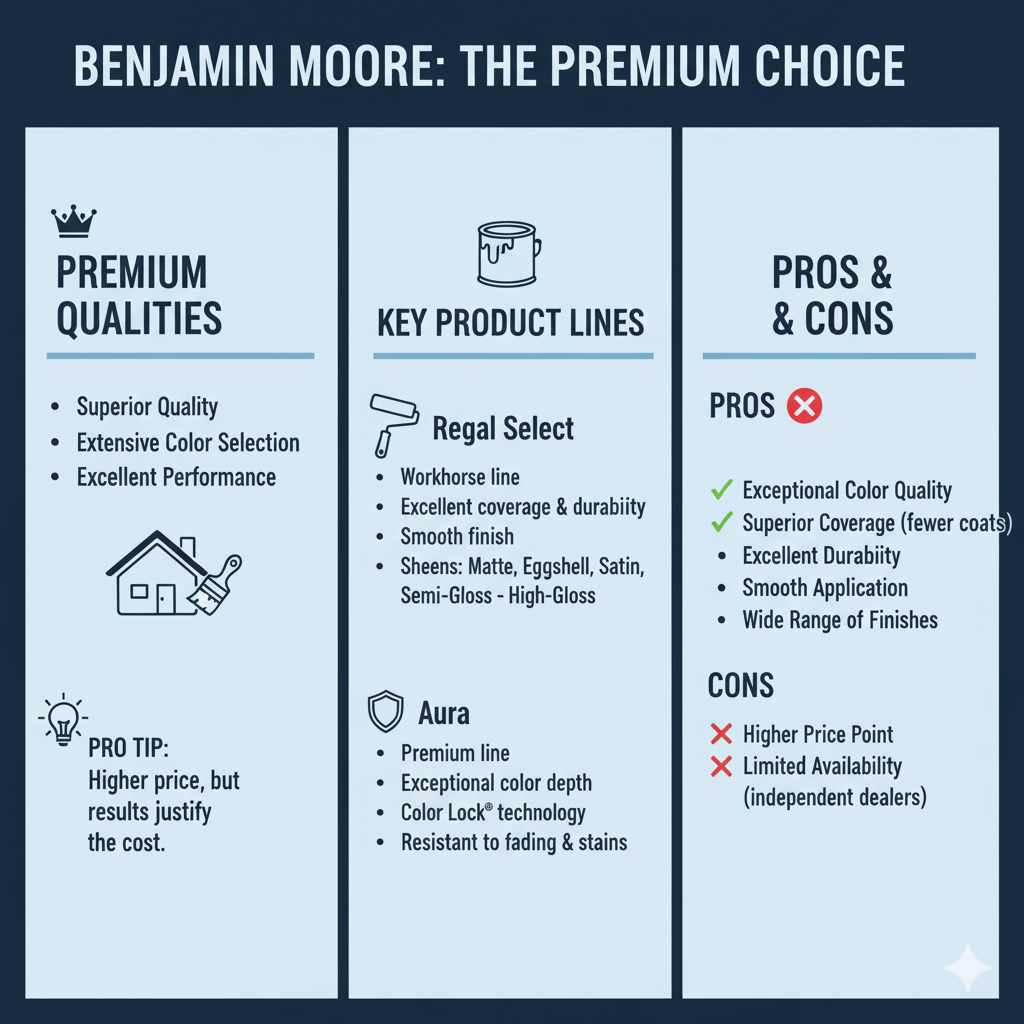
Benjamin Moore is often seen as the go-to brand for professionals and serious DIYers alike. It’s known for its superior quality, extensive color selection, and excellent performance. While it often comes with a higher price tag, many believe the results justify the cost.
Key Benjamin Moore Lines and Their Features
Benjamin Moore offers a range of product lines, each designed for specific needs. Here are a couple of their most popular:
- Benjamin Moore Regal Select: This is a workhorse line, offering excellent coverage, durability, and a smooth finish. It’s often recommended for its all-around performance in various rooms. It comes in different sheens like matte, eggshell, satin, semi-gloss, and high-gloss, giving you options for different areas.
- Benjamin Moore Aura: This is their premium line. Aura is known for its exceptional color depth, durability, and stain resistance. It uses exclusive Color Lock® technology for rich, vibrant colors that are incredibly resistant to fading and extreme conditions. Aura is often the choice for accent walls or areas where a truly stunning, long-lasting finish is desired.
Pros of Benjamin Moore Paint
- Exceptional Color Quality: Benjamin Moore is renowned for its incredibly accurate and rich colors. Their color matching is also top-notch.
- Superior Coverage: Often requires fewer coats, saving time and effort.
- Excellent Durability: Paints are formulated to be long-lasting and resistant to wear and stains.
- Smooth Application: Generally applies smoothly with minimal brush strokes or roller marks.
- Wide Range of Finishes: Offers a comprehensive selection of sheens for any application.
Cons of Benjamin Moore Paint
- Higher Price Point: Generally more expensive than Behr paint.
- Limited Availability: Primarily sold through independent Benjamin Moore dealers, not widely available in big box stores.
Behr: The Home Depot Favorite
Behr is a brand many homeowners are familiar with, largely due to its exclusive availability at The Home Depot. It’s praised for its affordability, wide color selection, and good performance, making it a popular choice for budget-conscious DIYers.
Key Behr Lines and Their Features
Behr also offers several lines catering to different needs and budgets:
- Behr Premium Plus: This is Behr’s mid-range option, offering good coverage, durability, and washability at a competitive price. It’s a solid choice for general interior painting projects. It often includes features like mildew resistance and low VOC (Volatile Organic Compounds) content for healthier air quality.
- Behr Marquee: Behr’s premium interior paint, Marquee, boasts superior one-coat coverage and exceptional stain resistance. It comes in a wide array of colors and is designed to offer a richer, more durable finish than their standard lines.
- Behr Dynasty: Behr’s newest premium interior paint. Dynasty is designed for ultimate stain resistance, offering excellent coverage and a beautiful, lasting finish. It aims to compete directly with top-tier paints from other brands.
Pros of Behr Paint
- Affordability: Generally more budget-friendly than Benjamin Moore.
- Wide Availability: Exclusively available at The Home Depot, making it easy to find for most homeowners.
- Good Coverage: Many Behr paints offer good coverage, especially their higher-end lines like Marquee and Dynasty.
- Durability and Stain Resistance: Their premium lines offer good resistance to stains and everyday wear.
- Extensive Color Palette: A vast selection of colors to choose from.
Cons of Behr Paint
- Color Accuracy: While good, some users find Behr’s color fidelity not as precise as Benjamin Moore, especially with complex colors or custom matches.
- Application: Some of Behr’s lower-end paints might be slightly thicker or require a bit more effort to apply smoothly compared to Benjamin Moore.
- Professional Preference: Less commonly used by professional painters compared to Benjamin Moore, though this is changing with Behr’s newer lines.
Benjamin Moore Paint vs Behr: Side-by-Side Comparison
To make the decision even clearer, let’s look at a direct comparison of Benjamin Moore paint vs Behr across key categories.
| Feature | Benjamin Moore (General) | Behr (General) |
|---|---|---|
| Price Range | Mid to High-High | Low-Mid to Mid-High |
| Availability | Independent Dealers | The Home Depot Exclusive |
| Color Selection | Extremely wide, known for accuracy and deep hues. Excellent custom matching. | Extremely wide, good range, but sometimes less nuanced than Benjamin Moore. |
| Coverage (Coats Needed) | Generally excellent (often 2 coats excellent, sometimes 1 for touch-ups or similar colors). | Good to Very Good (often 2 coats standard, Marquee/Dynasty aim for 1-coat coverage). |
| Durability & Washability | Excellent, premium lines are highly scrubbable and resistant. | Good to Very Good (premium lines offer strong stain/scrub resistance). |
| Ease of Application | Very good to excellent – smooth, predictable feel. | Good to very good – some lines can feel a bit thicker. |
| VOCs | Many low and zero VOC options available. | Many low and zero VOC options available. |
| Professional Preference | High | Growing, especially with newer lines. |
Which Paint Should a Beginner Choose?
As a beginner, you want a paint that’s forgiving and provides great results without requiring advanced techniques. For this reason, both brands offer excellent options, but the choice might lean slightly based on your priorities:
For Beginners Prioritizing Ease and Forgiveness:
- Benjamin Moore Regal Select (Eggshell or Satin finish): This line is a fantastic all-rounder. It applies smoothly, covers well, and is quite durable. The slightly forgiving nature of eggshell and satin finishes means minor imperfections in your application are less likely to show.
- Behr Premium Plus (Eggshell or Satin finish): A great budget-friendly option. It’s generally easy to work with and provides decent coverage. If you’re painting a room with less critical exposure or want to keep costs down, this is a solid choice.
For Beginners Wanting Top-Notch Results (and Willing to Pay a Little More):
- Benjamin Moore Aura: If you’re painting something special, like a living room or bedroom where you really want that wow factor, Aura is worth the investment. Its superior coverage and finish quality mean you’ll get a professional-looking result more easily.
- Behr Marquee or Behr Dynasty: These are Behr’s answers to premium paint. If you want to try a Behr product that really performs, opt for these. They offer excellent coverage and durability, making your painting job look more professional and last longer.
When in doubt, I always recommend getting a few sample pots of your chosen colors in the finishes you’re considering. Test them on your wall to see how they look in your home’s specific lighting. This is a crucial step, just like testing a wood finish on a scrap piece!
Factors to Consider Beyond Brand Name
While brand is important, it’s not the only thing that matters. Here are some other crucial factors to keep in mind when choosing paint:
Sheen (Finish) Matters!
The sheen or finish of your paint significantly impacts its look, durability, and how easy it is to clean. For beginners:
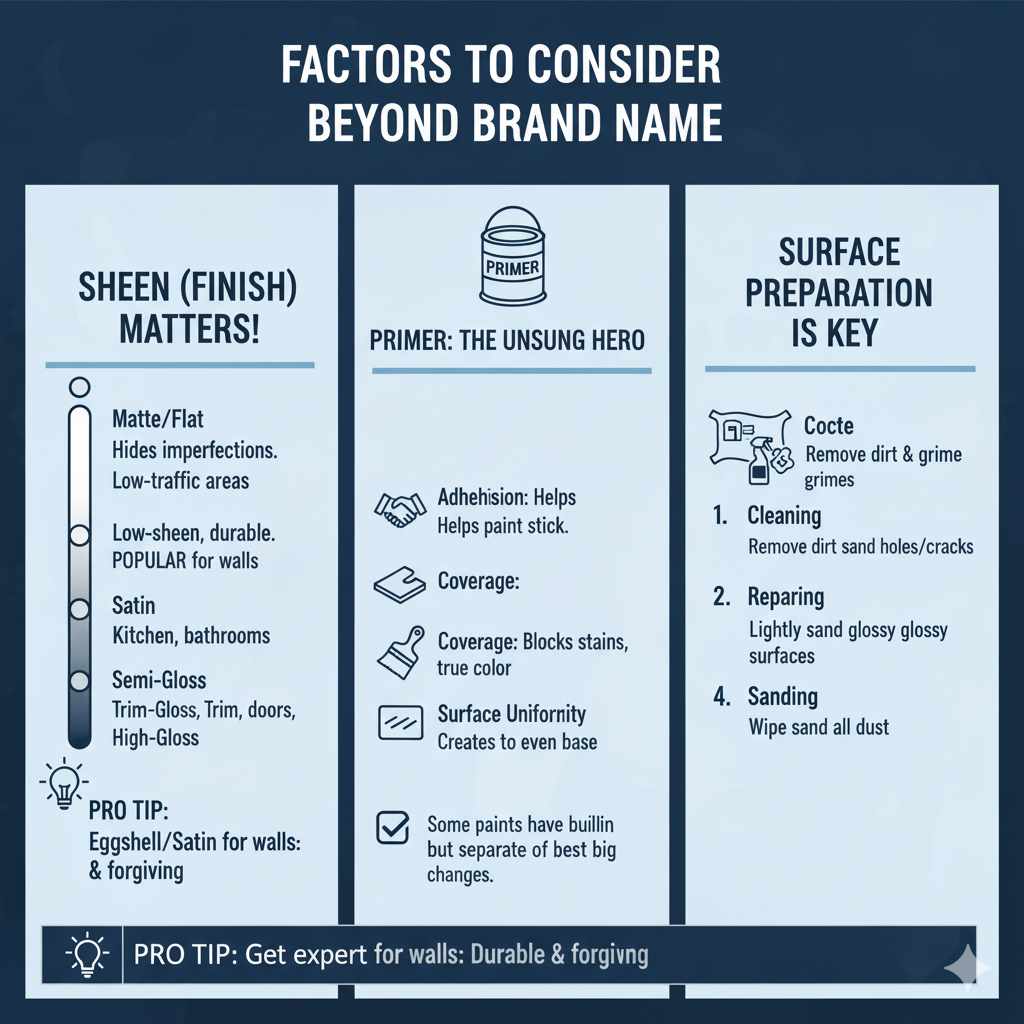
- Matte/Flat: Hides imperfections best, has a soft, non-reflective look. Not very washable. Good for ceilings and low-traffic areas.
- Eggshell: A low-sheen finish that’s more durable and washable than flat. It’s the most popular choice for walls in living rooms, bedrooms, and hallways because it offers a nice balance.
- Satin: Slightly more sheen than eggshell. It’s more durable and washable, making it a good choice for kitchens, bathrooms, and children’s rooms.
- Semi-Gloss: Noticeable sheen, very durable and washable. Excellent for trim, doors, and cabinets. Be aware that it highlights imperfections.
- High-Gloss: The most reflective and durable. Used for trim, doors, and high-impact areas where a dramatic shine is desired. It will show every imperfection.
For most walls, eggshell or satin are excellent starter choices as they offer durability and a pleasing look without being too shiny and highlighting every little flaw you might have made during application.
Primer: The Unsung Hero
Don’t skip the primer! A good primer is essential for a few key reasons:
- Adhesion: It helps the paint stick to the surface, especially important on glossy or difficult surfaces.
- Coverage: It helps block stains and ensures the top coat color is true, often reducing the number of paint coats needed.
- Surface Uniformity: It creates an even surface for the paint, ensuring a consistent finish.
Both Benjamin Moore and Behr make excellent primers. Some paints are formulated with a primer built-in, but for significant color changes or challenging surfaces, a separate coat of primer is highly recommended. For a comprehensive guide on primers, check out resources from the Building Science Information on surface preparation and materials.
Surface Preparation is Key
No matter how good your paint is, it won’t perform well if the surface isn’t prepared correctly. This means:
- Cleaning: Wash walls to remove dirt, grease, and grime.
- Repairing: Fill holes and cracks with spackle or joint compound, then sand smooth.
- Sanding: Lightly sand glossy surfaces to create a better grip for the paint.
- Dusting: Wipe away all dust after sanding.
Proper preparation is the foundation of a great paint job, just like a well-jointed piece of wood is the foundation of a strong furniture build.
Frequently Asked Questions About Benjamin Moore vs Behr Paint
Q1: Is Benjamin Moore paint truly better than Behr?
Benjamin Moore is generally considered to be of higher quality, particularly in terms of color depth, coverage, and application smoothness. However, Behr’s premium lines are competitive, and for many DIY projects, Behr offers excellent value and performance.
Q2: Which paint is easier for a beginner to use, Benjamin Moore or Behr?
Both brands offer easy-to-use paints. Benjamin Moore is often cited for its exceptionally smooth application. Behr’s premium lines are also designed for ease of use. For beginners, focusing on an eggshell or satin finish from either brand is recommended for forgiveness.
Q3: Can I use Behr paint with Benjamin Moore primer, or vice versa?
Yes, you can generally use primers from one brand with paints from another. The key is to ensure the primer is suitable for the surface you’re painting and that both products are dry according to manufacturer instructions before applying the next coat.
Q4: How does the price difference between Benjamin Moore and Behr impact quality?
The higher price of Benjamin Moore often reflects better quality ingredients, leading to superior coverage, color accuracy, and durability. Behr offers more budget-friendly options, and their higher-end lines aim to bridge the quality gap at a more accessible price point.
Q5: When should I choose Benjamin Moore over Behr?
Choose Benjamin Moore if you prioritize the absolute best color accuracy, a flawless finish, superior coverage, and are willing to invest a bit more. It’s often preferred for high-visibility areas or when you want a truly professional look.
Q6: When should I choose Behr over Benjamin Moore?
Choose Behr if you are on a tighter budget, need easy access through The Home Depot, or are tackling a large project where cost is a major factor. Their premium lines like Marquee and Dynasty offer excellent performance that can rival higher-priced brands.
Q7: Does Benjamin Moore paint last longer than Behr paint?
In general, Benjamin Moore’s premium lines tend to offer superior long-term durability and washability compared to many Behr paints, especially when comparing their top lines. However, Behr’s premium offerings are quite durable and can last many years with proper care.