Paint Roller Thread Pitch: 3/4-Inch Acme, 5 TPI (Fit Guide)
A threaded paint roller handle almost always uses a 3/4-inch Acme thread with 5 threads per inch (5 TPI), the same coarse thread used on broom handles and most extension poles, but plastic handles vary and quick-release poles are the exception. An earlier version of this guide quoted a 5/16-18 UNC thread, and that figure was wrong. This guide covers the actual spec, how to check your own thread, brand compatibility, adapters, what to do when a frame will not fit, and the power line danger that comes with long poles.
What Thread Does a Paint Roller Handle Use?
Best 3/4-Inch Threaded Pole Pick
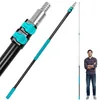 |
MAVRIZ 5-12 Ft Telescoping Extension Pole: $30.39 The listing describes a standard 3/4-inch threaded connection for paint rollers, so it is a straightforward match for the 3/4-inch, 5 TPI Acme handles this guide covers.
|
As an Amazon Associate we earn from qualifying purchases.
In the United States, most threaded handles for brooms, paint rollers, and extension poles for window-washing brushes and squeegees have threads 3/4 inch in diameter, 5 threads per inch, Acme form, according to the Sizes.com reference on handles. Because they all share it, the same source notes, a broom handle can be screwed into a paint roller and a window-washing pole into a broom. Wooster, Purdy, and other brands build their poles around it: Purdy’s Pole+ listing says its universal tip works with "any acme threaded frame."
Here is what the numbers mean in practice. Five threads per inch is a pitch of 0.2 inch, so a roller frame advances about 1/5 inch every full turn and needs roughly five turns to seat fully on a one-inch run of thread. Acme threads are a coarse, trapezoidal form, which is why a frame spins on quickly and does not need a tight fit to hold.
| Spec | Value | What it means for you |
|---|---|---|
| Major diameter | 3/4 inch (0.75 in, about 19 mm) | Matches broom, mop, and most pole tips |
| Threads per inch | 5 TPI | Coarse: about 5 ridges per inch |
| Pitch (1 / TPI) | 0.2 inch per turn | Roughly 5 turns to seat 1 inch of thread |
| Form | Acme (trapezoidal) | Quick to start, hard to cross-thread when square |
The 5/16-18 UNC claim does not hold up
Some pages, including the earlier version of this one, list 5/16-18 UNC as the roller handle thread. That figure fails a simple size check: a 5/16-inch post is less than half the diameter of a 3/4-inch broom or pole thread, so a handle cut that way could never interchange with a broom handle as the standard says it should. Other sites quote 5/8-inch figures. The one page we read that did so also gave a 3/4-inch Acme figure on the same page, so we would not rely on it. Check your own handle with the steps below instead of trusting a number from a spec table.
How to Measure and Identify Your Handle Thread
You do not need special tools. A ruler or calipers answers most questions in two minutes.
- Clean the thread first: wipe dried paint off with a rag so you are measuring metal or plastic, not buildup.
- Measure the diameter: a pole tip or threaded handle end near 3/4 inch (0.75 in) points to the standard.
- Count threads over one inch: lay a ruler along the thread and count ridges. About five means 5 TPI; a count near 10 or more means it is not the standard coarse thread.
- Test against a known part: a broom or mop head from the same standard should thread on smoothly for several turns. If it does, your handle is on the common thread.
- Feel the engagement: a proper fit starts by hand and spins freely for the first turns, then firms up. Gritty or binding after one turn means a mismatch or damaged threads.
A standard thread pitch gauge can help, but most gauge sets are cut for 60-degree machine threads, while Acme flanks are shaped differently, so a leaf may not seat flush even on a correct thread. Treat the gauge as a rough guide and let the hand test decide. This point comes from general machining knowledge rather than a manufacturer page, so check it against your own gauge set.
Roller Frame, Pole, or Quick-Release: Which Is Which?
A roller frame has a handle, and the handle end is usually the threaded socket that accepts a pole or a broom-style tip. The pole carries the matching threaded tip. When the two fit, the system works the same on any brand. Where it breaks down is the push-button or quick-release poles.
| System | How it attaches | Works with a threaded frame? |
|---|---|---|
| Standard threaded pole | 3/4-inch Acme tip screws into the handle | Yes, directly |
| Wooster Sherlock GT | Quick-click tip; includes a conversion tip for standard threaded tools | Yes, with the conversion tip installed |
| Purdy Pole+ / QuickConnect | Universal tip works with Purdy’s quick-connect frames or any Acme threaded frame | Yes, via the universal tip |
| Threaded adapter | Converts one thread type to 3/4-inch Acme | Yes, if the adapter lists 3/4-inch Acme |
Wooster’s product pages say the Sherlock GT includes a standard threaded tool conversion tip, and the Amazon listing for the replacement tip says it makes a threaded tool Sherlock GT quick-click compatible. If your quick-release pole will not hold a threaded frame, check that the conversion tip is installed and not lost in the grip. Wooster’s Sherlock (threaded) pole is described on a retailer’s page as having a zinc die cast threaded tip, built around a fiberglass outer pole and an anodized aluminum inner pole.
Brand Compatibility and Thread Adapters
Brand rarely matters on a threaded system, because the standard is shared. A Wooster frame on a Purdy pole, or either on an unbranded pole, works as long as both ends are on the 3/4-inch Acme thread. The mismatches come from three places: plastic handles molded loosely, overseas poles using other thread forms (the Sizes.com source notes handles in other countries often use different, sometimes tapered, threads), and quick-release poles with no conversion tip.
When you do need an adapter, look for one whose listing names the thread. One third-party listing describes its adapter as built around the 3/4 x 5 TPI Acme format commonly used on painter’s poles. Another converts a drywall corner roller handle with a fine thread on one end to 3/4-inch Acme on the other. Jameson sells an Acme universal adapter for its fiberglass poles. Skip any adapter that says only "universal" with no thread size.
What to Do If the Frame Will Not Fit
- Stop and back off: forcing a frame that binds can strip a soft aluminum or plastic handle in a single turn.
- Restart square: thread it by hand with the handle and tip in line, not at an angle.
- Clean the threads: dried paint inside the socket is a common cause of a frame that will not start.
- Try a second part: test the frame on a broom handle and the pole on a different frame to find which one is off.
- Use a conversion tip or adapter: for quick-release poles or odd threads, match the part to 3/4-inch Acme.
- Replace the worn part: a stripped handle end or tip is cheaper to replace than to fight on every job.
Cleaning the Threads So They Keep Working
Dried paint is what turns a smooth Acme thread into a sticky one. After each job, wipe the tip and the handle socket with a rag, using the cleaner that matches the paint: water and a little soap for latex, mineral spirits for oil-based. Our guide on whether you can reuse paint rollers covers cleaning the rest of the frame and cover. Let the parts dry before you store them, and wipe off any grit before you thread them together.
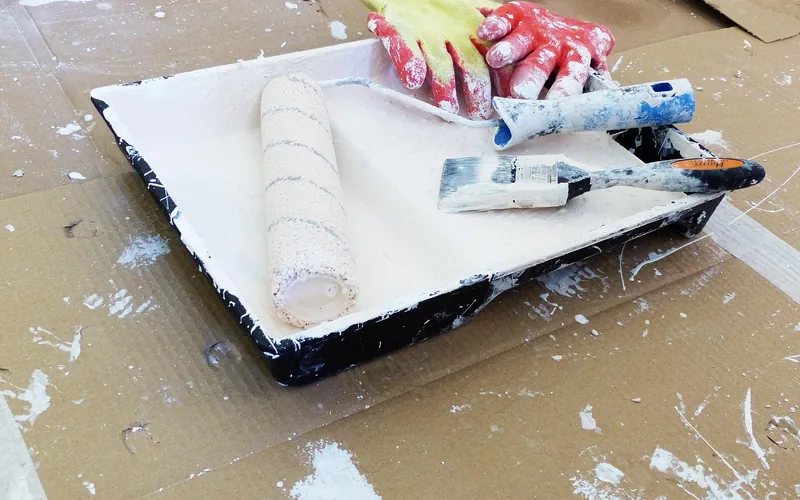
Pick the roller cover before you pick the pole, since the cover decides how much force you push through the frame. Our comparison of 1/2 inch vs 3/8 inch nap rollers explains how nap length changes the pressure you need. If your next job is a clear finish rather than paint, what brush to use for polyurethane covers the applicator choice, since a roller is not the right tool for every coat.
Extension Pole Safety: Stay Away From Power Lines
A long pole is also a long conductor if it is metal. The U.S. Consumer Product Safety Commission advises: "Never assume that an overhead power line is electrically insulated; always assume that contact with any line can be lethal." The agency also warns that you can be electrocuted by touching a conductive material such as a metal ladder, antenna, or pipe and the earth or any grounded item at the same time, and recommends keeping poles, ladders, and tools far from power lines at all times (CPSC).
- Look up before you extend the pole, and check the line position again each time you move.
- Do not rely on a pole being insulated. Telescoping poles often mix materials: one retailer page describes Wooster’s Sherlock as a fiberglass outer pole with an anodized aluminum inner pole, so an extended pole still has metal in it.
- Painting siding near a service drop or overhead line is a job to postpone or hand to a professional. Our guide to painting the outside of a house without scaffolding covers reaching high areas, but it does not change this rule.
- On decks and fences the lines are usually far away, but a pole raised vertically can still reach them; the same rule applies when you stain a deck near the house service line.
Frequently Asked Questions
What thread size is a paint roller handle?
Most threaded paint roller handles in the United States use a 3/4-inch Acme thread with 5 threads per inch, the same thread found on broom handles and extension poles. The tolerances are loose and some molded plastic handles are not true Acme form, so confirm with a hand test-fit.
What is the thread pitch on a paint roller handle?
The pitch is 5 threads per inch, which works out to 0.2 inch of travel per full turn (1 divided by 5). That is a coarse thread, so you should be able to count about five ridges along one inch of the pole tip.
Are all paint roller extension poles the same thread?
Most threaded poles share the 3/4-inch, 5 TPI Acme standard, but not all poles are threaded. Quick-release systems such as Wooster Sherlock GT and Purdy QuickConnect use a snap-on tip and need a conversion tip to hold a threaded roller frame.
Can I use a broom handle thread on a paint roller?
Usually yes. The reference source for this guide notes that a broom handle can be screwed into a paint roller and a window-washing pole into a broom because they share the same 3/4-inch Acme thread. Test by hand first, because plastic handles vary.
What if my roller frame does not fit my extension pole?
Back the frame off and restart it square by hand. If it still will not seat, clean the threads, try a different frame, or use a thread adapter or conversion tip rather than forcing it, which can strip a soft handle or cross-thread the tip.
Bottom Line
Look for 3/4-inch Acme, 5 TPI. Confirm it by measuring the diameter, counting ridges over an inch, and test-fitting a broom head. If a quick-release pole will not take your frame, the fix is the conversion tip, not more force. And keep every pole well away from overhead lines.
Sponsored / affiliate links. As an Amazon Associate I earn from qualifying purchases. I may earn additional commission from eligible campaigns.